
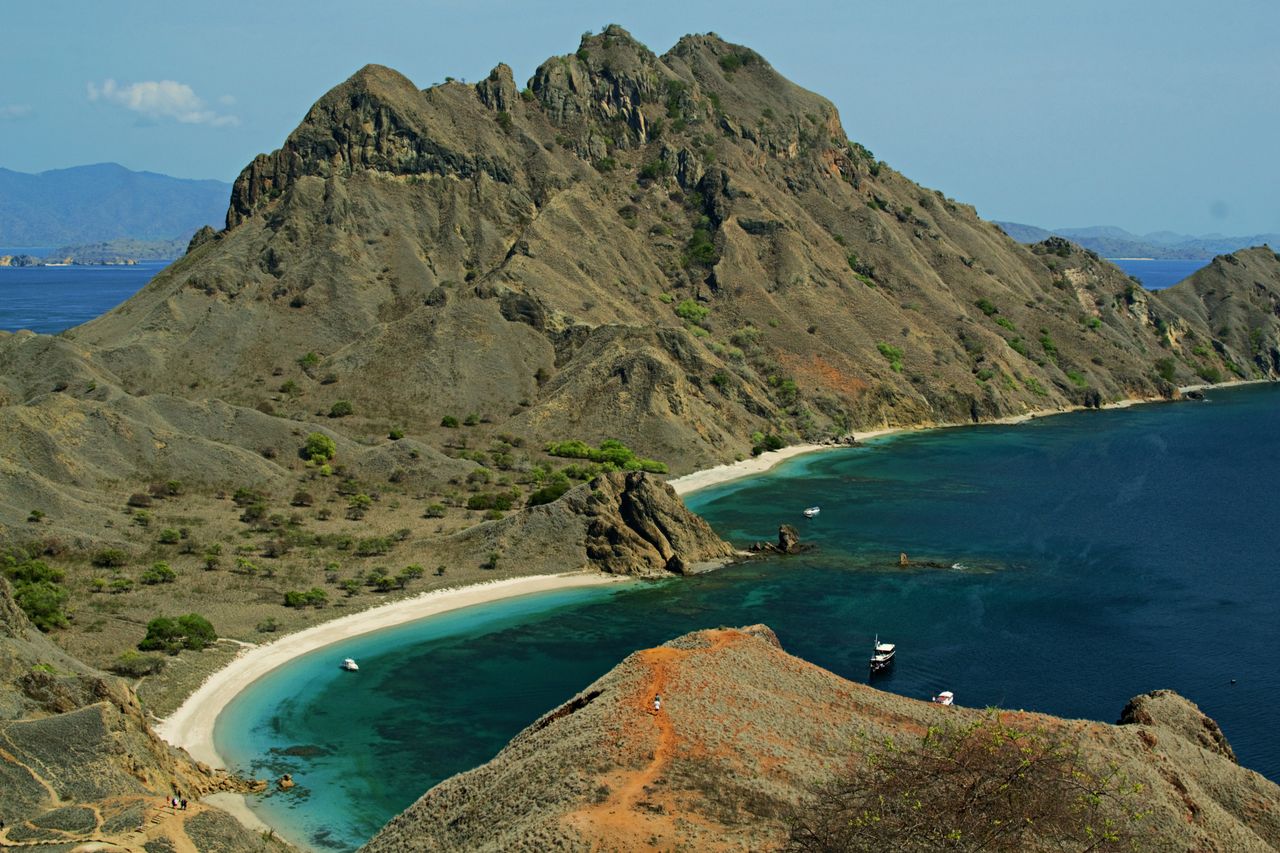
Komodo National Park in Indonesia has long represented the dream of wildlife tourism: ancient-looking islands, turquoise seas, coral reefs, dramatic viewpoints and one of the planet’s most extraordinary reptiles, the Komodo dragon.
But the success of the destination is creating a problem that many famous natural attractions eventually face. The more people who come to see a fragile ecosystem, the greater the possibility that tourism itself will damage the environment that attracted visitors in the first place.
That tension has become increasingly visible in Komodo. Visitor numbers have surged in recent years, putting pressure on beaches, trails, wildlife, coral reefs, boats and local infrastructure. In response, Indonesia introduced a daily visitor quota of 1,000 people at Komodo National Park from April 1, 2026. The government says the measure is designed to keep tourism within ecological limits while allowing the park to continue generating income for surrounding communities.
The challenge now is whether Komodo can transform from a rapidly expanding tourism destination into a genuinely sustainable one.
Why Komodo Has Become So Popular
Komodo National Park is located in East Nusa Tenggara, between the islands of Sumbawa and Flores. It encompasses Komodo, Rinca, Padar and numerous smaller islands, as well as surrounding marine areas.
The park’s biggest attraction is the Komodo dragon, the world’s largest living lizard. But the dragons are only one part of the destination.
Visitors also come for:
- Padar Island’s famous panoramic viewpoint
- Komodo Island and Rinca Island wildlife encounters
- Pink Beach
- coral reefs and diving sites
- snorkeling
- sailing and liveaboard cruises
- secluded beaches
- dramatic volcanic landscapes
- traditional communities and local culture
The gateway is Labuan Bajo on Flores, which has evolved from a relatively small port town into a major tourism hub.
The expansion of flights, hotels, restaurants, tour operators, yachts and cruise activity has made the region considerably more accessible. Tourism has consequently become an important source of economic activity.
That economic transformation is one reason the tourism boom cannot simply be described as an environmental problem. For businesses and residents, more visitors can mean more employment, customers and income.
The question is how much tourism the ecosystem can absorb.
Visitor Numbers Have Overtaken Earlier Capacity Estimates
The scale of the increase is significant.
The Komodo National Park Agency recorded 429,509 visits in 2025, with international tourists accounting for about 68% of the total. Officials said that figure exceeded the annual carrying capacity identified in a 2022 assessment, which placed the capacity of the park’s land and marine tourism areas at 378,870 visitors a year.
Earlier government planning had also established capacity figures for individual areas, including approximately 187,245 visitors for Komodo Island, 44,165 for Rinca Island and 17,885 for Padar Island, along with capacity limits for marine tourism at designated dive sites.
These figures illustrate why simply looking at the total number of visitors can be misleading.
A national park may accommodate a certain number of people across an entire year, yet still suffer severe local overcrowding if thousands of visitors arrive at the same viewpoint, trail or beach on the same day.
That is particularly important for Padar Island, where visitors often converge on a relatively small number of scenic locations.
The New 1,000-Visitor Daily Limit
Indonesia’s response has been to move toward tighter visitor management.
Beginning April 1, 2026, Komodo National Park introduced a daily limit of 1,000 visitors. The policy covers major land-based attractions and designated marine tourism areas. Officials say the quota is based on assessments of the park’s carrying capacity and is intended to reduce pressure on the ecosystem.
The policy represents a major change in how Indonesia manages one of its most internationally recognized tourism destinations.
Instead of assuming that visitor growth is automatically beneficial, the authorities are attempting to establish a ceiling based on environmental conditions.
The government has also described the quota as an adaptive policy that can be monitored and evaluated as conditions change. In April 2026, Indonesia’s Ministry of Forestry said tourism management would be reviewed regularly to balance ecological protection with economic welfare.
That last point is important.
A visitor quota is not a complete conservation strategy. It is a management tool.
Its effectiveness depends on what happens alongside the quota.
The Problem Is Not Just the Number of Tourists
It is tempting to think that reducing visitor numbers automatically solves overtourism.
It does not.
Environmental damage depends on where visitors go, how they travel, what infrastructure they use and how tourism operators behave.
A study published in 2026 on sustainable tourism in Labuan Bajo and Komodo National Park identified several continuing problems, including marine waste accumulation, coral damage associated with anchoring and pollution from vessels. The researchers also pointed to weak enforcement and fragmented coordination among stakeholders.
This means that 1,000 carefully managed visitors could potentially have a very different environmental impact from 1,000 visitors arriving on poorly regulated boats, concentrating at the same sites and generating unmanaged waste.
Tourism quality therefore matters alongside tourism quantity.
Coral Reefs Are Particularly Vulnerable
Komodo is not merely a collection of islands with wildlife.
Its surrounding waters are an important part of the attraction and contain coral reefs and marine habitats that support a wide range of species.
Snorkeling and diving are major components of the tourism economy, but marine recreation can also cause damage when visitors or boats interact improperly with the environment.
Anchoring is one example.
Dropping anchors directly onto sensitive coral can physically break or destroy reef structures. Repeated activity in heavily visited locations can compound the damage.
Waste and wastewater from vessels can create additional pressure.
A sustainable tourism system therefore requires more than telling tourists not to touch coral. It also requires appropriate mooring systems, waste collection, vessel standards, monitoring and enforcement.
The Komodo Dragons Face Their Own Tourism Pressure
The park’s most famous residents create another complication.
Komodo dragons are wild animals, not attractions designed for human entertainment.
High-intensity human activity can potentially influence wildlife behavior. Indonesian park officials have specifically raised concerns that heavy visitor activity could contribute to changes in Komodo dragons’ behavior and alert responses. They have also warned about broader ecological pressure.
Wildlife tourism works best when animals remain relatively independent of visitors.
That means maintaining appropriate distances, controlling the number of people around wildlife encounters and ensuring that tourists do not feed animals or otherwise manipulate their behavior.
The objective should not be to guarantee every visitor a perfect photograph.
It should be to ensure that the animals remain wild.
The Instagram Effect
Komodo’s tourism boom also illustrates how social media can transform remote landscapes.
Padar Island became particularly famous for its sweeping view over three curved bays. Images of the landscape spread rapidly through Instagram, TikTok, travel blogs and tourism campaigns.
The result is a familiar cycle in modern tourism:
A relatively obscure location becomes famous.
Photographs generate more interest.
More visitors arrive.
More businesses develop around the attraction.
The attraction becomes even easier to visit.
Visitor numbers increase again.
Eventually, the very conditions that made the destination attractive begin to deteriorate.
Komodo is not unique in experiencing this phenomenon. Similar patterns have occurred at famous beaches, national parks, mountain viewpoints and heritage sites around the world.
The difference is that Komodo is a conservation area whose value depends on maintaining functioning ecosystems.
Labuan Bajo Is Both Part of the Problem and Part of the Solution
The tourism story cannot be separated from Labuan Bajo.
The town is the principal gateway to the national park and has experienced substantial tourism development.
Hotels, restaurants, dive companies, boat operators, transport providers and other businesses depend heavily on visitors.
That creates an important opportunity.
If fewer people can enter the national park on a particular day, tourists do not necessarily have to leave the region.
They can spend additional time in Labuan Bajo and on Flores Island.
They can visit cultural attractions, eat at local restaurants, use local guides, explore communities, purchase locally produced goods or take part in activities outside the protected area.
Indonesia’s park authorities have explicitly linked visitor management with the possibility of spreading tourism benefits beyond the national park.
This is potentially one of the most important aspects of the new quota.
Sustainable tourism does not necessarily mean fewer economic opportunities.
It can mean distributing those opportunities differently.
A Tourism Economy Cannot Depend Entirely on the Dragons
There is another lesson for Labuan Bajo.
If the region’s tourism economy is overwhelmingly dependent on one attraction, it becomes vulnerable to environmental restrictions, natural disasters, bad weather and changes in visitor preferences.
Developing a broader destination could make the local economy more resilient.
Flores has cultural traditions, landscapes, villages, beaches, culinary experiences and other attractions that can complement the national park.
A visitor who previously spent one day entering Komodo National Park could potentially spend several days exploring Flores.
That changes the economic calculation.
The goal becomes not necessarily maximizing the number of people who enter the park, but maximizing the value of each visitor’s overall stay while minimizing ecological pressure.
The Cruise-Ship Question
Large cruise vessels and other high-capacity tourism operations create another management challenge.
A large vessel can deliver many visitors at once, potentially creating sudden pressure on sites whose infrastructure was designed for much smaller groups.
Indonesia has considered how cruise-ship allocations should interact with ordinary tourism quotas, indicating that authorities recognize that different types of tourism can have different impacts.
This raises a broader question for protected destinations:
Should every tourist be counted equally?
Probably not from an environmental management perspective.
A diver, a day-tripper, a liveaboard passenger and a cruise excursion group may interact with the ecosystem in very different ways.
Future management could therefore require more sophisticated measurements than simply counting heads.
Carrying Capacity Is More Than a Number
The phrase “carrying capacity” sounds precise, but ecosystems are complicated.
A numerical threshold can help authorities manage visitor flows, but environmental conditions change.
Coral health can decline.
Weather patterns can shift.
Boat traffic can increase.
Infrastructure can deteriorate.
Wildlife populations can change.
New attractions can redirect visitor flows.
Consequently, a sustainable tourism system needs continuous monitoring.
Indonesia’s forestry authorities have indicated that the quota will be monitored and evaluated.
That provides an important foundation, but monitoring only works if the results lead to management changes.
If coral degradation increases despite a quota, authorities may need to change marine access.
If one island becomes overcrowded while another remains underused, visitor allocations could be adjusted.
If particular wildlife encounters become problematic, those locations could require seasonal or temporary restrictions.
In other words, the system must be adaptive rather than static.
The Local Community Question
Conservation policies can create tensions if local communities feel that restrictions protect nature while limiting their economic opportunities.
Tourism generates jobs, but the distribution of tourism income matters.
A large hotel may employ local workers.
A boat operator may depend on visitors entering the park.
A restaurant may rely on tourists returning from excursions.
A local craft producer may benefit from increased visitor spending.
If visitor limits reduce income for some businesses, the government and tourism industry may need mechanisms to ensure that conservation does not simply transfer the economic burden onto local residents.
This is why community participation is central to sustainable tourism.
Long-term conservation is difficult when local communities feel excluded from decisions about how their environment is used.
What Responsible Tourism Looks Like in Komodo
Visitors also have a role.
Travelers cannot solve structural problems such as inadequate waste systems or excessive boat permits, but individual behavior still matters.
Responsible visitors can:
- follow park rules and ranger instructions
- maintain safe distances from Komodo dragons
- never feed wildlife
- avoid touching coral
- use designated mooring areas
- take rubbish away when appropriate
- avoid removing shells, sand or other natural materials
- use licensed and responsible operators
- respect local communities and cultural practices
- avoid damaging vegetation while hiking
- consider spending additional time and money in local communities outside the park
The principle is simple: leave the ecosystem as close as possible to the condition in which you found it.
Can Komodo Avoid Becoming a Victim of Its Own Success?
Komodo’s tourism boom is not necessarily a story about tourism being inherently destructive.
Tourism can finance conservation.
It can create jobs.
It can provide incentives to protect wildlife.
It can support local businesses.
It can introduce international visitors to Indonesian culture and biodiversity.
But those benefits depend on effective management.
Komodo National Park already has a stronger conservation framework than many ordinary tourist attractions. It is a protected area with international recognition and a long history of conservation management.
The challenge is that the speed of tourism growth can exceed the ability of infrastructure and institutions to adapt.
The new visitor quota is therefore best understood as the beginning of a new phase rather than the final answer.
The future of Komodo will depend on what happens after the number of visitors is controlled: whether marine pollution is reduced, whether coral reefs recover, whether wildlife interactions are properly managed, whether local communities benefit and whether tourism revenue contributes meaningfully to conservation.
The central question is no longer simply how many people want to visit Komodo.
It is how many people the islands can accommodate without undermining the ecological and cultural assets that make them worth visiting.
If Indonesia can answer that question effectively, Komodo could become an example of how a globally popular wildlife destination can manage growth without sacrificing the environment.
If it cannot, the park risks becoming a paradox: a place that attracts visitors because of its extraordinary natural beauty while gradually losing the conditions that created that beauty.
Frequently Asked Questions
1. Why is Komodo National Park limiting tourists?
Indonesia introduced a daily limit of 1,000 visitors from April 1, 2026, because visitor numbers had exceeded assessed carrying capacity and authorities were concerned about pressure on terrestrial and marine ecosystems. Officials have also cited concerns about wildlife behavior, coral reefs and visitor congestion.
2. How many tourists visited Komodo National Park?
The Komodo National Park Agency recorded 429,509 tourist visits in 2025, with international visitors accounting for approximately 68% of the total. Officials said this exceeded the annual carrying capacity identified in a previous assessment.
3. What are the main environmental threats from tourism in Komodo?
The pressures include overcrowding, marine waste, vessel pollution, coral damage from anchoring and poorly managed snorkeling or diving activity, as well as potential disturbance to wildlife. Research published in 2026 identified several of these problems in the Labuan Bajo and Komodo tourism area.
4. Is Komodo National Park still open to tourists?
Yes. The 1,000-person daily quota is a visitor-management measure, not a closure of the national park. Tourism continues, but access is more tightly controlled. Travelers should check current booking and access requirements before planning a trip because availability can be affected by quotas, weather and operational conditions.
5. How can tourists visit Komodo responsibly?
Visitors can help by following ranger instructions, keeping their distance from Komodo dragons, avoiding contact with coral, using designated boat facilities, taking waste seriously, avoiding removal of sand or shells and choosing responsible tourism operators. Spending additional time in Labuan Bajo and other parts of Flores can also help distribute tourism benefits beyond the most heavily visited park sites.
Conclusion
Komodo’s tourism boom presents a challenge that destinations around the world increasingly face: how to welcome visitors without allowing popularity to destroy the very environment people have come to experience.
The introduction of a daily quota is an important shift toward managing tourism according to ecological limits. But the long-term outcome will depend on more than a number.
Waste management, vessel regulation, coral protection, wildlife monitoring, local participation and the distribution of tourism income will all influence whether Komodo can remain both a successful destination and a functioning conservation landscape.
For travelers, the message is equally important. Visiting Komodo is not simply an opportunity to photograph a dragon or stand on a spectacular viewpoint. It is participation in a living ecosystem.
The future of the destination will depend on whether tourism can become an economic reason to protect Komodo rather than a reason to consume it.
Sources The Economist