
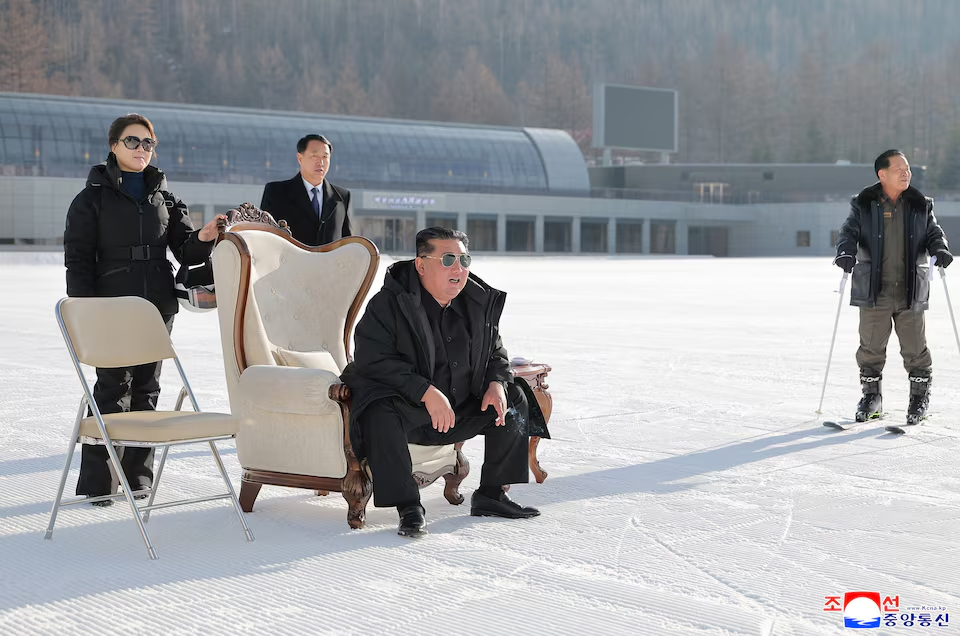
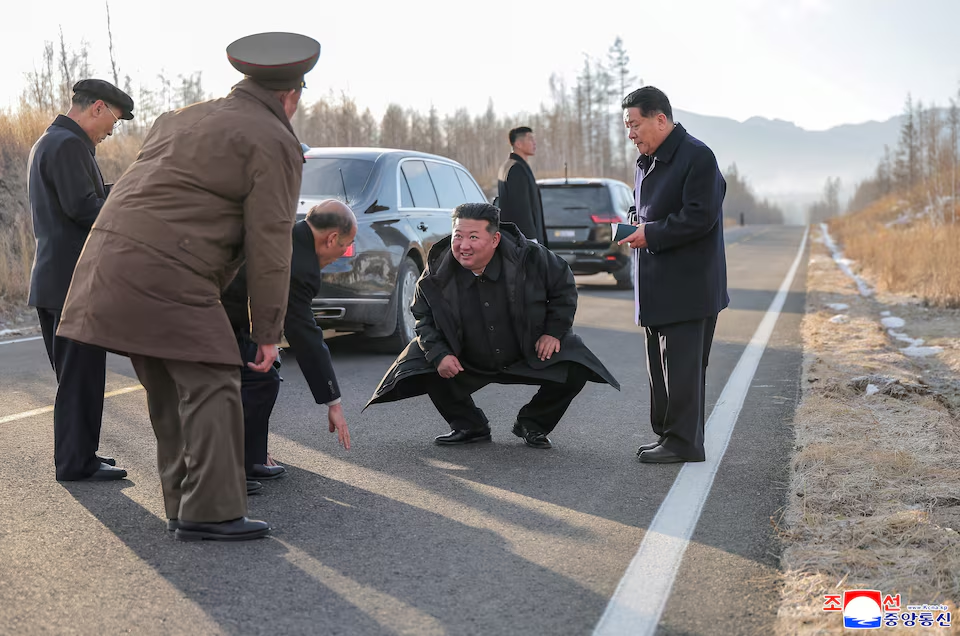
North Korean leader Kim Jong Un inspected the Samjiyon tourism development zone on November 15 and 16, 2026, according to the country’s state-run Korean Central News Agency (KCNA).
Located in Ryanggang Province near the Chinese border, Samjiyon is being transformed into a major mountain tourism destination built around Mount Paektu, one of the most historically and culturally significant places in the Korean Peninsula.
During the inspection, Kim visited several major infrastructure projects, including:
- Reconstruction and expansion of Samjiyon Airport.
- Development of a tourist railway.
- Construction of a mountain ski resort.
- Hotels, lodges and accommodation facilities.
- A rebuilt cable car station near Mount Paektu.
- Tourism infrastructure around Heaven Lake, the crater lake at the summit of the mountain.
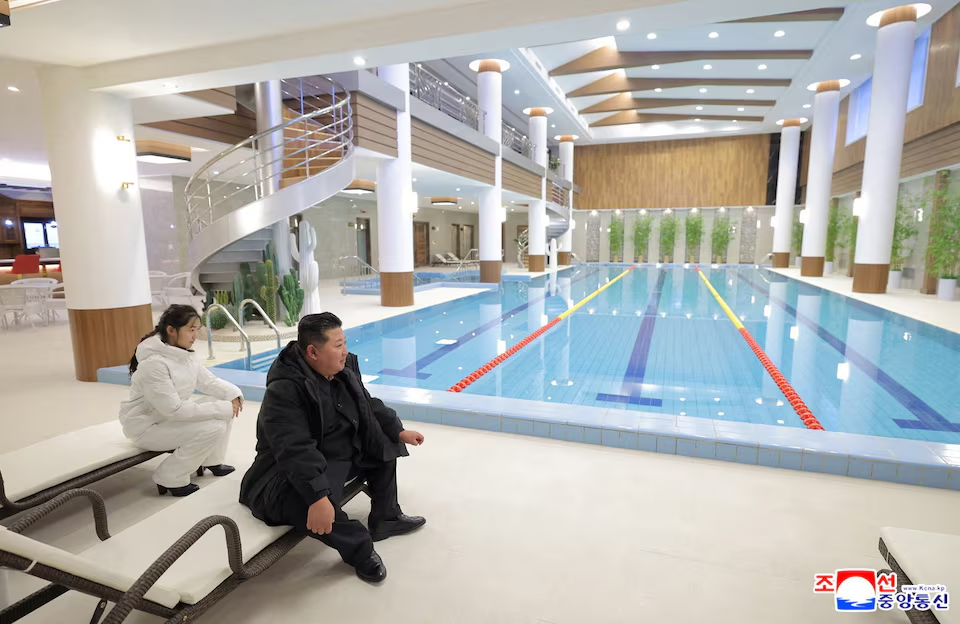
KCNA reported that Kim praised the quality of the resort’s hotels, lodges and housing. However, he also emphasized that the airport runway extension must meet standards established by the International Civil Aviation Organization (ICAO).
His instructions suggest that the government wants Samjiyon to become more than a domestic holiday destination. Improving airport infrastructure could eventually make it easier to bring organized groups of international visitors into the region.
Kim’s visit also highlighted the government’s intention to develop tourism as part of a broader strategy for regional economic development.
The inspection attracted additional attention because Kim was accompanied by his wife, Ri Sol Ju, and his daughter, Ju Ae. North Korean state media released photographs showing Ju Ae skiing at the resort, providing another glimpse of the family’s carefully managed public appearances.
South Korean intelligence officials have previously suggested that Ju Ae may be being prepared for a future leadership role, although her political future remains uncertain.
Why Samjiyon Is So Important to North Korea
Samjiyon is not an ordinary mountain town. Its location near Mount Paektu gives it considerable symbolic importance in North Korean national identity and political messaging.
Mount Paektu, also known as Baekdu Mountain, is an active volcanic mountain situated on the border between North Korea and China. Its summit contains Heaven Lake, a striking crater lake surrounded by mountainous terrain.
The mountain has deep significance in Korean history, mythology and national culture.
North Korean state ideology also associates Mount Paektu with the country’s revolutionary history and the Kim family’s political legitimacy. Official narratives describe the mountain as an important location connected to the country’s struggle against Japanese colonial rule.
Developing tourism around this landscape therefore serves two purposes.
First, it creates opportunities to attract visitors interested in mountain scenery, hiking, winter sports and cultural heritage.
Second, it allows the government to promote an important national symbol through tourism infrastructure and carefully managed visitor experiences.
North Korea began developing Samjiyon more systematically in 2018. The second phase of a major construction programme was completed in 2019, when Samjiyon was upgraded from a county to a city. Further construction continued into 2021 and beyond.
The government has built hotels, residential districts, transport infrastructure and winter recreation facilities as part of its longer-term development plans. The current expansion represents another stage in that strategy.
3. The Airport, Railway and Ski Resort: Building a Complete Tourism Destination
One of the most important aspects of the Samjiyon project is that North Korea is developing several connected facilities rather than simply constructing a hotel or tourist attraction.
A successful mountain tourism destination requires transportation, accommodation, food services, communications, healthcare and activities that can attract visitors throughout the year.
Kim’s latest inspection addressed many of these requirements.
Samjiyon Airport: Improving International Access
The airport reconstruction is particularly significant.
Kim reportedly ordered that the runway extension comply with International Civil Aviation Organization standards. This indicates that the government wants aviation infrastructure to meet internationally recognized technical requirements.
A modernized airport could reduce dependence on long road and rail journeys from other parts of North Korea.
It could also support organized international travel if foreign tourism becomes more accessible.
However, meeting international aviation standards does not automatically mean that the airport will receive regular international flights. Airlines, passenger demand, regulatory arrangements, security considerations and international restrictions would all influence its practical use.
The Tourist Railway: Connecting the Mountain Region
Rail transport is another essential part of the development plan.
A railway connecting Samjiyon with the wider transport network could make the region more accessible to domestic visitors and organized tour groups.
The area already has a railway connection to Hyesan. The approximately 70-kilometre line opened in 2019 and passes through forested mountain landscapes.
The latest tourism development plans include further railway improvements intended to support access to the growing resort area.
The Ski Resort: Attracting Winter Visitors
The ski facilities are intended to give Samjiyon a recognizable tourism product beyond its historical and political significance.
North Korea has previously developed winter sports facilities, including the Masikryong Ski Resort near Wonsan.
The new facilities in the Samjiyon area could appeal to visitors interested in skiing, snowboarding, mountain accommodation and winter landscapes.
The government has also emphasized hiking and climbing routes around Mount Paektu, which could attract visitors during warmer months.
If these activities become operational and accessible, the region could develop a broader seasonal tourism offering.
4. North Korea Wants Samjiyon to Become an All-Season Tourist Destination
Seasonality is a major challenge for mountain tourism.
Ski resorts depend heavily on winter conditions, while hiking and sightseeing destinations often attract more visitors during warmer months.
North Korea appears to be addressing this challenge by promoting Samjiyon as an all-season destination.
Its potential tourism products include:
| Season | Potential tourism activities |
|---|---|
| Winter | Skiing, snowboarding, winter scenery and mountain accommodation |
| Spring | Mountain sightseeing, cultural visits and photography |
| Summer | Hiking, climbing and visits to Mount Paektu |
| Autumn | Mountain scenery, nature tourism and cultural experiences |
The strategy could help improve hotel occupancy and generate revenue throughout the year.
However, the commercial success of an all-season resort depends on more than the number of attractions. Reliable transport, food supplies, electricity, heating, water, medical services and trained hospitality workers are equally important.
These requirements can be difficult to maintain in remote mountainous areas.
North Korea will also need to determine how much of the region can be made accessible to foreign visitors while maintaining its strict system of tourism supervision.
5. Can North Korea Attract International Tourists Again?
Tourism has long been an attractive potential source of foreign currency for North Korea.
Unlike many exports, tourism can generate income through accommodation, transport, food, guided excursions and visitor services.
However, the country’s tourism industry has experienced major interruptions.
North Korea closed its borders to most international visitors in early 2020 as the COVID-19 pandemic spread. The closure lasted for several years and disrupted travel businesses that had previously organized foreign visitor groups.
In 2024, the country began allowing selected Russian tourist groups to enter. In early 2025, some foreign visitors were also permitted to visit the Rason Special Economic Zone in the northeast.
That reopening was short-lived: foreign tour operators reported that visits to Rason were suspended again in March 2025.
The government has subsequently allowed carefully controlled tourism activity, particularly involving Russian visitors.
According to a United Nations report covering developments in 2025, North Korea opened the Wonsan-Kalma coastal tourist area to Russian visitors in July 2025. The report recorded 9,985 Russian nationals visiting North Korea during 2025, compared with 6,469 in 2024.
This illustrates an important point: North Korea is not necessarily trying to reopen tourism to everyone at once.
Instead, it appears to be pursuing a selective approach in which visitors are admitted under specific arrangements and travel conditions.
Russia is currently an especially important potential source market because of the growing political relationship between Moscow and Pyongyang.
China, historically North Korea’s most important tourism market, could also become significant if broader travel arrangements are restored.
6. Why Chinese Tourists Could Be Important to Samjiyon
Samjiyon’s location near the Chinese border gives it a geographical advantage.
China is North Korea’s largest trading partner and has historically accounted for a substantial share of its international visitors.
Chinese tourists could potentially reach northern North Korea through organized border crossings, rail connections or other approved travel arrangements.
However, geographical proximity does not guarantee that tourism will resume at scale.
Travel policies, border procedures, diplomatic relations and North Korea’s own restrictions will determine whether Chinese visitors can access the region.
There is also a commercial question: whether Chinese travelers will find the destination attractive enough to compete with established mountain resorts in China and elsewhere in Asia.
North Korea could differentiate Samjiyon through its combination of mountain scenery, political history, cultural significance and highly controlled visitor experiences.
Nevertheless, the country will need to demonstrate that it can provide a reliable tourism product rather than relying exclusively on curiosity about visiting one of the world’s most isolated countries.
7. Russia and North Korea Strengthen Their Political Relationship
While Kim was inspecting the tourism development project, another important diplomatic development was taking place in Moscow.
Jo Yong Won, a senior member of North Korea’s ruling Workers’ Party, met Russian President Vladimir Putin.
Jo is a member of the Presidium of the Political Bureau and a secretary of the Workers’ Party’s Central Committee. His senior position makes the visit particularly significant.
According to Russian news agencies Interfax and TASS, Putin received the North Korean delegation and asked Jo to convey his best wishes to Kim.
Jo also met other senior Russian political figures, including Dmitry Medvedev, chairman of the United Russia Party, and State Duma speaker Vyacheslav Volodin.
The discussions reportedly focused on expanding cooperation under the comprehensive strategic partnership agreement signed by Putin and Kim in June 2024.
North Korean state media described the relationship as developing across political, economic, cultural, defence, security and diplomatic fields. Jo also criticized Washington’s policy toward Pyongyang at a Moscow forum.
The timing of the visit is important because it took place shortly before the Asia-Pacific Economic Cooperation (APEC) summit in Shenzhen, China.
The diplomatic activity has raised questions about whether North Korea could use the summit period to arrange additional high-level meetings.
8. The Russia–North Korea Strategic Partnership Goes Beyond Diplomacy
Russia and North Korea have significantly strengthened their relationship since Russia launched its full-scale invasion of Ukraine in February 2022.
Their partnership became more formal in June 2024, when Putin visited Pyongyang and signed a Comprehensive Strategic Partnership Treaty with Kim.
The agreement includes a mutual-defence provision requiring assistance if either country is subjected to armed attack.
The relationship has also developed through military and economic cooperation.
North Korea has supplied Russia with ammunition, artillery shells and ballistic missiles, according to assessments by Ukraine, South Korea and Western governments.
North Korean military personnel have also been deployed to support Russian forces, particularly in Russia’s Kursk region.
The United States Congressional Research Service reported in September 2026 that North Korea had provided thousands of shipping containers of munitions, ballistic missiles and more than 10,000 troops in support of Russia’s war effort.
These developments have raised concerns among Western governments and Ukraine.
For Moscow, North Korean military assistance can help support its war effort. For Pyongyang, the relationship may provide financial benefits, diplomatic support, energy supplies and opportunities to obtain military knowledge or technology.
The precise terms of any exchanges remain difficult to establish independently.
This growing partnership also creates a complicated environment for international sanctions imposed on North Korea because of its nuclear weapons and ballistic missile programmes.
Tourism and military cooperation are different parts of the relationship, but both demonstrate that Pyongyang is seeking stronger economic and diplomatic connections with Moscow.
9. Could Putin and Kim Meet in China?
The timing of the Samjiyon inspection and Jo Yong Won’s Moscow visit has generated speculation about another possible meeting between Kim and Putin.
US President Donald Trump said on November 16 that he might meet Kim in China during his trip to attend the APEC summit in Shenzhen.
Separately, Kremlin spokesman Dmitry Peskov was quoted by Interfax as saying Putin could meet Kim if the North Korean leader also attended the summit.
These comments do not establish that Kim will travel to China or that any meeting has been formally arranged.
Nevertheless, the possibility is diplomatically significant.
A meeting involving Kim, Putin and Trump in the same period would attract considerable international attention.
It could create opportunities to discuss several major issues:
- North Korea’s nuclear and ballistic missile programmes.
- Russia’s military cooperation with Pyongyang.
- The war in Ukraine.
- US sanctions and North Korea’s international isolation.
- Regional security in Northeast Asia.
- The future of US–North Korea diplomatic engagement.
China would also have an important role in the broader diplomatic environment because it remains North Korea’s principal economic partner and a major regional power.
However, any potential meeting would face significant obstacles. North Korea has strengthened its strategic relationship with Russia, while the United States continues to oppose Pyongyang’s nuclear and missile programmes.
Kim would also need to decide whether renewed negotiations with Washington offer advantages that cannot be obtained through closer relations with Moscow and Beijing.
For now, a possible summit remains speculation rather than a confirmed diplomatic event.
10. Ju Ae’s Appearance Adds Another Political Dimension
Kim Jong Un’s daughter, Ju Ae, accompanied him during the Samjiyon inspection and appeared in photographs released by North Korean state media.
One photograph showed her skiing at the mountain resort.
Her public appearances have attracted international attention because she has increasingly appeared alongside her father during important military, political and economic events.
South Korean intelligence officials have previously assessed that she could be receiving preparation for a future leadership position.
However, North Korea has not officially announced that she is the designated successor.
Her appearance at Samjiyon is also relevant from a political communication perspective.
The photographs associate the Kim family with national development, modern leisure facilities and the country’s ambition to build new tourism destinations.
North Korean state media regularly use images of the leadership family to communicate political priorities and reinforce the government’s public narrative.
The skiing photographs therefore serve a symbolic purpose beyond simply documenting a family visit.
11. The Economic Challenges Behind North Korea’s Tourism Strategy
North Korea’s tourism ambitions face several structural obstacles.
Even if Samjiyon’s infrastructure is completed, turning it into a commercially successful destination will require overcoming significant difficulties.
International Sanctions
North Korea remains subject to extensive international sanctions related to its nuclear weapons and ballistic missile programmes.
Tourism itself is not universally prohibited, but restrictions affecting financial transactions, investment, transport and other commercial activities can complicate international business.
Foreign companies may also be reluctant to invest because of political and regulatory uncertainty.
Limited International Access
A tourism destination needs reliable connections to its source markets.
Samjiyon’s airport and railway improvements are important, but international flight availability, border arrangements and visitor permissions will determine how accessible the region actually becomes.
Infrastructure and Operating Costs
Mountain resorts require considerable resources.
Electricity, heating, water supply, telecommunications and road maintenance are particularly important in cold-weather destinations.
Building attractive hotels is only the first step. Keeping them operational and maintaining consistent service standards can be more difficult.
Restricted Visitor Freedom
North Korea operates a highly controlled tourism system.
Foreign visitors generally travel through approved arrangements, with restrictions on where they can go, what they can photograph and whom they can meet.
These conditions make the experience very different from conventional independent tourism.
Competition From Established Destinations
Samjiyon will compete with mountain tourism destinations in China, Japan, South Korea and other countries.
These destinations generally offer more established international transport networks, tourism services and independent travel options.
North Korea will need to identify what makes Samjiyon distinctive enough to attract repeat visitors.
12. Can Tourism Really Help North Korea’s Economy?
Tourism could provide North Korea with an additional source of foreign currency, but its contribution should not be exaggerated.
The country has a much broader economic challenge involving international sanctions, limited trade access, infrastructure constraints and its heavily state-controlled economic system.
Even a successful mountain resort would not resolve these structural problems.
However, tourism has several potential advantages.
Unlike some industrial exports, it can generate income through multiple services, including hotels, transport, restaurants, guides and entertainment.
It can also support employment in areas outside the country’s largest cities.
For the government, regional tourism development offers a visible way to demonstrate economic activity and infrastructure improvements.
Samjiyon is particularly useful in this regard because it combines a major national symbol with a large construction programme.
The government can present the project as evidence of regional development, improved living standards and the ability to create modern leisure facilities.
The actual economic benefits will depend on the number of visitors, the amount they spend, the cost of operating the facilities and the extent to which tourism revenue reaches local communities.
Without transparent economic data, it will be difficult for outside observers to determine whether the project is commercially successful.
13. What the Samjiyon Project Means for Northeast Asian Geopolitics
The latest developments highlight how tourism, diplomacy and security are increasingly connected in North Korea’s external relations.
The country is pursuing economic opportunities while strengthening its strategic relationship with Russia and maintaining its longstanding relationship with China.
At the same time, the possibility of renewed engagement with the United States remains an important diplomatic question.
These relationships are not necessarily mutually exclusive. Pyongyang could seek economic cooperation with China, political and military support from Russia, and selective negotiations with Washington.
However, the strengthening Russia–North Korea partnership may reduce the immediate incentives for Pyongyang to make concessions in negotiations with the United States.
It could also complicate security calculations for South Korea and Japan, both of which are concerned about North Korea’s weapons programmes and its military cooperation with Moscow.
For China, developments near its border also matter. A more active tourism zone in Samjiyon could create additional economic activity, but Beijing will remain attentive to regional security and stability.
The mountain resort is therefore part of a much larger picture.
North Korea’s tourism ambitions cannot be separated from the diplomatic relationships and international restrictions shaping its economy.
Conclusion: A Mountain Resort With Ambitions Beyond Tourism
Kim Jong Un’s inspection of Samjiyon demonstrates that North Korea continues to invest political attention in tourism as a potential source of economic development and international engagement.
The planned airport expansion, railway improvements, ski resort, hotels and Mount Paektu facilities suggest an ambition to create a modern mountain destination capable of attracting visitors throughout the year.
But the project faces substantial challenges.
International sanctions, limited access, weak external investment, infrastructure requirements and strict visitor controls could restrict its commercial potential.
At the same time, Jo Yong Won’s meeting with Vladimir Putin in Moscow highlights the growing strategic relationship between North Korea and Russia. The possibility of further diplomatic engagement during the APEC summit adds another layer of uncertainty.
For now, Samjiyon represents more than a tourism development project. It is also a showcase for North Korea’s regional development ambitions, a symbol of national identity and a potential gateway for carefully managed international visitors.
Whether the mountain destination becomes a meaningful economic success will depend on what happens after the construction photographs and official inspections: whether visitors can arrive, whether businesses can operate reliably and whether the country is willing to open its tourism industry beyond a narrow circle of approved travelers.
Frequently Asked Questions (FAQs)
1. Where is Samjiyon, and why is it important to North Korea?
Samjiyon is a city in Ryanggang Province in northern North Korea, close to the Chinese border and Mount Paektu. It is important because of its proximity to the mountain, which has deep historical, cultural and political significance in Korean national identity. The North Korean government is developing the area as a major mountain tourism destination.
2. What tourism facilities is North Korea building in Samjiyon?
The development programme includes the reconstruction and expansion of Samjiyon Airport, tourist railway infrastructure, ski facilities, hotels, lodges, accommodation, mountain hiking routes and improvements around Mount Paektu and Heaven Lake. The objective is to create an all-season mountain tourism destination.
3. Can foreign tourists visit North Korea in 2026?
Foreign tourism remains selective and subject to North Korean government decisions. The country has allowed certain Russian tourist groups and limited foreign tourism activity, but it has not returned to unrestricted international tourism. Travelers should check current government travel advisories and approved tour arrangements before considering a visit.
4. Why are North Korea and Russia strengthening their relationship?
North Korea and Russia signed a Comprehensive Strategic Partnership Treaty in June 2024 that includes a mutual-defence provision. Their cooperation has expanded across diplomacy, economics and military affairs. North Korea has supplied ammunition and missiles to Russia and deployed military personnel in support of Russian forces, according to Ukrainian, South Korean and Western assessments.
5. Could Kim Jong Un meet Donald Trump or Vladimir Putin in China?
A possible meeting was discussed after Trump said he might meet Kim during his November 2026 trip to China. Russian officials also indicated that Putin could meet Kim if the North Korean leader attended the APEC summit in Shenzhen. However, these comments did not confirm that Kim would travel to China or that either meeting had been formally arranged.
Sources Reuters