
Orlando has spent decades building one of the world’s most powerful tourism machines. But now, one of its biggest tourism investments is facing a very different question: does the region really need to spend another half-billion dollars to keep growing?
An Orange County tourism advisory panel has declined to advance a proposed $523 million expansion of the Orange County Convention Center, putting a major proposed investment on hold and opening a broader debate about how Orlando should spend its tourism-tax dollars.
The decision is more significant than a single construction project.
It raises questions about convention tourism, hotel-tax revenue, infrastructure, workforce housing, transportation and the long-term strategy for a destination that already attracts enormous numbers of visitors.
The panel’s recommendation does not permanently kill the expansion. The final decision belongs to the Orange County Board of County Commissioners, which is expected to consider the broader tourism-funding recommendations on August 25, 2026.
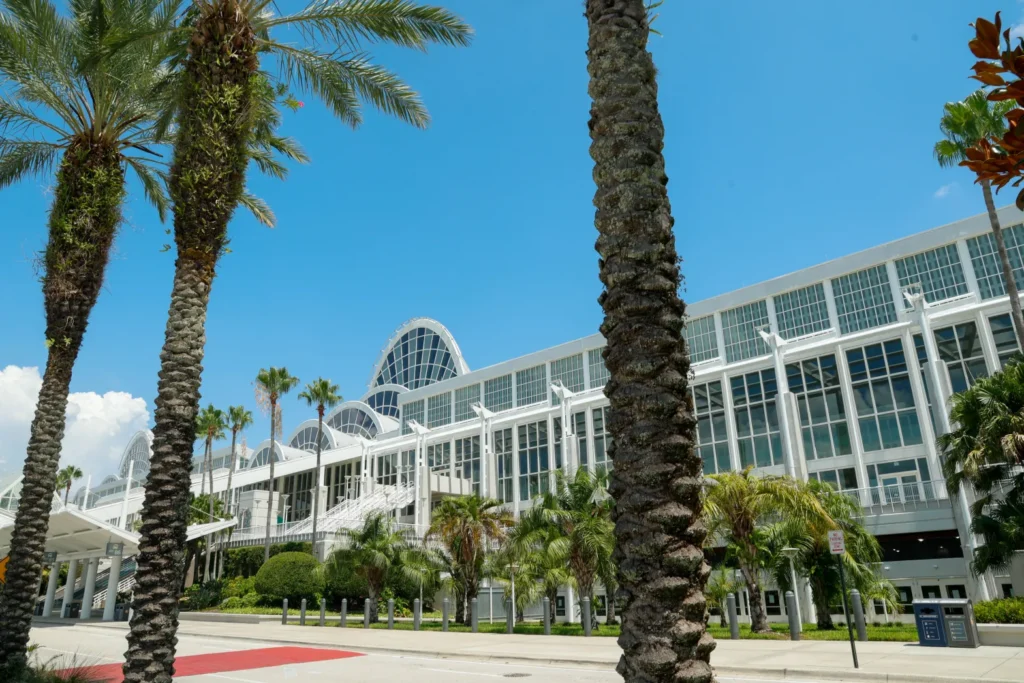
What Was the Proposed Convention Center Expansion?
The proposal was known as Phase 5B of the Orange County Convention Center expansion program.
The project called for a new multipurpose facility on the convention center’s International Drive campus.
The proposed addition would have included:
- 352,000 square feet of additional space;
- about 200,000 square feet of column-free multipurpose space;
- retractable seating for roughly 8,000 people;
- total seating capacity of up to 20,000;
- and a total project cost of approximately $540.8 million.
About $17.8 million had already been spent on design work, leaving approximately $523 million in the funding request before the panel.
Supporters argued that the project would help Orlando compete for larger conventions, meetings and events and generate additional visitor spending.
Opponents weren’t convinced the expected return justified the price.
And that disagreement is at the heart of the controversy.
Why the Convention Center Matters So Much to Orlando
Orlando’s tourism economy is not based exclusively on theme parks.
The convention industry is another major pillar.
The Orange County Convention Center is one of the largest convention facilities in the United States, with roughly 2.1 million square feet of exhibition space and a total complex of around 7 million square feet.
It sits in the heart of the International Drive tourism corridor, surrounded by hotels, restaurants, entertainment venues and other visitor businesses.
Convention visitors can be particularly valuable to destinations because business travelers often:
- stay multiple nights;
- spend money on restaurants;
- attend exhibitions and events;
- use transportation services;
- participate in entertainment;
- extend business trips into leisure vacations.
That makes convention infrastructure an important part of Orlando’s broader tourism ecosystem.
The Argument for Expansion
Supporters of Phase 5B essentially made a straightforward economic argument.
If Orlando doesn’t expand, competing convention destinations might win business instead.
Large conventions can require enormous amounts of contiguous event space.
Organizers increasingly want flexible facilities that can accommodate:
- trade shows;
- corporate meetings;
- sporting events;
- entertainment;
- exhibitions;
- large-scale conferences.
A modern multipurpose hall could therefore make Orlando more competitive when event organizers compare destinations.
Hotels and tourism businesses also benefit when large events fill rooms.
More conventions can mean:
hotel nights → restaurant spending → retail activity → transportation demand → local tax revenue.
That’s why representatives from the International Drive hospitality industry supported the expansion, arguing that the convention center functions as an economic engine for the region.
But the Opposition Asked a Different Question
The debate wasn’t simply about whether the expansion would generate economic activity.
The harder question was:
Would the additional economic activity justify $523 million in new tourism-tax spending?
One task-force member questioned the scale of the investment compared with the expected visitor increase.
He argued that the proposal would cost approximately half a billion dollars for an estimated 150,000 additional annual visitors, describing the resulting increase as relatively small compared with Orlando’s enormous overall visitor volume.
That argument highlights a growing challenge for mature tourism destinations.
At some point, adding another attraction, hotel or convention hall becomes less about creating tourism from scratch and more about fighting for incremental growth.
The Panel Wanted to See the Current Expansion Work First
Former Orange County Mayor Linda Chapin, who co-chaired the task force, expressed another concern.
Her position was essentially:
Finish the current work. Evaluate its results. Then decide whether another major expansion is necessary.
Rather than committing hundreds of millions of additional dollars immediately, she wanted the county to examine how the existing convention-center investment performs once completed.
That’s a fairly conservative approach to public spending.
It also reflects a broader issue with major tourism infrastructure:
Once construction begins, the political and financial pressure to keep expanding can become difficult to reverse.
Orlando Has Already Invested Billions
The discussion becomes even more significant when viewed historically.
The convention center has received roughly $3.129 billion in hotel-tax revenue since the Tourist Development Tax was established.
That doesn’t necessarily mean the money was wasted.
Far from it.
The convention center has become an important part of Orlando’s tourism economy.
But it does demonstrate how large the cumulative public investment has become.
The question is therefore no longer:
“Should Orlando build a convention center?”
It is:
“How much more should Orlando invest in convention infrastructure?”
What Is the Tourist Development Tax?
The Tourist Development Tax, commonly known as the TDT, is a tax imposed on certain short-term lodging transactions.
It is one of the most important funding mechanisms for tourism-related projects in Orange County.
The logic is relatively straightforward:
Visitors staying in hotels contribute to a tourism tax, and that revenue can then support projects intended to attract visitors and strengthen the tourism economy.
The system creates a feedback loop:
Visitors → hotel stays → tourism tax → tourism investment → more visitors.
But that model becomes more complicated when tourism is already enormous.
The Problem of Success
Orlando’s biggest tourism challenge may actually be its success.
The destination already has:
- world-famous theme parks;
- a huge hotel inventory;
- a major convention center;
- extensive entertainment infrastructure;
- an international airport;
- professional sports;
- restaurants and shopping;
- year-round tourism demand.
The region doesn’t need to convince the world that Orlando exists.
It needs to determine how to manage and improve an already massive tourism economy.
That changes the investment priorities.
Could Transportation Be a Better Investment?
This was one of the strongest arguments emerging from the debate.
Task-force members raised transportation and workforce housing as alternative priorities for tourism-tax revenue.
That’s important because visitors don’t experience a destination as a collection of individual projects.
They experience the entire system.
If a convention attendee spends an hour stuck in traffic, the convention center’s shiny new ballroom doesn’t solve the problem.
If hotel workers cannot afford housing near their jobs, businesses face staffing pressure.
If transportation infrastructure can’t keep pace with visitor growth, additional tourism can create congestion rather than prosperity.
Workforce Housing Is Becoming a Tourism Issue
Housing might sound unrelated to tourism.
It isn’t.
Hotels, restaurants, attractions and convention facilities require enormous numbers of workers.
Those workers need somewhere to live.
As housing costs rise, tourism businesses can struggle to recruit and retain employees.
That creates a strange contradiction:
A destination can attract millions of visitors while becoming increasingly difficult for the people serving those visitors to live in.
That is why the task force recommended that Orange County explore transportation and affordable housing as potential priorities.
More Tourists Aren’t Always Better
Traditional tourism economics often focuses on visitor growth.
More visitors generally mean:
- more hotel occupancy;
- more restaurant spending;
- more attraction revenue;
- more retail sales;
- more jobs.
But there’s a point where additional visitors create diminishing returns.
More people can also mean:
- heavier traffic;
- crowded attractions;
- higher housing demand;
- greater infrastructure costs;
- pressure on public services;
- increased environmental impacts.
This is the same challenge now confronting many major destinations around the world.
Growth itself isn’t necessarily the goal anymore. Sustainable growth is.
The Convention Industry Has Changed
The post-pandemic convention business is also different from the one Orlando knew a decade ago.
Companies have become more comfortable with:
- hybrid events;
- virtual meetings;
- smaller gatherings;
- regional conferences;
- shorter business trips.
At the same time, large in-person events remain valuable because exhibitions and conferences provide something online meetings cannot fully replicate:
face-to-face networking.
That makes convention centers neither obsolete nor guaranteed winners.
Their future depends on how event organizers’ needs evolve.
Flexible Space May Be More Valuable Than Bigger Space
The proposed Phase 5B was designed around multipurpose flexibility.
That is strategically important.
Convention organizers increasingly want venues that can quickly transform between:
- exhibitions;
- concerts;
- sporting events;
- corporate conferences;
- food events;
- entertainment productions.
The most useful building isn’t necessarily the largest building.
It may be the one that can accommodate the greatest variety of events efficiently.
Orlando Is Competing With Other Convention Cities
Orlando isn’t operating in isolation.
It competes with major convention destinations across the United States, including cities such as:
- Las Vegas;
- Chicago;
- Atlanta;
- Miami;
- Dallas;
- New Orleans;
- San Diego;
- Phoenix;
- Nashville.
These destinations are also investing heavily in convention facilities, hotels and transportation.
If Orlando pauses while competitors expand, it risks losing some future business.
That is the strongest argument in favor of Phase 5B.
But Construction Costs Matter Too
A $523 million project today is not the same proposition as a $523 million project several years ago.
Construction costs, labor expenses, financing conditions and long-term maintenance all affect the true economic cost of major infrastructure.
The headline number also isn’t necessarily the lifetime cost.
A public project eventually requires:
- maintenance;
- utilities;
- staffing;
- repairs;
- upgrades;
- technology replacements.
The economic calculation should therefore look far beyond the opening ceremony.
Orlando Has Been Here Before
The convention center has expanded repeatedly since its original opening.
The facility began operating in the early 1980s and underwent major expansions over subsequent decades.
The largest development phases transformed it into one of the country’s dominant convention complexes.
That history explains why expansion supporters believe continued investment is normal.
But history also provides the opposing argument:
The facility has already undergone enormous expansion.
At some point, the question becomes whether the next dollar produces more value elsewhere.
What Happens to the $523 Million?
For now, the proposed expansion does not move forward through the task force’s recommendation.
But the money isn’t simply being transferred automatically to another project.
The task force was an advisory body.
The Orange County Board of County Commissioners has the authority to make the final decisions about the tourism-tax funding.
The county commission is expected to consider the recommendations on August 25, 2026.
So the convention-center expansion is better described as rejected by the advisory panel, rather than permanently canceled by Orange County.
A Much Bigger Tourism Funding Battle Is Underway
The convention center was only one of many competing proposals.
The task force reviewed a large collection of requests seeking access to the county’s tourism-tax reserves.
Among the projects that advanced were proposals involving:
- the Dr. Phillips Center for the Performing Arts;
- an Eatonville museum;
- Camping World Stadium;
- a children’s museum;
- an arts festival;
- a natural history museum;
- golf and tourism infrastructure;
- ecotourism;
- natural-resource tourism.
Other major proposals, including a potential $975 million Major League Baseball stadium project, also failed to advance.
That means the debate isn’t simply:
Convention center vs. nothing.
It is:
Convention center vs. a long list of competing tourism investments.
The Dr. Phillips Center Creates an Interesting Contrast
The task force advanced the Dr. Phillips Center for the Performing Arts’ $750 million master-plan request, although it did not attach a specific dollar allocation to that recommendation.
That distinction is important.
The panel wasn’t necessarily rejecting large tourism projects on principle.
Instead, it was evaluating what kinds of investments should receive priority.
Arts and culture can also function as tourism infrastructure.
A destination that offers more than theme parks can attract:
- cultural tourists;
- convention attendees;
- affluent travelers;
- repeat visitors;
- residents seeking entertainment.
Tourism Is Becoming More Diversified
Orlando’s tourism identity has traditionally been dominated by theme parks.
But the destination has steadily expanded into:
- conventions;
- sports;
- arts;
- entertainment;
- dining;
- outdoor recreation;
- shopping;
- cultural tourism.
That diversification could become increasingly important.
If one segment slows, another can help stabilize the tourism economy.
The Baseball Stadium Debate Shows the Scale of the Challenge
The proposed Orlando Dreamers MLB stadium request reportedly sought $975 million in tourism-tax support.
That figure is almost twice the requested convention-center expansion funding.
The fact that multiple projects of this scale are competing for tourism dollars demonstrates the extraordinary financial pressure surrounding Orlando’s tourism infrastructure.
There simply isn’t enough money to fund every ambitious proposal.
Choices have to be made.
A New Question for Orlando: What Does “Tourism Development” Mean?
Historically, tourism development has often meant:
Build something that attracts visitors.
Today, the definition may be changing.
Tourism development can also mean:
Improve the infrastructure that allows visitors and residents to move, work and live successfully.
That includes:
- transportation;
- housing;
- public spaces;
- cultural institutions;
- environmental assets;
- pedestrian infrastructure;
- convention facilities.
The tourism economy doesn’t exist separately from the community.
It sits on top of it.
The Resident Experience Is Becoming More Important
A destination that is wonderful for tourists but difficult for residents eventually creates problems.
Residents provide the workforce.
They operate restaurants.
They drive buses.
They clean hotel rooms.
They staff attractions.
They maintain infrastructure.
They also vote.
That means tourism policy increasingly needs to answer two questions simultaneously:
Does this help visitors?
and
Does this improve life for the people who live here?
Could Saying “No” Actually Strengthen Orlando’s Tourism Strategy?
Rejecting a major project can sometimes be interpreted as anti-growth.
But that’s not necessarily what happened here.
The panel’s position can also be viewed as a demand for better evidence.
Instead of automatically approving another large expansion, officials can wait and measure:
- convention bookings;
- hotel occupancy;
- visitor spending;
- event demand;
- existing facility utilization;
- transportation impacts;
- economic returns.
Then they can decide whether additional capacity is justified.
That’s not anti-tourism.
It’s data-driven tourism planning.
What Should Orlando Measure?
Before committing another half-billion dollars, officials could examine several indicators.
Convention-center utilization
How frequently is existing space fully booked?
Lost business
How many conventions are actually being rejected because Orlando lacks space?
Economic impact
How much visitor spending does each additional convention generate?
Hotel demand
Are additional convention visitors filling rooms that would otherwise remain empty?
Transportation capacity
Can the region handle additional convention traffic?
Workforce availability
Can local businesses staff the increased demand?
Return on investment
How long would it take tourism-tax revenue to justify the public investment?
These questions turn an emotional debate into an economic one.
The Future of Orlando Tourism May Be About Quality, Not Just Quantity
The tourism industry is entering a more mature phase.
For decades, the objective was straightforward:
Bring more people.
Now the industry has to ask:
Bring which people, at what times, spending how much, using what infrastructure, and generating what long-term benefit?
That is a much more sophisticated tourism strategy.
Orlando’s Next Tourism Era Could Look Different
The rejection of Phase 5B does not mean Orlando is abandoning conventions.
It may simply mean the destination is entering a period of reassessment.
The next wave of tourism investment could place greater emphasis on:
- improving existing infrastructure;
- transportation;
- workforce housing;
- cultural attractions;
- sports;
- environmental tourism;
- visitor experience;
- technological upgrades;
- smarter use of existing convention space.
That could ultimately produce a more resilient tourism economy.
Final Thoughts
The Orange County tourism panel’s decision to reject the proposed $523 million convention-center expansion is about much more than a building.
It represents a broader debate over what Orlando’s next generation of tourism growth should look like.
The convention center remains a crucial part of Central Florida’s visitor economy. Supporters have a legitimate argument that modern facilities are necessary to compete for major conventions and protect Orlando’s position in the global meetings industry.
But opponents also have a compelling question:
When a destination already attracts enormous numbers of visitors, should another half-billion dollars go toward attracting even more—or should some of that investment address the infrastructure problems created by tourism’s success?
The answer could shape Orlando’s priorities for years.
For now, the convention-center expansion has hit a significant roadblock. The final decision remains with Orange County commissioners, who are expected to review the tourism-funding recommendations later this month.
And perhaps the most important lesson is this:
Orlando doesn’t have a tourism problem. It has a tourism-management challenge.
The city already knows how to attract visitors.
The harder task now is deciding how to make billions of tourism dollars work better—for visitors, businesses and the residents who call Central Florida home.
5 Frequently Asked Questions
1. Why did the Orange County tourism panel reject the convention-center expansion?
The Tourist Development Tax Citizen Advisory Task Force declined to advance the proposed $523 million Phase 5B expansion. Concerns included the size of the investment, the expected incremental visitor benefit and whether the county should evaluate the performance of existing convention-center investments before committing additional tourism-tax money.
2. Is the Orange County Convention Center expansion permanently canceled?
No. The task force is an advisory body and does not have final spending authority. The Orange County Board of County Commissioners is expected to make the final tourism-funding decisions, with a meeting scheduled for August 25, 2026.
3. What would the $523 million expansion have included?
The proposed Phase 5B project called for roughly 352,000 square feet of new space, including about 200,000 square feet of column-free multipurpose space, retractable seating for approximately 8,000 people and total seating capacity of up to 20,000.
4. Where does the money for tourism projects come from?
A major source is Orange County’s Tourist Development Tax, commonly called the hotel tax. The tax generates revenue from qualifying short-term lodging stays, which can then be used for eligible tourism-related purposes.
5. What could happen to Orlando’s tourism strategy if the expansion doesn’t proceed?
Orlando could place greater emphasis on improving existing facilities, transportation, workforce housing, cultural attractions, sports, environmental tourism and other visitor infrastructure. The decision could also encourage officials to measure the economic return of existing investments before approving another major convention-center expansion.
Sources Orlando Sentinel