
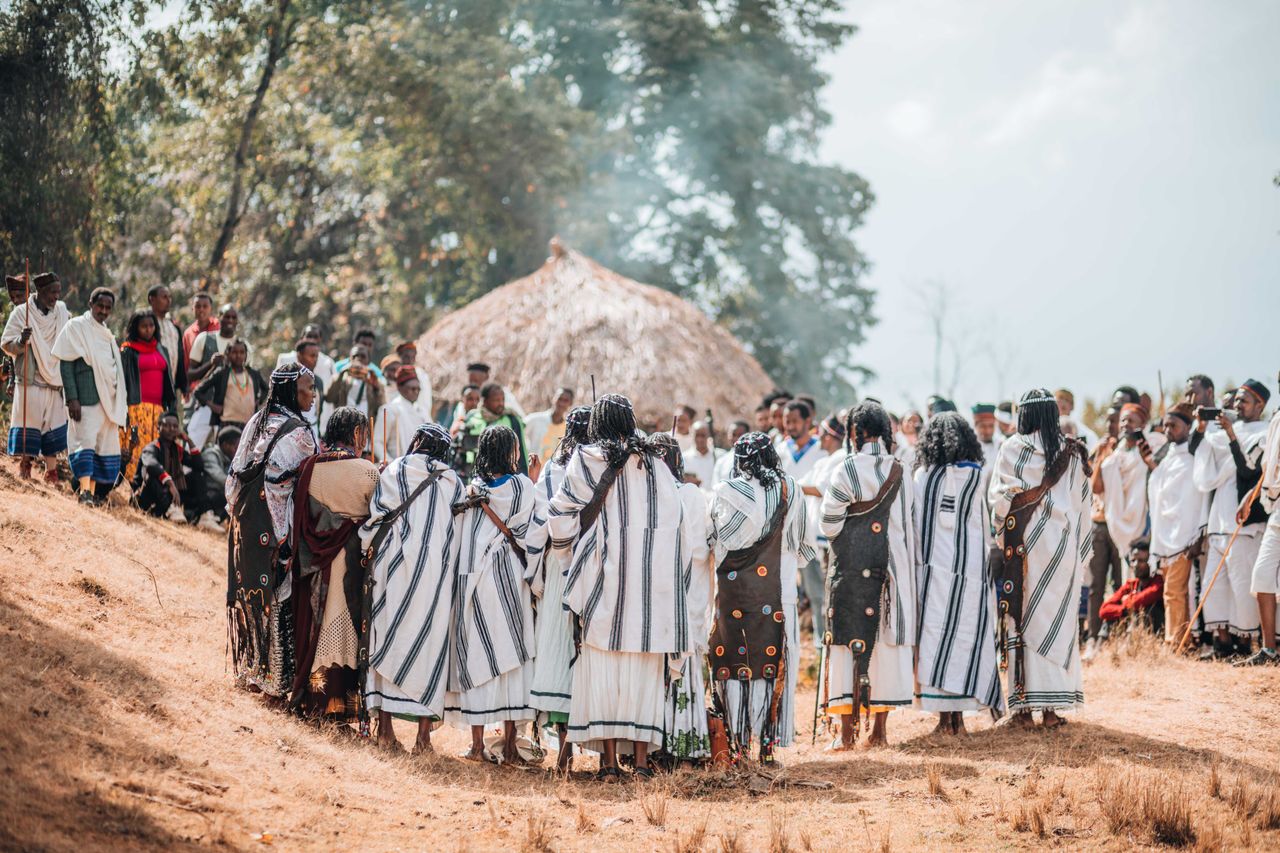
A language can disappear without a single dramatic moment. It can happen quietly — when children stop learning it, when elders have no one to speak with, when schools teach only another language, or when digital technology has no place for it.
That is why Indigenous language revitalization is about much more than preserving words. It is about protecting cultural identity, traditional knowledge, history, relationships with the land, and the ability of communities to pass knowledge from one generation to the next.
UNESCO has increasingly emphasized the central role of Indigenous practitioners and communities in this work. Rather than treating endangered languages simply as historical artifacts, language revitalization efforts increasingly focus on putting languages back into everyday use.
The challenge is enormous. But so is the opportunity.

Why Indigenous Languages Are Disappearing
Thousands of languages are spoken around the world, but many face serious threats.
Indigenous languages have often been weakened by historical forces including:
- Colonization
- Forced assimilation
- Residential and boarding school systems
- Restrictions on Indigenous cultural practices
- Displacement from traditional lands
- Discrimination
- Urbanization
- Economic pressures
- Dominance of national and international languages
- Lack of educational resources
- Limited representation in media and technology
In many communities, older generations may still speak an Indigenous language fluently while younger generations primarily use a dominant national language.
Once that transmission between generations breaks down, language loss can accelerate dramatically.
A language that once took centuries to develop can potentially disappear within just a few generations.
A Language Is More Than a Communication System
One of the biggest misunderstandings about endangered languages is the idea that losing a language simply means losing another way to say the same things.
It is far more complicated.
Languages contain concepts, classifications, metaphors and relationships that reflect the experiences of the people who speak them.
A language may encode detailed knowledge about:
- Plants
- Animals
- Seasons
- Weather
- Geography
- Traditional medicine
- Agriculture
- Navigation
- Kinship
- Spiritual practices
- Community responsibilities
- Local ecosystems
When a language disappears, some of that knowledge can become much harder to access.
This is particularly significant for Indigenous communities whose languages developed in close relationship with specific landscapes over hundreds or thousands of years.
Indigenous Communities Must Lead Revitalization
One of the most important principles emerging from modern language-revitalization work is that Indigenous communities should not be treated merely as subjects of research.
They are the knowledge holders, speakers, teachers and decision-makers.
Outside researchers can provide useful tools and expertise, but revitalization ultimately needs community ownership.
That can involve:
- Elders
- Fluent speakers
- Teachers
- Parents
- Young people
- Indigenous scholars
- Artists
- Community organizations
- Cultural leaders
The strongest programs tend to connect these groups rather than placing language learning entirely inside a classroom.
Elders Play a Critical Role
In many Indigenous communities, fluent speakers are disproportionately represented among older generations.
That makes elders incredibly important to revitalization.
They can provide:
- Pronunciation
- Vocabulary
- Traditional stories
- Oral histories
- Cultural context
- Songs
- Place names
- Ceremonial knowledge
- Traditional expressions
But there is also an urgency.
If fluent speakers pass away before their knowledge has been transferred to younger generations, communities may lose irreplaceable information.
This is why recording and intergenerational teaching can be so important.
Young People Are the Future of Language Revitalization
A language cannot survive indefinitely if only elders speak it.
Young people therefore sit at the center of revitalization efforts.
Successful programs increasingly try to make Indigenous languages relevant to young people’s everyday lives rather than presenting them solely as something from the past.
That can mean using the language in:
- Schools
- Social media
- Music
- Film
- Games
- Apps
- Sports
- Community events
- Children’s books
- Podcasts
- Online video
The objective is simple:
Make the language useful, visible and normal.
The Classroom Matters — But It Isn’t Enough
Schools can provide an important foundation for language learning.
Indigenous-language education can give children structured exposure to:
- Vocabulary
- Grammar
- Reading
- Writing
- Pronunciation
- History
- Cultural knowledge
But classroom instruction alone cannot guarantee language survival.
A child might spend several hours each week learning an Indigenous language at school and then spend the rest of the week using another language at home and online.
For revitalization to succeed, the language ideally needs to move beyond the classroom.
That means creating opportunities to speak it with family and community members.
The Home Is One of the Most Important Classrooms
Language transmission traditionally happens naturally between generations.
Parents speak to children.
Grandparents speak to grandchildren.
Children hear conversations and gradually absorb vocabulary, grammar and pronunciation.
When that process stops, rebuilding it can be difficult.
Language revitalization programs therefore increasingly encourage families to incorporate Indigenous languages into everyday routines.
Simple activities can matter:
- Greeting children in the language
- Naming household objects
- Cooking together
- Telling bedtime stories
- Singing songs
- Talking about weather
- Using traditional place names
- Practicing family introductions
The language does not have to be perfect.
Regular use is more important than perfection.
Technology Is Changing the Revitalization Game
Technology has created new possibilities for Indigenous language revitalization.
A language that once depended almost entirely on physical communities can now have a digital presence.
Communities are developing:
- Online dictionaries
- Language-learning apps
- Digital archives
- Keyboard tools
- Translation resources
- Educational websites
- Recorded interviews
- Online courses
- Digital storytelling projects
- Social media content
This is particularly important for younger generations who spend significant portions of their lives online.
If a language exists only in books, young people may struggle to connect with it.
If it exists on their phones, computers and social platforms, it becomes part of contemporary life.
Artificial Intelligence Creates Both Opportunities and Risks
The rise of artificial intelligence introduces another major question.
AI systems can potentially help communities create:
- Speech-recognition tools
- Digital dictionaries
- Language-learning applications
- Translation assistance
- Pronunciation tools
- Searchable archives
- Educational materials
But Indigenous languages present unique challenges.
Many have relatively small datasets compared with languages such as English, Spanish or Mandarin.
That means AI systems may lack sufficient high-quality training material.
More importantly, language data can contain culturally sensitive information.
Communities need to decide:
Who owns the data? Who can access it? How can it be used?
Technology should support Indigenous communities rather than taking control of their cultural knowledge.
Digital Preservation Is Not the Same as Revitalization
Recording a language does not automatically save it.
A digital archive might preserve thousands of hours of speech, but a language can still cease to be spoken in everyday life.
That distinction is crucial.
Documentation preserves evidence of a language.
Revitalization restores its use.
Both are valuable, but they serve different purposes.
A successful revitalization program therefore needs to move from archives to people.
UNESCO’s Role
UNESCO has played a major international role in raising awareness about linguistic diversity and endangered languages.
Its work includes promoting multilingualism, supporting language-related initiatives and bringing Indigenous practitioners and international organizations into conversations about language preservation and revitalization.
UNESCO’s approach increasingly recognizes that Indigenous communities possess expertise that cannot simply be replaced by outside academic research.
The organization has also used international initiatives to draw attention to the scale of language loss.
The International Decade of Indigenous Languages
One of the most significant global initiatives is the International Decade of Indigenous Languages, 2022–2032.
The initiative aims to raise awareness about Indigenous languages and mobilize action to protect and revitalize them.
The decade recognizes that language revitalization is connected to broader issues including:
- Human rights
- Cultural diversity
- Education
- Indigenous self-determination
- Sustainable development
- Intergenerational knowledge
- Cultural heritage
The goal is not simply to produce reports about endangered languages.
It is to encourage practical action.

Why Language Rights Matter
Language revitalization is also a question of rights.
People should be able to maintain connections with their cultural and linguistic heritage.
For Indigenous peoples, language can be deeply connected to identity and community belonging.
Policies that prevent or discourage people from using their own language can therefore have consequences far beyond communication.
Supporting Indigenous languages can involve ensuring access to:
- Education
- Public services
- Cultural institutions
- Media
- Government information
- Community programs
The exact needs differ from one community to another.
Traditional Place Names Are Part of Language Revitalization
One often-overlooked aspect of language preservation is geography.
Indigenous place names can carry information about:
- Historical events
- Natural features
- Traditional land use
- Animals
- Plants
- Travel routes
- Cultural relationships
Restoring Indigenous place names can therefore be both a linguistic and cultural act.
A map containing Indigenous names tells a different story about a landscape than a map using only names imposed during colonization.
Storytelling Keeps Language Alive
Traditional stories can be powerful language-learning tools.
Stories provide context.
Instead of memorizing isolated vocabulary, learners encounter words inside narratives.
They hear:
- Sentence structures
- Expressions
- Humor
- Character descriptions
- Cultural references
- Traditional knowledge
Storytelling also creates an emotional connection to the language.
People are more likely to remember a word when it is connected to a meaningful story than when it appears on a vocabulary list.
Songs Can Preserve Language Too
Music provides another powerful pathway.
Songs can help learners practice:
- Pronunciation
- Rhythm
- Vocabulary
- Repetition
- Memory
Traditional songs may also carry cultural knowledge that cannot easily be separated from the language itself.
Contemporary Indigenous musicians are taking this further by incorporating Indigenous languages into modern genres.
That sends an important message:
An Indigenous language does not belong only to the past.
It can be part of today’s culture.
Indigenous Media Is Becoming More Important
Film, television, radio and online video can dramatically increase language visibility.
A language heard on screen becomes normalized.
Children can see characters speaking it.
Teenagers can hear musicians using it.
Adults can encounter it in news, documentaries and entertainment.
Media therefore creates something that classrooms cannot easily provide:
constant cultural presence.
Why Representation Matters
If a language appears only in ceremonies or history lessons, young people may associate it with the past.
But when it appears in comedy, music, sports, entertainment and everyday conversation, it becomes part of modern identity.
That distinction matters.
Revitalization is not about freezing a language in its historical form.
Languages naturally evolve.
New words can emerge for:
- Smartphones
- Internet
- Video games
- Social media
- Artificial intelligence
- Modern transportation
- Contemporary politics
A living language needs the ability to describe the modern world.
Revitalization Does Not Mean Rejecting Other Languages
Another common misconception is that protecting an Indigenous language requires rejecting a national or international language.
That is not necessarily the case.
Multilingualism can be an advantage.
A child can speak an Indigenous language at home, a national language at school and another international language for travel or work.
The goal is not to eliminate other languages.
It is to ensure that Indigenous languages have the space and support necessary to survive alongside them.
The Economic Argument Is Also Important
Language revitalization is sometimes discussed exclusively as cultural preservation.
But there can also be economic benefits.
Language skills can support employment in:
- Education
- Government
- Cultural organizations
- Broadcasting
- Tourism
- Translation
- Research
- Technology
- Community services
Cultural tourism can also benefit from Indigenous-language knowledge when it is community-led and respectful.
But economic benefits should complement cultural goals rather than replacing them.
The Biggest Challenge: Creating New Speakers
Ultimately, the number that matters most is not how many historical recordings exist.
It is how many people can actually use the language.
A language is healthier when children learn it.
It becomes stronger when teenagers use it with friends.
It becomes sustainable when parents speak it to their children.
And it becomes truly revitalized when people can use it naturally in everyday life.
That is the difficult part.
What Successful Revitalization Can Look Like
Different communities require different strategies, but successful programs often share several characteristics.
They tend to have:
Strong community leadership
Programs work best when communities determine their own goals.
Intergenerational participation
Elders and younger speakers learn and work together.
Consistent education
Language instruction is available over many years rather than as a short-term project.
Everyday usage
The language appears outside classrooms.
Digital resources
Technology makes learning easier and expands access.
Government support
Stable funding and policy support allow programs to continue.
Cultural integration
Language learning is connected to history, land, traditions and identity.
There Is No One-Size-Fits-All Solution
One of the most important lessons from Indigenous language revitalization is that every language situation is different.
Some languages still have thousands of fluent speakers.
Others may have only a handful.
Some communities have extensive written materials.
Others depend heavily on oral transmission.
Some languages have standardized writing systems.
Others have multiple spelling conventions or are primarily spoken.
The revitalization strategy therefore needs to match the community.
What works for one Indigenous nation may be completely inappropriate for another.
The Question of Ownership
Language revitalization also raises difficult questions about intellectual property and cultural ownership.
Researchers and technology companies may want access to recordings, dictionaries or linguistic datasets.
But Indigenous communities may have legitimate concerns about:
- Commercial exploitation
- Unauthorized publication
- Sacred knowledge
- Misrepresentation
- Data ownership
- Artificial intelligence training
- Cultural appropriation
Responsible language work must therefore include clear consent and community governance.
The people whose heritage is being documented should have a meaningful say in what happens to that material.
Why the Next Generation Matters Most
The coming decades could determine the future of many Indigenous languages.
If today’s children become fluent speakers, the language has a much stronger chance of surviving.
If children never acquire the language, documentation alone may not be enough.
That makes the current period particularly important.
The International Decade of Indigenous Languages provides a global framework, but the real work happens locally — in homes, schools, communities, cultural centers and increasingly on digital platforms.
A Language Can Come Back
Language loss can feel irreversible.
But revitalization efforts around the world have demonstrated that languages can recover when communities have the resources, political support and determination to rebuild transmission.
The process is rarely quick.
It may take decades.
But revitalization does not require turning back the clock.
It means creating a future in which an Indigenous language can once again be spoken naturally by new generations.
That is perhaps the most powerful definition of language preservation:
not keeping a language behind glass, but giving it a future.
Conclusion
The work being supported and highlighted by UNESCO reflects a broader shift in how the world thinks about Indigenous languages.
These languages are not relics.
They are living systems of knowledge, identity, history and culture.
Their survival depends on more than dictionaries and archives. It requires children learning from elders, families using languages at home, teachers creating effective programs, communities producing modern media and technology being developed responsibly.
The International Decade of Indigenous Languages offers an important opportunity to turn global attention into practical action.
But ultimately, the future of an Indigenous language is decided in everyday moments.
A grandparent speaking to a child.
A teacher greeting students.
A musician writing a song.
A teenager posting online.
A community restoring an old place name.
A family choosing to use its ancestral language around the dinner table.
Each conversation is small.
Together, they can determine whether a language disappears — or lives for another thousand years.
Frequently Asked Questions
1. Why are Indigenous languages important?
Indigenous languages carry cultural identity, traditional knowledge, history, oral traditions and relationships with land and community. Losing a language can therefore mean losing unique ways of understanding and describing the world.
2. How many Indigenous languages are endangered?
There is no single universally agreed number because estimates depend on how languages and dialects are classified and how vitality is measured. However, UNESCO and other international organizations have warned that a significant proportion of the world’s languages are at risk, with Indigenous languages particularly vulnerable.
3. How can Indigenous languages be revitalized?
Effective approaches can include community-led language programs, Indigenous-language schools, family transmission, elder-youth programs, cultural activities, storytelling, music, media, digital tools and government support. The most appropriate combination depends on the individual community.
4. Can technology help save Indigenous languages?
Yes. Digital dictionaries, recordings, language-learning applications, online courses, speech technologies and social media can make languages more accessible. However, technology must be developed with community consent and respect for Indigenous ownership and cultural protocols.
5. What is the International Decade of Indigenous Languages?
The International Decade of Indigenous Languages runs from 2022 to 2032. It is a global initiative designed to raise awareness, encourage policy action and support efforts to protect, preserve and revitalize Indigenous languages around the world.

Sources UNESCO