
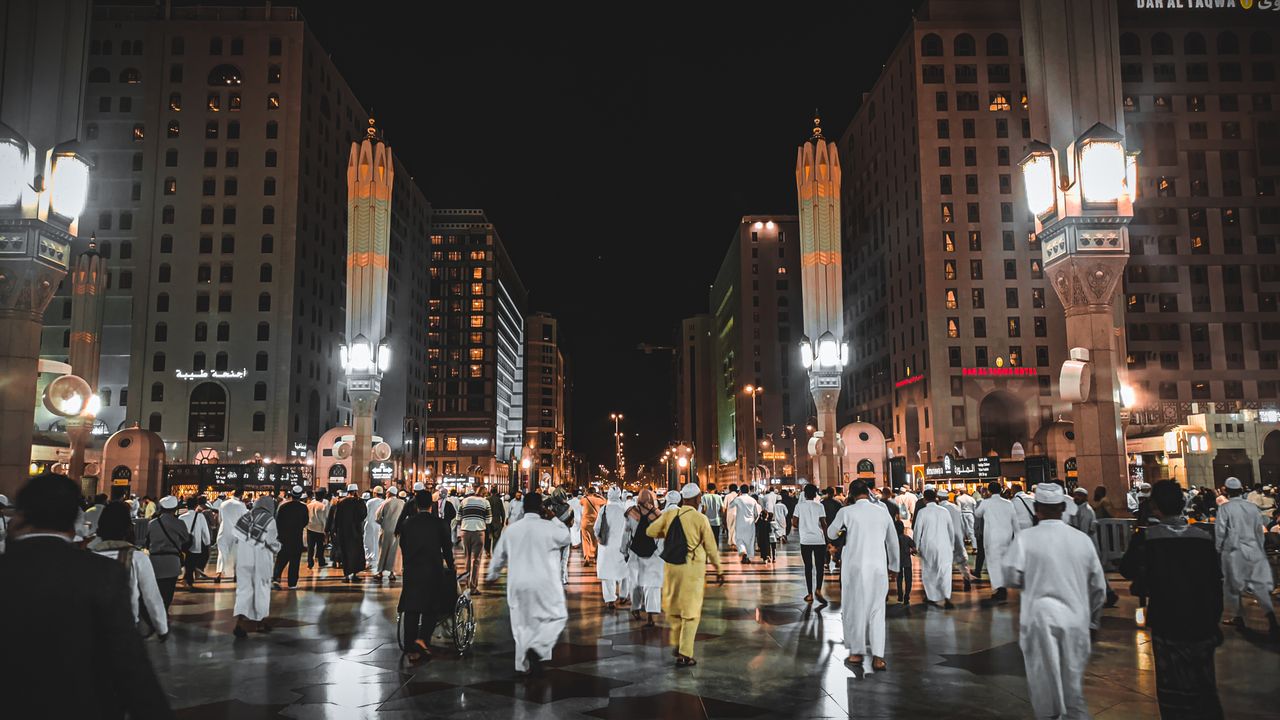
Saudi Arabia’s tourism transformation is entering a new phase.
The Kingdom’s licensed tourism hospitality facilities increased by 17.9% year on year in the second quarter of 2026, reaching 6,278 establishments compared with 5,326 a year earlier, according to data from the General Authority for Statistics. The expansion came as Saudi Arabia continued adding accommodation capacity to support its rapidly growing tourism industry.
But there is an important detail behind the headline.
While the supply of hotels, serviced apartments and other hospitality facilities is growing rapidly, occupancy rates and average room prices declined during the same period.
That combination tells a more interesting story about Saudi Arabia’s tourism ambitions. The Kingdom is not simply responding to existing demand. It is building a much larger hospitality ecosystem in anticipation of future visitor growth.
The strategy is closely linked to Saudi Vision 2030, the Kingdom’s economic diversification program, which places tourism at the centre of efforts to expand non-oil economic activity. Saudi Arabia originally targeted 100 million annual domestic and international tourist visits by 2030, reached that target in 2023 and subsequently raised its ambition to 150 million visitors by 2030.
The question now is whether demand will grow quickly enough to absorb the enormous amount of new accommodation being created.
Hospitality facilities jump almost 18%
The latest figures show just how quickly Saudi Arabia’s accommodation market is changing.
There were 6,278 licensed tourism hospitality facilities in Q2 2026, up from 5,326 in the same quarter of 2025. That represents an increase of 952 facilities in just one year.
The market is also becoming more diverse.
Serviced apartments and other hospitality facilities accounted for 3,258 establishments, or 51.9% of the total. Hotels accounted for another 3,020 establishments.
This distinction matters because Saudi Arabia’s tourism strategy is not based exclusively on building conventional luxury hotels.
Travellers have increasingly diverse needs. International leisure tourists may want resorts and upscale hotels, families may prefer apartments, business travellers may prioritize centrally located properties and longer-stay visitors may seek accommodation with kitchens and additional living space.
The expansion of serviced accommodation therefore gives Saudi Arabia a broader tourism product.
The number of rooms is growing even faster in some segments
The increase in facilities is accompanied by significant growth in licensed rooms.
According to the latest data, licensed hotel rooms increased by 13.2% compared with Q2 2025, while rooms in serviced apartments and other hospitality facilities increased by 19.7%.
That distinction is significant.
A new hospitality facility can contain anything from a small number of units to hundreds of rooms. Therefore, the number of establishments alone does not fully capture the increase in accommodation capacity.
Saudi Arabia is effectively building both more properties and more inventory within those properties.
Earlier 2026 data also showed the scale of the expansion. During the first quarter, the Kingdom had more than 6,120 licensed accommodation facilities offering around 616,000 licensed rooms, according to figures cited by Saudi Arabia’s Ministry of Tourism.
This rapidly expanding inventory is designed to support tourism growth across multiple markets rather than rely on a single visitor segment.
The surprising part: occupancy is falling
If tourism is booming, why are hotel rooms becoming less full?
That is one of the most important questions raised by the latest statistics.
Hotel occupancy fell to 51% in Q2 2026, compared with 53.2% in Q2 2025. Occupancy in serviced apartments and other hospitality facilities declined even more, from 50.2% to 46.5%.
At first glance, this may appear negative.
However, declining occupancy during a period of rapid capacity expansion does not necessarily mean tourism demand is weakening.
Imagine a market with 100,000 hotel rooms that is operating at 60% occupancy. If another 30,000 rooms are added while demand increases more slowly, the overall occupancy percentage can fall even though the absolute number of occupied rooms rises.
That appears to be part of what Saudi Arabia is experiencing.
The Kingdom is increasing supply ahead of the full realization of its tourism ambitions.
Room rates are also under pressure
Average daily room rates provide another indication that the market is becoming more competitive.
The average hotel room rate was approximately SR563 ($150.40) in Q2 2026, down 12.4% from SR643 a year earlier.
Serviced apartments and other hospitality facilities recorded an average daily rate of approximately SR197, down 2.1% from SR201.
For travellers, this can be good news.
More accommodation supply and greater competition can create more choices and potentially make Saudi Arabia more affordable for visitors.
For hotel operators, however, the situation is more complicated.
Lower room rates combined with lower occupancy can put pressure on revenue per available room, profitability and investment returns.
Operators therefore need to compete not simply through price, but through location, service quality, brand reputation, technology, food and beverage offerings, wellness, entertainment and distinctive experiences.
Saudi Arabia is building a tourism ecosystem, not just hotels
The hospitality expansion makes more sense when viewed alongside the Kingdom’s enormous investment in tourism infrastructure.
Saudi Arabia is developing tourism destinations across the country, including Riyadh, Jeddah, Makkah, Madinah, Diriyah, the Red Sea and NEOM.
The hotel development pipeline is particularly large.
A 2026 Knight Frank report estimated that more than 105,000 hotel rooms were under construction or in advanced planning stages across Saudi Arabia. Existing hotel inventory was estimated at 176,260 rooms, with the pipeline potentially taking the total above 281,500 rooms by 2030.
Another recent industry report put Saudi Arabia’s hotel development pipeline at approximately 110,000 rooms, representing around half of the Middle East’s development pipeline.
These figures illustrate the scale of the transformation.
Saudi Arabia is effectively betting that today’s excess capacity will become tomorrow’s required infrastructure.
Vision 2030 is driving the transformation
Tourism is not an isolated economic project.
It is part of a much broader effort to diversify Saudi Arabia’s economy away from dependence on hydrocarbons.
Saudi Vision 2030 identifies tourism as one of the sectors that can contribute to a more diversified economy while generating employment, attracting investment and improving the country’s international profile.
The tourism strategy also supports broader goals related to culture, entertainment, quality of life and international connectivity.
The idea is to transform Saudi Arabia from a destination dominated by religious travel and business trips into a country capable of attracting visitors for:
- leisure holidays
- cultural tourism
- heritage experiences
- entertainment
- sporting events
- conferences
- luxury resorts
- adventure tourism
- wellness
- nature tourism
- religious travel
The rapid hospitality expansion is therefore infrastructure for a much broader tourism model.
Religious tourism remains a crucial pillar
One of Saudi Arabia’s biggest existing tourism advantages is religious travel.
Makkah and Madinah attract enormous numbers of Muslim pilgrims, giving Saudi Arabia a tourism demand base unlike most other countries.
Vision 2030 includes an objective to increase the Kingdom’s annual capacity to welcome 30 million Umrah visitors, while improving the quality of services available to pilgrims.
This creates a particularly important role for hotels and serviced accommodation.
Religious tourism produces strong demand around Hajj and Umrah seasons, but the Kingdom is also trying to extend the economic impact of pilgrimage-related travel by encouraging visitors to explore other destinations and experiences.
That could help increase the length of stay and distribute tourism spending more widely.
Longer stays could become increasingly important
The latest statistics contain one encouraging signal for Saudi accommodation operators.
The average hotel stay increased to approximately five nights, compared with 4.8 nights a year earlier, a 3.3% increase.
The change may appear modest, but longer stays are valuable for tourism destinations.
A visitor who stays five nights has more opportunities to spend money on restaurants, attractions, shopping, entertainment and transportation than someone who stays only one or two nights.
Longer stays can also make international flights more economically worthwhile for travellers coming from distant markets.
For Saudi Arabia, encouraging visitors to remain in the country longer could therefore be just as important as increasing the number of arrivals.
Tourism is already creating jobs
The expansion is also affecting the labour market.
The number of tourism establishments with employees reached 179,507 in Q2 2026, an increase of 8.7% from 165,167 a year earlier. Employment in tourism activities rose 7.2% to approximately 1.07 million workers.
Saudi employees accounted for 258,043 workers, or 24.1% of tourism employment, while non-Saudi employees represented 811,077 workers, or 75.9%.
This highlights another major challenge.
Building hotels is relatively straightforward compared with building the human capital needed to operate them at international standards.
Hospitality requires trained workers in:
- hotel management
- food and beverage
- housekeeping
- customer service
- culinary arts
- tourism marketing
- revenue management
- event management
- travel technology
- destination management
As Saudi Arabia’s tourism market expands, workforce development will become increasingly important.
The localization challenge
The employment figures also highlight the importance of Saudi Arabia’s workforce localization efforts.
With non-Saudi workers currently representing a large majority of tourism employment, the Kingdom faces the challenge of preparing more Saudi citizens for hospitality careers.
That does not necessarily mean replacing international workers.
A successful tourism industry can benefit from a combination of local talent and international expertise.
International workers bring experience from global hotel markets, while Saudi employees bring local cultural knowledge, language skills and an understanding of the country’s rapidly changing tourism environment.
Training programs, hospitality education and career pathways will therefore be crucial to ensuring that tourism growth produces lasting benefits for the domestic workforce.
Riyadh is becoming a major tourism and business hub
Riyadh sits at the centre of Saudi Arabia’s transformation.
The capital is already the country’s primary business hub, but it is increasingly being positioned as an international destination for conferences, entertainment, sporting events and leisure.
Large-scale developments, new cultural attractions and international events are changing the city’s tourism profile.
The opening and expansion of hospitality facilities therefore needs to be viewed alongside the broader transformation of Riyadh into a more internationally connected metropolitan destination.
The challenge will be ensuring that hotel development keeps pace with actual demand rather than creating prolonged oversupply.
The Red Sea represents a different tourism model
Saudi Arabia’s Red Sea developments illustrate another side of the country’s strategy.
Instead of simply competing with established urban destinations, the Kingdom is attempting to create new luxury tourism destinations built around natural landscapes, marine environments and high-end resorts.
The model emphasizes relatively low-density development, premium accommodation and environmental considerations.
This approach could allow Saudi Arabia to compete in the global luxury tourism market without relying exclusively on mass tourism.
However, luxury tourism still requires substantial infrastructure.
Airports, roads, water systems, energy supply, waste management, restaurants, staff accommodation and transportation all have to function efficiently.
NEOM and the future of destination tourism
NEOM represents an even more ambitious experiment.
The project combines technology, new urban development, tourism, infrastructure and large-scale investment.
Its tourism components are intended to attract international visitors with experiences that differ from traditional city tourism.
The development of new destinations is potentially valuable because Saudi Arabia does not have to depend entirely on its existing tourism infrastructure.
Instead, new destinations can be designed from the beginning around modern transport, hospitality, sustainability and visitor-management principles.
The challenge is that large-scale projects require time to mature.
Tourism demand cannot always be switched on immediately simply because rooms and attractions have been constructed.
Destinations need international awareness, airline connectivity, tour operators, repeat visitors and strong reputations.
More hotel rooms do not automatically create more tourists
This may be the biggest lesson from the latest occupancy data.
It is relatively easy to measure supply.
Governments can count hotels, rooms and facilities.
Demand is more difficult.
Tourists have to choose the destination, book flights, select accommodation and decide how long to stay.
Saudi Arabia is therefore moving from a period focused heavily on building tourism capacity toward one increasingly focused on creating sustained tourism demand.
Marketing will become more important.
So will international air connectivity, visa accessibility, destination branding and the development of attractions that provide travellers with reasons to visit.
Saudi Arabia’s tourism product is becoming more diverse
For decades, international perceptions of Saudi Arabia were strongly associated with religious travel, oil and business.
That is changing.
The Kingdom is promoting a much wider collection of destinations and experiences.
Visitors can now encounter ancient archaeological sites, desert landscapes, Red Sea coastlines, modern entertainment districts, cultural festivals, sporting events, luxury resorts and historic cities.
Saudi Arabia’s heritage is particularly significant.
The country has archaeological and cultural assets that can provide a foundation for experiential tourism, rather than simply resort-based travel.
This could help differentiate Saudi Arabia from competing destinations across the Middle East.
Competition within the Gulf is intensifying
Saudi Arabia is not developing its tourism sector in isolation.
The Gulf already contains highly developed tourism markets such as the United Arab Emirates and Qatar, alongside emerging destinations in Oman and other regional markets.
Dubai has spent decades building its global tourism brand.
Saudi Arabia therefore has to offer travellers a compelling reason to choose the Kingdom rather than another Gulf destination.
Its competitive advantages include its enormous domestic market, religious significance, cultural heritage, large investment capacity and the sheer scale of its new destinations.
But competition will increasingly be based on the quality and uniqueness of the visitor experience.
Lower room rates could eventually benefit Saudi tourism
The decline in average hotel prices should not automatically be interpreted as a failure.
If additional supply creates more competitive pricing, Saudi Arabia could become more attractive to price-sensitive international travellers.
Lower accommodation costs could also support longer stays.
A traveller who might previously have spent three nights could potentially afford five or six nights if accommodation becomes more competitively priced.
That can produce secondary benefits for restaurants, attractions, transportation and retail.
The key issue is whether operators can maintain sufficient profitability while prices remain competitive.
Sustainability will become more important as tourism grows
Saudi Arabia’s tourism expansion also raises environmental questions.
Large-scale resorts and new destinations require water, energy and transportation infrastructure.
This is particularly important in a country with an arid climate.
Tourism developments therefore need to consider water efficiency, renewable energy, waste management, biodiversity protection and sustainable construction.
The Red Sea projects in particular demonstrate the importance of balancing tourism development with the protection of sensitive marine ecosystems.
If Saudi Arabia succeeds in combining tourism growth with environmental stewardship, it could establish a model for large-scale destination development in challenging climates.
The next challenge is demand management
Saudi Arabia has demonstrated that it can build tourism infrastructure quickly.
The next test is whether it can manage the resulting market efficiently.
The Q2 2026 figures show a sector with rapidly expanding supply but softer occupancy and room rates.
That suggests the market may be entering a period in which competition between accommodation providers becomes more intense.
Operators will need to differentiate themselves.
Destinations will need to improve their attractions.
Airlines and airports will need to increase connectivity.
Tourism authorities will need to understand visitor behaviour.
And investors will need to distinguish between projects supported by genuine demand and projects based primarily on optimistic long-term forecasts.
A tourism superpower in the making?
Saudi Arabia’s transformation is already one of the most ambitious tourism development programs in the world.
The numbers show why.
Licensed hospitality facilities increased nearly 18% in one year. Hotel rooms and serviced accommodation capacity continue to grow. Tourism employment has passed one million workers. International and domestic visitor numbers remain substantial. Meanwhile, more than 100,000 additional hotel rooms are in development or advanced planning.
But the falling occupancy rate provides an important reality check.
Tourism success cannot be measured only by how many hotels are built.
The ultimate measure will be whether those hotels are occupied by visitors who stay longer, spend more and return again.
Saudi Arabia has already demonstrated extraordinary capacity to invest in tourism infrastructure.
Its next challenge is to build equally strong and sustainable tourism demand.
If the Kingdom can convert its enormous investment in hotels, resorts, cultural attractions, transportation and entertainment into a diverse and resilient visitor economy, tourism could become one of the defining pillars of Saudi Arabia’s post-oil economic transformation.
The 17.9% rise in licensed hospitality facilities is therefore more than a statistic.
It is a snapshot of a country attempting to reshape its place in global tourism.
5 Most Commonly Asked Questions
1. How many licensed tourism hospitality facilities does Saudi Arabia have?
Saudi Arabia had 6,278 licensed tourism hospitality facilities in Q2 2026, up from 5,326 a year earlier. Serviced apartments and other hospitality facilities accounted for 3,258, while hotels numbered 3,020.
2. Why is Saudi Arabia investing so heavily in hotels and tourism?
Tourism is a major component of Saudi Vision 2030, which aims to diversify the economy, increase non-oil economic activity, create employment and attract international visitors. Saudi Arabia originally targeted 100 million annual tourist visits by 2030 but surpassed that milestone in 2023 and subsequently raised its target to 150 million domestic and inbound tourists by 2030.
3. Why did hotel occupancy fall while the number of hotels increased?
The most likely explanation is that accommodation supply is expanding faster than demand in some parts of the market. Hotel occupancy fell from 53.2% in Q2 2025 to 51% in Q2 2026, while serviced-apartment occupancy declined from 50.2% to 46.5%. At the same time, Saudi Arabia continued adding substantial new capacity.
4. Is Saudi Arabia’s tourism industry creating jobs?
Yes. Tourism employment reached approximately 1.07 million workers in Q2 2026, up 7.2% from a year earlier. Saudi employees accounted for 24.1% of the tourism workforce, while non-Saudi employees accounted for 75.9%.
5. What are the main tourism destinations being developed in Saudi Arabia?
Saudi Arabia is developing tourism opportunities across a wide range of locations, including Riyadh, Jeddah, Makkah, Madinah, Diriyah, the Red Sea and NEOM. These destinations serve different tourism markets, ranging from business and cultural tourism to religious travel, luxury resorts, entertainment and nature-based experiences. The country’s hotel development pipeline is heavily concentrated around several of these major destinations.
Sources Arab News