
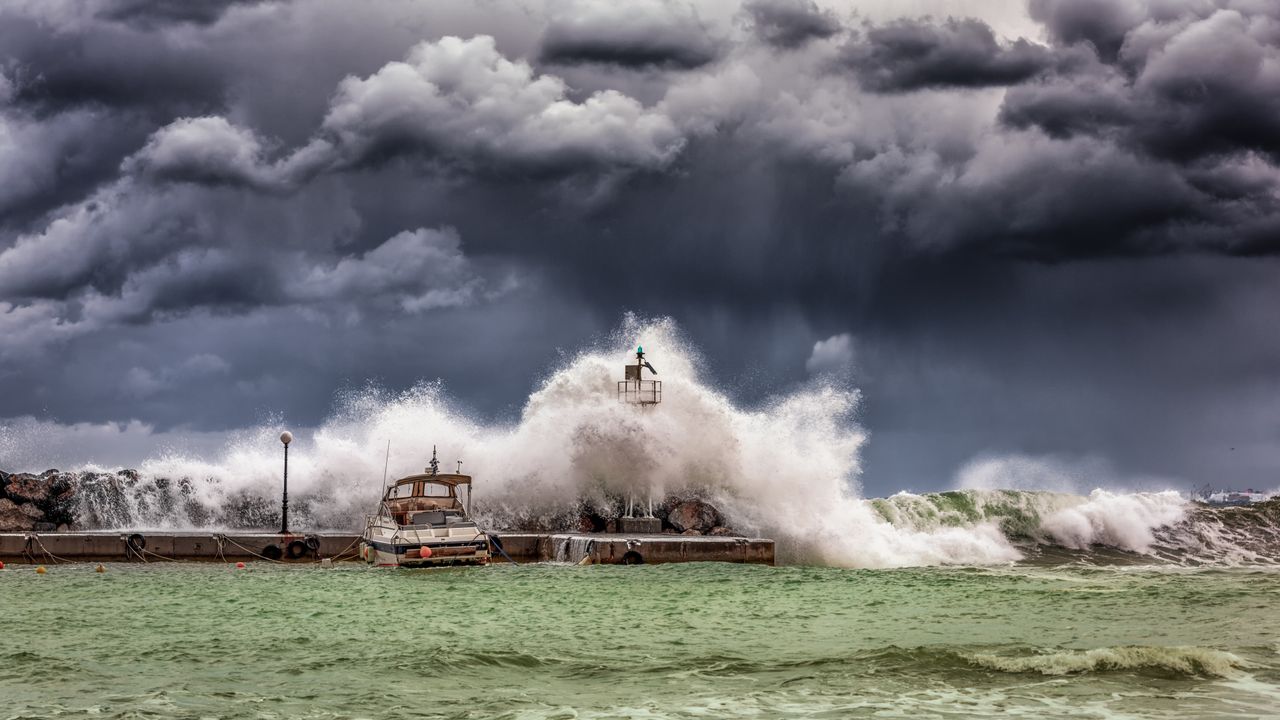
A powerful typhoon is turning one of China’s busiest travel periods into a major transportation headache.
Typhoon Dolphin has prompted Shanghai to cancel more than 1,300 flights, while hundreds of thousands of people across eastern China have been moved from vulnerable areas as authorities prepare for torrential rain, flooding, landslides, and powerful winds. The storm has also disrupted rail and ferry services and triggered China’s highest-level typhoon warning.
The situation is developing rapidly, with the storm expected to make landfall along the coasts of Zhejiang and Fujian between Sunday night and Monday morning.
For travelers, the message is straightforward: if you’re flying into or out of Shanghai or traveling through eastern China, expect major disruptions and check your itinerary before leaving for the airport.

What Is Typhoon Dolphin?
Typhoon Dolphin is a tropical cyclone moving toward China’s eastern coast after passing near Taiwan.
By Sunday morning, the storm had maximum sustained winds estimated at about 162 kilometers per hour (101 mph). Its outer bands had already brought heavy rain to northern Taiwan, including Taipei.
China’s National Meteorological Centre subsequently issued a red typhoon alert, the highest level in the country’s warning system, as Dolphin approached the coast.
Forecasters expected the typhoon to weaken gradually after making landfall, but weakening does not mean the storm becomes harmless.
A weakening tropical cyclone can still produce extremely heavy rainfall, dangerous winds, flash flooding, and landslides.
Shanghai Cancels More Than 1,300 Flights
Shanghai is at the center of the travel disruption.
The city’s two major airports — Shanghai Pudong International Airport and Shanghai Hongqiao International Airport — canceled more than 1,300 flights.
Updated figures put the total at approximately 1,384 canceled flights, including 871 at Pudong and 513 at Hongqiao. That represented nearly 60% of the day’s scheduled inbound and outbound flights.
This is a major disruption for one of Asia’s most important aviation hubs.
Shanghai handles enormous volumes of domestic and international traffic, meaning cancellations there can quickly create knock-on effects elsewhere.
A flight that never reaches Shanghai can also prevent the aircraft and crew from operating their next scheduled service.
As a result, travelers should expect delays and cancellations to potentially extend beyond the immediate storm period.
Why Are So Many Flights Being Canceled?
Airlines do not cancel flights simply because rain is inconvenient.
Typhoons create multiple aviation hazards simultaneously.
These can include:
- Extremely strong winds
- Turbulence
- Heavy rainfall
- Reduced visibility
- Lightning
- Flooding around airports
- Aircraft ground-handling problems
- Runway contamination
- Dangerous conditions for airport workers
- Disrupted air-traffic control
- Problems repositioning aircraft and crews
Even if an airport technically remains open, airlines may determine that operating a particular flight is unsafe or impractical.
That is why travelers should not assume that a flight will operate simply because the airport itself has not officially closed.
Shanghai Is Not the Only Airport Affected
The disruption extends beyond Shanghai.
Hangzhou Xiaoshan International Airport in Zhejiang reported that airlines had canceled 270 flights on Sunday, with the typhoon expected to affect operations during the afternoon.
That matters because Zhejiang is directly in the storm’s projected path.
As the typhoon moves inland, additional airports and transportation networks could experience disruption depending on rainfall, wind speeds, and flooding.
Hundreds of Thousands Have Been Relocated
Authorities are taking extensive precautions on the ground.
In Zhejiang, officials evacuated approximately 390,000 people in Taizhou as the storm approached.
Shanghai authorities also moved more than 30,000 people from higher-risk areas.
These evacuations are intended to reduce exposure to flooding, storm winds, landslides, and other hazards.
They also demonstrate the seriousness with which authorities are treating Dolphin.
This is not simply a transportation disruption.
It is a major regional weather emergency.
The Biggest Threat May Be Rainfall
Wind gets most of the attention during a typhoon, but rainfall can be equally dangerous.
Chinese forecasters warned that some areas could receive 200 to 400 millimeters (7.9 to 15.7 inches) of rain over several days.
That amount of rainfall can overwhelm drainage systems, rivers, and reservoirs.
It can also saturate hillsides, increasing the possibility of landslides.
Zhejiang authorities have specifically warned about severe landslide risks.
For people in mountainous or low-lying areas, the greatest danger may therefore arrive hours after the storm’s strongest winds.
Flooding Is a Major Concern
Shanghai and surrounding parts of eastern China have extensive urban infrastructure, but extreme rainfall can still overwhelm drainage systems.
Heavy rainfall can cause:
- Urban flooding
- Road closures
- Subway disruptions
- Traffic congestion
- Power interruptions
- Waterlogged rail lines
- Property damage
- Dangerous driving conditions
Travelers should be particularly cautious about attempting to move around during the worst conditions.
A short journey that normally takes 30 minutes can become extremely difficult when roads are flooded and public transportation is suspended.
Rail Services Are Also Being Disrupted
Air travel isn’t the only transportation system affected.
Rail services have also been adjusted, with temporary suspensions affecting sections of railway across Shanghai and several surrounding provinces, including Zhejiang, Fujian, Guangdong, Anhui, and Jiangxi.
This is particularly important for travelers who might normally respond to a canceled flight by taking a high-speed train.
During a major typhoon, switching from air travel to rail is not necessarily a reliable backup plan.
If both transportation systems are affected, travelers may need to delay their journey altogether.
Ferries and Cruises Have Been Suspended
Water-based transportation is facing even greater restrictions.
Zhejiang authorities suspended water-based activities, including ferries and cruises, as the storm approached.
That decision reflects the danger of strong winds and rough seas.
Typhoons can produce enormous waves and dangerous currents even when the storm center is still offshore.
For coastal communities, ferry suspensions can also isolate islands and affect supplies and local transportation.
Taiwan Felt the Storm Before China
Typhoon Dolphin’s outer bands had already reached northern Taiwan by Saturday.
The storm brought heavy rain to Taipei and other areas, while some Taiwanese airlines canceled flights to China for Sunday.
This illustrates how the effects of a tropical cyclone can extend far beyond the location of its eye.
Airlines and transportation authorities must often make decisions before the worst weather arrives because repositioning aircraft, vessels, and personnel becomes increasingly difficult once conditions deteriorate.
What Does the Typhoon Mean for Shanghai Tourists?
Travelers currently in Shanghai should prepare for changes to normal transportation and sightseeing.
Possible disruptions include:
- Flight cancellations
- Flight delays
- Rail suspensions
- Ferry cancellations
- Heavy rain
- Flooded roads
- Temporary attraction closures
- Reduced public transportation
- Difficult taxi availability
- Changes to hotel check-in or onward travel
The safest approach is to avoid unnecessary travel during the worst weather.
If you’re staying in a hotel, keep your phone charged and monitor local weather and transportation announcements.

What Should International Travelers Do?
If your flight is scheduled through Shanghai, don’t rely solely on the original departure time shown in your booking confirmation.
Check:
- The airline’s official flight-status system.
- The airport’s current operating information.
- Any travel waiver or rebooking notice.
- Your connecting flight status.
- Hotel cancellation or extension policies.
If your flight has been canceled, contact the airline before heading to the airport unless the carrier specifically instructs you to go there.
Airports can become extremely crowded when large numbers of passengers are simultaneously trying to rebook.
Connecting Flights Could Create Additional Problems
Travelers with connections should be especially careful.
Imagine a passenger flying from Southeast Asia to Shanghai and then connecting onward to Europe.
If the Shanghai segment is canceled, the second flight may also be affected — even if the weather at the final destination is perfectly normal.
Passengers with separate tickets face an additional risk because the airline operating one flight may not be responsible for the other ticket.
This is one reason travelers should avoid making assumptions about connections during major weather events.
Businesses Are Also Preparing for Disruption
Typhoons affect far more than transportation.
Factories, warehouses, restaurants, shops, and offices may temporarily close or alter operating hours.
Companies may move workers away from vulnerable locations and secure equipment, vehicles, and construction materials.
Ports can also experience interruptions because high winds and rough seas make cargo and shipping operations dangerous.
For China’s massive manufacturing and logistics network, even a short period of severe weather can have consequences beyond the immediate affected cities.
Why China’s Typhoon Response Is So Extensive
China has extensive experience dealing with tropical cyclones.
Eastern and southern coastal provinces regularly face typhoons during the summer and early autumn.
As a result, emergency preparations can involve:
- Evacuating residents
- Closing schools
- Suspending transportation
- Securing construction sites
- Moving fishing vessels
- Closing tourist attractions
- Deploying emergency personnel
- Preparing shelters
- Monitoring reservoirs and rivers
The goal is to reduce casualties before the storm arrives rather than waiting until conditions become dangerous.
Typhoon Names Can Be Confusing
For international travelers, the word “typhoon” can sometimes be confusing.
A typhoon is essentially a tropical cyclone occurring in the northwest Pacific and nearby regions.
The same type of weather system is called a:
- Hurricane in the Atlantic and eastern North Pacific
- Typhoon in the western North Pacific
- Cyclone in parts of the Indian Ocean and South Pacific
The terminology changes by region, but the underlying phenomenon is broadly the same: a powerful rotating tropical storm.
Why Typhoon Forecasts Can Change
Even sophisticated weather models cannot predict a typhoon’s exact track and intensity perfectly.
Small changes in atmospheric conditions can influence:
- Where the storm makes landfall
- How quickly it strengthens or weakens
- How much rainfall different regions receive
- How far strong winds extend
- How quickly flooding develops
This is why travelers should avoid relying on an old forecast screenshot or social-media post.
A forecast issued several hours earlier can become outdated quickly when a tropical cyclone is approaching land.
The Storm’s Economic Impact Could Be Significant
Shanghai is one of China’s most important economic centers.
A major transportation disruption can affect:
- Tourism
- Retail
- Restaurants
- Hotels
- Aviation
- Logistics
- Manufacturing
- Shipping
- International business travel
Even when physical damage is limited, the temporary shutdown of transportation can create significant economic costs.
Thousands of canceled flights alone can disrupt business schedules and supply chains across multiple countries.
What Happens After Landfall?
The end of the typhoon does not necessarily mean the danger is over.
After landfall, authorities may continue monitoring:
- Rivers
- Reservoirs
- Mountain slopes
- Roads
- Bridges
- Drainage systems
- Power infrastructure
Flooding and landslides can occur after the strongest winds have passed.
Transportation may therefore take additional time to return to normal.
Airlines also need time to reposition aircraft and crews and work through accumulated passenger backlogs.
The Bigger Lesson for Travelers
Typhoon Dolphin is another reminder that summer travel in East Asia comes with a degree of weather-related uncertainty.
China, Japan, Taiwan, South Korea, and other parts of the region can experience powerful tropical cyclones during the warmer months.
Travelers don’t necessarily need to avoid these destinations.
But they should travel intelligently.
That means:
Build flexibility into your itinerary.
Don’t schedule an important international connection immediately after a domestic flight through a typhoon-prone region if you can avoid it.
Consider travel insurance.
Keep emergency funds available.
And most importantly, take official warnings seriously.
Conclusion
Typhoon Dolphin is creating major disruption across eastern China as authorities prepare for a potentially dangerous combination of powerful winds, extreme rainfall, flooding, and landslides.
Shanghai’s Pudong and Hongqiao airports have canceled roughly 1,384 flights, while authorities have relocated hundreds of thousands of people in Zhejiang and Shanghai. Rail services have also been suspended or adjusted, and water-based transportation has been halted in affected areas.
The storm is expected to make landfall along the Zhejiang-Fujian coast between Sunday night and Monday morning, with forecasters warning of potentially 200 to 400 millimeters of rainfall in some locations.
For travelers, the safest strategy is simple: check before you travel, expect delays, keep your plans flexible, and follow local authorities’ instructions.
A canceled flight is frustrating.
Getting caught in a typhoon because you assumed your itinerary would operate normally is something else entirely.
Frequently Asked Questions
1. How many flights has Shanghai canceled because of Typhoon Dolphin?
Shanghai’s two major airports canceled approximately 1,384 flights on Sunday, representing nearly 60% of scheduled inbound and outbound flights. Pudong accounted for 871 cancellations and Hongqiao for 513.
2. When is Typhoon Dolphin expected to hit China?
The storm is expected to make landfall along the coasts of Zhejiang and Fujian between Sunday night and Monday morning, after moving across the southern East China Sea.
3. How dangerous is Typhoon Dolphin?
Dolphin is capable of producing powerful winds, extremely heavy rainfall, flooding, and landslides. Forecasts indicated that some areas could receive 200–400 millimeters of rain, while authorities warned of particularly serious landslide risks in Zhejiang.
4. Should travelers cancel a trip to Shanghai?
Travelers should not make a blanket decision without checking the latest conditions. However, anyone traveling during the storm should expect significant transportation disruptions and should verify flight, rail, and hotel arrangements before departure. If authorities issue evacuation or safety instructions, those should take priority over travel plans.
5. What should I do if my Shanghai flight is canceled?
First, check your airline’s official notification and rebooking options. Avoid immediately traveling to a crowded airport unless instructed. If you have a connecting flight or hotel reservation, contact those providers as soon as possible. Keep your phone charged, monitor official weather updates, and allow additional time for transportation once services begin operating again.

Sources AP News

