

A groundbreaking study published in October 2025 suggests that exposure to the heavy metal lead — long associated with modern industrial pollution — has, in fact, been a part of the evolutionary landscape of hominids for millions of years. Even more intriguing, the research proposes that our species, Homo sapiens, may have developed genetic resilience to lead’s neurotoxic effects. This resilience could have given us a critical edge in developing language and complex social behaviors — potentially helping to explain why we, and not the Neanderthals, became the last humans standing.

What the Study Found
Lead Exposure Was Ancient and Widespread
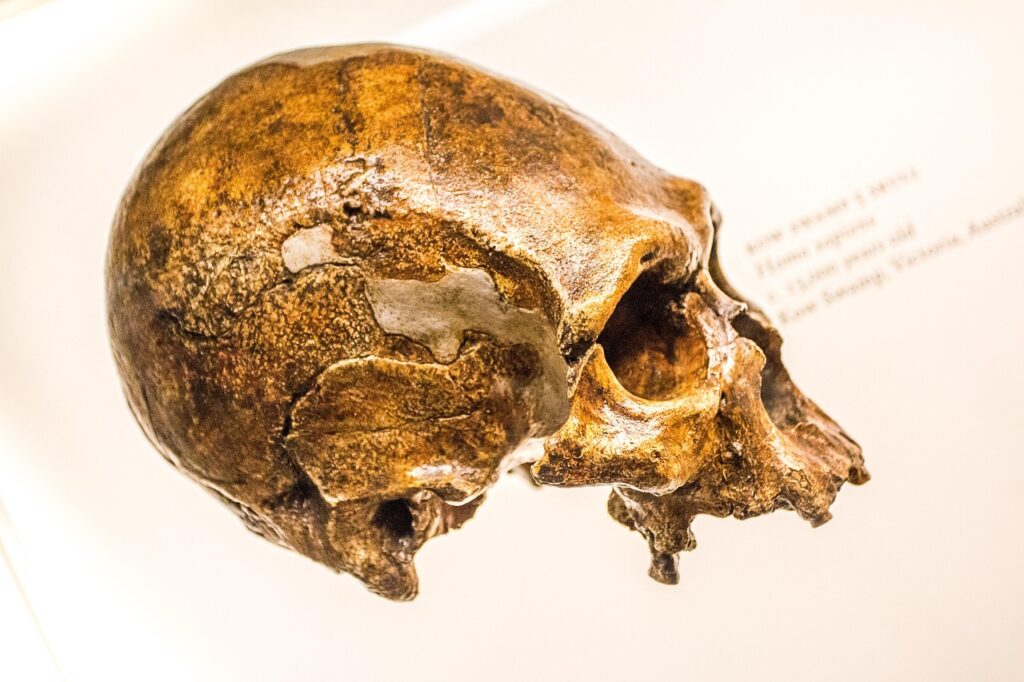
Researchers examined fossilized teeth from 51 hominid specimens across Africa, Asia, and Europe. These included modern humans, Neanderthals, early Homo species, and even extinct great apes. In about 73% of these samples, scientists found clear evidence of lead exposure during childhood — visible as thin bands in the developing teeth.
This discovery shows that significant lead exposure is not a byproduct of modern industry alone. Early hominids likely encountered lead through natural sources like volcanic dust, mineral-rich groundwater, and lead-bearing rock and soil — conditions that existed long before humans began mining or smelting metals.
A Genetic Edge for Modern Humans
A central focus of the study was a gene called NOVA1, which influences brain development. Modern humans carry a version of NOVA1 that differs from that found in Neanderthals and other extinct hominids.
To test the effect of this genetic difference, researchers used lab-grown “mini brains” (organoids) with either the Neanderthal-type or modern-human-type NOVA1 gene. When these organoids were exposed to lead, those with the Neanderthal variant showed greater disruption in the expression of FOXP2 — a key gene involved in language development. The modern human organoids, however, appeared more resistant.
This suggests that early humans may have evolved a form of molecular resilience to environmental toxins like lead — especially in brain regions important for communication and cognition. That advantage could have supported better language development, social bonding, and adaptability — all vital traits for long-term survival.
Why It Matters: Big-Picture Implications
Evolution Through Toxin Tolerance
This study reframes how we think about human evolution. Rather than focusing solely on adaptation to climate or predators, it introduces the idea that surviving environmental toxins like lead may have played a significant role in shaping cognitive development.
Rethinking Language Origins
The findings add another layer to our understanding of how language might have evolved. It’s not just about brain size or social needs — but also about the brain’s ability to develop normally under toxic stress. Resilience to lead exposure may have allowed Homo sapiens to preserve the delicate neurological architecture needed for speech and symbolic thinking.
Long-Term Public Health Lessons
Though lead is often considered a modern hazard, this study highlights how it has affected our ancestors for millions of years. Our continued vulnerability — particularly among children — underlines the importance of reducing exposure today. The fact that our brains evolved under pressure from toxins does not mean we are immune to their damage.
What the Original Study Didn’t Fully Cover
- Real-World Complexity: Lab-grown brain organoids are powerful tools, but they don’t capture the full complexity of real human brains and behavior.
- Environmental Differences: Different hominid groups lived in varied environments. Not all may have been equally exposed to lead.
- Other Contributing Factors: Lead exposure is likely just one of many influences on the cognitive differences between Homo sapiens and Neanderthals.
- Social and Cultural Factors: Language depends not just on biology, but also on cultural transmission and social structure — areas not fully addressed by this study.
- Implications for Modern Health: While the study highlights ancient resilience, it doesn’t deeply explore modern lead toxicity, which continues to impact millions of people today.
Frequently Asked Questions (FAQ)
Q: Does this prove Neanderthals couldn’t speak?
No. It suggests they may have been more vulnerable to lead-related neurodevelopmental damage, but it doesn’t conclusively prove they lacked language. Evidence shows they had symbolic behavior and likely some form of communication.
Q: Was lead exposure common before industrial times?
Yes. Natural sources of lead — such as mineral-rich soil, volcanic ash, and groundwater — exposed early hominids to the metal long before mining or industry began.
Q: Are modern humans immune to lead poisoning?
Not at all. We may have some genetic resilience, but lead exposure still causes significant harm — especially in children. Even low levels of lead can affect IQ, attention, and behavior.
Q: How reliable are brain organoids for this kind of research?
They’re an important tool for studying brain development, but they are simplified models. They don’t account for the full range of brain functions, environmental inputs, or long-term developmental changes.
Q: Could this help explain why Homo sapiens survived and Neanderthals didn’t?
Possibly. Greater cognitive resilience in stressful environments — including exposure to neurotoxins — could have given our species a survival advantage. But it’s likely one of many contributing factors.
Q: Will more research follow?
Yes. Scientists plan to examine more fossil samples, study other genes affected by toxins, and explore how different environmental factors may have shaped brain evolution across hominid species.
Final Thought
This study invites us to consider a bold idea: that our evolutionary journey was shaped not just by natural beauty and harsh climates, but also by invisible poisons — like lead — hiding in the soil, water, and air. Over time, those who adapted better to environmental stress may have emerged with more resilient brains and a greater capacity for language, learning, and culture.
In a world where toxic exposure is still a reality for many, understanding how our ancestors coped with such challenges reminds us of both our vulnerability and our resilience. It also reinforces a timeless truth — the environment shapes who we become, sometimes in ways we can’t even see.
Sources US San Diego Today

