

Few ancient historians have become as politically fashionable in the modern world as Thucydides.
His name now appears in:
- military strategy papers
- U.S.-China rivalry debates
- foreign policy think tanks
- intelligence briefings
- geopolitical YouTube explainers
At the center of this revival is one famous phrase:
“The Thucydides Trap.”
The idea sounds simple:
when a rising power threatens an established power, war becomes almost inevitable.
It is constantly used to explain tensions between:
- the United States and China
- historical empires
- modern superpower transitions
But according to growing scholarly criticism — including discussions surrounding the article you referenced — something important may have been lost.
Not just historically.
But linguistically.
Because the “trap” may not actually be what Thucydides meant at all.
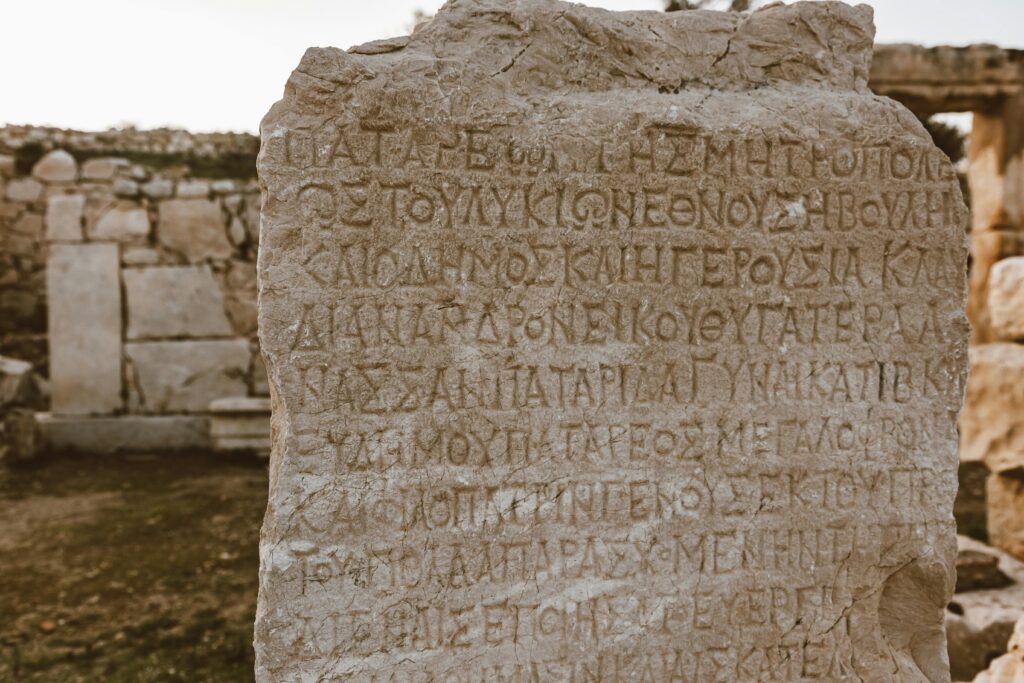
🏛️ Who was Thucydides?
Thucydides was an ancient Greek historian who wrote History of the Peloponnesian War, documenting the conflict between:
- Athens (rising naval power)
- Sparta (dominant land power)
Written in the 5th century BCE, the work is often treated as:
- one of the first analytical histories
- a foundational text of political realism
- an early study of power politics
Unlike mythological storytelling traditions, Thucydides tried to analyze:
- human behavior
- fear
- ambition
- strategic calculation
And that made him timeless.
Or at least… adaptable.
🧠 Where the “Thucydides Trap” came from
The modern phrase was popularized largely by political scientist Graham Allison.
It draws from a famous passage often translated roughly as:
“It was the rise of Athens and the fear this caused in Sparta that made war inevitable.”
That line became the foundation for:
- power-transition theory
- strategic competition models
- modern geopolitical forecasting
But here’s the controversy:
Ancient Greek scholars increasingly argue that:
the translation — and interpretation — oversimplified the original meaning.
🔄 The problem with translating ancient political language
Ancient Greek is extraordinarily dense.
Words often carry:
- multiple layers of political meaning
- moral implication
- rhetorical ambiguity
- contextual nuance
And Thucydides wrote in a compressed style that even ancient readers considered difficult.
That means translation choices matter enormously.
A single word can shift:
- inevitability → probability
- structural pressure → human choice
- fear → anxiety → strategic insecurity
Modern geopolitical thinkers often quote simplified English versions as if they were mathematically precise doctrines.
But the original text is much murkier.
⚠️ “Inevitable war” may be the biggest distortion
This is the critical issue.
Many modern interpretations frame Thucydides as arguing:
rising powers always lead to war.
But scholars argue the original text may suggest something subtler:
- fear increases instability
- miscalculation intensifies conflict risk
- political decisions matter enormously
- war emerges from human failures, not destiny
That changes everything.
Because:
inevitability removes responsibility.
And Thucydides may have been warning against exactly that mindset.
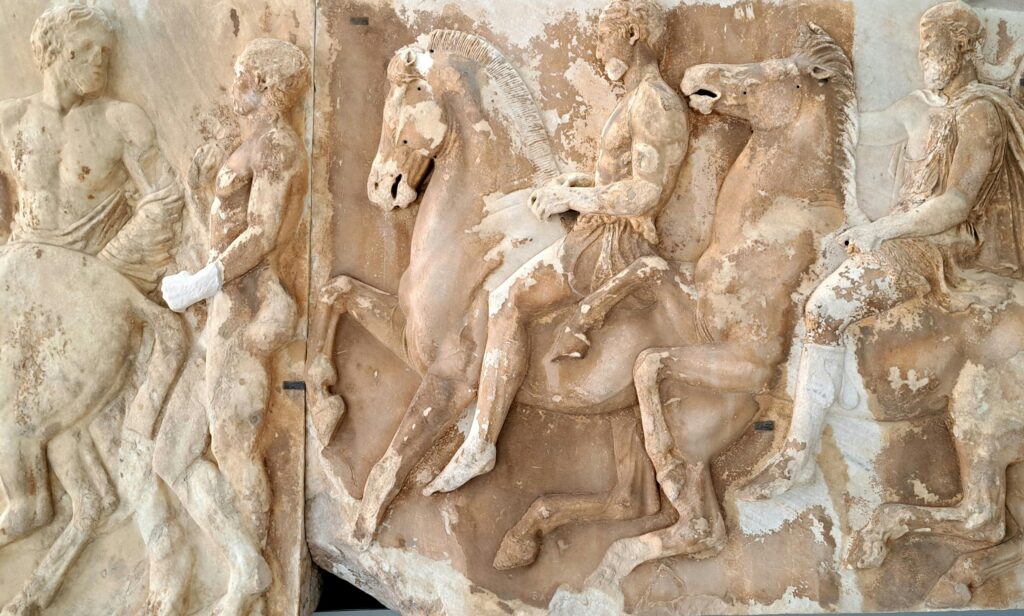
🧩 Translation didn’t just alter words — it altered policy thinking
This is where the story becomes genuinely important.
Once the “trap” concept entered modern geopolitics, it started shaping:
- military planning
- diplomatic rhetoric
- strategic assumptions
In some circles, the theory became almost self-fulfilling:
if leaders believe conflict is inevitable, they may behave more aggressively.
That creates a dangerous feedback loop:
- Theory predicts conflict
- Policymakers act defensively
- Rival powers escalate
- Theory appears validated
In other words:
mistranslation can become geopolitical infrastructure.
That’s a chilling thought.
🌍 Why the U.S.-China comparison became so popular
The “Thucydides Trap” gained massive traction because it mapped neatly onto:
- China’s economic rise
- America’s dominant superpower status
- military competition in Asia-Pacific
The narrative was seductive:
- Athens = rising China
- Sparta = dominant America
Simple. Dramatic. Historically elegant.
Too elegant, perhaps.
Critics argue this analogy ignores:
- nuclear deterrence
- globalized economies
- cyber warfare
- modern institutions
- interdependence between rivals
Ancient Greece and the 21st century are not interchangeable systems.
History rhymes, maybe.
It does not copy-paste.
📖 Thucydides was writing tragedy, not equations
One of the deepest misunderstandings may be literary.
Modern strategists often read Thucydides like a political science manual.
But his work also functions as:
- tragedy
- moral examination
- meditation on fear and power
- exploration of democratic collapse
His histories are filled with:
- irrational leaders
- emotional decision-making
- pride-driven escalation
- catastrophic misjudgment
That sounds less like deterministic theory…
and more like a warning about human psychology.
🧠 The translation issue reflects a larger modern problem
The Thucydides debate reveals something broader about modern intellectual culture:
We increasingly prefer:
- simplified frameworks
- catchy geopolitical models
- meme-like historical analogies
Complexity gets compressed into slogans.
Ancient texts become:
- TED Talk material
- foreign policy branding
- strategic shorthand
But compression often strips away ambiguity — and ambiguity was central to Greek thought.
🤖 AI, algorithms, and the danger of simplified history
Ironically, the digital age amplifies this problem.
Algorithms reward:
- concise narratives
- emotionally compelling frameworks
- “explain everything” theories
“The Thucydides Trap” spreads easily because it feels:
- intellectually sophisticated
- emotionally intuitive
- historically validated
But virality is not accuracy.
And historical oversimplification becomes dangerous when governments internalize it.
🔮 So what did Thucydides actually mean?
The honest answer:
scholars still debate it.
But many modern historians increasingly argue he was exploring:
- the instability created by fear
- fragility inside political systems
- dangers of strategic paranoia
- how perception shapes conflict
Not a mechanical law of history.
More like:
a diagnosis of recurring human weakness.
That distinction matters enormously.
❓ FAQ: The Thucydides Trap explained
1. What is the Thucydides Trap?
It is the idea that war becomes likely when a rising power threatens an established dominant power.
2. Did Thucydides actually invent the term?
No. The modern phrase was popularized by political scientist Graham Allison.
3. Why is the translation controversial?
Because scholars argue the original Greek text was more nuanced than the simplified “war is inevitable” interpretation.
4. Is the U.S.-China rivalry really comparable to Athens and Sparta?
Partially, but critics say the analogy ignores major modern realities like nuclear weapons, global trade, and international institutions.
5. Did Thucydides believe war was unavoidable?
Not necessarily. Many historians argue he emphasized fear, miscalculation, and political choices rather than destiny.
6. Why does this debate matter today?
Because historical interpretations can shape real-world policy decisions and international behavior.
🧭 Final thought
The story of the “Thucydides Trap” is not just about ancient Greece.
It is about what happens when complex historical ideas are translated into modern ideological tools.
Somewhere between Greek syntax, political theory, and strategic anxiety, a subtle warning may have hardened into a deterministic slogan.
And perhaps the deepest irony is this:
Thucydides may not have been predicting inevitable war between great powers.
He may have been warning us how easily humans convince themselves that war is inevitable in the first place.
Sources The Guardian

