Two years after a devastating wildfire tore through Jasper, the Rocky Mountain community is discovering that rebuilding a town is only half the challenge. The other half is convincing visitors to come back.
Jasper National Park remains one of Canada’s most spectacular destinations, but its visitor economy is still operating below its former potential. Businesses are reopening, trails and infrastructure are being restored, and new construction is visible across the town. Yet many tourism operators continue to face fewer visitors, reduced accommodation capacity, higher costs and difficulty finding staff.
The recovery is therefore entering a new phase: from emergency response to economic survival and long-term renewal.
The 2024 wildfire destroyed about 30 percent of the structures in the Jasper townsite and damaged or destroyed roughly 20 percent of the park’s assets. More than 32,700 hectares burned.
For a community where tourism accounts for nearly half of local employment, the consequences have been enormous.
The 2024 Jasper Wildfire Changed Everything
In July 2024, a wildfire driven by extreme heat, drought and powerful winds reached the community of Jasper.
The evacuation was massive. Around 25,000 residents and visitors were forced to leave as the fire threatened the town and surrounding national park.
The destruction was severe.
Homes disappeared. Hotels and businesses were destroyed. Staff accommodation was lost. Roads, campgrounds, utilities and other park infrastructure were damaged.
The fire did not simply destroy buildings.
It interrupted the economic ecosystem that depended on those buildings.
A hotel room that no longer exists means fewer visitors. Fewer visitors mean less revenue for restaurants. Restaurants then need fewer workers. Retailers sell less. Tour operators lose bookings.
That domino effect is one of the biggest challenges facing Jasper today.
Jasper’s Visitor Economy Was Already Enormous
Before the wildfire, Jasper was a major international tourism destination.
Jasper National Park attracted approximately 2.48 million visitors in 2023, generating about $446 million in visitor spending. International visitors accounted for around 80 percent of that spending.
Tourism is therefore not a side business for Jasper.
It is the economic foundation of the community.
Nearly 49 percent of Jasper’s workforce is employed in tourism-related activity, according to economic assessments.
That explains why visitor numbers matter so much.
When tourists stay away, the impact is felt by almost everyone.
Visitor Numbers Fell Dramatically
The wildfire caused a dramatic collapse in visitation.
Parks Canada recorded approximately 1.14 million visitors in 2024, down from 2.48 million in 2023 — a decline of roughly 54 percent.
The decline was understandable.
The park had been evacuated. Large parts of the community were damaged. Some facilities were unavailable. Travelers were uncertain about what remained open.
But the psychological impact can last longer than the physical emergency.
Potential visitors may continue to associate Jasper with wildfire damage even after roads reopen and tourism businesses resume operations.
That perception problem has become one of the industry’s biggest challenges.
Jasper Is Open — But It Isn’t Back to Normal
One of the most important distinctions for travelers is this:
Jasper is open, but recovery is still underway.
Many iconic parts of the national park remain available to visitors, while other areas continue to be closed, repaired or reimagined.
Much of the park remains intact, with the majority of the sprawling national park unaffected by the fire.
That matters because some people may mistakenly believe that the entire park burned.
It did not.
The landscape is far more complicated than that.
Visitors can encounter spectacular mountains, lakes and forests alongside areas where the wildfire dramatically transformed the landscape.
The Burned Landscape Is Becoming Part of Jasper’s Story
Fire has changed Jasper’s scenery, but it has also created a new visitor experience.
Charred trees stand alongside emerging vegetation.
Previously hidden views have opened up.
New growth is appearing across burned areas.
Wildlife is returning to areas affected by the fire.
The result is a landscape that can feel simultaneously damaged and alive.
This creates an opportunity for Jasper to develop a more sophisticated form of nature tourism — one that explains wildfire ecology, forest regeneration and climate resilience rather than simply treating burned areas as something to hide.
Tourism Can Help the Community Rebuild
For many travelers, spending money on a vacation is simply part of having a good time.
In Jasper, however, tourism spending has a much more direct recovery effect.
A hotel booking supports accommodation workers.
A restaurant meal supports cooks, servers and suppliers.
A rafting trip supports guides and equipment providers.
A coffee purchased in town helps another small business remain open.
Tourism therefore becomes a form of economic participation in the recovery.
The message from local businesses is increasingly clear:
Visitors are not merely welcome. They are needed.
Businesses Are Still Facing a Visitor Shortage
A 2026 economic assessment of Jasper businesses identified a lack of visitors as one of the biggest challenges, particularly for restaurants and retail businesses.
Other challenges include:
- Higher operating costs
- Difficulty attracting employees
- Lack of staff accommodation
- Reduced accommodation capacity
- Rebuilding expenses
- Insurance complications
- Ongoing infrastructure work
This creates a difficult cycle.
Businesses need visitors to generate revenue.
But they need revenue to rebuild and maintain the businesses that attract visitors.
Accommodation Is a Particularly Serious Problem
One of Jasper’s most important tourism assets is also one of its biggest recovery bottlenecks: places to sleep.
The wildfire destroyed hundreds of homes and businesses, while the community lost significant accommodation capacity.
Economic assessments have estimated that Jasper had around 20 percent fewer accommodation options during the recovery period.
That creates a strange situation.
A destination can be ready for tourists but still be unable to accommodate as many tourists as before.
And that limits how quickly the visitor economy can recover.
Hotels Are More Than Places to Sleep
Hotels play a much larger role in a tourism economy than many travelers realize.
They provide:
- Rooms for visitors
- Employment
- Meeting spaces
- Restaurants
- Event facilities
- Seasonal jobs
- Tax revenue
- Demand for local suppliers
When a major hotel disappears, the impact spreads throughout the community.
Rebuilding accommodation therefore becomes an economic priority rather than simply a construction project.
Staff Housing Is Another Hidden Challenge
Jasper’s tourism industry has historically depended heavily on seasonal and temporary workers.
But rebuilding homes and accommodation for workers is itself part of the recovery challenge.
Businesses can have rooms to sell but still struggle to operate at full capacity if they cannot house enough employees.
The 2026 business assessment specifically identified staff accommodation as a significant problem for restaurants, retail businesses and accommodation providers.
This is one of the less visible consequences of the wildfire.
Tourists see hotel rooms.
Businesses see the workers needed to clean them, prepare food, guide tours and keep facilities operating.
Reconstruction Is Accelerating
Despite the difficulties, Jasper’s rebuilding effort has moved forward.
By June 2026, debris had been removed from 100 percent of affected lots, while construction was actively underway at 118 properties. Interim housing had also been provided for more than 415 families.
Canada has committed significant public funding to the recovery.
In June 2026, the federal government announced another $520 million for Jasper’s rebuilding efforts, bringing federal wildfire response and recovery funding delivered over the previous two years to more than $385 million before the new commitment.
The additional funding is intended to accelerate reconstruction, support interim housing through March 2028 and repair critical infrastructure.
The Recovery Is About More Than Rebuilding the Old Jasper
One of the most interesting questions is whether Jasper should simply try to recreate what existed before the fire.
The answer is increasingly complicated.
Reconstruction creates an opportunity to build:
- More fire-resistant structures
- Better emergency infrastructure
- Improved evacuation systems
- Stronger community facilities
- More resilient tourism businesses
- Better wildfire buffers
- More adaptable accommodation
The goal is not simply to rebuild quickly.
It is to build a community better prepared for the next extreme-weather event.
Fire Risk Is Now Part of Tourism Planning
Wildfire has become an unavoidable consideration for tourism destinations across western Canada.
Jasper’s recovery plans therefore include not only rebuilding but also reducing future fire risk.
The latest recovery funding includes support for townsite and perimeter fire-risk reduction.
That could include changes to vegetation management, defensible space and infrastructure.
For Jasper, resilience has moved from an environmental concept to an economic necessity.
The Natural Environment Is Recovering Too
Buildings can be reconstructed in months or years.
Forests operate on a different timetable.
The burned landscape will continue changing for decades.
Some areas will regenerate naturally, while others may require carefully managed restoration.
Parks Canada has been balancing visitor access with ecological recovery, including reopening trails in ways designed to protect new vegetation.
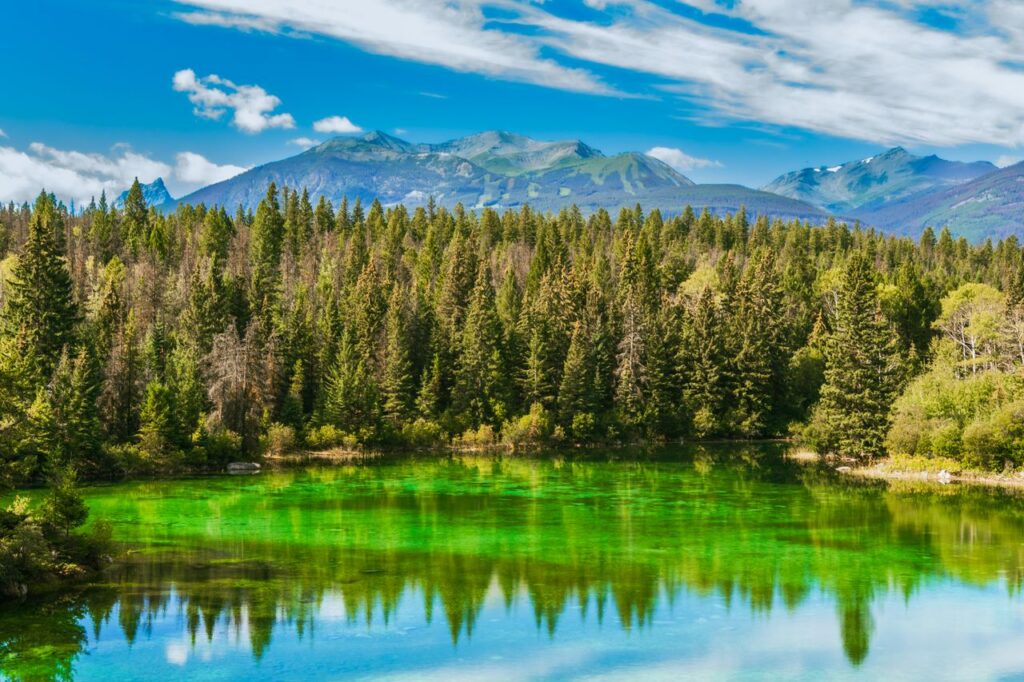
The reopened Valley of the Five Lakes trail, for example, offers visitors a dramatically different landscape while emphasizing the importance of staying on designated paths so recovering vegetation is not damaged.
Wildfire Tourism Can Be Educational — If Done Responsibly
There is a delicate balance here.
Visitors naturally want to understand what happened.
But wildfire affected real families, destroyed homes and businesses, and displaced residents.
That means tourism operators have to avoid turning tragedy into entertainment.
The most constructive approach is educational.
Visitors can learn about:
- Wildfire ecology
- Forest regeneration
- Climate and weather
- Emergency preparedness
- Indigenous relationships with the landscape
- Forest management
- Community resilience
The story should be about recovery and understanding, not simply destruction.
Jasper’s Wildlife Story Is Changing
Wildfire also changes animal habitat.
Burned forests can create new feeding opportunities and open landscapes for some species.
Local observations suggest that larger wildlife such as elk have become easier to spot in some fire-affected areas because visibility has increased.
That does not mean the wildfire was beneficial overall.
Rather, it demonstrates how ecosystems respond in complex ways.
A burned landscape can simultaneously represent loss and ecological renewal.
The Tourism Product Could Become More Diverse
Jasper’s traditional tourism model relied heavily on famous landscapes and outdoor recreation.
The recovery could encourage the community to broaden that offering.
Potential growth areas include:
- Wildlife watching
- Indigenous cultural experiences
- Wildfire education
- Guided ecological tours
- Wellness travel
- Winter tourism
- Local food
- Dark-sky experiences
- Photography
- Slow travel
- Longer stays
Diversification can help reduce dependence on a narrow group of attractions.
Why Longer Stays Could Help
A visitor who spends three nights contributes much more to the local economy than someone who drives through for a few hours.
Longer stays mean more spending on:
- Accommodation
- Food
- Activities
- Transportation
- Retail
- Local attractions
For Jasper, encouraging visitors to slow down and stay longer could be particularly useful while accommodation capacity remains constrained.
The goal is not necessarily to attract millions of additional visitors.
It may be to attract visitors who contribute more value to the local economy while putting less pressure on infrastructure.
The Recovery Also Has an Environmental Balancing Act
Tourism itself can create environmental pressure.
Jasper National Park is a protected ecosystem.
More visitors mean more:
- Traffic
- Waste
- Trail use
- Wildlife encounters
- Water consumption
- Energy demand
That means recovery cannot simply be measured by visitor numbers.
A successful recovery needs to balance economic activity with ecological protection.
The future question is not merely:
How many tourists can Jasper attract?
It is:
How many visitors can Jasper sustainably accommodate?
What Travelers Can Do to Help Jasper
Travelers can make a meaningful difference by spending locally.
Instead of treating Jasper as a quick photo stop, consider staying overnight and supporting locally owned businesses.
Travelers can:
- Book local accommodation
- Eat at independent restaurants
- Hire local guides
- Shop at local stores
- Visit reopened attractions
- Follow park restrictions
- Stay on designated trails
- Respect wildlife
- Avoid entering closed areas
- Follow fire restrictions
- Give businesses flexibility during recovery
The simplest contribution is often the most obvious:
Come to Jasper.
But Responsible Tourism Matters
Supporting recovery does not mean ignoring restrictions.
Visitors should never enter closed areas simply to see wildfire damage.
They should respect barriers, trail closures and wildlife regulations.
In a recovering ecosystem, even seemingly harmless behavior can damage fragile vegetation.
Parks Canada’s approach to reopened trails emphasizes exactly this point: allowing people to experience recovery while giving the landscape room to heal.
Jasper’s Recovery Is a Canadian Tourism Test Case
Jasper is not alone.
Wildfires, floods, hurricanes and other extreme-weather events are increasingly disrupting tourism destinations around the world.
Jasper offers an important example of how climate-related extreme weather can expose the vulnerability of tourism-dependent communities.
Jasper therefore offers lessons far beyond Alberta.
Other tourism communities are watching how the town handles:
- Reconstruction
- Visitor communication
- Insurance
- Emergency planning
- Workforce shortages
- Infrastructure resilience
- Destination marketing
- Environmental recovery
What happens in Jasper could influence how other tourism destinations respond after disasters.
Two Years Later, Recovery Is Measured in Small Victories
The biggest mistake would be expecting Jasper to look exactly as it did before July 2024.
Recovery does not work that way.
Progress can mean a family returning home.
It can mean a restaurant reopening.
It can mean a trail becoming accessible again.
It can mean a new hotel structure rising from the ashes.
It can mean young trees appearing among blackened trunks.
It can mean tourists returning — not because the fire has been forgotten, but because the community has moved forward.
The Future of Jasper’s Visitor Economy
Jasper is entering an unusual chapter.
The community needs visitors, but it also needs time.
It needs investment, but it needs investment that improves resilience.
It needs more accommodation, but it needs sustainable development.
It needs tourism revenue, but it cannot sacrifice the natural environment that attracts tourists in the first place.
The path forward is therefore not simply about returning to the past.
It is about creating a more resilient version of Jasper.
The goal of the ongoing recovery effort is to rebuild stronger and safer while coordinating the needs of the community and the national park.
Conclusion
Two years after the devastating wildfire, Jasper is neither a destroyed tourist town nor a fully recovered destination.
It is something in between.
The roads are open. Businesses are rebuilding. Visitors are returning. Nature is regenerating. But thousands of people have had their lives disrupted, accommodation capacity remains below pre-fire levels and many businesses still need stronger visitor numbers.
The central lesson is simple:
Jasper cannot rebuild its visitor economy without visitors.
Travelers who return responsibly can help provide the revenue that keeps restaurants open, supports tour operators, creates jobs and gives businesses the confidence to rebuild.
But the future of Jasper should not be measured solely by whether it looks like the Jasper of 2023.
The more important question is whether it can become a destination that is economically healthy, environmentally responsible and better prepared for the extreme weather challenges of the future.
Two years after the fire, that rebuilding story is still being written.
Frequently Asked Questions
1. Is Jasper open to tourists after the 2024 wildfire?
Yes. Jasper and much of Jasper National Park are open to visitors, although some areas and facilities remain closed or under reconstruction. Travelers should check current conditions before visiting because access can change as recovery work continues.
2. How badly was Jasper affected by the wildfire?
The 2024 wildfire destroyed approximately 30 percent of structures in the town of Jasper and damaged or destroyed around 20 percent of assets across Jasper National Park. More than 32,700 hectares burned.
3. Is Jasper’s tourism industry recovering?
Yes, but recovery remains incomplete. Visitor numbers dropped sharply after the wildfire, and businesses continue to report challenges including insufficient visitors, higher operating costs, staffing difficulties and limited employee housing.
4. Is it appropriate to visit Jasper while the community is recovering?
Yes. Responsible tourism can directly support Jasper’s recovery by providing revenue to accommodation providers, restaurants, retailers, guides and other local businesses. Visitors should, however, respect closures, fire restrictions, residents’ privacy and ecological recovery areas.
5. What can travelers expect to see in Jasper now?
Visitors can still experience many of Jasper’s famous mountains, lakes, wildlife and outdoor attractions. They may also encounter visibly burned landscapes, construction zones and areas undergoing ecological recovery. Some attractions and facilities remain unavailable, but the changing landscape itself has become part of Jasper’s recovery story.
Sources CBC