
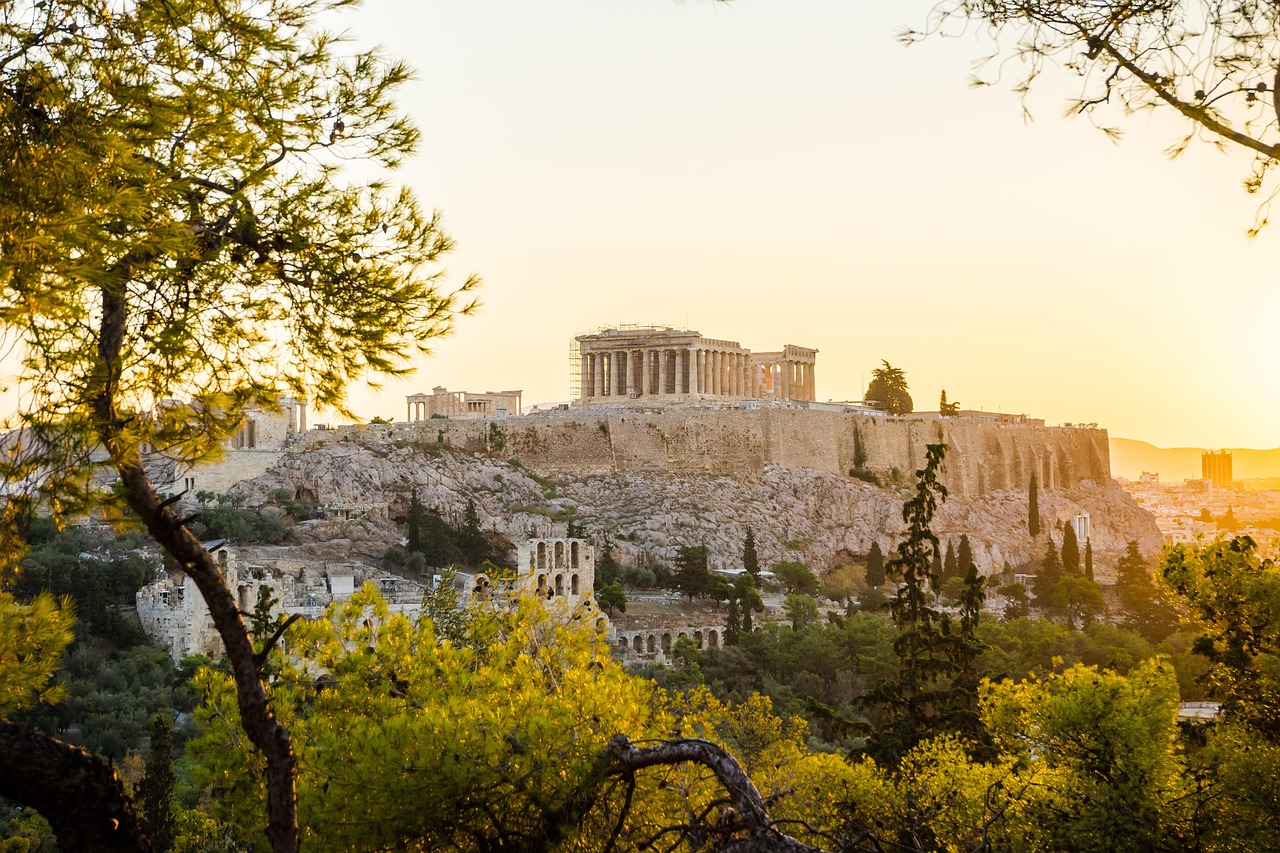
Sun hats, sunglasses, umbrellas and water bottles are becoming as essential to a Greek holiday as ancient ruins, island beaches and taverna dinners. After repeated heatwaves and wildfires, tourists appear to be taking extreme summer conditions more seriously.
For decades, Greece sold summer as a simple proposition: blue skies, warm seas, ancient monuments and endless sunshine.
In 2026, that sunshine comes with a warning label.
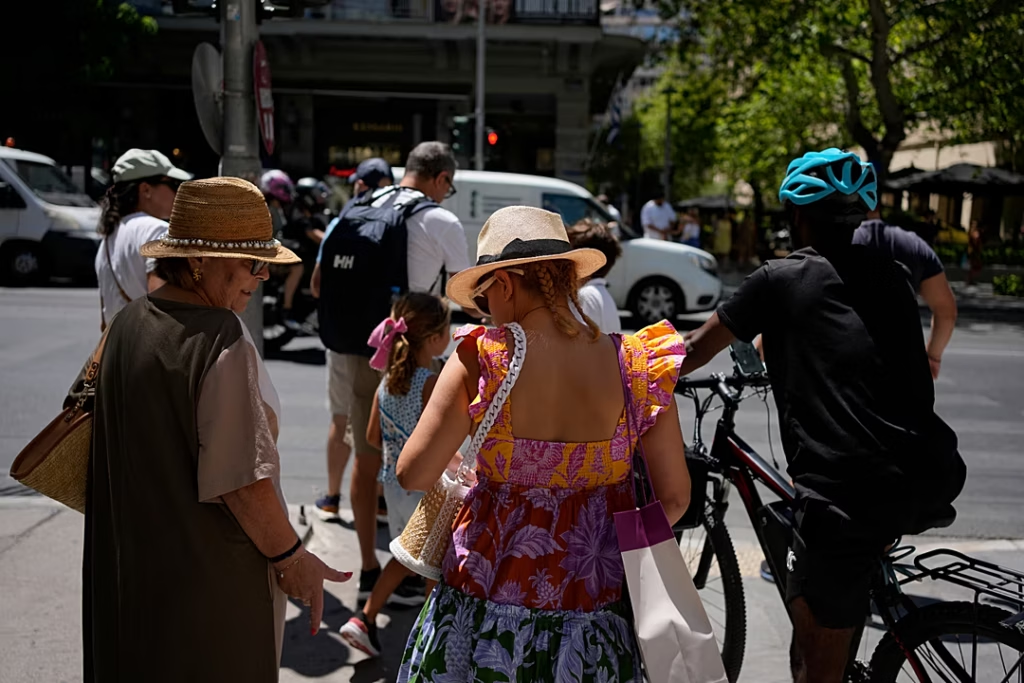
Tourists visiting Athens and other Greek destinations are increasingly arriving prepared for intense ultraviolet radiation and extreme heat. At the Acropolis, visitors can increasingly be seen wearing hats, sunglasses and carrying umbrellas for additional protection. One tourist interviewed by Euronews described using a UV-protective umbrella alongside a hat to shield herself from the sun.
The behavioral shift is subtle, but significant.
People are still coming.
They are simply learning that a Mediterranean vacation requires more than sunscreen and optimism.
Greece’s Tourism Boom Meets a Hotter Summer
Greece remains one of Europe’s most popular tourist destinations, with Athens, the islands and archaeological sites attracting millions of visitors.
The Acropolis alone recorded about 4.6 million visitors in 2025, while Greece welcomed approximately 38 million visitors nationally.
That popularity presents a challenge when extreme heat arrives.
Ancient monuments are often exposed to direct sunlight, with limited shade and few opportunities for visitors to escape the heat.
The Acropolis is a particularly obvious example.
Visitors climb stone pathways, stand in queues and spend extended periods outdoors while temperatures can reach the mid-30s Celsius or higher.
For someone accustomed to cooler northern European weather, the experience can become physically demanding surprisingly quickly.
The Hat Has Become a Tourism Essential
Perhaps the most visible change is the growing popularity of the humble sun hat.
Straw hats, baseball caps, bucket hats and wide-brimmed designs are increasingly common among visitors in Athens.
Local hat sellers have reportedly experienced stronger demand as tourists become more aware of the risks of prolonged exposure.
It may look like a fashion trend.
It is actually a public-health adaptation.
A hat can reduce direct solar exposure to the head, face and neck, while sunglasses protect the eyes from intense sunlight.
Umbrellas can provide additional shade, particularly when tourists are walking through exposed archaeological sites.
The message is simple:
If you’re going sightseeing in Greece at the height of summer, dress for the weather—not for the Instagram photo.
Tourists Are Also Learning From Previous Summers
The increased awareness hasn’t happened in isolation.
Greece has experienced repeated episodes of dangerous heat in recent years.
In 2024, several tourists died after becoming unwell during extreme heat, prompting Greek authorities to warn visitors not to take unnecessary risks.
Those incidents changed the way many travelers think about sightseeing in extreme temperatures.
A hike that looks easy on a map can become dangerous under a blazing Mediterranean sun.
A two-hour archaeological tour can become exhausting when there is little shade.
And dehydration can develop before a traveler realizes anything is wrong.
The growing presence of hats and umbrellas suggests that the lessons are gradually being absorbed.
Greece Is Still Attracting Tourists Despite the Heat
One of the most striking aspects of the current situation is that extreme weather has not eliminated demand.
Athens continues to attract large crowds.
Visitors are still climbing the Acropolis.
Cruise passengers continue arriving.
Hotels remain busy.
Island tourism remains a central pillar of the Greek economy.
That creates a difficult paradox.
The hotter the destination becomes, the more important tourism adaptation becomes—but the heat itself does not necessarily reduce the desire to visit.
Instead, travelers may alter how they experience the destination.
The Midday Sightseeing Model Is Becoming Outdated
For decades, many visitors planned their holidays around a familiar rhythm:
Breakfast.
Sightseeing.
Lunch.
More sightseeing.
Dinner.
That schedule becomes problematic during extreme heat.
The most dangerous part of the day is often when tourists are doing exactly what they came to do—walking around outdoor attractions.
A more heat-adapted itinerary might look different:
Early morning: archaeological sites and outdoor sightseeing.
Midday: museums, restaurants, hotels or shaded areas.
Late afternoon: sightseeing resumes as temperatures begin to moderate.
Evening: dining, entertainment and outdoor activities.
This isn’t necessarily a worse holiday.
It may actually produce a better one.
Tourists avoid the most punishing hours while experiencing Greece when the atmosphere is more comfortable.
Water Is Becoming Part of the Sightseeing Equipment
A tourist’s summer packing list used to focus on passports, cameras and sunscreen.
Now it increasingly includes reusable water bottles.
Hydration is one of the simplest ways travelers can reduce the risk of heat-related illness.
But there is an important distinction between simply drinking water and recognizing when the body is struggling.
Symptoms such as dizziness, headache, unusual weakness, nausea or confusion can indicate heat-related illness and should not be ignored.
The danger is particularly high for visitors who are not accustomed to hot climates.
Heat Can Affect Anyone
It is tempting to assume that only elderly tourists or people with medical conditions need to worry.
That’s incorrect.
Extreme heat can affect healthy young people too—especially when they combine:
- prolonged walking;
- direct sunlight;
- dehydration;
- alcohol;
- insufficient sleep;
- and physical exertion.
A traveler who spends the morning hiking, drinks little water and then spends several hours sightseeing can become seriously overheated.
Being young doesn’t make anyone immune.
Wildfires Add Another Layer of Risk
Heat isn’t Greece’s only summer tourism problem.
Wildfires are closely connected to periods of extreme heat, drought and dry vegetation.
Greece has experienced significant wildfire activity during recent summers, and 2026 has again brought fire-related disruptions in several areas.
Strong winds and dry conditions can make fires spread rapidly.
That means tourists need to think beyond sunburn.
They also need to monitor local fire warnings.
A perfectly safe hotel can become problematic if a wildfire approaches nearby roads or transport routes.
Climate Change Is Reshaping Mediterranean Tourism
The deeper issue is not simply that one summer is hot.
Europe is warming faster than the global average, and increasingly intense heatwaves are becoming a major challenge for Mediterranean destinations.
Greece is particularly exposed because tourism is heavily concentrated in the summer months.
That creates a structural problem.
The period when Greece attracts the largest number of visitors is increasingly becoming the period when outdoor conditions can be most uncomfortable.
Could Greece’s Tourism Season Shift?
This is one of the most important long-term questions.
If July and August become increasingly difficult for outdoor sightseeing, travelers may gradually shift toward:
- May;
- June;
- September;
- October;
- and potentially even November.
That would not necessarily be bad news.
A longer tourism season could reduce pressure during peak summer.
Hotels, restaurants and attractions could spread revenue across more months.
Workers could experience less extreme seasonal pressure.
And tourists could enjoy Greece in more comfortable conditions.
Spring and Autumn Could Become the New Sweet Spot
For many travelers, Greece is arguably more enjoyable outside the peak summer period anyway.
Spring brings cooler temperatures and landscapes that can be surprisingly green.
Autumn offers warm seas, fewer crowds and more manageable daytime temperatures.
If climate change continues making midsummer conditions harsher, tourism marketing could increasingly emphasize these periods.
The concept of the “Greek summer” may eventually become less about July and August and more about a long Mediterranean travel season.
Cities Need More Shade
Tourist behavior can adapt, but infrastructure must adapt too.
Athens and other historic cities face a particularly difficult challenge.
Many attractions are surrounded by stone, concrete and paved surfaces that absorb heat.
Shade is limited.
Trees take years to mature.
Historic preservation rules can restrict modifications to ancient sites.
That means cities need creative solutions.
Potential measures include:
- shaded waiting areas;
- drinking-water stations;
- cooling centers;
- more urban trees;
- reflective surfaces;
- better pedestrian shade;
- improved ventilation;
- and redesigned tourist routes.
The objective is not to turn Greece into an air-conditioned shopping mall.
It is to make outdoor tourism safer.
The Acropolis Is a Perfect Test Case
The Acropolis illustrates the problem particularly well.
It is one of the world’s most important archaeological sites, but it is also an exposed hilltop.
Visitors must walk outdoors.
Stone surfaces can become extremely hot.
There are periods when shade is limited.
And millions of people want to experience the site.
Managing that combination requires more than simply selling tickets.
Authorities have already introduced measures during previous heatwaves, including temporary closures or restrictions during periods of extreme conditions.
As heat intensifies, such measures could become a more regular feature of summer tourism.
Tourism Workers Face the Same Heat
Tourists aren’t the only people exposed.
Tour guides, hotel employees, restaurant workers, transport operators, archaeological staff and street vendors may spend many hours working in the same conditions.
This is an important distinction.
A tourist may spend two hours outside.
A guide might spend eight.
The problem becomes occupational as well as recreational.
Europe’s tourism industry therefore needs to think about heat protection for workers—not just visitors.
Guides Are Already Warning About the Problem
Tourist guides across Europe have increasingly described extreme heat as an occupational hazard.
A recent case involving a guide who died after collapsing while leading a tour of Rome’s Colosseum during scorching conditions illustrates the wider issue.
Tourism professionals cannot simply cancel every hot-weather tour.
Their livelihoods depend on providing the experience visitors paid for.
But continuing to operate normally during dangerous conditions can put workers and tourists at risk.
The Tourism Industry May Need to Rewrite the Summer Schedule
Hotels and tour operators could eventually rethink traditional sightseeing programs.
Instead of scheduling a walking tour at noon, they could move it to early morning.
Instead of offering a three-hour outdoor excursion during peak heat, operators could provide shorter activities with indoor breaks.
Instead of insisting that visitors follow fixed schedules, tour companies could build flexibility into itineraries.
That could become a competitive advantage.
The best tourism companies of the future may be those that understand not just where tourists want to go, but when their bodies can safely go there.
Heat-Adapted Tourism Could Become a Selling Point
There is an opportunity hidden inside the problem.
Hotels could market:
- shaded pools;
- cooled rooms;
- hydration stations;
- early-morning tours;
- sunset excursions;
- wellness facilities;
- indoor cultural experiences.
Travel companies could package “heat-smart” itineraries.
Destinations could promote cooler regions and higher-altitude attractions.
Tourism marketing could shift from:
“Come to Greece for endless sunshine.”
to:
“Experience Greece comfortably and intelligently.”
That may sound less romantic.
It is probably more realistic.
The Rise of the “Coolcation”
Greece’s heat problem also exists within a much larger European tourism shift.
As southern Europe becomes hotter, some travelers are beginning to consider cooler destinations for summer holidays.
The phenomenon has become known as the “coolcation”—traveling to northern or higher-altitude destinations specifically to escape extreme heat.
That doesn’t mean Greece is about to lose its tourism industry.
Its beaches, islands, history and cultural attractions remain enormously attractive.
But the competitive landscape could change.
A traveler who once automatically chose Greece in August may increasingly compare it with Scandinavia, the Alps, the British Isles or northern European cities.
Greece’s Biggest Advantage Is Still the Sea
There is one thing Greece can offer during a hot summer that many inland destinations cannot:
water.
The Aegean and Ionian seas provide natural cooling and make beach tourism possible even when inland sightseeing becomes uncomfortable.
That may encourage the tourism industry to place greater emphasis on coastal and maritime experiences.
Boat trips, swimming, diving and early-morning or evening excursions can be more comfortable than walking through exposed urban environments.
But even the sea is not a complete solution.
Sun exposure remains intense.
Heat exhaustion can still occur.
And visitors can become dehydrated while swimming or boating.
What Tourists Should Change
The basic rules are not complicated.
Wear a Hat
A wide-brimmed hat provides better protection than leaving the head uncovered.
Use Sunscreen
Apply high-SPF sunscreen and reapply it as directed, particularly after swimming or sweating.
Wear Sunglasses
Good-quality sunglasses can reduce glare and protect the eyes from ultraviolet radiation.
Carry Water
Don’t wait until you’re thirsty.
Avoid the Hottest Hours
Plan major outdoor activities for early morning or late afternoon when possible.
Take Breaks
Air-conditioned museums, cafés and hotel spaces can provide valuable recovery periods.
Watch for Symptoms
Dizziness, headache, weakness, nausea and confusion are warning signs that should be taken seriously.
Monitor Wildfire Information
Extreme heat can coincide with dangerous fire conditions.
Don’t Forget the Night
One of the less obvious dangers of extreme heat is nighttime temperature.
When nights remain unusually warm, the body has less opportunity to recover.
That can be particularly problematic after a day spent walking outdoors.
Air conditioning, fans, cool showers and adequate hydration can therefore matter after sunset too.
The old idea that “it cools down at night” isn’t always reliable during severe heatwaves.
Travel Insurance and Flexible Plans Matter More
Extreme weather also changes the practical side of travel.
Wildfires can lead to:
- road closures;
- ferry disruptions;
- evacuation orders;
- canceled excursions;
- accommodation changes.
Travelers should understand what their insurance covers and keep contact information for their airline, hotel and tour operator readily available.
Flexibility has become more valuable in a world where weather disruptions can occur with little warning.
Greece Is Not Alone
The country’s experience is part of a broader European pattern.
Spain, Italy, France, Germany and other countries have also faced dangerous heatwaves and wildfire conditions during 2026.
The scale of recent heat-related mortality across Europe demonstrates that extreme heat is no longer merely a tourism inconvenience.
It is a public-health issue.
The Future of European Summer Tourism
The long-term implications could be substantial.
Tourism infrastructure built around a mild Mediterranean summer may need to adapt to a hotter climate.
That could mean:
- more shade;
- more water infrastructure;
- altered opening hours;
- seasonal changes;
- stronger wildfire planning;
- better worker protections;
- and more sophisticated heat warnings.
Travelers, meanwhile, may change their own behavior.
The tourist of the future may check the heat forecast with the same seriousness previously reserved for rain.
Final Thoughts
The sight of tourists walking through Athens wearing sun hats and carrying umbrellas might seem trivial.
It isn’t.
It represents a small behavioral adjustment to a much larger transformation.
Greece remains one of Europe’s great tourism destinations. Visitors clearly still want its archaeological treasures, islands, beaches, food and culture. But repeated heatwaves are changing what it takes to enjoy those attractions safely.
The lesson is not that travelers should stop visiting Greece.
It is that the traditional Mediterranean summer holiday needs to evolve.
The smartest visitors will plan around the heat.
The smartest tourism businesses will redesign their schedules around it.
And the smartest destinations will invest in shade, water, cooling and wildfire resilience.
Because the future of Greek tourism may not belong to the traveler who can tolerate the hottest afternoon.
It may belong to the traveler who knows when to put the hat on, when to seek the shade—and when to call it a day.
5 Frequently Asked Questions
1. Is Greece too hot to visit in summer?
Not necessarily. Greece remains a popular summer destination, but travelers should expect potentially extreme heat, particularly in July and August. Planning outdoor activities for cooler parts of the day and taking regular breaks can make a major difference.
2. What should tourists wear in Greece during a heatwave?
Lightweight, breathable clothing, a wide-brimmed hat, sunglasses and comfortable footwear are sensible choices. Sunscreen and adequate hydration are also essential during prolonged outdoor activities.
3. What is the best time of day to visit the Acropolis during extreme heat?
Early morning or later in the afternoon is generally more comfortable than visiting around the hottest part of the day. Visitors should always check current conditions and any official restrictions before setting out.
4. Are wildfires a risk for tourists in Greece?
Yes. Wildfires are a recurring summer hazard, particularly during hot, dry and windy conditions. Travelers should monitor local warnings, follow evacuation instructions immediately and remain flexible if roads, attractions or transportation routes are affected.
5. Could climate change change when people visit Greece?
Very likely. As extreme summer heat becomes more common, some travelers may increasingly favor spring and autumn, while tourism businesses may expand shoulder-season offerings. Greece could gradually move toward a longer tourism season rather than relying so heavily on July and August.
Sources Euro News

