
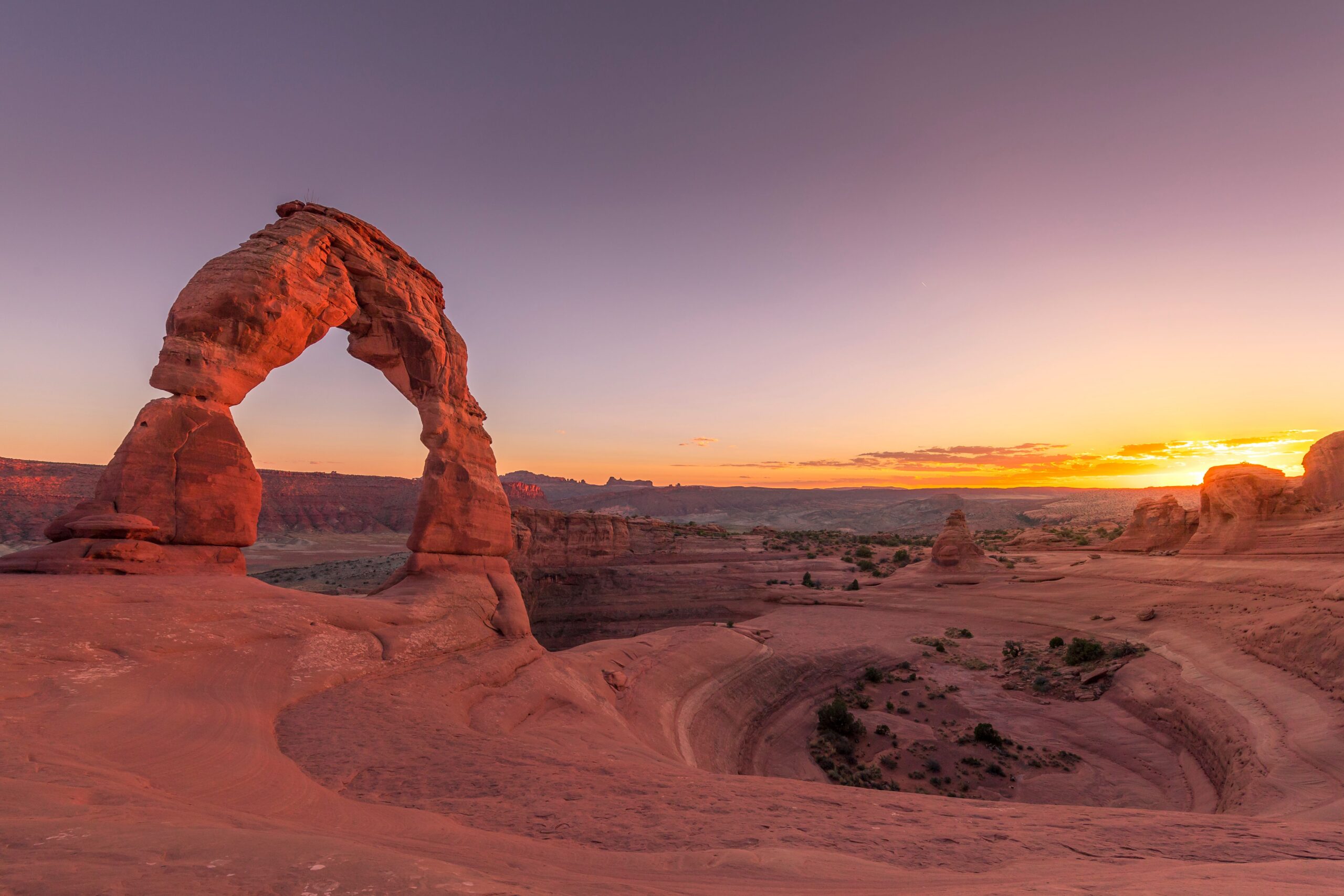
Utah’s tourism industry reached a remarkable milestone in 2025: visitors generated a record $13.7 billion in economic activity, even as several traditional measures of tourism—including hotel occupancy, park visits and airport traffic—declined.
The figure, reported by the University of Utah’s Kem C. Gardner Policy Institute, represents a 0.6% inflation-adjusted increase from 2024. Visitor spending also generated about $1.6 billion in direct state and local tax revenue and supported approximately 107,500 jobs directly, with another 59,700 jobs supported through indirect and induced effects. (KSL)
The numbers reveal something more interesting than simply another tourism record.
Utah appears to be generating more economic value without necessarily attracting more visitors.
That distinction could become increasingly important as destinations across the United States confront overcrowding, changing travel habits, higher costs and unpredictable weather.
A Tourism Record With a Twist
Ordinarily, record visitor spending would be expected to accompany record visitation.
Utah’s 2025 numbers tell a different story.
Statewide hotel occupancy declined modestly. National and state park visitation also weakened, while Salt Lake City International Airport handled nearly 1% fewer passengers. The state’s ski industry suffered an especially difficult season, with about 4.8 million skier visits—a 26% year-over-year decline. (KSL)
Yet total visitor spending still increased.
That suggests travelers who came to Utah were spending more on certain activities, even while overall visitor volumes softened.
This could mark a transition away from a tourism model based primarily on quantity toward one increasingly focused on visitor value.
Restaurants Were a Major Beneficiary
Among the visitor-spending categories tracked in the report, dining stood out.
Money spent at restaurants and other food-service businesses increased 5.9%, the strongest growth among the spending categories highlighted by the report. (KSL)
That matters because restaurant spending has a broad local economic impact.
A tourist eating at a Utah restaurant supports not only the restaurant and its employees, but also food suppliers, transportation companies, property owners and other businesses connected to the hospitality ecosystem.
For communities trying to maximize the economic benefits of tourism, encouraging visitors to spend locally can therefore be just as important as increasing raw visitor numbers.
Tourism Supports About 167,000 Jobs
The scale of Utah’s tourism economy extends far beyond hotel workers and tour guides.
About 107,500 jobs were directly supported by the visitor economy in 2025, while another 59,700 jobs were supported indirectly or through induced economic activity. (KSL)
Those jobs span accommodation, restaurants, transportation, entertainment, recreation, retail and professional services.
The report also found particularly strong growth in tourism jobs connected to spectator sports.
Employment associated with spectator sports increased 17%, partly reflecting the arrival of new professional sports opportunities and events attracted to Utah through Salt Lake County’s sports tourism efforts. (KSL)
That is an important development because Utah’s tourism identity is increasingly expanding beyond mountains and national parks.
Sports Tourism Is Becoming a Serious Business
Utah’s emergence as a sports destination could help diversify the state’s tourism calendar.
Professional teams, college athletics, tournaments and major sporting events bring visitors who typically spend money on several categories at once.
A traveling sports fan may need:
- a hotel room;
- restaurant meals;
- transportation;
- entertainment;
- shopping;
- tickets;
- and sometimes several days of accommodation.
Unlike some outdoor attractions, sports events can also be scheduled during periods when natural tourism is less predictable.
That makes sports particularly valuable as a tool for reducing seasonality.
Conferences and Conventions Helped Offset Weakness
Business travel also played an important stabilizing role.
Downtown Salt Lake City bucked the broader statewide trend, recording increases in hotel occupancy, hotel revenue and events. Conferences, conventions and other gatherings helped offset weakness in some leisure-tourism segments. (KSL)
That diversification is strategically important.
A destination dependent entirely on skiing can suffer during a poor snow season.
A destination dependent entirely on summer national-park tourism can struggle when temperatures, wildfires or other environmental factors affect travel.
But a city capable of hosting conventions, sporting events, concerts and cultural gatherings has additional sources of visitor demand.
International Tourism Was More Complicated
Utah’s international visitor market experienced significant changes in 2025.
Spending by visitors from Canada fell 22%, while spending from Chinese visitors dropped 23%. The decline from those two markets was substantially larger than the roughly 6% decline from other international markets combined. (KSL)
Canadian travel was affected by a combination of factors, including U.S.-Canada tensions, tariffs, currency exchange rates and higher travel costs.
Meanwhile, some other international markets performed better.
Visitor numbers from the United Kingdom increased 10%, Australia rose 5% and Peru increased 3%. (KSL)
The mixed results illustrate why destination marketers increasingly emphasize diversification.
A tourism economy that relies heavily on a small number of international markets can be vulnerable to political events, exchange-rate movements and changing consumer sentiment.
Utah’s Ski Industry Had a Rough Season
Skiing remains one of Utah’s signature tourism products, but the latest season delivered a major warning.
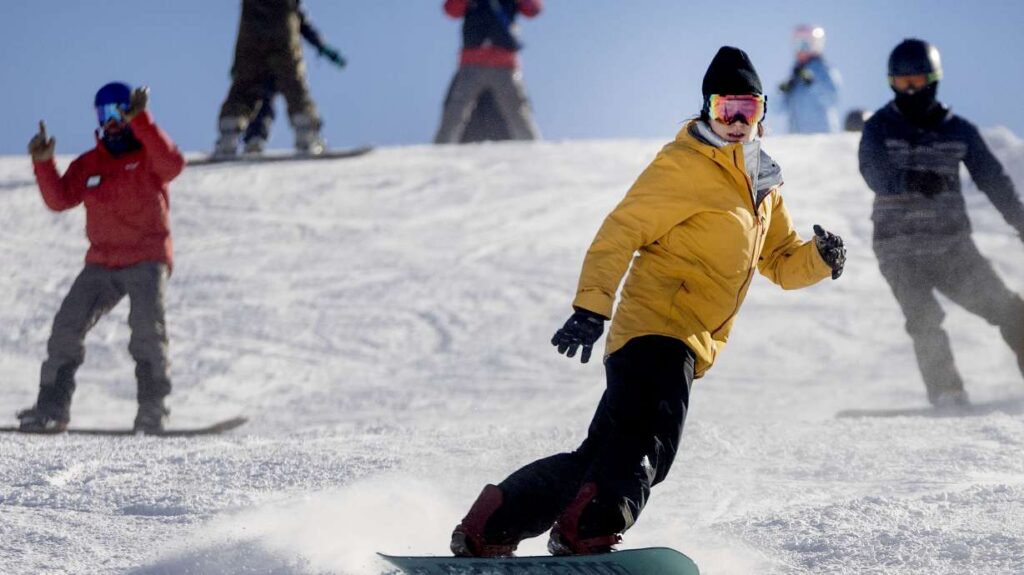
Ski Utah reported approximately 4.8 million skier visits, a 26% decline from the previous year, following an exceptionally poor snow season. (KSL)
The consequences extend beyond ski resorts.
A weak ski season can reduce demand for:
- hotels;
- restaurants;
- equipment rentals;
- transportation;
- retail;
- seasonal employment;
- and other mountain services.
That makes diversification increasingly important for communities whose economies depend heavily on winter recreation.
Utah’s Tourism Industry Is Getting Broader
The state’s tourism economy is no longer simply about the “Mighty Five” national parks or world-famous ski slopes.
Arts and entertainment, museums, parks, amusement and recreation businesses and spectator sports are all becoming increasingly important.
The report found Utah outperforming the nation in year-over-year visitor-spending growth as well as in arts, entertainment and recreation and accommodation job growth. (KSL)
This broader portfolio could make Utah’s tourism industry more resilient.
Visitors can come for skiing.
Or hiking.
Or a concert.
Or a sporting event.
Or a convention.
Or a culinary experience.
Or several of those things at once.
The National Parks Remain Crucial—but They Cannot Carry Everything
Utah’s five national parks remain its biggest tourism calling card.
Zion, Bryce Canyon, Arches, Canyonlands and Capitol Reef attract visitors from across the United States and around the world.
But national parks also create a complicated economic equation.
They generate enormous visitor spending while simultaneously facing pressure from:
- overcrowding;
- traffic;
- water demand;
- trail erosion;
- waste;
- emergency-response costs;
- and environmental degradation.
The tourism industry therefore has to balance economic growth with conservation.
A destination cannot endlessly increase visitation without eventually affecting the resource that made the destination famous.
The New Tourism Question: How Much Does Each Visitor Spend?
Utah’s latest numbers raise a useful question for tourism officials everywhere.
Should destinations measure success by how many people arrive, or by how much economic value visitors generate?
The answer increasingly appears to be both—but the second metric may deserve greater attention.
A visitor who stays for several nights, eats locally, attends events and visits multiple attractions can have a much larger economic impact than someone who drives through the state for a single day.
That creates opportunities for Utah to promote longer stays and higher-value experiences.
Shoulder-Season Tourism Could Become More Important
One way Utah can increase visitor spending without worsening peak-season congestion is to encourage travel during traditionally quieter periods.
Travelers can be encouraged to visit popular destinations in spring and fall rather than concentrating demand during the busiest summer months.
That benefits businesses by spreading revenue throughout the year.
It can also reduce pressure on infrastructure during peak periods.
The approach fits broader changes in consumer behavior.
The 2025 report noted expectations that travelers in 2026 would increasingly take shorter, less expensive trips while looking for popular destinations during off-peak periods. (KSL)
Salt Lake City Is Becoming a Tourism Powerhouse
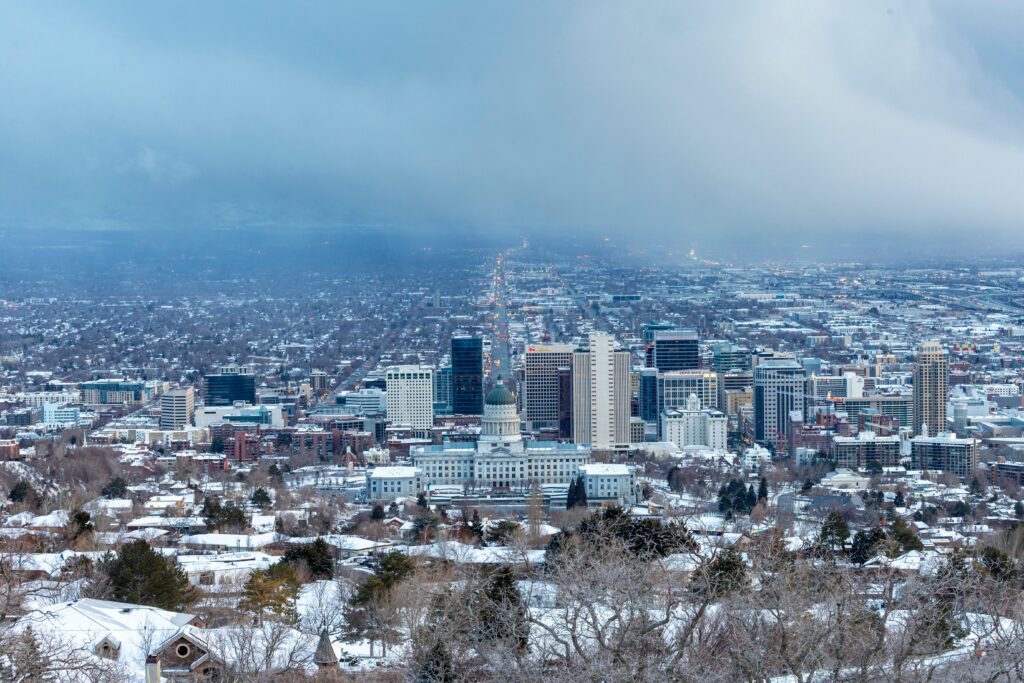
Salt Lake City is increasingly important to Utah’s visitor economy because it combines several advantages.
It has a major international airport, hotels, restaurants, conventions, sporting events, cultural attractions and easy access to the mountains.
That gives the city an opportunity to serve multiple categories of travelers simultaneously.
A visitor could attend a conference downtown and ski the next morning.
Another might come for a sporting event and spend several days exploring the state’s outdoor attractions.
That combination gives Salt Lake City an unusually flexible tourism proposition.
The Economic Impact Goes Beyond Tourist Spending
Tourism creates a multiplier effect.
A visitor pays for a hotel.
The hotel pays its employees.
The hotel buys supplies.
Employees spend their wages.
Suppliers hire workers.
Local governments collect taxes.
The visitor’s original spending therefore circulates through the broader economy.
The 2025 report estimated another $1.1 billion in tax revenue came from indirect and induced economic effects, in addition to $1.6 billion in direct state and local tax revenue. (KSL)
That brings the overall tax impact to approximately $2.7 billion.
But Record Tourism Does Not Mean No Problems
A $13.7 billion tourism economy sounds like an uncomplicated success story.
It isn’t.
Tourism can put pressure on housing, roads, water systems and public lands.
Popular communities can experience traffic and congestion.
Natural attractions can suffer from excessive visitation.
And the economic benefits are not necessarily distributed evenly across the state.
That creates a policy challenge.
Utah needs tourism revenue—but it also needs to protect the communities and landscapes responsible for generating that revenue.
The Future May Be About Quality, Not Quantity
Utah’s experience suggests that the next generation of tourism strategy may focus less on simply increasing visitor counts.
Instead, tourism organizations could concentrate on:
- longer stays;
- higher visitor spending;
- shoulder-season travel;
- sports tourism;
- cultural tourism;
- culinary experiences;
- conventions;
- rural tourism;
- and better distribution of visitors across the state.
That would allow Utah to grow economically without necessarily encouraging unlimited visitation to its most fragile locations.
What Could Shape Utah Tourism in 2026?
The outlook remains uncertain.
The Gardner Institute expects modest growth in U.S. domestic and international travel, but Utah’s performance will depend on economic conditions and consumer behavior. (KSL)
Several factors could influence the state’s tourism economy:
- inflation;
- interest rates;
- travel costs;
- exchange rates;
- international relations;
- consumer confidence;
- weather;
- and major sporting events.
The FIFA World Cup also provides an additional opportunity for tourism across North America.
A More Resilient Tourism Model
Utah’s record is significant precisely because it occurred under less-than-perfect conditions.
Visitors spent more despite lower hotel occupancy, reduced park visitation, fewer airport passengers and a severe decline in ski visits. (KSL)
That suggests the state’s tourism economy is becoming more diversified.
It isn’t dependent on a single attraction or a single season.
And that may be the most important story hidden inside the $13.7 billion headline.
Final Thoughts
Utah’s tourism economy generated a record $13.7 billion in visitor spending in 2025, supported roughly 167,000 jobs through direct and broader economic effects, and generated approximately $2.7 billion in state and local tax revenue when direct, indirect and induced effects are combined. (KSL)
But the state’s biggest tourism achievement may not be the record itself.
It may be the industry’s ability to keep growing economically while traditional visitation indicators weakened.
Utah is gradually becoming more than a destination for national parks and powder snow.
Sports, conventions, restaurants, entertainment, arts and recreation are all expanding the tourism portfolio.
The challenge now is making that growth sustainable.
Because the smartest tourism strategy isn’t necessarily more tourists, everywhere, all the time.
It is more value, more widely distributed, across more seasons—while protecting the landscapes and communities that make Utah worth visiting in the first place.
And that may be the real blueprint behind Utah’s next tourism boom.
Sources KSL

