
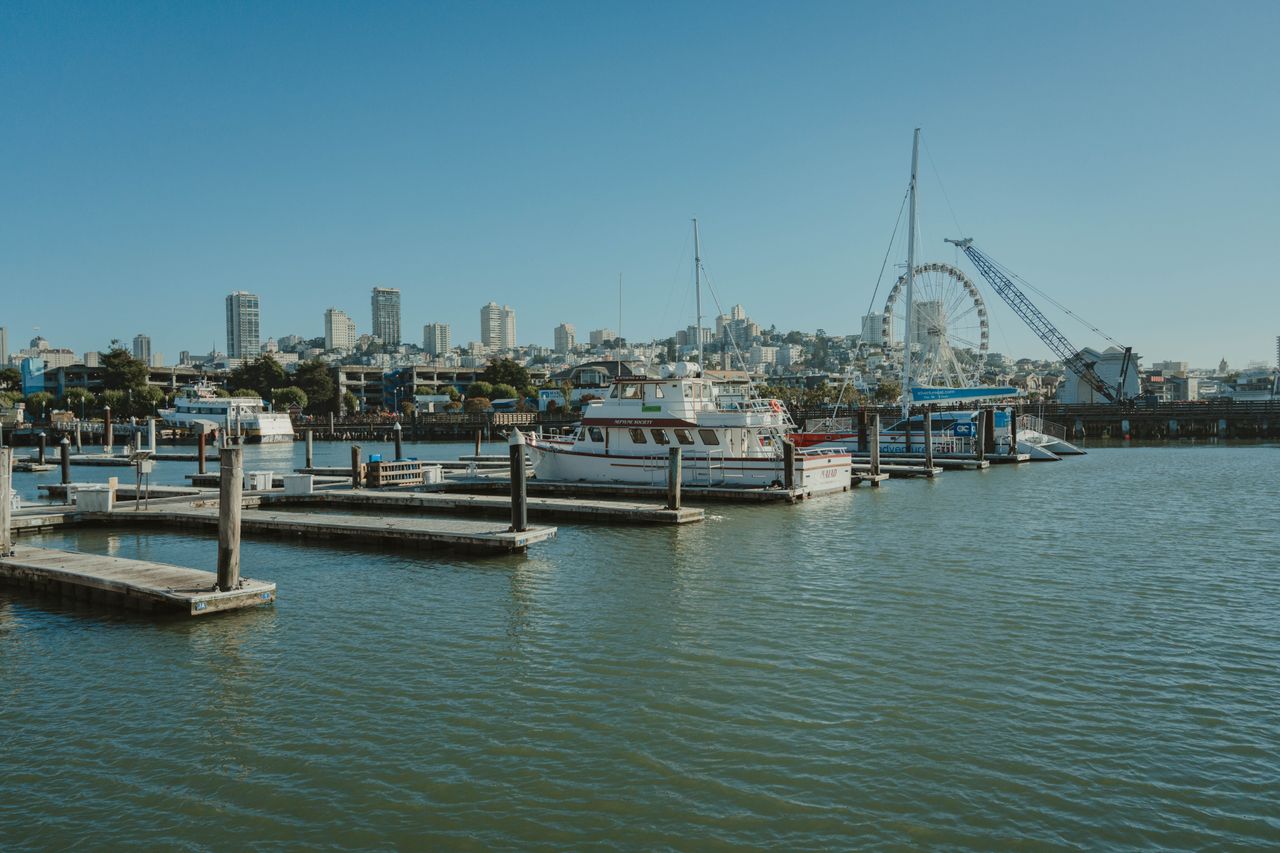
A familiar piece of San Francisco tourism history is coming to an end.
Ripley’s Believe It or Not!, the longtime oddities museum at Fisherman’s Wharf, will close its San Francisco attraction before the end of 2026 after nearly six decades at the waterfront location. The company has not announced the exact closing date, and the museum remains open for visitors in the meantime.
The decision marks the end of one of the longest-running attraction stories at Fisherman’s Wharf.
But it is also arriving at a complicated moment for San Francisco tourism.
The city’s visitor economy is expanding again. San Francisco Travel projects roughly 24.4 million visitors and $9.94 billion in visitor spending in 2026, following 23.7 million visitors and $9.4 billion in spending in 2025.
Meanwhile, Fisherman’s Wharf is undergoing a major redevelopment and resilience program that includes new public spaces, commercial opportunities and infrastructure designed to address seismic risk and future sea-level rise.
Ripley’s closure therefore does not fit neatly into a story of tourism disappearing from San Francisco.
Instead, it illustrates how individual attractions can close while the broader tourism economy changes and grows at the same time.
Ripley’s Has Been Part of San Francisco Since 1967
The San Francisco Odditorium opened on February 2, 1967.
Its location at 175 Jefferson Street placed it directly in the middle of Fisherman’s Wharf, where seafood restaurants, souvenir stores, maritime attractions, street performers and other tourism businesses create one of San Francisco’s best-known visitor districts.
For generations of tourists, Ripley’s offered something distinctly different from the city’s traditional museums.
Instead of paintings or conventional historical collections, visitors encountered unusual artifacts, optical illusions, strange objects, extraordinary human stories and interactive displays.
The attraction reportedly contains more than 400 exhibits as well as a 2,000-square-foot mirror maze.
That combination made Ripley’s particularly compatible with Fisherman’s Wharf.
Visitors were not necessarily searching for an academic museum.
They were looking for something surprising.
The Ripley’s Story Began Long Before the Fisherman’s Wharf Museum
The brand’s origins go back to cartoonist and entrepreneur Robert Ripley.
His “Believe It or Not!” cartoon first appeared in newspapers in 1918. Ripley became famous for collecting and presenting unusual facts, images and objects from around the world.
The concept eventually expanded beyond newspapers into radio, books, exhibitions and permanent attractions.
Ripley opened his first permanent Believe It or Not! attraction in St. Augustine, Florida, in 1950, more than 15 years before the San Francisco location opened.
By the time Ripley’s arrived in San Francisco, the company had already developed a recognizable entertainment formula.
San Francisco proved to be a particularly appropriate place for it.
Robert Ripley Had Deep Bay Area Connections
The San Francisco connection predates the Odditorium by decades.
Ripley worked for the San Francisco Bulletin in 1909, and the company points to his involvement with exhibitions at the Golden Gate International Exposition on Treasure Island in 1939 and 1940.
That history is part of why company president Jim Pattison Jr. emphasized the significance of San Francisco to Ripley’s legacy when announcing the closure.
The company has also indicated that closing the existing attraction does not necessarily mean the end of Ripley’s involvement with the city.
Pattison said Ripley’s was not necessarily saying goodbye to San Francisco permanently.
That leaves open the possibility of a future attraction or exhibition, although no new San Francisco location has been announced.
Ripley’s Has Not Given One Specific Reason for Closing
The company has deliberately avoided blaming a single factor.
A spokesperson told SFGATE that the decision was not the result of “one single challenge or event.” Instead, Ripley’s said it took a broader look at the attraction, the changing Fisherman’s Wharf environment and what made sense for the company in the future.
That wording is important.
It means the closure should not automatically be attributed to one particular issue such as tourism levels, crime, rent, the pandemic or competition.
Those may be part of the wider business environment, but the company has not publicly identified one as the definitive cause.
The attraction is simply reaching the end of its current chapter.
The Timing Is Especially Interesting Because San Francisco Tourism Is Recovering
At first glance, a famous tourist attraction closing may seem inconsistent with a tourism rebound.
The latest industry data shows why the two things can coexist.
San Francisco Travel says the city had 23.7 million visitors in 2025, generating $9.4 billion in visitor spending and supporting approximately 63,900 tourism-related jobs. Sixty percent of visitor spending occurred outside hotels, benefiting restaurants, retail businesses, arts organizations and neighborhood companies.
The organization’s updated 2026 forecast is even stronger, projecting:
24.4 million visitors
$9.94 billion in visitor spending
70.7% hotel occupancy
$266.16 average daily hotel rates
and continued growth in lodging revenue.
So the closure of Ripley’s should not be read as evidence that San Francisco has stopped attracting visitors.
Instead, it shows that tourists are spending their money in a changing mix of businesses and experiences.
A Tourist Boom Does Not Guarantee Every Attraction’s Survival
Tourism is made up of thousands of individual businesses.
Some gain customers.
Some lose them.
Some reinvent themselves.
Others eventually close.
A destination can record record visitor spending while a particular restaurant, museum or attraction leaves the market.
Consumer preferences change.
Operating costs change.
Property arrangements change.
Visitors’ expectations evolve.
An attraction that worked well for decades may require substantial reinvestment to compete with newer forms of entertainment.
Ripley’s is part of a tourism category that increasingly competes with immersive experiences, large-scale entertainment venues, social-media destinations and digitally delivered entertainment.
The fact that the brand remains active in other cities suggests the company is not abandoning the attraction concept itself.
The San Francisco location is the part being retired.
Fisherman’s Wharf Is Changing at the Same Time
Ripley’s is leaving while Fisherman’s Wharf is undergoing one of its most substantial transformations in decades.
The Port of San Francisco’s Fisherman’s Wharf Forward program is a multiyear initiative focused on Taylor and Jefferson streets and the Inner Lagoon.
The project includes:
New public spaces.
An Inner Lagoon overlook.
Improved lighting for the fishing fleet.
New opportunities for events and experiences.
Retail and restaurant opportunities.
Seawall and wharf improvements.
Flood-protection measures.
Long-term seismic resilience work.
The Port says near-term improvements are being completed around 2026, while long-term resilience work is scheduled to continue into fall 2030.
That means the Fisherman’s Wharf of the early 2030s could look substantially different from the Fisherman’s Wharf of 2020—or the Fisherman’s Wharf that existed when Ripley’s first opened in 1967.
Fisherman’s Wharf Remains a Huge Tourist Destination
The Wharf is not being redeveloped because nobody visits.
The Port says the neighborhood attracted more than 10 million people in 2024, making it San Francisco’s most visited neighborhood according to Placer.ai data cited by the Port.
The district remains home to major visitor attractions, restaurants, waterfront excursions, fishing operations, entertainment and the SkyStar Observation Wheel.
That makes the future of the former Ripley’s site particularly interesting.
A property in one of the city’s busiest visitor corridors is unlikely to remain irrelevant.
The question is what comes next.
The Wharf Is Moving Toward More Public Space
One visible part of the transformation is Alioto’s Plaza.
The public space opened in September 2026 on the site of the former Alioto’s restaurant, a Fisherman’s Wharf institution that operated for nearly a century. The Port says the plaza expands public views and access toward the Inner Harbor while highlighting the neighborhood’s fishing-industry and cultural history.
The change illustrates a broader trend.
The future of Fisherman’s Wharf will not necessarily depend entirely on individual legacy attractions.
Public gathering spaces, restaurants, retail, events and maritime experiences can all contribute to the district’s appeal.
That creates a more diversified visitor environment.
Other Longtime Attractions Have Also Disappeared
Ripley’s is not the first iconic attraction to leave the Wharf.
Madame Tussauds permanently closed its Fisherman’s Wharf location in October 2024.
That does not mean the neighborhood’s attraction industry is collapsing.
It shows that the mix of attractions is changing.
Some businesses close.
New concepts appear.
Public spaces replace private uses.
Historic properties are adapted.
The neighborhood evolves.
The current Fisherman’s Wharf Forward program explicitly envisions new retail and restaurant spaces alongside public-realm improvements and infrastructure projects.
New Businesses Are Already Entering the Area
The transformation is not purely about closures.
SFGATE reports that Saigon Sandwich and Little Sweet are slated to open in the broader Fisherman’s Wharf area, while Space Karaoke is planned for 2027.
The arrival of new food and entertainment concepts suggests that commercial turnover is occurring alongside the departure of older businesses.
That is typical of established tourist districts.
A neighborhood can retain its visitor traffic even while the names visitors recognize change substantially.
Ripley’s San Francisco Exhibits Could Be Scattered
The closure will also affect the objects inside the attraction.
Ripley’s says a selection of San Francisco-related exhibits will be offered for sale.
Among the items identified by the company are:
A miniature Golden Gate Bridge made on the head of a pin.
Toothpick versions of the Golden Gate Bridge.
Joe DiMaggio’s crutches.
A chicken-wire portrait of Janis Joplin.
These objects are unusual even by museum standards.
They also represent a form of San Francisco memorabilia that may become increasingly difficult to see together once the attraction closes.
The company has not provided a final list of every exhibit that will be sold.
Why the San Francisco-Related Objects Matter
A Golden Gate Bridge replica made on the head of a pin is not valuable simply because it depicts the bridge.
Its significance comes from the story behind it and the setting in which visitors encountered it.
The same is true of the DiMaggio and Joplin items.
Ripley’s has spent decades turning objects into stories.
Once the museum closes, those stories may travel elsewhere.
An item may go to a private collector.
Another could be purchased by another attraction.
Some might eventually appear in an auction or temporary exhibition.
The fate of the collection will determine how much of the San Francisco-specific Ripley’s experience survives.
The Attraction’s Unusual Exhibits Were Its Competitive Advantage
Traditional museums compete partly on historical importance and academic collections.
Ripley’s competes on curiosity.
Its central question is essentially:
Can this possibly be true?
That concept allows the attraction to combine history, entertainment, science, human achievement and bizarre stories.
In a digital world where travelers can search almost any fact instantly, the physical experience of seeing an unusual object remains part of the attraction.
Visitors can look at something strange and ask questions about it.
The museum turns information into an experience.
Physical Attractions Now Face a Different Competitive Environment
The challenge for long-running attractions is that tourism itself has become more experience-driven.
Travelers increasingly have access to:
Immersive exhibitions.
Large entertainment venues.
Sports events.
Live residencies.
Pop-up experiences.
Virtual environments.
Social-media destinations.
This does not make traditional attractions obsolete.
But it changes the standard they have to meet.
A museum that opened nearly 60 years ago may need to continually refresh its experience to remain competitive with newer attractions designed specifically for today’s visitors.
San Francisco’s Tourism Growth Is Increasingly Event-Driven
Another important part of the city’s recovery is conventions and major events.
San Francisco Travel says 38 events at Moscone Center are scheduled in 2026 and are expected to generate more than 656,000 hotel room nights.
Events such as major conventions, sports competitions and cultural festivals can generate substantial visitor demand.
That changes the way tourists experience the city.
Instead of traveling solely because of a traditional attraction, people increasingly visit for a conference, concert, sporting event or festival and then explore neighborhoods during their stay.
Fisherman’s Wharf benefits from that broader visitor ecosystem.
International Tourism Is Another Part of the Recovery
San Francisco’s tourism recovery is not entirely domestic.
San Francisco Travel projects international overnight visitation to San Francisco and San Mateo counties to reach approximately 2.42 million in 2027, up 5.2% from 2026, with spending projected to rise 7.3%.
That longer-term forecast illustrates the city’s continued ambition to rebuild its international visitor base.
For a district like Fisherman’s Wharf, international visitors are especially important because iconic landmarks and waterfront attractions are often high priorities for first-time travelers.
The Wharf’s Infrastructure Is More Important Than Ever
The future of Fisherman’s Wharf is not just about attracting customers.
It is about maintaining the physical waterfront.
The Port says the district faces significant seismic risks and long-term sea-level-rise challenges. The Fisherman’s Wharf Forward program is designed to improve the resilience of Taylor Street and the Inner Lagoon through 2100, including potential seawall and wharf replacement, flood-proofing and improvements to fishing-industry facilities.
That means some changes visitors see in the coming years may have little to do with tourism trends.
They may be required simply to keep the waterfront operational.
Fisherman’s Wharf Is Both a Working Waterfront and a Tourist Destination
One reason the neighborhood is so distinctive is that tourism and working maritime activity coexist.
Fishing boats and commercial operations operate alongside restaurants, retail stores and attractions.
The Port’s redevelopment strategy is explicitly trying to preserve and highlight the fishing industry while also improving the visitor experience.
That creates a different model from a purely entertainment-focused tourist district.
The objective is not to remove the working waterfront.
It is to make that history and activity part of the visitor experience.
What Visitors Can Still Experience at Fisherman’s Wharf
Even after Ripley’s closes, visitors will continue to have a long list of attractions available.
These include:
PIER 39, with restaurants, retail, sea lions and waterfront views.
The Aquarium of the Bay, focused on Northern California’s marine environment.
San Francisco Maritime National Historical Park, preserving the city’s maritime history.
Alcatraz Island, accessible from nearby ferry services.
SkyStar Observation Wheel, providing aerial views of the waterfront and city.
Cable cars, including routes serving the waterfront.
Fishing and bay excursions, which connect visitors to the Wharf’s maritime identity.
The neighborhood’s future therefore does not depend on replacing Ripley’s with an exact equivalent.
The Future Attraction May Be Something Completely Different
One possibility is another museum.
But the redevelopment environment suggests a range of alternatives.
A restaurant could expand into the space.
A new entertainment attraction could move in.
A family-oriented interactive experience could take over.
A retail concept could be developed.
The Port’s broader Fisherman’s Wharf strategy explicitly includes new opportunities for events and experiences and future retail leasing.
The next occupant could therefore tell visitors something very different about what Fisherman’s Wharf wants to become.
Could Ripley’s Return?
The company has intentionally left the door open.
Pattison said Ripley’s was not necessarily saying goodbye to San Francisco permanently.
That could mean anything from a future permanent attraction to a temporary exhibition.
At this stage, there is no announced project.
But the statement is significant because it suggests the company still regards San Francisco as a relevant market rather than abandoning it completely.
The Closure Is Also About Nostalgia
For many visitors, Ripley’s is more than a business.
People remember taking children there.
Teenagers remember exploring the mirror maze.
Families remember unusual photographs.
Visitors remember seeing objects they could not easily explain.
Because the attraction operated for almost 60 years, many generations experienced it.
That creates a form of cultural memory that is difficult to measure in visitor-spending statistics.
When an attraction closes, part of what disappears is not only the business itself but the shared memory associated with it.
Longtime Tourist Attractions Become Part of a City’s Identity
This is why the closure has received attention beyond the tourism industry.
San Francisco contains many famous attractions, but the city’s visitor identity is constantly changing.
The attractions tourists remember from childhood are not necessarily the attractions younger travelers will know.
That is part of how cities evolve.
Restaurants become landmarks.
New public spaces become gathering points.
Old attractions close.
New attractions emerge.
Some experiences become historical references rather than living businesses.
Ripley’s is now entering that transition.
The Closure Does Not Mean San Francisco Tourism Is Weak
The broader numbers are important enough to repeat.
San Francisco Travel forecasts nearly $10 billion in visitor spending in 2026, while the city welcomed 23.7 million visitors in 2025.
The city’s tourism sector is therefore moving in a direction that differs from the fate of one individual attraction.
The Ripley’s closure is better understood as a business and neighborhood transition within a recovering visitor economy.
That distinction will become increasingly important as Fisherman’s Wharf changes over the next several years.
What the Closure Means for the Bay Area Tourism Industry
The lesson is not that classic attractions are doomed.
It is that tourism businesses have to adapt to changing consumer expectations, costs, neighborhoods and destination strategies.
Ripley’s continues to operate elsewhere.
Fisherman’s Wharf continues to attract millions of people.
San Francisco’s overall visitor economy continues to grow.
At the same time, older properties and businesses are being replaced with new uses.
That is the normal—and sometimes disruptive—process of tourism evolution.
A Historic Waterfront Is Entering a New Generation
When Ripley’s opened in 1967, San Francisco looked very different.
Tourists had fewer entertainment choices.
There was no social media.
There were no smartphones.
Visitors planned trips around guidebooks, newspapers and recommendations from friends.
Today, travelers can discover experiences through short-form video, online reviews, virtual tours and constantly changing digital recommendations.
The tourist district has had to evolve with them.
Fisherman’s Wharf Forward represents the physical side of that evolution.
New restaurants and entertainment concepts represent the commercial side.
And Ripley’s closure represents the generational turnover side.
What Happens Before the Museum Closes?
The attraction remains open while the company prepares for its departure.
The exact closing day has not yet been announced.
Ripley’s also plans to support employees through the transition and sell a selection of San Francisco-connected exhibits.
That means visitors still have an opportunity to experience the museum before the doors close permanently at this location.
Those who are particularly interested in the San Francisco-specific artifacts may also want to monitor future announcements about exhibits being offered for sale.
The Final Chapter May Become Part of Fisherman’s Wharf History
There is a certain irony to Ripley’s closing just as Fisherman’s Wharf is investing in its future.
The museum spent almost six decades presenting unusual pieces of history to visitors.
Now its own building and exhibits are becoming part of San Francisco tourism history.
The location’s next chapter could look very different.
But the neighborhood itself is unlikely to disappear from the tourist map.
Millions of people continue to visit the Wharf.
The city is forecasting tourism growth.
The Port is investing in new public spaces and long-term infrastructure.
New restaurants and entertainment businesses are entering the district.
The visitor economy is evolving rather than disappearing.
A Nearly 60-Year Run Comes to an End
Ripley’s Believe It or Not! will leave Fisherman’s Wharf before the end of 2026, closing a location that opened on February 2, 1967.
The company’s decision comes without a single publicly identified cause, but the timing places it within a broader period of change at Fisherman’s Wharf.
The waterfront is being redesigned.
New public spaces are opening.
Commercial tenants are changing.
Infrastructure is being strengthened for future climate and seismic risks.
San Francisco’s tourism economy is recovering.
And visitors are seeking increasingly diverse experiences.
For those reasons, Ripley’s closure is best understood as the end of one chapter rather than the end of Fisherman’s Wharf’s tourism story.
The strange objects, giant figures, mirror maze and San Francisco oddities that filled the museum may soon become memories or pieces of dispersed collections.
But the Wharf itself is preparing for another generation.
And, perhaps fittingly for a place built around things that are difficult to believe, the next chapter could be just as unexpected as the one that came before it.
5 Frequently Asked Questions About Ripley’s Believe It or Not! San Francisco
1. When is Ripley’s Believe It or Not! San Francisco closing?
The San Francisco attraction will close before the end of 2026. Ripley’s has not announced the exact final operating date, and the museum remains open while the company completes its plans for the closure.
2. Why is the Ripley’s San Francisco attraction closing?
Ripley’s has not identified a single cause. The company says it reviewed the attraction, the changing Fisherman’s Wharf environment and its future plans before deciding that it was time to close the current location.
3. How long has Ripley’s been at Fisherman’s Wharf?
The San Francisco Odditorium opened on February 2, 1967, giving the attraction a run of nearly 60 years.
4. What will happen to Ripley’s San Francisco exhibits?
Ripley’s plans to offer selected San Francisco-related exhibits for sale. Announced examples include a Golden Gate Bridge model made on the head of a pin, toothpick versions of the bridge, Joe DiMaggio’s crutches and a chicken-wire portrait of Janis Joplin. The full list and final destinations of the items have not yet been announced.
5. Is Fisherman’s Wharf still a popular tourist destination?
Yes. The Port of San Francisco says Fisherman’s Wharf attracted more than 10 million people in 2024, making it the city’s most visited neighborhood according to the data it cites. The waterfront is also undergoing a major redevelopment program aimed at improving public spaces, commercial activity and long-term resilience.
Ripley’s departure will remove a recognizable landmark from Fisherman’s Wharf, but it does not mark the end of San Francisco’s tourism era. The city’s visitor economy is forecast to approach $10 billion in spending in 2026, while Fisherman’s Wharf is being rebuilt around a combination of public space, maritime heritage, restaurants, retail, entertainment and resilient waterfront infrastructure.
Sources New York Post