
A changing audience is reshaping the UK book market
For years, publishers and literacy campaigners have worried that men are drifting away from fiction. Yet an unexpected development in Britain’s book market is challenging that assumption: novels originally written in other languages and translated into English are attracting a growing male audience.
The shift is more than a literary curiosity. Research commissioned by the Booker Prize Foundation shows that men now account for a larger share of purchases of translated fiction than women. These buyers also tend to be younger and more ethnically diverse than purchasers of fiction overall.
The trend suggests that the answer to declining interest in reading may not simply be to persuade men to read more of the same books. It may be to widen the range of stories, voices and literary traditions available to them.
Translated fiction is doing exactly that—bringing readers into contact with unfamiliar cultures, different styles of storytelling and subjects that cross national boundaries.
1. The numbers behind the translated-fiction boom
Research compiled by NielsenIQ BookData for the Booker Prize Foundation reveals a substantial change in the UK market over the past decade.
In 2016, approximately 2.9 million translated fiction books were sold in Britain. By 2025, annual sales had risen to around 3.8 million. The market’s value increased from £23.2 million to £40.7 million over the same period.
The most striking finding concerns gender.
In 2025, male buyers accounted for 51.3% of translated-fiction purchases, compared with 46.5% in 2016. By contrast, men accounted for only 37.2% of purchases in the broader general-fiction category.
This is an important reversal of the pattern often associated with fiction readership. Men are not necessarily buying more fiction across the board, but translated novels appear to be reaching a segment of the market that conventional fiction struggles to attract.
Age is another important factor. Buyers under 45 accounted for 72.8% of translated-fiction purchases in 2025, compared with 54.4% for general fiction. Readers under 35 represented 52% of translated-fiction purchases.
The largest purchasing age group for translated fiction was 25 to 34, while general fiction purchases were more concentrated among older buyers.
These figures suggest that translated fiction is not simply benefiting from a temporary literary fashion. It is developing a distinctive audience.
2. Why are more men buying translated novels?
There is no single explanation for the increase. Instead, several developments in publishing, reading culture and consumer behaviour may help explain why translated fiction is connecting with male buyers.
Unfamiliar stories offer a different reading experience
Readers who regularly buy English-language fiction may become familiar with particular genres, settings, characters and narrative conventions.
Translated fiction can disrupt those expectations.
A Japanese novel may approach family relationships and social pressure differently from a British novel. A French psychological thriller may explore identity and morality through a different cultural lens. A Russian classic may offer a complex examination of politics, history and human behaviour.
For readers seeking something beyond familiar publishing formulas, these books can offer a refreshing alternative.
This does not mean translated fiction is inherently more sophisticated or more interesting than English-language writing. Its appeal lies in the variety of perspectives it makes available.
Readers are looking for discovery
The popularity of translated novels may also reflect a growing appetite for discovery.
Finding an author from another country can feel like entering a literary world that has not yet been extensively explored. Readers can encounter writers whose reputations are already established in their home countries but who are relatively new to English-language audiences.
That sense of discovery is particularly attractive in an environment where social media, book recommendations and online communities make it easier to find unusual titles.
Genre matters more than the language of origin
Translated fiction is not a single literary genre. It includes crime, thrillers, science fiction, fantasy, historical novels, literary fiction, romance and experimental writing.
A reader who enjoys Nordic crime fiction, Japanese suspense or European political thrillers does not necessarily approach those books as an exercise in cultural education. The primary attraction may simply be a compelling story.
This distinction matters when considering how to reach men who have become less interested in reading.
Publishers may find more success by promoting the excitement, suspense, humour or emotional power of individual books rather than presenting translated fiction as an academic or specialist category.
3. Japanese, French and Russian literature lead the way
The languages from which British publishers translate fiction have also changed.
In 2016, translated books from Swedish, French and Italian were among the most popular. By 2025, Japanese, French and Russian had become the leading languages of origin in the Booker Foundation’s analysis.
Japanese fiction has become particularly visible in English-language bookshops. Its popularity spans contemporary literary novels, crime stories, psychological fiction and works exploring loneliness, family, work and social expectations.
French fiction has maintained a strong position, supported by a long tradition of internationally recognised writers and publishers.
Russian literature’s position in the rankings has been partly driven by renewed sales of classic works. This illustrates how translated-fiction markets can bring older literature back into public attention, not just introduce contemporary authors.
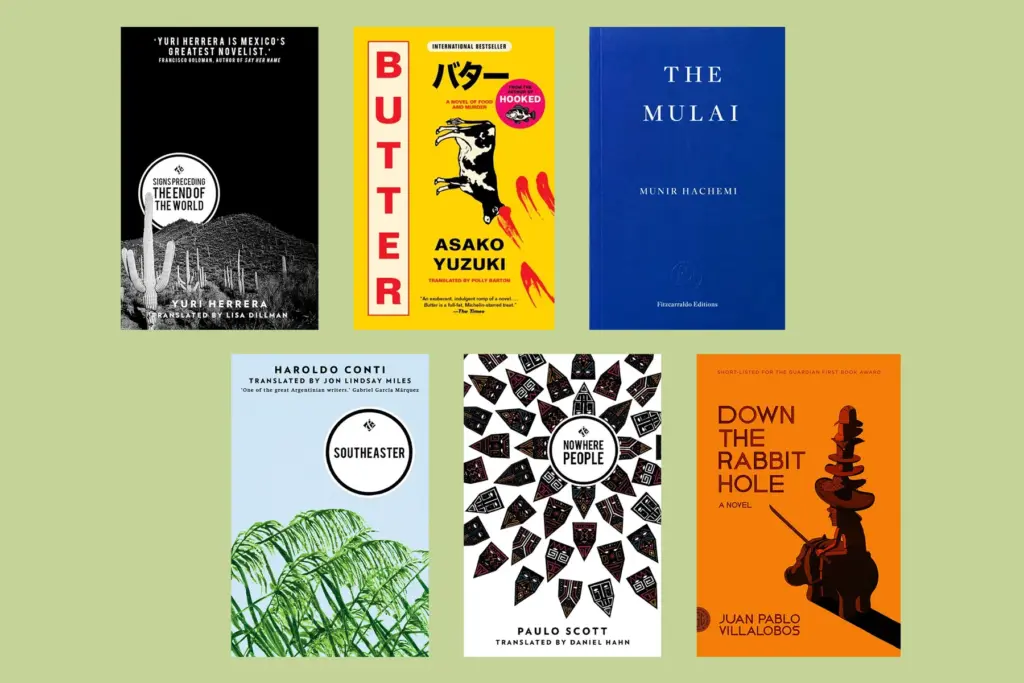
The range of countries represented is much wider than these three languages. Readers can also discover fiction from South Korea, China, Spain, Germany, Italy, Arabic-speaking countries, Latin America, Africa and many other literary traditions.
The growing market creates opportunities for books that might previously have remained largely inaccessible to English-speaking readers.
4. The International Booker Prize has helped change reading habits
One of the most important institutions behind the growing visibility of translated fiction is the International Booker Prize.
The prize in its current form was established in 2016. Unlike the main Booker Prize, which recognises fiction written in English, the International Booker celebrates a single work of fiction translated into English and published in the UK or Ireland.
It also recognises the translator alongside the author, giving greater visibility to the person responsible for carrying the original work into another language.
Over the past decade, the prize has become a major platform for international writers. Its shortlist and winner announcements attract media attention, bookseller promotion and discussion among readers.
The effect can extend beyond the winning title. A reader who discovers one translated novel through the prize may become interested in other writers from the same country, language or publisher.
The 2025 award went to Heart Lamp, a collection of short stories by Indian writer Banu Mushtaq, translated from Kannada by Deepa Bhasthi. The recognition brought attention to a literary tradition and language that many English-language readers may previously have known little about.
The prize also helps demonstrate that translated fiction is not a niche category reserved for specialists. It can compete for mainstream literary attention on the strength of its storytelling.
5. Independent publishers are opening doors for international writers
Large publishing companies play an important role in the book industry, but independent publishers have been particularly influential in bringing translated fiction to English-language audiences.
Translation can be a commercially uncertain investment. A publisher must acquire rights, commission a translator, edit the manuscript, produce the book and promote an author who may be unfamiliar to local readers.
The costs and risks can be significant, especially when the original writer has no established English-language readership.
Independent publishers often accept these risks because they are willing to focus on distinctive voices, literary experimentation and books that may not fit conventional commercial categories.
Their work can introduce readers to authors who might otherwise remain unknown outside their home countries.
This publishing ecosystem also creates opportunities for smaller literary communities. A successful translation can encourage publishers to acquire additional works from the same country or language, creating a wider market over time.
The International Booker Prize has helped amplify this work by drawing attention to translated titles and the publishers responsible for bringing them to readers.
6. Social media and book recommendations are changing discovery
The way readers find books has changed considerably.
Traditional literary reviews remain important, but recommendations from friends, independent booksellers, online communities and social media can now play a major role in turning an unfamiliar title into a bestseller.
Book-focused communities on platforms such as TikTok, Instagram, YouTube and Reddit allow readers to discuss books that may not receive extensive coverage in mainstream newspapers.
Translated fiction benefits from this environment because readers can recommend titles based on distinctive themes, unexpected endings, unusual settings or powerful characters.
A novel does not necessarily need to be written in English to become a conversation starter.
Research by NielsenIQ on translated-fiction sales has also highlighted the importance of personal recommendations and physical bookshops in helping readers discover titles. Bestseller lists and literary prizes can then reinforce that initial interest.
This suggests that the translated-fiction boom is not being driven by one promotional channel. It is the result of several routes to discovery working together.
7. Translated fiction buyers are more diverse
The demographic findings reveal another important characteristic of the market.
In 2025, 29% of translated-fiction purchases were made by people identifying as Black, Black British, Asian, Asian British, Mixed or another ethnicity outside the white category. In 2016, the corresponding share was 11.3%.
The audience for general fiction remains considerably less diverse by comparison.
Translated fiction may appeal to readers who want to encounter stories that reflect a wider range of cultural experiences. It also provides access to literary traditions that are not always represented prominently in mainstream English-language publishing.
This is significant in a multicultural country such as Britain, where many people have family, linguistic or cultural connections to other parts of the world.
However, it would be inaccurate to assume that only people with international backgrounds buy translated books. The figures show a broader diversification of the audience, not an exclusive relationship between heritage and reading preferences.
The most interesting implication is that translated fiction is reaching across demographic boundaries.

8. Are men really returning to reading?
The statistics offer encouraging evidence, but they need to be interpreted carefully.
The fact that men account for 51.3% of translated-fiction purchases does not prove that men as a whole are reading more books than before.
The NielsenIQ figures describe the demographic profile of book purchases. They do not directly measure every aspect of reading behaviour, including how many books people finish, how frequently they read or whether they borrow books rather than buy them.
Nevertheless, the contrast with general fiction is meaningful.
Men account for a much larger share of translated-fiction purchases than of purchases in the wider fiction market. That suggests the category is reaching male buyers who may be less represented in other areas of fiction publishing.
This is especially relevant amid concerns about declining reading habits among boys and men.
The National Literacy Trust has reported that daily reading rates and enjoyment of reading among children and young people have weakened, with boys experiencing particularly pronounced declines in recent years.
The challenge is therefore not simply to celebrate a successful publishing category. It is to understand what makes certain books attractive to readers who might otherwise disengage from fiction.
Translated fiction may offer one useful answer: variety, discovery and stories that challenge expectations.
9. Why reading fiction matters in a digital world
The growing popularity of translated novels also raises a wider question about the role of reading in modern life.
People now consume information through short videos, social media feeds, podcasts, streaming platforms and digital news services. These formats provide convenience and entertainment, but they do not always encourage sustained attention.
Reading a novel requires a different kind of engagement.
Readers must follow characters, remember details, interpret motivations and connect events across many chapters. They may need to understand unfamiliar social settings or consider perspectives that differ from their own.
Fiction can therefore encourage patience, imagination and reflection.
Translated fiction adds another dimension because it exposes readers to different cultural assumptions and ways of interpreting the world.
A novel written in another language may challenge readers to reconsider ideas about family, religion, politics, class, relationships or individual freedom.
This does not mean every translated novel automatically creates greater empathy or cultural understanding. The value depends on the quality of the writing and the reader’s willingness to engage with it.
But the opportunity is significant.
10. Translation is a creative process, not just a language conversion
Behind every successful translated novel is a translator whose work is central to the reading experience.
Literary translation is much more complicated than replacing words in one language with their equivalents in another.
A translator must consider tone, rhythm, humour, cultural references, idioms, character voices and the emotional effect of individual sentences.
A phrase that works naturally in Japanese or French may sound awkward or confusing if translated word for word into English. The translator must find a way to preserve the meaning and literary effect without making the writing feel unnatural.
There are also difficult decisions involving cultural references. Should a translator explain an unfamiliar custom, preserve the original expression or find an English equivalent?
Different translators may make different choices, and those choices can influence how readers experience a book.
This is why recognition of translators through awards such as the International Booker Prize is important.
It reminds readers that translated literature is a collaborative achievement involving the original author, translator, editor and publisher.
11. The commercial opportunities—and risks—for publishers
The expansion of translated fiction offers significant opportunities for the publishing industry.
Publishers can reach new audiences, acquire international rights, develop relationships with overseas literary agents and build long-term reputations for discovering exceptional writers.
Bookshops can use translated fiction to create distinctive collections and encourage customers to explore unfamiliar authors.
Libraries can also use translated titles to support cultural engagement and offer readers access to a broader range of literature.
However, growth does not remove the commercial risks.
Translation is expensive, and not every title will sell enough copies to recover its costs. Some books require substantial editorial work, specialist knowledge and careful marketing.
Publishers must also consider whether readers will understand the cultural context of a book and how best to position it in a competitive market.
A successful translated novel can create demand for more international literature, but a single bestseller does not guarantee that the entire category will grow at the same rate.
The long-term health of the market will depend on a steady supply of strong writing, skilled translators, committed publishers and effective distribution.
12. What the trend means for the future of British literature
The growing interest in translated fiction could change the way British readers think about literature.
For generations, English-language publishing has enjoyed an enormous advantage because English is widely used internationally. British and American writers can reach global markets without first passing through a translation process.
The movement of literature in the opposite direction has historically been more limited.
The rise of translated fiction challenges that imbalance by making it easier for English-speaking readers to encounter writers from outside the traditional centres of English-language publishing.
It may also encourage British authors to experiment with different narrative styles and engage more deeply with international literary traditions.
For male readers in particular, the trend offers an important lesson for publishers: there is no single formula for attracting people to fiction.
Some readers may prefer crime and thrillers. Others may be drawn to philosophical novels, historical stories, science fiction or intimate accounts of family life. A wider selection increases the chances that more people will find something that speaks to them.
The industry’s task is to make those choices visible and accessible.
Conclusion: A new generation is discovering the world through books
The rise of translated fiction among male readers in Britain is a promising development for an industry concerned about the future of reading.
The numbers show that translated novels have grown in both sales and cultural visibility. They also reveal an audience that is younger, more male and more diverse than the market for general fiction.
The International Booker Prize, independent publishers, booksellers and online reading communities have all helped create an environment in which international writers can reach new audiences.
But the deeper significance is cultural.
A novel originally written in Japanese, French, Russian, Kannada or another language can speak to readers who have never visited the country where it was written. It can reveal unfamiliar experiences while exploring emotions and conflicts that are recognisable across borders.
For men who have become less interested in conventional fiction, translated novels may provide a fresh reason to pick up a book. For the publishing industry, they offer evidence that readers are not necessarily turning away from stories—they may simply be looking for different ones.
The future of reading could depend less on persuading people to read what they already know and more on helping them discover what they have not yet encountered.
Frequently Asked Questions (FAQs)
1. Why are more men in the UK buying translated fiction?
Research commissioned by the Booker Prize Foundation found that men accounted for 51.3% of translated-fiction purchases in the UK in 2025, compared with 37.2% of purchases in general fiction. Possible reasons include the appeal of unfamiliar stories, diverse genres, international settings and recommendations that help readers discover authors outside the English-language mainstream. The data shows a purchasing trend rather than proving that all men are reading more.
2. What is translated fiction?
Translated fiction refers to novels, short stories and other fictional works originally written in one language and subsequently translated into another. For example, a Japanese novel translated into English is considered translated fiction in the UK market. It includes many genres, from crime and romance to literary fiction, science fiction and historical novels.
3. Which countries and languages are most popular in UK translated fiction?
According to the Booker Prize Foundation’s analysis of 2025 sales, Japanese, French and Russian were the leading languages of origin for translated fiction in the UK. The popularity of these languages reflects a combination of contemporary writers, established literary reputations and renewed interest in classic literature.
4. What is the International Booker Prize, and how does it support translated literature?
The International Booker Prize recognises fiction translated into English and published in the UK or Ireland. It awards recognition to both the author and translator, helping bring international writers to the attention of English-speaking readers. Its annual shortlist and winner can increase bookshop visibility, media coverage and interest in translated literature more broadly.
5. Does translated fiction help improve reading habits and cultural understanding?
Translated fiction can encourage readers to explore unfamiliar cultures, perspectives and storytelling traditions. Reading novels also requires sustained attention, interpretation and engagement with characters and ideas. However, a translated book does not automatically improve literacy or create cultural understanding. Its impact depends on the reader’s engagement, the quality of the work and the opportunities available to discover and discuss it.

Sources Bloomberg