

Childhood may be a universal human experience, but the memories, fears and expectations that shape it are anything but identical. A child growing up in Japan in the early twentieth century encounters a world shaped by traditions, family structures and social expectations that may feel distant to a modern Western reader. Yet the emotions beneath those experiences—loneliness, curiosity, embarrassment, longing and the desire to belong—remain remarkably familiar.
That tension between cultural difference and emotional recognition lies at the heart of reading literature in translation. Japanese writer Yasushi Inoue offers a particularly compelling example. His writing invites readers to revisit childhood not as a simple period of innocence, but as a complicated landscape of memory, family relationships and gradual discovery.
The recent New Yorker interview with literary translator J. Martin Holman explores this subject through Inoue’s story collection The Death of a Certain Woman. Holman discusses how he became fascinated by Inoue’s autobiographical fiction, why the author’s work deserves wider international attention, and how translating stories about childhood can change the way a translator understands language and human experience.
The conversation also raises a broader question: what happens when a writer’s memories of a particular time and place are carried into another language, decades after the experiences themselves took place?
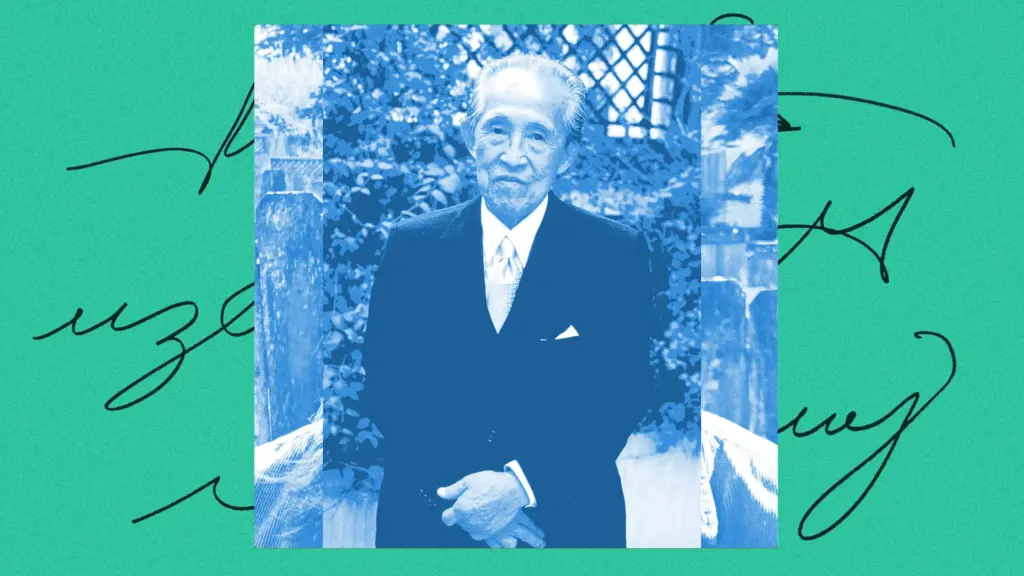
Who Was Yasushi Inoue?
Yasushi Inoue (1907–1991) was one of Japan’s major twentieth-century literary figures. Born in Asahikawa, Hokkaido, he studied philosophy at Kyoto Imperial University before working as a journalist and literary editor.
His literary career gained national recognition with Bullfight, which won the prestigious Akutagawa Prize in 1950. He left newspaper work in 1951 to concentrate on writing and subsequently produced an extraordinary body of fiction, including approximately 50 novels and 150 short stories.
Inoue wrote across several genres. His historical fiction explored people and events from different periods of Asian history, while his contemporary and autobiographical stories examined family relationships, personal ambition, memory and the uncertainties of everyday life.
In 1976, he received Japan’s Order of Culture, the country’s highest honour for artistic achievement.
Despite his remarkable reputation in Japan, only a portion of his work has appeared in English. This gap is one of the issues Holman addresses in his interview with The New Yorker.
Inoue’s international readership has gradually expanded through the work of translators and independent publishers, who have introduced new generations of readers to his distinctive literary voice.
J. Martin Holman: The Translator Who Discovered Inoue’s Childhood Stories
The connection between Holman and Inoue began in 1988.
Holman initially met the Japanese author to discuss translating The Memoirs of the Priest Honkaku, a historical novel involving the sixteenth-century tea master Sen no Rikyū and the political intrigues surrounding his life.
Inoue even marked the occasion with a tea ceremony at his home in Setagaya, Tokyo.
However, Holman was already reading Inoue’s short fiction about childhood and youth. Many of these stories were inspired by incidents from the author’s own life. Their emotional complexity and attention to ordinary human behaviour gradually captured the translator’s interest.
Instead of continuing with the original historical-novel project, Holman became increasingly absorbed in these childhood narratives.
He began translating them with Inoue’s permission. His translation of one story, The Naked Treetops, appeared in 1991, the same month Inoue died.
Over the following years, Holman continued translating Inoue’s stories and other fiction, including Asunaro Monogatari, or The Story of the Tomorrow Tree. Inoue described that work as autobiographical in the sense that it imagined the life he might have lived if certain circumstances had unfolded differently.
Holman’s latest project brings together stories that originally appeared in several Japanese collections during the 1950s and 1960s. Rather than simply translating one existing Japanese volume, he assembled a selection into a new English-language collection.
The result is The Death of a Certain Woman, a book that presents a connected literary exploration of childhood, adult behaviour and the gradual loss of innocence.
The Death of a Certain Woman: When Childhood Meets the Adult World
The title story provides a powerful introduction to Inoue’s approach to childhood.
Set in rural Japan during the late 1910s, it follows a boy who encounters a woman named Omitsu after she moves into a village storehouse.
Omitsu is known as the mistress of a middle-aged construction contractor, Shinjo Shinsuke. The villagers gossip about her arrival, and their children absorb the adults’ opinions without fully understanding the social and moral implications.
The word “mistress” becomes a mysterious new concept for the village children. They imagine that such a woman must be frightening, perhaps even monstrous.
Their curiosity leads them to spy on Omitsu’s home, turning adult scandal into a childhood adventure.
But when the narrator meets Omitsu, he discovers that she is not the frightening figure he imagined. She is a real person, capable of kindness and generosity.
This discovery is one of the story’s most important moments. The boy begins to understand that the labels adults attach to people do not necessarily reflect their actual personalities.
A Child’s First Encounter With Adult Hypocrisy
Omitsu’s relationship with Shinsuke becomes a subject of constant village gossip.
The adults initially condemn her, then gradually soften their opinions when she appears harmless. Their attitudes change again when Shinsuke begins visiting her openly.
The children observe these shifts without fully understanding them.
Inoue uses this situation to reveal how children learn social values. They do not necessarily develop their ideas through formal instruction. Instead, they absorb the behaviour, language and prejudices of the people around them.
The narrator’s experience suggests that growing up involves recognising the distance between what adults say and what they actually do.
The Movie Outing: A Small Moment of Freedom
One of the story’s most memorable episodes occurs when Omitsu takes the boy to see a movie in Nagano.
For the child, this is an exciting adventure. He rarely gets the opportunity to watch films, and the journey offers experiences beyond his ordinary village routine.
Omitsu buys him dinner, takes him to the cinema and treats him to sweet bean soup afterward.
The boy does not fully understand the film, but the moving images are fascinating enough. More importantly, he experiences a night of generosity and freedom with someone whom the village has taught him to distrust.
The journey becomes a secret. Omitsu asks him not to tell anyone that they watched the movie, and he keeps his promise.
This episode reveals the emotional complexity of the relationship. The child sees Omitsu not as a social category, but as a person who has shown him kindness.
The Tragedy in the Blizzard
The story eventually moves toward a devastating conclusion.
Shinsuke’s business difficulties and relationship with his wife place pressure on his relationship with Omitsu. The lovers agree to separate, but their feelings remain unresolved.
During a later visit, Omitsu insists that they renew their promise to part. She refuses to allow their emotional attachment to overcome the decision they have made.
The boy becomes a witness to this private conflict.
Afterward, Omitsu and Shinsuke walk together toward the railway station through a severe winter storm. The next day, their frozen bodies are discovered in separate locations in the snow-covered fields.
The villagers offer different explanations. Some believe the deaths were a planned lovers’ suicide. Others suspect coercion or divine punishment.
Decades later, the narrator encounters the German word Ringwanderung in a book about mountain climbing. The term describes the tendency of people in fog or blizzards to walk in circles even when they believe they are moving in a straight line.
The narrator suddenly imagines that Omitsu and Shinsuke may have become separated in the storm, each unknowingly moving along a different circular path.
This possibility changes his understanding of the tragedy. Rather than interpreting their deaths through the villagers’ moral judgments, he imagines two people losing one another in a natural disaster.
The final image is deeply affecting because it connects the narrator’s adult understanding with the small hand he remembers placing over the lovers’ joined fingers as a child.
The past has not changed, but the meaning of the memory has.
Why Inoue’s Childhood Stories Are More Than Nostalgia
Stories about childhood are often associated with innocence, happiness and the sentimental recollection of simpler times.
Inoue’s writing is more complicated.
His young protagonists encounter subjects that adults may consider inappropriate or difficult: infidelity, romantic relationships, social exclusion, death, jealousy and family secrets.
Yet Inoue does not present childhood as a period of complete ignorance. His characters are observant. They notice emotional tensions and recognise changes in adult behaviour, even when they cannot explain what they see.
This approach gives the stories their unusual psychological depth.
Childhood as a Time of Discovery
Children learn about the world through fragments.
They hear conversations, misunderstand unfamiliar words, observe adults and invent explanations for events they cannot comprehend.
Inoue’s fiction captures this process with remarkable precision.
A child may misunderstand a relationship but accurately sense that something important has happened. A young narrator may not understand the reasons behind an adult’s sadness but remember the expression on that person’s face for decades.
These incomplete impressions become the foundations of adult memory.
The Complexity of Family Relationships
Inoue’s own childhood experiences help explain his interest in unconventional family relationships.
Holman notes that Inoue was largely raised by a woman he regarded as his grandmother, although she was actually his late grandfather’s former mistress.
The Japanese legal system required the family to support her, even though relatives did so grudgingly.
This unusual family arrangement exposed Inoue to questions of social respectability, belonging and the complicated relationships that exist beyond conventional family structures.
It is reasonable to see echoes of these experiences in his fiction, although the stories should not automatically be treated as literal autobiographical records.
Inoue transforms personal memories into literary situations that explore much broader questions about how people judge one another.
The World of Rural Japan in the 1910s and 1920s
The stories in The Death of a Certain Woman are set in rural Japan during the early twentieth century.
This historical setting matters because it places the characters in a society where community reputation, family connections and traditional expectations have considerable influence.
The period includes the Taishō era (1912–1926), a time of social and cultural change in Japan.
Urbanisation, new forms of entertainment, changing social attitudes and expanding access to modern technology were reshaping Japanese society. However, rural communities often maintained strong traditional structures and close social networks.
In Inoue’s stories, these contrasts appear through ordinary experiences.
A journey to a nearby town can become a major adventure. Watching a movie is an exciting event. A woman’s private relationship can become the subject of intense community scrutiny.
The village itself functions almost like another character. Its residents observe, discuss, judge and influence the lives of individuals.
For international readers, these details provide an introduction to a particular historical environment without requiring extensive knowledge of Japanese political history.
Inoue’s focus remains on the people living within that environment.
What Makes Inoue’s Writing Distinctive?
Holman describes being attracted to Inoue’s attention to small, tender and sometimes confusing human actions.
This is an important observation because Inoue’s fiction does not depend on dramatic speeches or elaborate explanations.
Instead, its emotional power often comes from ordinary moments:
- A child watching adults exchange uncomfortable glances.
- A woman quietly offering food to a young boy.
- A person trying to keep a promise despite emotional pain.
- A memory that remains unresolved for decades.
- A familiar landscape that changes as time passes.
These moments gradually reveal the characters’ inner lives.
Inoue also demonstrates an unusual ability to preserve ambiguity. Readers are not always given a definitive explanation for why people behave as they do.
In the title story, even the narrator’s final interpretation of Omitsu and Shinsuke’s deaths remains speculative.
The German concept of Ringwanderung provides a possible explanation, not a definitive historical answer.
That uncertainty is part of the story’s emotional strength. It leaves readers thinking about the difference between what happened and what people choose to believe happened.

Why Has So Little of Inoue’s Work Been Translated Into English?
One of the central questions in Holman’s interview concerns Inoue’s limited presence in English-language publishing.
The author was prolific and highly respected in Japan, yet much of his writing remained inaccessible to readers who do not read Japanese.
Holman identifies several reasons.
1. Historical Fiction Can Require Cultural Context
Inoue wrote many historical novels. Some explore periods, figures and cultural traditions that may be unfamiliar to Western readers.
A novel involving a Japanese tea master, an emperor or a historical political conflict can require additional background knowledge.
Publishers may worry that unfamiliar settings will limit a book’s commercial appeal.
However, Holman makes an important distinction: Inoue’s historical fiction often focuses on people living around famous historical figures rather than the celebrated figures themselves.
These peripheral characters can make the stories accessible through their everyday experiences.
2. Literary Translation Requires Specialised Skills
Japanese and English differ significantly in grammar, sentence structure, cultural references and patterns of expression.
Translating literary fiction requires more than understanding vocabulary. A translator must interpret tone, rhythm, implication, humour and emotional restraint.
A sentence that appears simple in Japanese may carry cultural or emotional associations that require careful consideration in English.
This makes experienced literary translators particularly important.
3. Publishing Markets Have Their Own Limitations
Holman also points to the relatively small market for Japanese literature during much of Inoue’s career.
Publishing decisions are influenced by commercial expectations, translation costs, marketing budgets and the availability of readers.
A writer may be widely respected in one country but remain less familiar internationally because publishers have not consistently invested in translating and promoting the work.
The situation has gradually changed as translated literature has gained more visibility, independent publishers have developed specialist catalogues, and readers have become increasingly interested in international fiction.
Translation Is More Than Replacing Words
The conversation between Holman and The New Yorker also highlights the intellectual and emotional challenges of literary translation.
A translator must preserve the author’s meaning while producing prose that feels natural in another language.
But the process is not mechanical.
Consider the word “mistress” in Inoue’s title story. The children hear it as an unfamiliar term and transform it into something frightening. Their understanding is shaped by the villagers’ attitudes rather than by any direct knowledge of Omitsu.
The word therefore carries several layers of meaning:
- Its literal meaning as a description of a relationship.
- The social stigma attached to the woman.
- The children’s imaginative interpretation.
- The narrator’s later understanding of the person behind the label.
A translator must preserve these layers without explaining away the story’s ambiguity.
The Importance of Cultural Context
Japanese literature contains social conventions, family relationships and forms of address that may not have direct equivalents in English.
A translator must decide how much context to provide and how much to leave for readers to discover.
Too much explanation can interrupt the narrative. Too little can make important relationships difficult to understand.
The challenge is particularly significant in historical fiction, where everyday details may be unfamiliar to modern readers.
Holman’s approach to Inoue demonstrates the value of sustained engagement with an author’s work. Translating several stories over many years can deepen a translator’s understanding of recurring themes, characters and literary habits.
Translation Changes the Translator, Too
One of Holman’s most revealing observations is that his understanding of language and human existence has changed throughout his decades of translating Inoue.
This is an important reminder that translation is not simply a process of transferring a finished meaning from one language to another.
The translator’s interpretation develops over time.
A passage that seems clear during an early reading may become more complicated after years of experience. New knowledge, personal changes and repeated encounters with the original text can reveal different possibilities.
Translation is therefore a continuing intellectual relationship between writer, translator and reader.
The Translator’s Role in Preserving Literary Memory
Writers are often remembered through their most famous novels, awards and public reputations. But translators play a crucial role in determining which parts of a writer’s work survive internationally.
Holman’s work on Inoue is an example of how translation can recover stories that might otherwise remain largely unknown outside their original language.
By assembling ten stories from different Japanese collections, he creates a new route into Inoue’s literary world.
This kind of editorial and translation work is especially valuable for writers with large bodies of work.
An author may have produced dozens of novels and hundreds of stories, but international readers often encounter only a small selection. Translators and publishers help determine which works receive attention and how they are introduced.
The process can also challenge the idea that only an author’s most famous or commercially successful works deserve translation.
Sometimes the most revealing way to understand a major writer is through a collection of smaller, less familiar stories.
Other Yasushi Inoue Books Worth Exploring
Readers interested in The Death of a Certain Woman may also want to explore Inoue’s other works available in English.
Shirobamba: A Childhood in Old Japan
Shirobambais one of Inoue’s best-known autobiographical works.
It follows a boy growing up in rural Japan and explores his relationship with the woman who raises him, known as Granny Onui.
The novel reflects Inoue’s own unusual childhood circumstances and provides a broader portrait of family life, social expectations and rural society.
It is a natural companion to the stories in The Death of a Certain Woman.
The Hunting Gun
This novella explores the emotional consequences of an extramarital relationship through letters connected to a man involved in a complicated romantic history.
It demonstrates Inoue’s ability to reveal intimate human relationships through restrained storytelling and carefully controlled perspectives.
Bullfight
The work that brought Inoue national recognition through the Akutagawa Prize is a valuable introduction to his early literary career.
It also demonstrates the author’s ability to explore ambition, human motivation and moral complexity.
Life of a Counterfeiter and Other Stories
This collection introduces readers to another side of Inoue’s fiction, including stories about identity, memory, artistic ambition and the uncertain relationship between truth and deception.
Together, these works show that Inoue’s literary interests extend well beyond childhood and historical fiction.
Why Independent Publishers Matter to Translated Literature
The publication of The Death of a Certain Woman also illustrates the importance of independent publishing.
Transit Books, the publisher behind the English-language collection, specialises in international literature and works that broaden readers’ understanding of global storytelling.
Independent publishers frequently take risks on writers who may not have immediate mainstream commercial appeal.
They can introduce authors from underrepresented literary traditions, support translators and develop relationships with readers interested in discovering unfamiliar voices.
This work is particularly important for Japanese literature, where the international profile of a writer does not always reflect the writer’s standing in Japan.
The English-language edition of The Death of a Certain Woman is scheduled for publication on January 19, 2027. The paperback is listed at 164 pages.
The collection offers an opportunity to discover ten stories that examine childhood as a period of curiosity, confusion and gradual exposure to the complicated world of adults.
What Childhood in Translation Can Teach Modern Readers
Inoue’s stories are set in a world that has largely disappeared.
The rural communities, social conventions and everyday routines of early twentieth-century Japan are far removed from contemporary life in many parts of the world.
Yet the emotional experiences remain recognisable.
Children still misunderstand adult relationships. Communities still create reputations around individuals. Families still contain secrets. People still remember small acts of kindness long after the circumstances surrounding them have faded.
This is why translated literature matters.
It allows readers to encounter unfamiliar societies without reducing them to stereotypes or treating cultural differences as barriers.
Instead, literature creates an opportunity to understand how people in different places and periods experience similar emotional questions.
Inoue’s work also challenges readers to reconsider memory. A childhood event may remain confusing for years until a new experience, a new word or a new piece of knowledge changes its meaning.
The adult narrator in The Death of a Certain Woman does not simply remember Omitsu. He revisits the memory and discovers another possible explanation for what happened.
That process is familiar to anyone who has reconsidered an event from childhood after gaining a more mature understanding of the world.
Conclusion: The Universal Power of a Childhood Memory
Yasushi Inoue’s fiction demonstrates that the smallest human experiences can carry extraordinary literary power.
A child’s curiosity about a woman whom the village condemns becomes a story about social prejudice, compassion, love and the uncertainty of memory. A journey to watch a movie becomes a moment of freedom and trust. A tragic death in a blizzard becomes an unresolved question that follows the narrator into adulthood.
Through J. Martin Holman’s translation, these experiences cross linguistic and cultural boundaries.
The result is more than a rediscovery of a major Japanese writer. It is a reminder that childhood is not simply a period we leave behind. It is a collection of impressions, misunderstandings and emotional discoveries that continue to shape how we understand other people.
For readers interested in Japanese literature, translated fiction and the relationship between memory and identity, The Death of a Certain Woman offers a compelling place to begin.
And perhaps its most important lesson is that understanding another person’s life requires more than accepting the stories a community tells about them. Sometimes it requires looking again, decades later, with a little more knowledge and a little more compassion.
Frequently Asked Questions (FAQs)
1. Who was Yasushi Inoue?
Yasushi Inoue (1907–1991) was a prominent Japanese novelist, short-story writer and poet. He worked as a journalist before becoming a full-time author in 1951. His novel Bullfight won the Akutagawa Prize in 1950, and he received Japan’s Order of Culture in 1976. His fiction includes historical novels, contemporary stories and autobiographical writing.
2. What is The Death of a Certain Woman about?
The Death of a Certain Woman is a collection of ten stories by Yasushi Inoue, translated into English by J. Martin Holman. The stories explore childhood in rural Japan during the early twentieth century, focusing on family secrets, adult relationships, social expectations, curiosity and the gradual discovery of life’s complexities. The title story follows a boy who becomes acquainted with Omitsu, a woman whose relationship with a local contractor makes her the subject of village gossip.
3. Who is J. Martin Holman, and why is his translation important?
J. Martin Holman is a literary translator who has translated works by Japanese writers including Yasushi Inoue and Yasunari Kawabata. He first met Inoue in 1988 and became particularly interested in the author’s autobiographical stories about childhood. Holman’s translation of The Death of a Certain Woman brings together ten stories originally published across several Japanese collections, making them accessible to English-language readers.
4. Why is Yasushi Inoue not more widely known internationally?
Although Inoue was highly respected in Japan, relatively little of his work has been translated into English. Reasons include the historical and cultural background required by some of his novels, the limited availability of experienced literary translators and the relatively small market for Japanese literature during much of his career. Independent publishers and translators have helped introduce more of his writing to international readers.
5. When will The Death of a Certain Woman be published in English?
The English-language edition, translated by J. Martin Holman and published by Transit Books, is scheduled for January 19, 2027. The paperback is listed at 164 pages and contains ten stories set in rural prewar Japan. Readers can find publication information through the publisher’s official website.
Sources The New Yorker