
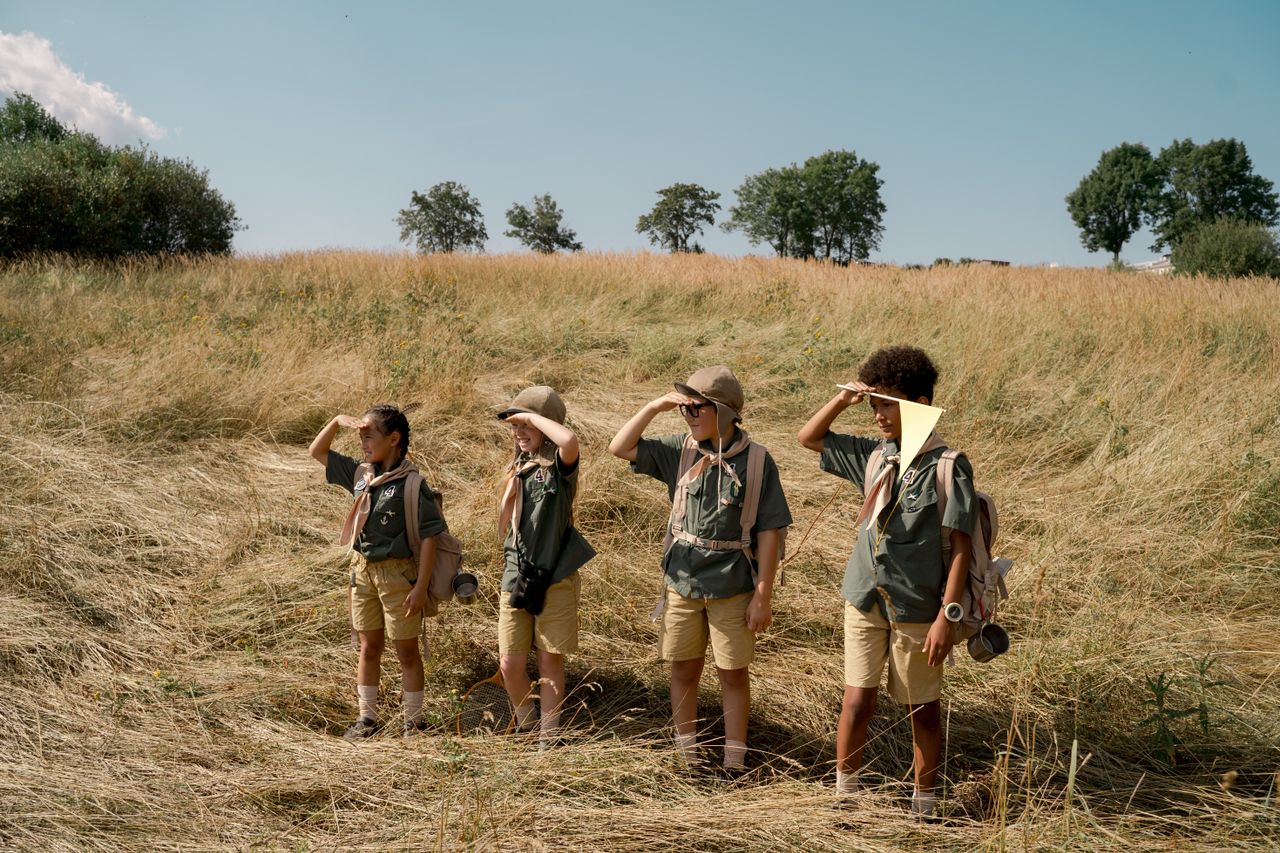
Why Are the Scouts Opposing England’s Proposed Tourist Tax?
The Scout Association says England’s proposed overnight visitor levy could leave it facing an additional annual bill of approximately £1.04 million if a 5% charge were applied across its reported overnight stays.
The organisation, which provides activities for hundreds of thousands of young people across the UK, argues that the proposed charge could make residential camps and outdoor adventures more expensive for families. It also warns that volunteer-led groups could face additional administrative responsibilities.
The controversy has become known as the potential “tent tax” because even relatively inexpensive camping accommodation could fall within the proposed framework.
Chief Scout Dwayne Fields has called for youth organisations to receive an exemption, arguing that charitable activities designed to develop young people’s skills should not be treated in the same way as commercial tourism.
The government, meanwhile, says regional authorities will have the flexibility to exempt certain accommodation types, including camping pitches commonly used by youth groups.
The disagreement highlights a difficult policy question: should young people attending charitable educational activities contribute to a levy designed primarily to help destinations manage the costs of tourism?

How Could the Scouts Face a £1.04 Million Annual Bill?
The Scout Association’s estimate is based on the number of overnight stays recorded across its different sections and volunteers.
The organisation reported 1,423,344 annual overnight stays involving:
- Squirrels, for children aged four to six.
- Beavers, for children aged six to eight.
- Cubs, for children aged eight to approximately ten and a half.
- Scouts, for young people aged ten and a half to fourteen.
- Explorers, for teenagers aged fourteen to eighteen.
- Adult volunteers supporting activities and residential events.
The association estimates that a 5% visitor levy applied across these stays could cost approximately £1.04 million annually.
It is important to understand that this is a projected cost based on the organisation’s assumptions, not an amount already being collected or a confirmed future bill.
The calculation also does not mean every individual Scout would pay the same amount. The actual liability would depend on the final legislation, the accommodation used, local decisions about exemptions, the levy rate, and the applicable accommodation costs.
Nevertheless, the estimate illustrates how a relatively small percentage charge could become significant when applied across a very large number of overnight activities.
For a national charity operating through local volunteer groups, even an additional expense of this scale could affect the number, frequency, and affordability of residential activities.
What Is England’s Proposed Overnight Visitor Levy?
The proposed visitor levy is a new power that would allow eligible strategic authorities in England to charge an additional amount on certain short-term overnight accommodation.
It is commonly described as a tourist tax, hotel tax, or visitor levy.
The government argues that popular destinations need additional funding to maintain the public facilities and infrastructure that attract visitors.
Tourism can generate substantial economic benefits, but it can also place pressure on:
- Public transport.
- Roads and parking facilities.
- Public toilets.
- Parks and public spaces.
- Waste collection.
- Cultural attractions.
- Local events and visitor facilities.
Under the proposed framework, regional authorities would be able to decide whether introducing a levy makes sense for their area.
The revenue would remain within the relevant local area and could support tourism-related investment and wider economic development.
The government sees the policy as a way to give local leaders greater financial independence rather than relying entirely on national government funding.
However, the proposed charge has raised concerns among accommodation providers, charities, tourism organisations, and businesses that fear additional costs and administrative responsibilities.
Could Campsites and Youth Hostels Be Included?
Yes. This is one of the central reasons the Scouts are concerned.
The government’s proposed framework is designed to cover a broad range of short-term, commercially let visitor accommodation.
Potentially affected accommodation includes:
- Hotels and guesthouses.
- Bed-and-breakfast establishments.
- Holiday cottages.
- Short-term rental properties.
- Campsites.
- Touring caravan pitches.
- Hostels.
- Other qualifying overnight accommodation.
The inclusion of camping accommodation has attracted particular criticism from organisations that provide low-cost outdoor activities.
Unlike a commercial hotel, a Scout campsite may operate primarily to provide educational experiences for children and young people.
Its purpose is not necessarily to attract conventional holidaymakers or generate commercial profits.
The Scouts argue that charitable camping activities should therefore be treated differently from ordinary tourist accommodation.
The government recognises that some forms of accommodation are frequently used for educational and socially beneficial activities. Its consultation response specifically identifies tent pitches, touring caravan pitches, and dormitory-style accommodation such as hostels as possible candidates for local exemptions.
However, the proposed approach does not automatically exempt every campsite or every youth organisation.
That distinction is at the heart of the dispute.
Why Is the Government Not Offering a Nationwide Exemption?
The government has indicated that exemptions should generally be based on the type of accommodation rather than the identity or purpose of the person staying there.
This means an eligible local authority could potentially exempt camping pitches throughout its area rather than creating a separate exemption for every Scout, Guide, school group, or charitable organisation.
The government believes this approach would be easier to administer.
Imagine a campsite that welcomes Scout groups, school trips, families, and independent holidaymakers.
If exemptions depended on the identity of every visitor, the campsite operator might need to establish whether each guest qualified for a special category.
That could create additional paperwork and require organisations to share personal information.
An accommodation-based exemption would be simpler: if a particular type of pitch is exempt, the rule would apply regardless of whether the guest is a Scout, a family, or another visitor.
However, the approach also creates a potential problem.
If a local authority chooses not to exempt tent pitches, charitable youth groups could still face the levy even though their activities have educational and social purposes.
The Scouts therefore want a stronger national guarantee rather than relying on different local decisions.
What Does Chief Scout Dwayne Fields Want?
Chief Scout Dwayne Fields has acknowledged that the government wants to strengthen local communities through additional tourism investment.
However, he has argued that youth organisations should not be forced to carry the financial and administrative burden of the policy.
The Scout Association has called for two particularly important protections.
A national exemption for young people under eighteen
The organisation believes children and teenagers attending residential youth activities should not be exposed to an additional accommodation charge that could make camps less affordable.
A national exemption for charitable facilities
The Scouts also want charity-run hostels, campsites, activity centres, and meeting places to be excluded from the levy.
Its argument is that these facilities operate for youth development and community benefit, rather than as conventional commercial tourism businesses.
The organisation has also raised concerns about the possibility of volunteers becoming responsible for collecting and reporting additional charges.
For a large commercial hotel, tax administration may be handled by dedicated finance staff or specialist software.
For a small Scout group, the responsibility could fall on volunteers who already spend considerable time organising activities, managing safeguarding arrangements, raising funds, and supporting young people.
The Scouts argue that this would place an unnecessary burden on people giving their time without payment.
A Local Example: Linnet Clough Could Face More Than £11,000 in Extra Costs
The potential financial impact is not limited to the national organisation.
Linnet Clough, a Scout campsite in Stockport operated by a Greater Manchester Scout group, has become an example of how the proposed levy could affect individual facilities.
Chris Taylor, lead volunteer for Greater Manchester East Scout County, said the campsite hosted nearly 25,000 overnight stays during the previous year.
He estimated that a 5% levy could add more than £11,000 annually to the site’s costs.
Taylor also warned about the administrative expense of collecting the charge and submitting the required returns.
He suggested that employing someone to manage the additional responsibilities could cost approximately £7,000 a year.
This would mean a combined potential financial burden of more than £18,000 annually for the facility, based on those estimates.
For a charity-run campsite, that is a significant amount of money.
It could otherwise support equipment, maintenance, training, improvements to facilities, or subsidies for children from families who struggle to afford residential activities.
The Linnet Clough example demonstrates why the debate is not simply about whether a few extra pounds should be added to a camping trip.
It is also about the wider financial and operational responsibilities that could be placed on volunteer-led organisations.
Why Are Overnight Camps So Important for Young People?
The Scouts’ opposition is based on more than financial considerations.
Residential experiences are an important part of youth development because they give children opportunities to learn outside the classroom and their normal home environments.
A camping trip can involve much more than sleeping in a tent.
Young people may learn to:
- Put up tents and organise equipment.
- Prepare meals and manage basic resources.
- Navigate unfamiliar environments.
- Work together to complete practical tasks.
- Make decisions independently.
- Manage challenges and unexpected situations.
- Respect nature and understand environmental responsibility.
- Build friendships with people from different backgrounds.
These activities can help children develop confidence, resilience, communication skills, and a sense of responsibility.
The Scout Association has previously highlighted research from the Paul Hamlyn Foundation’s Learning Away programme.
According to the research cited by the organisation, 71% of young people reported improved relationships with peers following residential experiences, while 87% felt more confident about trying new things.
These findings help explain why the Scouts regard overnight experiences as an important part of their educational mission.
Residential activities can also provide opportunities for children who may not otherwise have access to holidays, outdoor adventures, or extended experiences away from home.
For those young people, a subsidised Scout camp could be one of the few opportunities to experience the countryside, develop independence, and participate in group activities outside their local communities.

Could the Visitor Levy Make Scout Camps More Expensive for Families?
Potentially, yes.
If the levy applies to a campsite or accommodation provider, the provider would be responsible for calculating and paying the charge to the relevant authority.
The government says accommodation providers may pass some or all of the cost on to visitors through accommodation prices.
In the case of youth organisations, that could ultimately increase the cost of residential activities.
Scout groups generally need to cover a variety of expenses when organising overnight trips, including:
- Accommodation or campsite fees.
- Food and cooking supplies.
- Transport.
- Equipment.
- Insurance.
- Activity materials.
- Safety and supervision arrangements.
- Facility maintenance.
An additional levy could force groups to increase participation fees or find additional fundraising income.
Some organisations might be able to absorb the expense, but smaller groups with limited budgets could find it more difficult.
This could create a wider inequality problem.
Families with greater disposable income might continue paying for camps, while those already struggling with the cost of living could decide that their children cannot participate.
The Scouts fear that this would undermine the principle that outdoor education and youth development should be accessible to everyone.
Why Is the Government Introducing the Levy?
The government’s argument is that visitors should contribute towards maintaining the destinations they use.
Popular tourism areas can experience significant pressure during peak periods.
A city welcoming millions of visitors may need to spend more on cleaning, public transport, public toilets, parks, event facilities, and other services.
Without additional revenue, local authorities may have to rely on existing budgets, national funding, or other sources of income.
The proposed levy is intended to give regional authorities a way to raise money directly from overnight visitor accommodation.
The government also argues that a percentage-based system would make the charge proportionate to the cost of a stay.
For example, a lower-cost accommodation booking would generate a smaller levy than an expensive hotel stay.
This is intended to protect affordability for people using budget accommodation.
However, the Scouts argue that even a proportionate charge can have an unfair impact when applied to activities that are charitable, educational, and already designed to be affordable.
The disagreement is therefore partly about how the policy defines a visitor and whether all commercially provided overnight accommodation should be treated similarly.
Is There a Maximum 5% Tourist Tax Rate?
One of the most important details is that 5% is not currently a legally guaranteed maximum rate under the proposed framework.
Labour mayors have indicated that they would keep their visitor levy rates at no more than 5%.
That political position has helped shape the debate, but the government’s published policy response states that it does not intend to impose a national cap on the rate.
Instead, eligible strategic authorities would be given flexibility to determine an appropriate local percentage.
The government argues that local leaders should be able to consider their area’s economic circumstances, tourism pressures, and investment priorities.
This means the final financial impact could vary between regions.
The absence of a statutory maximum is one reason organisations and businesses are seeking greater clarity before the policy is implemented.
For the Scouts, even a 5% rate could create a substantial cost. A higher rate would potentially increase that burden further if the relevant accommodation remained taxable.
Who Would Collect the Visitor Levy?
The government proposes that accommodation providers would be legally responsible for the levy.
This means hotels, campsites, hostels, and other liable providers would have to calculate the amount due and submit payments to the relevant strategic authority.
The system is expected to operate through self-assessment.
Providers would need to maintain appropriate records, calculate their liabilities, and submit returns.
This is where smaller organisations are particularly concerned.
A commercial hotel may already have accounting systems, booking software, and employees responsible for financial administration.
A small charitable campsite might depend on volunteers who organise bookings and manage the site alongside other responsibilities.
The government has acknowledged the importance of keeping administrative burdens proportionate and is exploring ways to make collection more efficient, including potential roles for booking platforms.
However, the Scouts argue that avoiding unnecessary paperwork should be part of the exemption discussion from the beginning.
What Happens to the Money Raised by the Levy?
The government says revenue from the visitor levy would remain within the relevant local area.
It could be invested in projects designed to improve the visitor experience and support economic growth.
Possible priorities include:
- Improving public transport and connections to attractions.
- Maintaining parks and public spaces.
- Supporting local cultural events.
- Improving high streets and town centres.
- Developing tourism infrastructure.
- Maintaining facilities that attract visitors.
Supporters argue that the levy could help destinations become more sustainable and reduce pressure on local taxpayers.
However, the Scouts’ dispute raises a question about whether some of the money should also support organisations that provide community and educational benefits.
For example, youth camps can encourage children to visit rural areas, use outdoor facilities, and develop an appreciation for nature.
A policy that makes these activities more expensive could potentially undermine some of the wider social benefits that local investment is intended to support.
What Can the Scouts Learn from Wales?
Wales offers an interesting comparison because its approach to tourism taxation includes specific protections for young people using certain types of accommodation.
The Welsh Government has said that young people staying in hostels, campsites, or outdoor centres will be exempt from its tourism tax, which is due to begin in 2027.
This provides an example of how a visitor levy can be designed with youth activities in mind.
However, the Welsh system is separate from the proposed English legislation. Its rules cannot automatically be applied to England.
The comparison nevertheless strengthens the argument that youth development and charitable residential activities can be considered when governments design tourism taxes.
The question for England is whether similar protections should be included nationally or left to individual regional authorities.
Could Girlguiding and Other Youth Organisations Also Be Affected?
Yes.
The debate is not limited to the Scout Association.
Girlguiding, school groups, youth charities, outdoor education organisations, and other volunteer-led groups may use campsites, hostels, activity centres, and similar facilities.
Depending on the accommodation type and local exemptions, these organisations could also be affected.
Schools and charities often operate on restricted budgets. They may organise residential activities to provide educational experiences that are not easily replicated in classrooms.
If the cost of accommodation rises, some groups may reduce the number of trips they organise or ask parents to contribute more.
This could affect access to outdoor learning, particularly for children from lower-income households.
The government has said local authorities can consider exemptions for accommodation types frequently used by youth groups. But the availability of those exemptions will depend on local decisions.
That creates the possibility of different rules across England.
An organisation operating camps in several regions could face different levy arrangements depending on where its facilities are located.
Such inconsistency could make budgeting and administration more complicated.
What Are the Possible Solutions?
The disagreement does not necessarily mean the visitor levy must be abandoned.
There are several ways policymakers could protect youth organisations while allowing local authorities to raise tourism revenue.
1. Introduce a national exemption for youth accommodation
A national exemption for qualifying charitable campsites, hostels, and outdoor activity centres would provide greater certainty.
It would also prevent the rules from changing significantly between regions.
2. Protect under-18s attending organised educational activities
A separate exemption for young people participating in qualifying youth programmes could protect access to residential education.
However, the government would need to design the rules carefully to avoid excessive paperwork and privacy concerns.
3. Exempt charity-run facilities
A distinction could be made between commercial accommodation providers and facilities operated primarily for charitable or educational purposes.
Clear eligibility criteria would be needed to prevent businesses from misusing the exemption.
4. Provide simple administrative arrangements
If some youth accommodation remains taxable, authorities could introduce simplified reporting systems for smaller organisations.
Digital tools, shared reporting platforms, and clear guidance could reduce the burden on volunteers.
5. Establish a dedicated support fund
Another option would be to direct part of the revenue raised through the visitor levy towards youth development, outdoor education, or affordable residential experiences.
This would allow local authorities to collect additional funding while supporting community organisations.
6. Consult charities before implementation
Local authorities should engage with Scouts, Girlguiding, schools, campsite operators, and other affected organisations before deciding whether to introduce the levy or exemptions.
These organisations understand how their facilities operate and can explain the practical consequences of different policy choices.
What Happens Next?
The Visitor Levy (England) Bill was introduced in Parliament in November 2026 and is progressing through the legislative process.
The government has indicated that, subject to parliamentary approval, local leaders are expected to be able to set out plans for how levy revenue will be invested by March 2028.
The precise implementation arrangements and the decisions made by individual strategic authorities will determine when charges begin to affect accommodation providers.
For the Scouts, the immediate priority is securing clarity about exemptions.
The organisation wants the government to ensure that youth camps and charitable residential activities are protected nationally rather than leaving every local authority to decide independently.
Members of Parliament have also raised concerns about the potential impact on youth organisations during parliamentary debate.
The eventual outcome will depend on the legislation, its final provisions, and the willingness of policymakers to recognise the difference between commercial tourism and charitable youth development.
Conclusion: Should Young People Pay a Tourist Tax to Go Camping?
The dispute over the proposed £1 million cost facing the Scouts reveals a wider challenge in designing public policy.
The government wants overnight visitors to contribute towards the infrastructure and services that make destinations attractive. That is a legitimate objective, particularly in areas where tourism places pressure on local facilities.
But a charitable Scout camp is not the same as a luxury hotel or a commercial holiday rental.
Its purpose is to help young people develop practical skills, confidence, independence, and friendships through shared experiences.
If additional charges make these opportunities less affordable, the consequences could extend beyond the finances of a national charity.
Families may face higher costs, volunteers may take on more administration, and some young people may lose access to residential activities that help them grow.
The government’s proposal to allow local exemptions offers a possible solution, but it does not provide the national certainty the Scouts are seeking.
A fair visitor levy should recognise the difference between commercial tourism and activities that deliver wider social benefits.
The challenge is not simply deciding who should pay a tax. It is ensuring that efforts to improve local communities do not unintentionally make valuable opportunities less accessible to the next generation.
Frequently Asked Questions (FAQs)
1. Why are the Scouts facing a potential £1 million tourist tax bill?
The Scout Association estimates that a 5% overnight visitor levy applied across its 1,423,344 annual overnight stays could cost approximately £1.04 million a year. This is a projection based on the organisation’s assumptions, not a confirmed bill.
2. Will Scout camps be subject to England’s proposed tourist tax?
Potentially. The proposed framework covers short-term, commercially let overnight accommodation, which can include campsites. However, eligible strategic authorities will have the power to exempt certain accommodation types, including tent pitches, touring caravan pitches, and hostels.
3. Is the proposed tourist tax definitely 5%?
No. Five per cent is a rate that Labour mayors have indicated they would not exceed, but the proposed legislation does not establish a universal statutory maximum. Local authorities would have flexibility to set their own rates.
4. Will the tourist tax make Scout camps more expensive for parents?
It could. Accommodation providers would be responsible for paying the levy and could pass some or all of the cost on through accommodation charges. If a campsite remains liable, Scout groups may face higher costs that could ultimately affect participation fees.
5. Can youth organisations receive an exemption from the visitor levy?
Yes, under the proposed framework, strategic authorities can exempt certain accommodation types, including tent pitches and hostels. However, there is no general automatic national exemption for all Scouts, Guides, or youth organisations in the proposed arrangements. The Scout Association is campaigning for stronger nationwide protections.

Sources BBC