
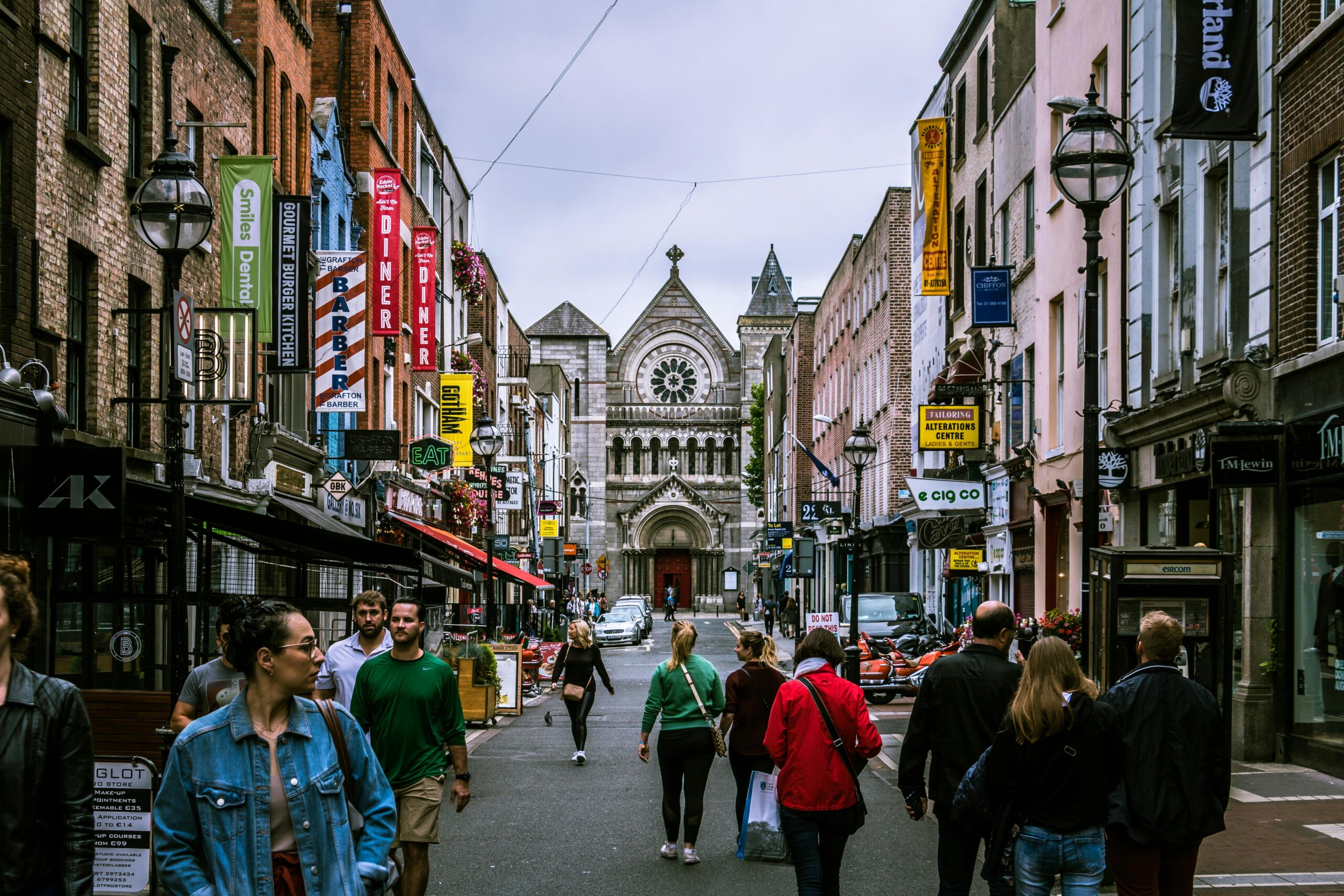
The Irish language has long sat at the heart of Northern Ireland’s cultural identity—and now, it’s back in the spotlight with fresh controversy. A senior minister described its use as having been “very serious” in terms of what he calls its concentration and role in the public sphere. Critics say the language has been politically leveraged, while supporters warn that such claims risk undermining heritage and rights. Here’s a closer look at the dynamics, what’s at stake, and how communities across Northern Ireland see the issue.

What the Minister’s Words Reveal
A key minister (the Communities Minister) argued that the Irish language has been used in a way that has raised concern about representation and equality. His remarks spotlight several themes:
- Concentration of use: The suggestion that the language’s presence or promotion is strongly associated with certain cultural or political communities, rather than being shared widely.
- Politicisation: The idea that Irish‐language initiatives are not just about culture or education, but function as a marker in a long‑standing identity and political conflict.
- Concern about equity: Some in unionist communities feel that language policies or signage favour Irish over other linguistic or cultural traditions, which creates a sense of exclusion or imbalance.
In short: the minister’s comments reflect a perception (among some) that Irish isn’t neutral or simply linguistic heritage—but rather a symbolic tool in broader cultural or political debates.
Why This Issue Is Complex
Historical & Cultural Roots
- The Irish language was a central element of the Irish‑national tradition and of the movement for independence in the early 20th century. It remains deeply associated with nationalist identity.
- Meanwhile, many unionist communities have felt marginalised by language demands or dual‑language signage, viewing them as symbols of change rather than mere heritage.
- The legal status of Irish in Northern Ireland has evolved: it now has official recognition under the Identity and Language (Northern Ireland) Act 2022, but implementation and public perception vary greatly.
Linguistic Rights vs. Perceived Symbolism
- Supporters argue for rights: Irish‑language speakers deserve services, education and signage in their language, just as speakers of other community languages do.
- Opponents often frame proposals as favouring one tradition or privileging one community’s culture over others. The term “weaponised” is used to describe what they see as strategic deployment of language policy for identity politics.
- Importantly: many Irish‑language speakers view the language as inclusive and cultural, not confrontational. The framing of “weaponisation” can itself feel alienating.
Practical Issues: Cost, Infrastructure and Implementation
- Rolling out bilingual signage, education resources, interpretation services—and maintaining them—carries cost and operational implications.
- Smaller councils or service providers with limited budgets may face choices about signage, language resources and public communication.
- Ensuring fair access for multiple linguistic communities is a persistent challenge.
What the Coverage Might Have Missed
- Voices of everyday speakers: Many Irish speakers in Northern Ireland use the language for social, educational or cultural reasons—not as a political tool. Their perspectives get less media focus.
- Language diversity beyond Irish: Focus on Irish often overshadows the fact that other languages (Ulster Scots, community immigrant languages) also call for recognition, raising broader questions about linguistic pluralism.
- Evidence on usage and vitality: While debates about signage and symbolism dominate, recent censuses show modest growth in Irish‑language skills and daily use—but also continued challenges in real‑world usage.
- Regional variations: In some districts (e.g., West Belfast) Irish is far more visible and used. In others (especially unionist‑majority areas) uptake and visibility are low.
- Educational impact: The question of Irish‑medium schooling, teacher supply, curriculum choices, and how language policy interacts with academic outcomes is less prominent in the framing.
- Reconciliation potential: There’s potential for Irish to act as a bridge (cultural tourism, cross‑community projects) rather than only a wedge—but that possibility is often overlooked in debates focused on division.
What This Means for Communities & Policy
- For Irish‑language advocates: They must communicate how the language serves cultural inclusion, not exclusion; how services can benefit speakers without alienating others.
- For unionist and non‐Irish‑speaking communities: It’s important that policy acknowledges their concerns—that language recognition doesn’t become a unilateral display of identity dominance.
- For policymakers: Balancing linguistic rights, equality, cost‐efficiency and community cohesion is key. Transparent processes, stakeholder consultation and equitable resource distribution matter.
- For education & public services: Provision of Irish‐medium or bilingual services must match demand, quality standards and broader system capability—while not diverting attention from other language needs (e.g., migrant or immigrant languages).
- For public perception: The framing of language as a “weapon” may deepen division. Encouraging language as heritage, choice, and cultural enrichment might help shift the tone.
Frequently Asked Questions (FAQ)
Q: What does “weaponised language” mean in this context?
It refers to the idea that the Irish language is being used intentionally as a cultural or political tool—rather than simply a medium of communication or heritage—particularly in local signage, education and public symbolism.
Q: Does the Irish language have legal rights in Northern Ireland?
Yes. Under the Identity and Language (Northern Ireland) Act 2022, Irish was granted official status and protections, though many provisions are still being implemented and vary by locality.
Q: Does this debate affect only Irish?
No. Although the focus is Irish, broader questions involve multilingualism in Northern Ireland—including Ulster Scots and other community languages—raising issues of fairness, recognition and resource allocation.
Q: How widely is Irish actually spoken in Northern Ireland?
While a minority language in terms of everyday use, survey data show that around 12–13% of the population report some ability in Irish, and roughly 2–3% speak it daily outside educational/training settings.
Q: Does promoting Irish disadvantage non‐Irish speakers?
It can feel that way to some, especially if they believe language services or signage disproportionately favour Irish. However, policy frameworks aim for language equality—though perceptions and implementation may lag.
Q: Can the use of Irish help social and economic development?
Yes—through cultural tourism, Irish‑medium media, heritage projects, bilingual education benefits and community engagement. But realising that potential requires inclusive policies and community buy‑in.
Final Thought
The Irish language remains a vital part of Northern Ireland’s cultural fabric—yet it also reflects deep currents of identity, history and community relations. The minister’s warning about its potential for division highlights a real tension: a minority language striving for recognition can be seen both as a cultural asset and as a flashpoint.
Ultimately, the challenge is not whether Irish should be used—but how it is used: whether it fosters shared heritage and inclusion, or becomes a tool of division and symbolism. With careful policy, community engagement and transparent implementation, language can serve all communities rather than dividing them.
Sources BBC

