

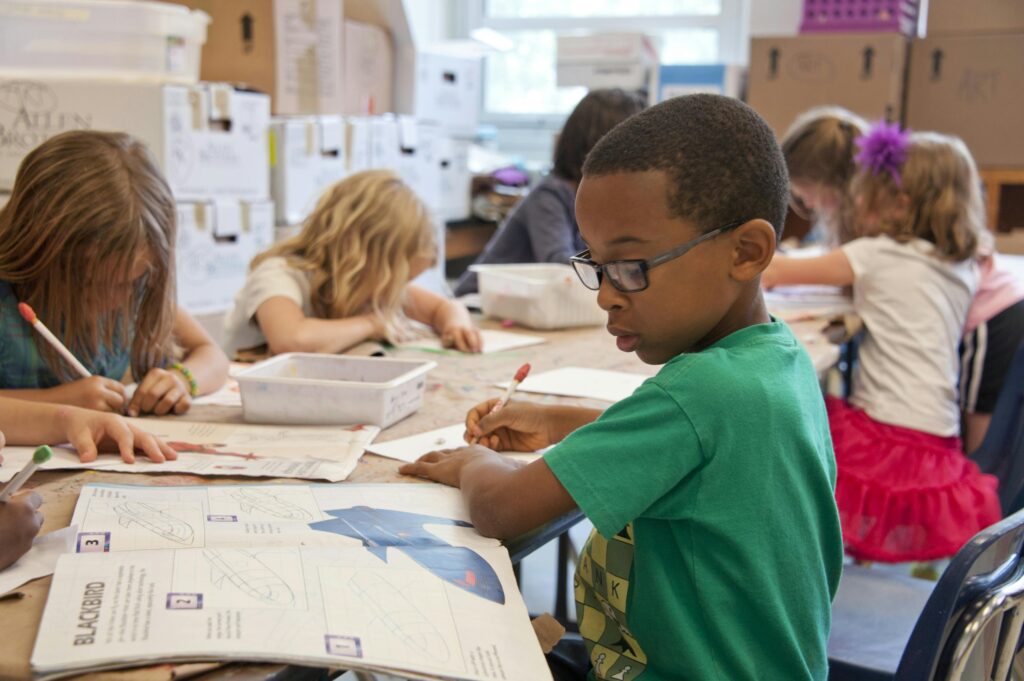
At a high school in Pittsburgh, students from dozens of countries—many of them recent arrivals, refugees or immigrants—are learning English as they build new lives in the U.S. Their classroom isn’t just a typical American high‑school setting: it is a living example of how educators adapt, welcome diversity and confront the challenges of multilingual, multicultural teaching.
What’s happening
At the high school (within the Pittsburgh Public Schools district), English language instruction is central to integrating students whose first language isn’t English. These newcomer students speak multiple languages, have varied educational backgrounds (some had no formal schooling before arrival), and require accelerated support (in both language proficiency and subject content) to keep pace with their peers.
Teachers use special programs, pairing English‑language development (ELD) or English as a Second Language (ESL) instruction with regular classes. These programs often include translation supports, dual‑language aides, culturally responsive teaching, and resources to help students navigate not only language but also social adjustment.
Why it matters
- Changing demographics. Schools across Pittsburgh are seeing a rise in English‑language‑learner (ELL) students—reflecting refugee resettlement, immigration and families relocating for work.
- Educational equity. When a large number of students arrive with limited English, schools face the twin tasks of teaching both language and grade‑level content, to avoid academic lag.
- Cultural enrichment. A classroom with students from multiple countries brings global perspectives, diverse languages and experiences—enriching the school community.
- Systemic strain. The rise in newcomer students places pressure on staffing (bilingual aides, ESL specialists), curriculum design, classroom size and school resources. Many districts are struggling to keep pace.
What this school is doing
- Newcomer / ESL support centres. Some schools act as concentrated hubs for English‑learner services, offering specialised instruction, language‑rich environments and dedicated teachers.
- Dual‑language / translation aids. Teachers use translation tools, visuals, peer‑support, and multilingual aides to help students with little or no English.
- Culturally responsive resources. Instructional materials are adapted to include students’ backgrounds, use of visual supports, scaffolding for newcomers and differentiated pacing.
- Integration with content classes. English‑learner students don’t only take ESL classes—they also join grade‑level subjects (math, science, social studies) with supports, so they progress academically as language skills grow.
- Community and extracurricular support. Many schools connect students with peer‑mentors, after‑school programs, and community organisations that help with the transition (social, emotional, logistical).
What’s Often Underscored—but Important
While coverage highlights the newcomer influx and classroom adaptation, several deeper dimensions deserve attention:
- Teacher training and certification. Many districts face shortages in certified ESL/ELD teachers; existing staff may lack specialised training to support multilingual learners optimally.
- Variation in prior schooling. Some newcomer students arrive with interrupted schooling, literacy gaps, or differing educational systems—this creates additional instructional complexity.
- Resource and funding allocation. Schools rely on state and federal funds for ELL instruction, but when newcomer numbers rise rapidly, funding and staffing often lag.
- Peer and social integration issues. Language is only one barrier—students also face cultural adjustment, identity questions, possibly trauma, and navigating a new school system.
- Curriculum alignment. Schools must balance language‑learning goals with academic content goals (for graduation, college readiness); this dual burden is often under‑resourced.
- Outcome tracking. Measuring success isn’t just language proficiency—it’s academic performance, graduation rates, post‑school outcomes. The data behind these metrics is still developing in many districts.

What the Implications Are
- For Students: With effective support, newcomer students can catch up academically, build English proficiency, and enrich the school’s culture. However, without adequate resources they risk falling behind in both language and content.
- For Schools: Increasing multilingual learner populations present both opportunity (diversity, global readiness) and challenge (resource strain, training needs). Schools must adapt instructional models and staffing to meet these needs.
- For Communities: Schools that welcome multilingual learners contribute to broader integration, community vitality and economic mobility. Conversely, if newcomer students struggle educationally, communities may see negative downstream effects.
- For Education Policy: Policymakers must ensure funding models, teacher certification pathways, curriculum support and data tracking mechanisms are designed to accommodate growing diverse student populations.
Frequently Asked Questions (FAQ)
Q: Who counts as an English‑language learner (ELL) or newcomer student?
Typically, a student whose primary or home language is not English, and who has limited English proficiency. “Newcomer” often refers to recent immigrants/refugees with little English and sometimes limited prior formal schooling.
Q: How do schools decide which supports a newcomer student needs?
Schools use assessments (such as the WIDA ACCESS or similar), teacher evaluations, interviews, and student history to determine English‑language proficiency, prior education, and instructional needs. Based on that, they assign ESL/ELD classes, dual supports, and grade‑level content classes.
Q: Is teaching English the only challenge?
No. While English proficiency is key, students also need to learn grade‑level content (math, science, etc.), adapt to school culture, overcome possible trauma or interrupted education, and integrate socially. Language instruction is intertwined with academic and social support.
Q: Are there enough teachers trained for these students?
In many districts, including Pittsburgh, there’s a shortage of teachers certified in ESL/ELD or trained for multilingual instruction. The influx of newcomers often outpaces staffing and training capacity.
Q: How do schools measure success for newcomer students?
Measures include English‑language proficiency growth, academic achievement (grades, tests), graduation rates, enrolment in college/career programs, and long‑term integration outcomes. Both language and content progress matter.
Q: What can parents of newcomer students do to support their child?
Engage with the school, ask about ESL/ELD supports, encourage reading/English usage at home, connect with peer or community support groups, monitor academic progress, and advocate for resources when needed.
Q: Does a diverse multilingual student body help or hinder the school community?
It has the potential to enhance school culture (diverse perspectives, global readiness, stronger peer learning). But it requires strong systems so that the diversity becomes a strength rather than stretching resources thin and leading to undue burdens on staff and students.
Final Thought
What’s happening in this Pittsburgh high school is more than a local story—it reflects a broader trend in U.S. education: classrooms becoming global, student populations changing fast, and schools needing to adapt both curriculum and support systems.
When newcomer students arrive with the desire to learn, the right resources and responsive teaching can change not only individual lives but enrich the entire school community. But ensuring that success hinges on investment, training, systems — and the belief that every student, regardless of language or origin, belongs and will succeed.

Sources AP News

