
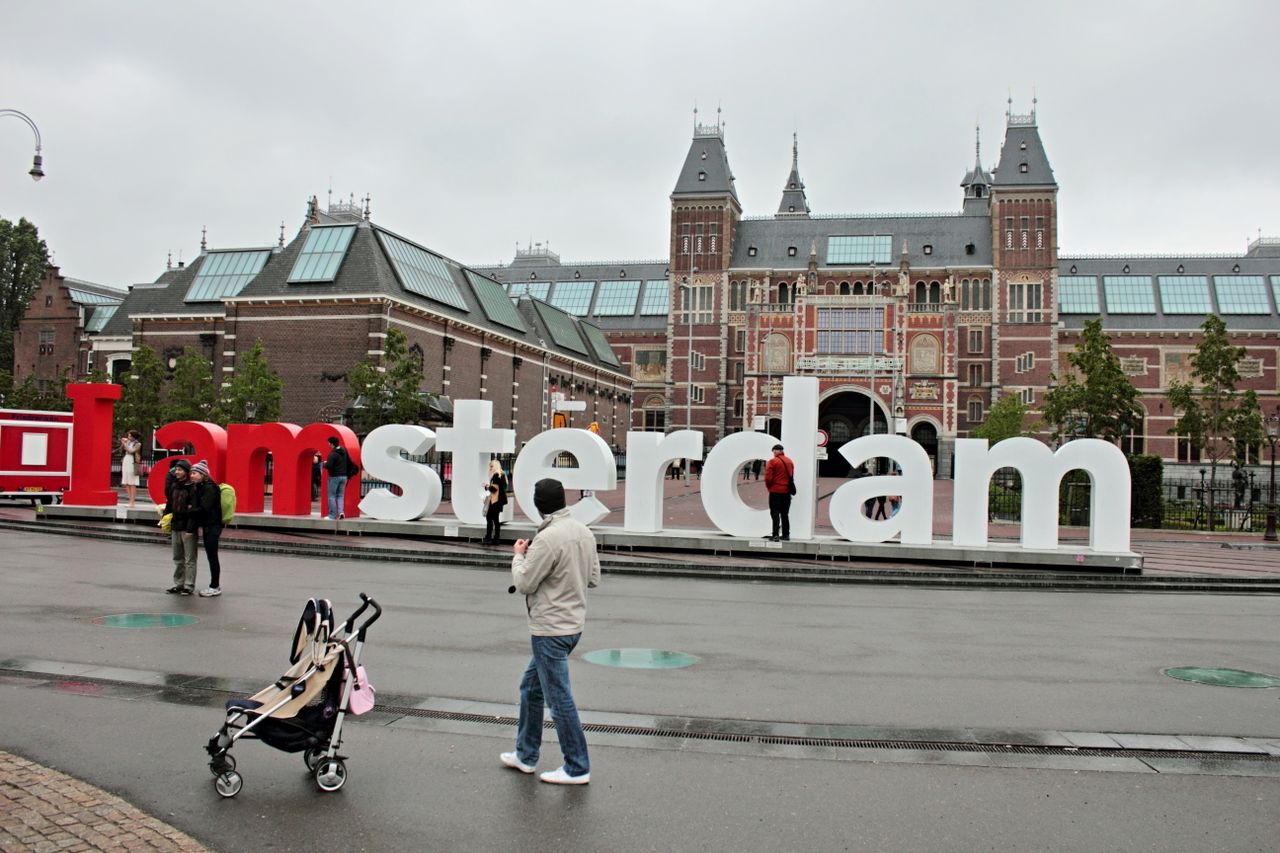
The price of visiting one of Europe’s most popular destinations
Amsterdam’s tourism debate is becoming increasingly difficult to ignore. The Dutch capital attracts visitors with its historic canals, world-famous museums, distinctive architecture, vibrant nightlife and relaxed café culture. Yet the very qualities that make it appealing have also contributed to crowded streets, pressure on housing and growing frustration among residents.
The city is now considering a significant increase in its tourist tax. Following approval of its 2027 budget, the accommodation tax is scheduled to rise from 12.5% to 16% in 2027, with the governing coalition aiming to increase it by another percentage point annually until it reaches 20% in 2031.
This increase comes on top of a major national tax change: the Netherlands raised VAT on overnight accommodation from 9% to 21% on January 1, 2026. Together, the charges could bring the combined tax burden on Amsterdam hotel accommodation to approximately 41% by 2031.
For travellers, the change could make an already expensive European city break significantly more costly. For Amsterdam, however, the policy is part of a much larger attempt to balance tourism revenue with the needs of a city that must remain a comfortable place to live.
1. Amsterdam’s tourist tax: What is changing?
Amsterdam already applies a percentage-based tourist tax to overnight accommodation. The proposed increases are designed to make visitors contribute more towards the costs associated with tourism while discouraging some accommodation demand.
The city council approved the 2027 budget in November 2026, including an increase from 12.5% to 16%. The coalition formed by the progressive PRO and centrist D66 parties has a longer-term ambition to raise the rate to 20% by 2031.
The planned progression is:
- Current rate: 12.5%
- 2027: 16%
- 2028: 17%, under the proposed annual progression
- 2029: 18%, under the proposed annual progression
- 2030: 19%, under the proposed annual progression
- 2031: 20%, the coalition’s target
The future annual increases should be understood as the coalition’s intended schedule, rather than a guarantee that every future budget has already been enacted.
The national VAT increase is a separate measure. From January 2026, the Netherlands applies its standard 21% VAT rate to hotel stays, hostels, bed-and-breakfast accommodation and other covered overnight stays.
When the municipal tourist tax eventually reaches 20%, the combined accommodation tax burden is expected to approach 41% of the underlying room price. The exact amount a traveller pays will depend on the property’s pricing and how the applicable charges are calculated.
This distinction matters because the tourist tax and VAT are separate charges, not a single new 41% tax introduced by Amsterdam.
2. Why Amsterdam wants to discourage excessive tourism
Amsterdam is one of Europe’s most recognisable destinations. Its canals, narrow historic streets, museums, nightlife and compact city centre make it particularly attractive for short breaks.
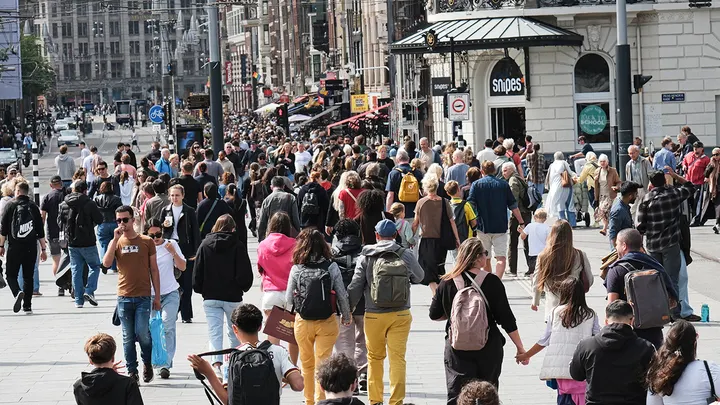
However, tourism growth has placed pressure on neighbourhoods where residents must share public spaces with large numbers of visitors.
According to Amsterdam’s October 2026 tourism report, the city received an estimated 12.9 million unique day visitors and 10.1 million overnight visitors in 2025. Overnight visitors generated approximately 24 million overnight stays, while day visitors made around 21.9 million visits.
These figures illustrate why counting only hotel guests can underestimate the scale of tourism. A visitor staying for several nights and a day-tripper create different patterns of demand, but both use transport, streets, public facilities and popular attractions.
The busiest areas can experience:
- Crowded pavements and narrow streets.
- Long queues outside major attractions.
- Noise from nightlife and organised tour groups.
- Pressure on public transport and waste collection.
- Increased demand for restaurants and other services.
- Competition for residential accommodation.
- Disruption to everyday activities in central neighbourhoods.
For residents, the issue is not simply seeing tourists taking photographs or enjoying the canals. It is the cumulative effect of visitor numbers on housing, mobility, public services and the character of local communities.
Amsterdam’s stated tourism policy is therefore not to eliminate visitors. Instead, the city wants tourism that contributes positively to residents’ lives and does not create unacceptable nuisance.
3. The housing problem behind the overtourism debate
One of the most complicated parts of Amsterdam’s tourism challenge is the relationship between visitor accommodation and housing affordability.
In highly desirable destinations, property owners may find that short-term tourist accommodation offers attractive financial returns. When residential properties are converted into holiday rentals, fewer homes may be available to people who need somewhere to live permanently.
The relationship is not simple: housing costs are also affected by construction levels, population growth, interest rates, planning decisions and wider economic conditions. Nevertheless, the growth of tourist accommodation can intensify competition for homes in popular neighbourhoods.
Amsterdam has already introduced restrictions on holiday rentals and hotel development as part of its wider visitor-management strategy.
The city has also moved to tighten the number of nights that certain properties can be rented to tourists. A 2026 municipal measure introduced a 15-night annual limit in designated neighbourhoods, reducing the previous 30-night allowance there.
These policies reflect a broader change in thinking. Instead of treating every additional tourist bed as an economic opportunity, local authorities are increasingly considering whether accommodation growth is compatible with the city’s housing needs.
For residents, the objective is straightforward: neighbourhoods should remain places where people can afford to live, rather than becoming increasingly dominated by temporary visitors.
4. Hotels and tourism businesses fear unintended consequences
Not everyone supports Amsterdam’s higher tourist tax.
Hotel operators, hospitality businesses and cultural organisations have warned that increasing accommodation costs could damage the city’s visitor economy.
Their concern is that visitors may not stop coming to Amsterdam. Instead, they may choose to sleep in nearby municipalities and travel into the city during the day.
That could create an awkward outcome: Amsterdam would still experience crowded attractions, busy public transport and pressure on public spaces, but some hotel revenue and visitor spending would move elsewhere.
A report by Dutch outlet NL Times described opposition from hospitality and cultural-sector representatives following the council’s budget decision. Businesses argued that higher accommodation costs could affect hotels, restaurants, cultural venues, events and international visitors.
The cultural sector has particular reasons to be concerned. International artists, performers, speakers and festival participants often require accommodation when working in Amsterdam. Higher hotel bills can reduce the money available for cultural programming or make events more expensive to organise.
Smaller hotels may also find it harder to absorb or communicate rising costs than large international chains.
The challenge is to avoid creating a tourism policy that places a disproportionate burden on smaller operators while leaving the underlying problems of overcrowding and housing pressure unresolved.
5. Will higher tourist taxes actually reduce visitor numbers?
This is the central question behind Amsterdam’s policy.
A higher accommodation tax can influence travel decisions, particularly for budget-conscious visitors and families comparing several European destinations. However, it is unlikely to have the same effect on every traveller.
Someone who has wanted to visit Amsterdam for years may accept a higher hotel bill. A traveller planning a low-cost weekend break may choose Rotterdam, Utrecht, Haarlem or another destination instead.
Some visitors may also stay outside Amsterdam and commute into the city.
That means the tax could change where people sleep without necessarily reducing the number of people visiting the historic centre.
There is also a question of whether the tax is primarily a demand-management measure or a revenue-raising measure. Amsterdam says it wants tourism to contribute more fairly to the costs it creates, including public services such as waste collection. Critics argue that the city must demonstrate that the policy actually reduces nuisance rather than simply making accommodation more expensive.
The effectiveness of the measure will depend on what happens after implementation. Authorities will need to monitor visitor numbers, hotel occupancy, day-trip activity, accommodation prices and residents’ experiences.
A reduction in overnight stays alone would not necessarily mean that overcrowding had been solved.
6. Amsterdam’s wider campaign against overtourism
The tourist tax is only one part of Amsterdam’s strategy.
The city has been introducing measures aimed at changing the type of tourism it attracts and reducing disruptive behaviour.
Discouraging party tourism
Amsterdam has long been associated with nightlife, cannabis cafés and the Red Light District. While these are part of the city’s identity and visitor appeal, authorities have become increasingly concerned about visitors who arrive primarily for excessive drinking, disruptive parties and antisocial behaviour.
The city’s 2023 “Stay Away” campaign targeted certain potential visitors, particularly people searching for cheap party trips and pub crawls.
More recent efforts include tackling nuisance from stag parties and organised pub crawls, bringing forward closing times for some hospitality venues and restricting cannabis smoking in parts of the city centre.
The objective is to discourage behaviour that creates problems for residents without making the city less welcoming to responsible visitors.
Reducing river cruise traffic
Amsterdam is also seeking to reduce the number of river cruises operating in the city.
River cruises bring passengers and business to restaurants, attractions and tour operators. However, they can also contribute to congestion, transport movements, emissions and pressure on central areas.
The municipality’s 2026 visitor-economy programme includes a plan to halve the number of river cruises.
A study by Dutch consultancy Decisio examined the economic and environmental implications of restricting river cruise traffic. It found that a full restriction could reduce economic activity, including an estimated €126 million in total economic contribution and more than 2,000 jobs when indirect effects are included. At the same time, fewer vessels and associated coach movements could improve air quality, reduce noise and ease congestion.
This demonstrates the difficult trade-off facing tourism-dependent cities: restrictions can improve residents’ quality of life while reducing income for businesses that rely on visitors.
Limiting new hotel development
Amsterdam has also restricted new hotel construction.
Under its policy, a new hotel generally needs to replace an existing one without increasing the overall number of available hotel beds. It must also offer improvements, such as stronger sustainability performance.
The approach is intended to prevent accommodation capacity from expanding indefinitely in a city already struggling to manage visitor demand.
7. Amsterdam is not alone: Europe’s overtourism problem
Amsterdam’s debate reflects a wider European trend.
Popular destinations including Barcelona, Venice and Dubrovnik have faced growing concerns about overcrowding, rising housing costs and the effects of mass tourism on local communities.
These destinations have experimented with different ways of managing visitor numbers.
Venice, Italy, introduced an entry-fee system for certain day visitors on selected high-demand dates. The policy is designed to manage visitor flows and encourage people to plan their visits, although debate continues about whether the fee meaningfully reduces overcrowding.
Barcelona, Spain, has pursued measures affecting tourist accommodation and short-term rentals while debating how to protect residential neighbourhoods from the pressures of mass tourism.
Dubrovnik, Croatia, has become a prominent example of the strain that large tour groups and cruise passengers can place on a historic city with narrow streets and limited public space.
The common challenge is that tourism growth is not automatically beneficial simply because visitor numbers increase. Destinations must consider how much visitors spend, where that money goes, how long they stay and what costs their presence creates.
A city with fewer visitors who spend more money in local businesses may sometimes achieve better outcomes than a destination that attracts enormous crowds but struggles to distribute the benefits.
8. The shift from mass tourism to higher-value tourism
One increasingly popular idea is to move away from measuring tourism success primarily through visitor numbers.
Instead, destinations are looking at the quality and distribution of tourism spending.
This approach is sometimes described as “quality over quantity.” It does not necessarily mean that only wealthy travellers should be welcomed. Rather, it asks whether tourism creates meaningful benefits for local workers, independent businesses, cultural institutions and residents.
For Amsterdam, a healthier visitor economy could involve:
- Encouraging longer stays rather than large volumes of short visits.
- Supporting local restaurants, independent retailers and cultural venues.
- Promoting attractions outside the busiest central districts.
- Reducing disruptive nightlife and party tourism.
- Improving public transport and visitor management.
- Ensuring tourism revenue contributes to public services.
- Protecting residential neighbourhoods from excessive commercial pressure.
However, higher prices alone do not guarantee higher-quality tourism. A wealthy visitor can still create nuisance, while a budget traveller can be respectful and contribute positively to the local economy.
Effective tourism management must therefore address behaviour, infrastructure, accommodation and the distribution of economic benefits—not simply the spending power of visitors.
9. What travellers should know before visiting Amsterdam
Travellers planning a visit should not assume that the proposed 2031 tax rate applies immediately. The approved 2027 budget sets the next increase at 16%, while the 20% figure remains the coalition’s longer-term target.
Nevertheless, the national VAT increase already affects accommodation costs in 2026.
A few practical steps can help visitors manage their budgets:
Check the final hotel price. Compare the full amount payable, including VAT and tourist tax, rather than relying only on the advertised nightly rate.
Compare nearby accommodation carefully. Staying outside the city centre may be cheaper, but calculate the cost and time of travelling into Amsterdam.
Book popular attractions in advance. Advance reservations can help avoid long queues and disappointment during busy periods.
Consider travelling outside peak periods. Visiting during quieter months or weekdays may offer a more relaxed experience and sometimes better accommodation prices.
Explore beyond the busiest streets. Amsterdam has neighbourhoods, markets, museums and cultural attractions beyond the traditional central sightseeing route.
Respect local rules. Follow cycling and pedestrian etiquette, avoid disruptive behaviour and remember that Amsterdam is a residential city, not an amusement park.
Visitors who plan carefully can still enjoy the city’s canals, historic architecture, museums and food culture without contributing unnecessarily to the pressures residents face.
10. Can Amsterdam find the right balance?
Amsterdam’s tourist tax debate highlights a difficult reality for popular destinations. Tourism creates employment, supports businesses, funds cultural attractions and connects communities with the wider world. But uncontrolled growth can also make a city less affordable and less enjoyable for the people who call it home.
The proposed tax increases may help Amsterdam generate revenue and influence accommodation demand. However, they cannot solve every problem on their own.
Housing policy, short-term rental regulation, transport planning, visitor management and enforcement against disruptive behaviour will all matter. The city must also ensure that higher charges do not simply push overnight visitors into neighbouring communities while leaving the same crowds in the centre.
Ultimately, Amsterdam’s success should not be measured only by how many people visit or how much money they spend on hotel rooms. It should also be measured by whether residents can continue to enjoy their neighbourhoods, whether local businesses benefit fairly and whether visitors can experience the city without overwhelming it.
The future of tourism may depend less on attracting ever-larger crowds and more on building destinations where visitors and residents can genuinely share the same place.
Frequently Asked Questions (FAQs)
1. How much will Amsterdam’s tourist tax be in 2027?
Amsterdam’s tourist tax is scheduled to increase from 12.5% to 16% in 2027 following approval of the city’s budget. The governing coalition intends to raise it gradually to 20% by 2031, although future annual increases remain subject to the relevant budget decisions.
2. Why is Amsterdam increasing its tourist tax?
The city wants visitors to contribute more towards the costs associated with tourism and hopes higher accommodation costs will help manage visitor demand. The wider objective is to reduce pressure on crowded neighbourhoods, public services and residential life while encouraging a more sustainable visitor economy.
3. Will tourists pay 41% tax on Amsterdam hotels?
The combined accommodation tax burden is expected to approach 41% by 2031, based on the planned 20% municipal tourist tax and the Netherlands’ 21% VAT rate on overnight accommodation. This is a combined tax calculation, not a single 41% tourist tax. The exact amount charged depends on the accommodation’s pricing and applicable tax calculations.
4. Is Amsterdam trying to stop tourists from visiting?
No. Amsterdam is not seeking to eliminate tourism. It wants to limit excessive visitor numbers, reduce disruptive behaviour and encourage tourism that benefits residents and local businesses. Measures include higher accommodation taxes, restrictions on hotel development, limits on river cruises and campaigns against nuisance tourism.
5. How can tourists avoid the highest accommodation costs in Amsterdam?
Travellers can compare accommodation outside the busiest central districts, visit during quieter periods, book early and check whether advertised prices include all applicable taxes. Staying in a nearby town may reduce hotel costs, but visitors should compare transport expenses and travel times before deciding.
Sources Fox News