
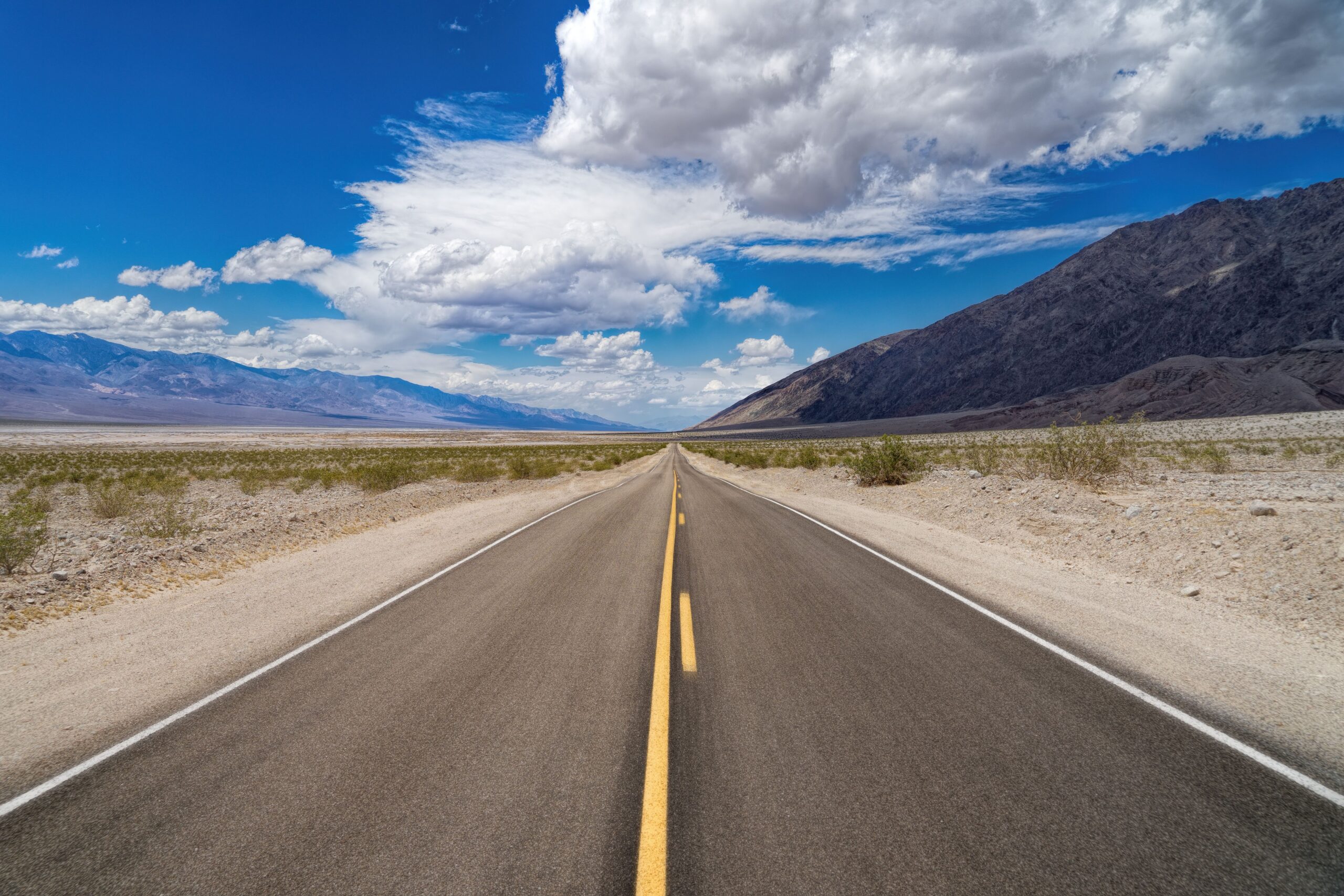
Death Valley’s spectacular landscape can turn deadly with astonishing speed. The death of a 68-year-old French visitor after his vehicle became stuck on a remote road is a stark reminder that, in America’s hottest desert, a seemingly manageable problem can become a life-threatening emergency within minutes.
A visit to Death Valley National Park is often marketed as an encounter with one of the most extraordinary landscapes in the United States: salt flats stretching toward distant mountains, vast desert horizons and some of the most extreme temperatures recorded on Earth.
But that same environment can be unforgiving.
On August 17, 68-year-old French tourist Pierre Michel Formosa and another French traveler became stranded after their vehicle became stuck in mud on the remote West Side Road near Queen of Sheba Mine Road. With no other vehicles nearby, the pair began walking toward Badwater Road to seek help. Temperatures reached 116°F (46.7°C) that day.
After walking approximately 1.3 miles, Formosa was unable to continue. His companion continued toward Badwater Road, eventually receiving assistance from a passing motorist and reporting the emergency at the Furnace Creek Visitor Center shortly after 2 p.m.
Rangers, an Inyo County deputy and a California Highway Patrol helicopter launched a search. Formosa was located later that afternoon, approximately 1.5 miles from Badwater Road, but he was pronounced dead at the scene. The Inyo County coroner is expected to determine the official cause and manner of death.
The tragedy exposes a broader problem confronting Death Valley: how do tourists safely explore a landscape where the environment itself can become an emergency?
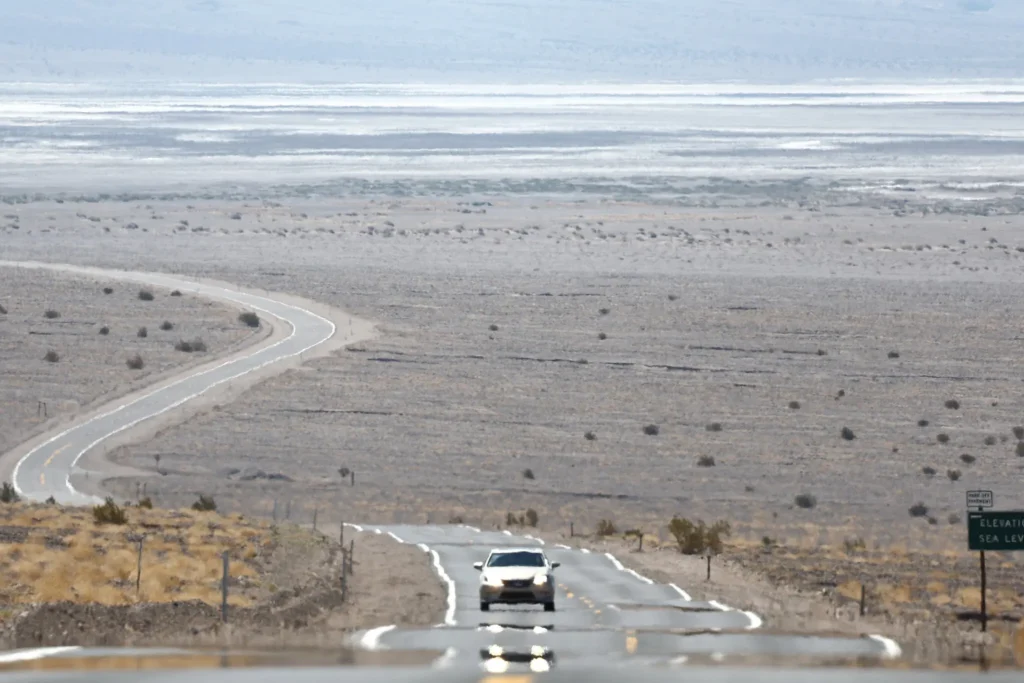
A Vehicle Problem Became a Survival Situation
The incident demonstrates why remote desert travel is fundamentally different from driving through a populated area.
A vehicle stuck on a muddy road might ordinarily be an inconvenience.
In Death Valley during extreme summer heat, it can become potentially catastrophic.
There may be:
- no nearby traffic;
- no reliable cellphone coverage;
- little or no shade;
- enormous distances between services;
- limited water;
- and emergency responders who may need considerable time to reach an isolated location.
The two visitors were faced with precisely this combination.
Their vehicle was immobilized, leaving them with a difficult decision: remain with the vehicle or walk toward help.
The National Park Service emphasizes that, in many circumstances, staying with a disabled vehicle is safer because the vehicle provides shade and shelter and is easier for search teams to locate than an individual walking across open desert.
Why Walking for Help Can Be So Dangerous
In ordinary circumstances, walking 1.3 miles doesn’t sound particularly challenging.
In 116°F heat, across exposed salt flats with little shade, the calculation changes dramatically.
The human body continuously produces heat. Under normal conditions, sweating helps regulate temperature.
But extreme desert environments can overwhelm that cooling mechanism.
The danger increases when someone is:
- walking under direct sunlight;
- dehydrated;
- carrying insufficient water;
- physically exerting themselves;
- exposed for an extended period;
- or unable to reach shade.
The surface around Death Valley can also be dramatically hotter than the official air temperature.
That means a thermometer reading of 116°F doesn’t fully communicate what the human body is experiencing at ground level.
Death Valley Is More Than Just “Very Hot”
Death Valley’s reputation as one of Earth’s hottest environments is well established.
The park recorded 134°F (56.7°C) at Furnace Creek on July 10, 1913, a figure recognized as the world’s highest recorded air temperature. The park has also recorded temperatures of 130°F in more recent years.
The valley’s geography helps explain the extreme conditions.
Much of the valley floor lies below sea level and is surrounded by mountains. Heated air can become trapped and recirculate within the basin, producing extraordinary temperatures.
This is not simply a hot place.
It is a landscape naturally configured to amplify heat.
Even Nighttime Offers Limited Relief
One misconception about desert travel is that the temperature becomes comfortable as soon as the sun goes down.
In Death Valley during summer, that may not happen.
Midnight temperatures can still reach 100°F to 110°F during periods of intense summer heat.
That means a person stranded outdoors cannot necessarily rely on nighttime cooling to provide immediate relief.
The body may have difficulty recovering after hours of exposure.
The Remote Road Was a Critical Factor
West Side Road is not equivalent to a busy highway.
Death Valley is enormous, and many areas are extremely remote.
A visitor can be surrounded by spectacular scenery while being many miles from the nearest assistance.
That’s part of the attraction.
It is also part of the danger.
Large sections of the park have little or no cellular coverage, and emergency assistance can take hours.
Visitors therefore need to think about self-rescue before entering remote areas.
The Park’s Size Can Be Deceptive
Death Valley National Park covers approximately 3.4 million acres, making it one of the largest national parks in the United States outside Alaska.
Distances that appear manageable on a map can become difficult when roads are rough, temperatures are extreme and vehicles cannot travel at normal speeds.
GPS navigation also does not necessarily tell a traveler whether a particular road is suitable for their vehicle.
A route may technically exist but still require:
- high clearance;
- four-wheel drive;
- specialized tires;
- additional supplies;
- or recent knowledge of road conditions.
Mud Was the Unexpected Hazard
Extreme heat was not the original cause of the vehicle problem.
The vehicle became stuck in mud.
That detail illustrates another important characteristic of desert environments: dry landscapes can still contain serious mud hazards.
Rainfall may be infrequent, but when storms occur, water can collect rapidly in washes, low areas and unpaved roads.
Mud can trap vehicles that would otherwise have no trouble navigating dry terrain.
A road that looked passable earlier can become impassable after weather changes.
Why the National Park Service Says to Plan Ahead
Following the death, park officials reiterated basic but critical safety advice.
Visitors should:
- Plan their route before leaving.
- Check road and weather conditions.
- Tell someone where they are going.
- Carry substantial water and emergency supplies.
- Use a vehicle appropriate for the route.
- Carry a satellite communicator or emergency beacon when traveling beyond cellphone coverage.
- Stay with a disabled vehicle whenever possible.
- Avoid hiking in lower elevations during extreme heat.
The National Park Service recommends at least one gallon of water per person per day, plus additional water for vehicle emergencies.
For summer desert travel, that should be viewed as a minimum planning benchmark rather than an invitation to carry only the bare minimum.
Cellphone Coverage Cannot Be Assumed
International travelers can be particularly vulnerable to this problem.
Someone accustomed to having reliable mobile service in Europe may reasonably expect a phone to work almost everywhere.
Death Valley is different.
Large sections of the park have little or no cellular coverage.
A phone with a full battery does not help if there is no network.
That makes satellite communication equipment particularly valuable for visitors traveling into remote areas.
Why International Tourists Need Extra Preparation
Death Valley attracts visitors from around the world.
International tourists may face additional challenges because they may be unfamiliar with:
- desert driving;
- U.S. national park distances;
- local weather patterns;
- remote-road conditions;
- emergency-response times;
- and the intensity of American Southwest heat.
A landscape that looks familiar in photographs can behave very differently in person.
A European summer road trip and a Death Valley backcountry drive are two very different propositions.
The Heat Doesn’t Care About Experience
Death Valley National Park officials have emphasized that the park’s heat, distances and remoteness can be dangerous regardless of experience.
That point deserves attention.
Outdoor experience helps.
But experience does not make a person physiologically immune to extreme heat.
A seasoned hiker can still become dehydrated.
A strong driver can still get stuck.
A fit traveler can still suffer heat illness.
The environment always has the final word.
The Death Valley Tragedy Is Part of a Wider Heat Problem
The incident occurred during a summer of severe heat across parts of the American West.
Other U.S. national parks have also experienced heat-related deaths this year.
At Grand Canyon National Park, several people died in June after apparent heat-related illnesses while temperatures reached triple digits.
That broader pattern matters.
National parks are increasingly being visited during periods when extreme weather can transform ordinary recreation into a serious health risk.
Tourism and Extreme Heat Are Colliding
There is an uncomfortable contradiction at the heart of Death Valley tourism.
The extreme climate is part of what attracts visitors.
People travel there specifically because it is one of the hottest and most unusual places on Earth.
They want to stand below sea level.
They want to photograph the salt flats.
They want to experience Furnace Creek.
They want to say they visited one of the planet’s climatic extremes.
But the characteristic that makes the destination extraordinary is also the characteristic that makes it dangerous.
The “Extreme Tourism” Problem
Death Valley belongs to a growing category of destinations where environmental extremes themselves have become tourist attractions.
Other examples include:
- glaciers;
- volcanoes;
- polar regions;
- high-altitude mountains;
- deserts;
- and remote wilderness.
Tourists are increasingly seeking places that feel dramatically different from ordinary life.
That creates an important responsibility for visitors.
The more extreme the environment, the less room there is for improvisation.
What Tourists Should Do If Their Vehicle Breaks Down
This may be the most important practical lesson from the tragedy.
If a vehicle becomes disabled in Death Valley:
Stay with the vehicle when possible
The vehicle is much easier for rescuers to spot than a person walking across a vast landscape.
Conserve water
Do not assume help will arrive quickly.
Create shade
Use the vehicle itself as protection from direct sunlight.
Contact emergency services
Use cellphone service if available, or satellite communication equipment where appropriate.
Avoid unnecessary physical activity
Walking through extreme heat can rapidly consume water and energy.
Make the vehicle visible
Emergency signals, reflective materials or other visible indicators can help search teams locate the vehicle.
Don’t Trust Distance Alone
One of the most dangerous psychological traps in desert travel is thinking:
“It’s only a mile.”
Distance does not tell the whole story.
A mile on a shaded sidewalk and a mile across an exposed desert basin are completely different physical experiences.
Temperature, terrain, hydration, altitude, wind, clothing and available shade all matter.
In extreme conditions, even short distances can become dangerous.
Why Water Is the First Line of Defense
Dehydration is not simply thirst.
The body loses water through sweating and breathing, and extreme heat accelerates that loss.
Once dehydration becomes significant, physical and cognitive performance can deteriorate.
That creates a dangerous feedback loop:
- Heat causes fluid loss.
- Fluid loss reduces physical capacity.
- Reduced capacity makes escape harder.
- Continued exertion increases heat production.
- The situation deteriorates further.
That is why carrying adequate water before beginning a remote journey is so important.
Heat Illness Can Escalate Quickly
Heat exhaustion can involve:
- heavy sweating;
- weakness;
- dizziness;
- headache;
- nausea;
- muscle cramps;
- and fatigue.
Heat stroke is far more serious.
Symptoms can include:
- confusion;
- altered mental status;
- loss of coordination;
- seizures;
- unconsciousness;
- and potentially death.
Anyone displaying severe symptoms needs emergency assistance immediately.
The Best Strategy May Be Not to Go
During periods of extreme heat, the safest hiking decision can be postponement.
Visitors should avoid hiking at lower elevations during extreme summer temperatures and stay on safer routes when conditions warrant it.
That might disappoint a traveler who has flown thousands of miles to visit.
But an itinerary is not worth risking a life.
The Future of Death Valley Tourism May Require More Caution
Climate change is adding another layer to the conversation.
Death Valley has always been extremely hot.
But broader warming trends mean extreme heat events are becoming a major concern across the American West.
Tourism operators and national parks may increasingly need to rethink how summer visitors access extreme environments.
That could involve:
- stronger heat warnings;
- modified operating hours;
- greater emphasis on early-morning activities;
- expanded emergency communications;
- additional visitor education;
- and restrictions during dangerous conditions.
Why This Matters Beyond Death Valley
The tragedy isn’t just a story about one tourist making a difficult decision.
It illustrates a broader truth about modern travel.
Visitors increasingly seek remote and extreme destinations, while climate conditions are becoming less predictable and more intense.
The result is a growing gap between tourism expectations and environmental reality.
A traveler may see an empty road and think freedom.
A park ranger sees limited communication, no shade, extreme heat and potentially hours before rescue.
Both are looking at the same landscape.
Only one is thinking about the emergency plan.
Final Thoughts
Pierre Michel Formosa’s death is a heartbreaking reminder that Death Valley is not a conventional sightseeing destination.
Its beauty is inseparable from its harshness.
A stuck vehicle, a missing cellphone signal and a short walk for help might sound manageable under ordinary circumstances.
At 116°F, in an isolated desert with little shade, those same circumstances can become fatal.
The National Park Service’s advice is therefore more than routine park guidance: prepare before entering remote areas, carry abundant water, understand the road you’re traveling, communicate your plans and stay with a disabled vehicle when possible.
Death Valley will continue to attract people precisely because it is extraordinary.
But visitors need to remember that the landscape does not become safer simply because it is beautiful.
Sometimes the smartest adventure is knowing when not to push farther.
5 Frequently Asked Questions
1. What happened to the French tourist in Death Valley?
Pierre Michel Formosa, 68, and another French traveler became stranded after their vehicle became stuck in mud on a remote road on August 17. They walked toward Badwater Road for help in temperatures reaching 116°F. After about 1.3 miles, Formosa could not continue. His companion eventually reached assistance, and a search operation located Formosa later that afternoon. He was pronounced dead at the scene.
2. How hot can Death Valley become?
Death Valley recorded 134°F (56.7°C) at Furnace Creek in 1913, the highest officially recorded air temperature on Earth. More recently, temperatures of 130°F have been recorded in the park.
3. Is Death Valley safe to visit during summer?
It can be visited, but summer conditions can be extremely dangerous. Visitors should carefully check weather and road conditions, carry substantial water, avoid strenuous outdoor activity during extreme heat and remain on safer routes when conditions warrant it.
4. What should you do if your car breaks down in Death Valley?
The safest general advice is to stay with the vehicle because it provides shade and shelter and is easier for rescuers to locate. Visitors should conserve water, seek emergency assistance using available communication equipment and avoid unnecessary walking in extreme heat.
5. How much water should visitors carry in Death Valley?
The National Park Service recommends at least one gallon of water per person per day, with additional water reserved for vehicle emergencies. Visitors traveling into remote areas should plan for delays and carry enough supplies to remain safe if something goes wrong.
Sources The New York Times

