
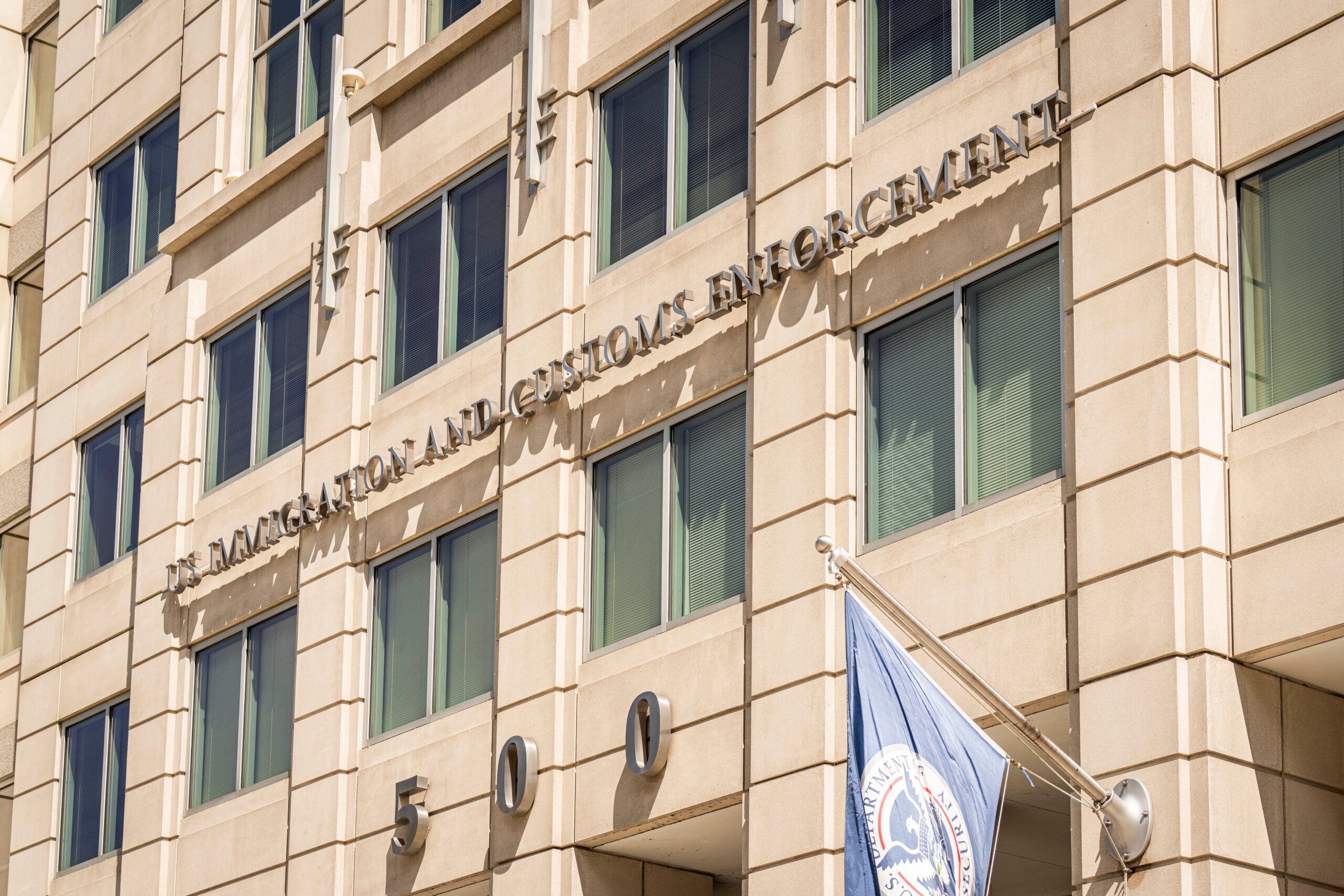
A growing federal crackdown on so-called “birth tourism” is putting visa fraud, medical-payment schemes and the future of U.S. visitor screening under renewed scrutiny. The campaign highlights a broader shift in American immigration enforcement: authorities are increasingly using travel patterns and other data to identify suspected misuse of the visa system.
For years, birth tourism existed in a legal and political gray area that was difficult for authorities to police at scale.
That is changing.
The U.S. government has launched a dedicated Birth Tourism Prevention Task Force, and officials say hundreds of visas connected to suspected birth-tourism and fraud schemes have already been revoked.
According to reports, the task force had revoked more than 750 visas shortly after its launch on August 12, 2026, with officials expecting the number to rise.
The campaign is not simply about women traveling to the United States while pregnant.
The central issue is whether travelers misrepresent the purpose of their trip, misuse visitor visas or participate in organized schemes designed to circumvent U.S. immigration and financial rules.
What Is Birth Tourism?
Birth tourism generally refers to traveling to the United States primarily to give birth so that the child can obtain U.S. citizenship.
U.S. immigration authorities have made clear that birth tourism is not a permissible basis for receiving a visitor visa.
That distinction is important.
Simply being pregnant while visiting the United States is not automatically the same thing as committing visa fraud.
The issue arises when the primary purpose of the trip is giving birth for citizenship purposes and the applicant misrepresents that purpose during the visa process.
In other cases, authorities have alleged that commercial networks actively facilitate these trips.
From Individual Travelers to Organized Businesses
The federal investigation is increasingly focused on the infrastructure surrounding birth tourism.
According to officials, some networks allegedly advertise packages that combine accommodation, medical services and assistance with childbirth in the United States.
Authorities have also described cases in which businesses allegedly coach prospective travelers about what to tell U.S. consular officers.
That changes the nature of the problem.
Instead of an individual traveler making an isolated decision, investigators may be dealing with an organized business model.
Such networks can involve:
- overseas marketing;
- travel arrangements;
- accommodation;
- medical referrals;
- financial arrangements;
- transportation;
- and advice on navigating immigration procedures.
The more organized the operation becomes, the easier it can be for authorities to characterize it as systematic fraud rather than ordinary tourism.
Why Visa Fraud Is at the Center of the Crackdown
The U.S. visitor visa system depends heavily on applicants providing truthful information.
Consular officers evaluate whether applicants qualify for the visa category being requested.
That makes honesty particularly important.
If someone applies for a tourist visa while concealing that the primary purpose of the trip is to give birth, authorities can treat the deception as a much more serious issue than simply visiting America while pregnant.
Medical Bills Are Another Major Concern
The controversy isn’t limited to citizenship.
Federal officials have also raised concerns about unpaid medical bills.
Pregnancy and childbirth can be extraordinarily expensive in the United States, particularly when complications require additional treatment.
Some birth-tourism operations have allegedly encouraged participants to avoid paying medical bills after receiving treatment.
Officials argue that this can shift costs onto hospitals, insurers or taxpayers.
That allegation has become a central part of the administration’s argument for tougher enforcement.
Why U.S. Childbirth Is So Expensive
The economics help explain why the issue attracts attention.
Childbirth in the United States can cost thousands of dollars even without complications, while complicated pregnancies and neonatal care can become dramatically more expensive.
For someone traveling from a country where medical care is substantially cheaper, the United States may appear financially attractive if a third party claims to have a way of arranging medical treatment.
But the financial risk can be enormous.
A complicated delivery can generate bills far beyond the cost of an ordinary planned birth.
That creates incentives for some commercial operators to promise travelers a predictable package while leaving hospitals to deal with unexpected expenses.
The Citizenship Question
Birth tourism is inseparable from America’s long-running debate over birthright citizenship.
Under the traditional interpretation of the Fourteenth Amendment and existing U.S. law, most people born on U.S. soil are citizens at birth, subject to specific exceptions.
The existence of birth tourism has therefore generated a political argument over whether the constitutional framework was intended to cover children whose parents entered the country temporarily specifically to give birth.
The Trump administration has repeatedly criticized birth tourism as an abuse of the citizenship system.
The administration has argued that American citizenship should not become the centerpiece of a commercial travel industry.
Supporters of the crackdown say stronger enforcement protects the integrity of the immigration system.
Critics, however, have raised broader questions about constitutional rights, enforcement standards and how authorities distinguish fraudulent conduct from lawful travel.
Birth Tourism Is Not the Same as Ordinary Medical Travel
This distinction is crucial.
People legitimately travel internationally for medical treatment.
A pregnant traveler could also have legitimate reasons for being in the United States.
For example, someone might already be living in the country lawfully, have family there or require specialized medical treatment.
The key issue for a visitor visa is the purpose of the trip and whether the traveler is truthful about it.
Why Consular Interviews Matter
The U.S. visa interview remains an important part of the screening process.
Consular officers assess information provided by applicants and determine whether the applicant qualifies for the requested visa.
That process can involve reviewing:
- travel plans;
- financial circumstances;
- employment;
- family connections;
- previous travel;
- stated purpose of the visit;
- and other relevant information.
The new enforcement approach adds another layer by allowing authorities to examine patterns beyond the individual interview.
The Crackdown Fits Into a Larger Visa Enforcement Strategy
Birth tourism is not happening in isolation.
The U.S. government has substantially tightened visa screening and immigration-related policies during 2026.
The government has introduced or maintained visa restrictions affecting nationals of numerous countries, while also implementing visa-bond requirements for citizens of selected countries.
It has also announced broader efforts to strengthen screening and vetting.
That suggests the birth-tourism campaign is part of a much larger effort to make the U.S. visa system more restrictive and enforcement-oriented.
Visa Revocation Can Have Serious Consequences
A visa is not a permanent guarantee of entry into the United States.
Visa violations, fraud or misrepresentation can result in visa revocation and future immigration consequences.
For someone whose visa has been revoked, future travel to the United States can become significantly more difficult.
The consequences can extend beyond one trip.
What Happens When a Visa Is Revoked?
A visa revocation can prevent a traveler from using that visa for future entry.
Depending on the circumstances, additional immigration consequences may follow.
The precise consequences depend on the underlying facts and applicable U.S. law.
That is why travelers facing allegations of fraud should obtain qualified legal advice rather than assuming that paying a fine, leaving the country or simply applying for another visa will resolve the problem.
Why the Crackdown Could Affect Tourism
The policy has implications beyond immigration.
International visitors contribute substantially to the U.S. tourism economy.
Hotels, airlines, restaurants, retailers, hospitals and other businesses depend on international travel.
More aggressive visa screening could reduce some forms of travel demand if potential visitors become concerned about being denied entry.
The challenge for policymakers is therefore finding a balance between:
strong enforcement against fraud
and
maintaining legitimate international tourism.
The Risk of Over-Enforcement
Any large-scale enforcement campaign creates the possibility of mistakes.
Pregnancy alone does not establish fraud.
Frequent travel alone does not establish birth tourism.
Having a U.S.-born child does not automatically prove that a parent committed visa fraud.
Investigators must distinguish suspicious patterns from legitimate circumstances.
That makes evidence and due process particularly important.
A data-driven system can identify patterns that humans might miss.
But patterns are not necessarily proof.
Why Transparency Will Matter
As the task force expands, several questions are likely to become increasingly important.
What specific indicators trigger investigation?
How are innocent travelers protected?
What evidence is required before a visa is revoked?
How can someone challenge an erroneous decision?
And how does the government distinguish an organized birth-tourism operation from an individual traveler who simply happens to give birth while legally visiting the country?
The answers could determine whether the crackdown is viewed as effective enforcement or overly broad immigration policing.
Birth Tourism Networks Could Adapt
Another challenge is that enforcement tends to encourage criminal or questionable businesses to change tactics.
If authorities begin identifying particular advertising methods, operators may move online.
If certain destinations receive increased scrutiny, networks may shift elsewhere.
If particular travel patterns become known indicators, operators may attempt to disguise them.
That means enforcement agencies may need to continuously update their methods.
The task force’s emphasis on real-time analysis appears designed partly to address that problem.
Technology Is Becoming Part of Immigration Enforcement
The birth-tourism crackdown illustrates a broader trend in modern border enforcement.
Governments increasingly have access to large amounts of travel and immigration data.
Algorithms can identify patterns involving:
- travel frequency;
- visa applications;
- border crossings;
- destinations;
- length of stay;
- and other factors.
The advantage is speed.
The danger is overreliance on automated signals.
A suspicious pattern should ideally trigger further investigation—not automatically become a verdict.
The Human Element Remains Critical
Immigration enforcement ultimately affects real people.
A traveler may face:
- a canceled trip;
- financial losses;
- visa ineligibility;
- separation from family;
- or potentially criminal proceedings.
That makes accurate decision-making essential.
A sophisticated system should combine technology with experienced consular officers and investigators who can evaluate context.
What This Means for Travelers
The safest rule for anyone seeking a U.S. visa is also the simplest:
Tell the truth.
Applicants should accurately explain:
- why they are traveling;
- how the trip will be financed;
- where they will stay;
- and what they intend to do in the United States.
Travelers should never rely on advice from an agent or consultant telling them to conceal information from U.S. officials.
A dishonest answer that seems harmless at the time can create far bigger problems later.
What This Means for the U.S.
The crackdown reflects a fundamental question about America’s immigration system:
How aggressively should the government police the difference between legitimate international travel and deliberate exploitation of immigration rules?
The administration’s answer is increasingly clear: much more aggressively.
The Birth Tourism Prevention Task Force is evidence of that change.
But the ultimate test will not simply be how many visas are revoked.
It will be whether authorities can dismantle organized fraud while protecting legitimate travelers and maintaining a visa system that remains predictable, transparent and legally defensible.
Final Thoughts
Birth tourism has always been a politically sensitive subject because it sits at the intersection of immigration, citizenship, healthcare and international travel.
The latest crackdown takes the issue into a new phase.
More than 750 visas had reportedly been revoked shortly after the new federal task force began operating, and officials say the number is expected to increase.
The government’s strategy also signals something larger: America’s visa system is becoming increasingly data-driven and enforcement-focused.
For legitimate travelers, the message is straightforward.
A visitor visa is not a blank check.
Travelers must qualify for the visa category they use and provide truthful information.
For policymakers, however, the harder task lies ahead.
Stopping organized fraud is one thing. Making sure aggressive enforcement does not sweep legitimate travelers into the same net is another.
That balance will determine whether America’s new approach to birth tourism becomes a lasting model for immigration enforcement—or the beginning of another major legal and political battle.
5 Frequently Asked Questions
1. What is birth tourism?
Birth tourism generally refers to traveling to the United States primarily to give birth so that the child can obtain U.S. citizenship. U.S. authorities have stated that birth tourism is not a permissible basis for obtaining a visitor visa.
2. Is it illegal to give birth in the United States as a foreign visitor?
Giving birth in the United States is not, by itself, the same as committing visa fraud. The key issue is whether the traveler obtained or used a visa through deception or otherwise violated U.S. immigration rules. Birth tourism specifically is not a permissible purpose for a visitor visa.
3. Can a U.S. visa be revoked because of suspected birth tourism?
Yes. The current federal crackdown has already resulted in hundreds of visa revocations tied by authorities to suspected birth-tourism activity and related fraud schemes.
4. What happens if someone lies on a U.S. visa application?
Misrepresentation can have serious consequences, potentially including visa denial, revocation, future visa ineligibility and, in cases involving fraud, possible criminal prosecution.
5. Will the U.S. continue increasing enforcement against birth tourism?
The current administration has indicated that enforcement will expand. The Birth Tourism Prevention Task Force is using travel patterns and other information to identify suspected activity, and officials have said the number of visa revocations is expected to grow.
Sources Fox News

