
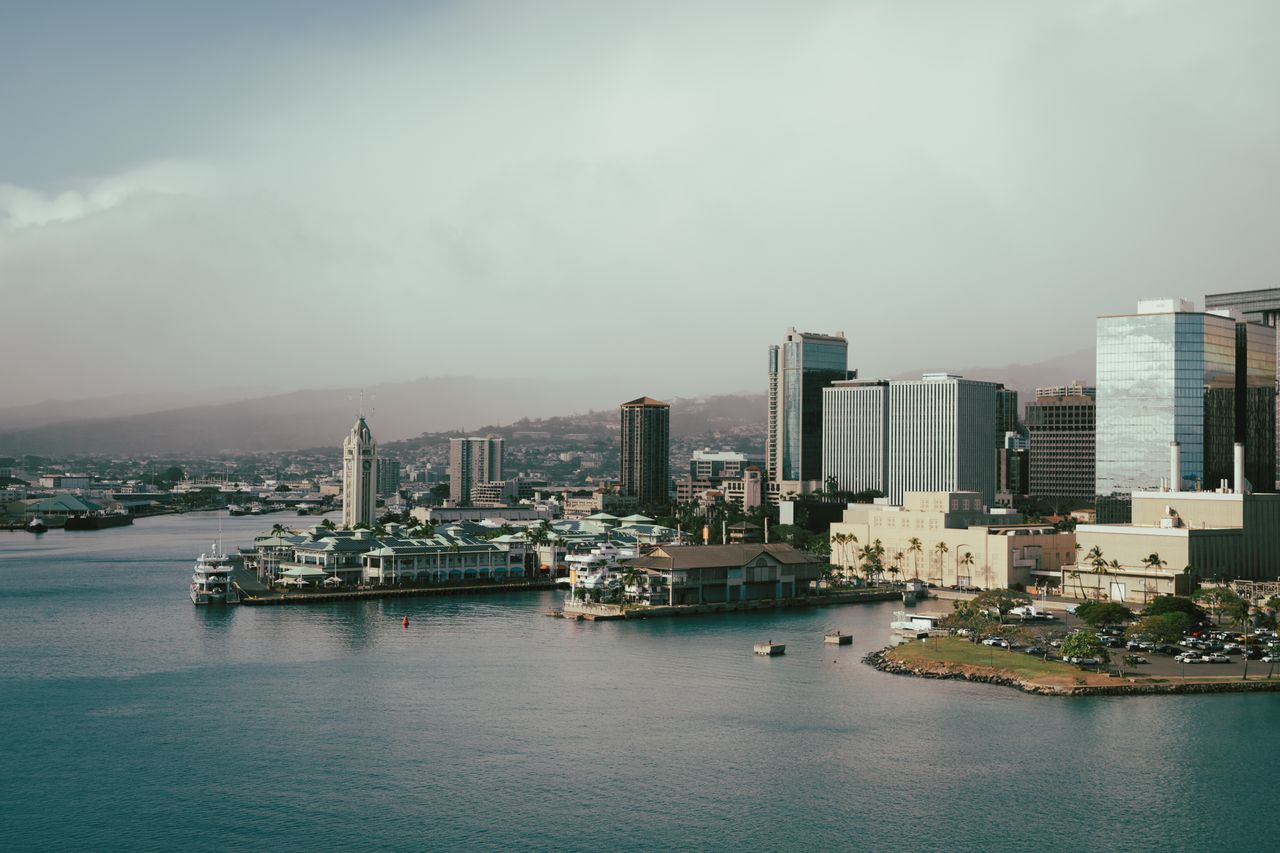
Hawaii has spent generations perfecting the tourism business. Now, with visitor growth losing momentum and living costs continuing to squeeze residents, the islands are betting on something radically different: startups, advanced manufacturing, aerospace, ocean technology and high-paying technology jobs.
For decades, Hawaii’s economic identity has been remarkably simple. Visitors arrive, hotels fill, restaurants serve them, attractions entertain them and thousands of local workers keep the machinery running.
But that model has a weakness: when tourism struggles, almost everything feels it.
Hawaii’s latest economic experiment is therefore not about replacing tourism overnight. It is about building enough new industries alongside it that the state’s future isn’t determined by how many airplane seats are filled each year.
That effort is already visible in unexpected places around Oahu—from engineers designing heating and cooling systems in Kailua to University of Hawaii students working on equipment intended for the Moon, scientists developing wastewater technology and companies experimenting with ocean-based products.
State officials increasingly believe Hawaii needs a small number of high-growth companies capable of creating well-paid jobs, attracting investment and, perhaps most importantly, convincing young residents that they don’t have to leave home to build a career.
Hawaii’s Tourism Problem Is Really an Economic Concentration Problem
Tourism isn’t disappearing from Hawaii.
That is important.
The problem is that tourism has become so dominant that weakness in the sector can have consequences far beyond hotels and airlines.
Inflation-adjusted tourism spending in Hawaii peaked decades ago, while the state’s economy remains heavily dependent on visitors. In June 2026, total visitor arrivals were reported to be 9% below June 2019, with international arrivals roughly half their pre-pandemic level.
Meanwhile, Hawaii has some of the highest living costs in the United States.
Housing is particularly painful.
The combination creates a difficult equation:
High living costs + relatively limited high-paying private-sector jobs = young workers leave.
That isn’t simply a demographic problem.
It becomes an economic problem because the very people who could create the next generation of companies are the ones most likely to leave.
The Young People Hawaii Needs Are Leaving
The talent drain is perhaps the most worrying part of the story.
Young adults represent roughly one-fifth of Hawaii’s population but account for more than 40% of residents who leave the state, according to figures cited in the report.
More than half of Hawaii-born college graduates now live on the mainland.
That creates a vicious cycle.
A student grows up in Hawaii.
They graduate from high school.
They attend university on the mainland.
They discover that the best opportunities in technology, engineering, finance or science are elsewhere.
They accept a job.
They establish a career.
And Hawaii loses another highly educated worker.
Eventually, the state doesn’t merely lose employees.
It loses future founders, investors, engineers, executives and mentors.
The Startup Bet Is Really a Talent-Retention Strategy
This is why Hawaii’s technology push is about more than creating companies.
It’s about creating reasons to stay.
Imagine a young Hawaiian engineer graduating from Stanford, MIT, UC Berkeley or another mainland university.
Traditionally, the obvious next step might be Silicon Valley, Seattle, Boston, Austin or another technology center.
Hawaii wants to make another option possible:
Come home. Build something. Hire people.
That sounds romantic.
But it requires an ecosystem.
A founder needs:
- skilled employees;
- investment capital;
- laboratories;
- manufacturing facilities;
- customers;
- mentors;
- universities;
- business services;
- reliable infrastructure;
- and access to national and international markets.
Without those ingredients, telling entrepreneurs to “start a company in Hawaii” isn’t enough.
Hawaii Has One Unusual Advantage: Geography
The islands’ isolation is normally discussed as an economic disadvantage.
Shipping is expensive.
Travel is expensive.
Housing is expensive.
Supply chains are complicated.
But geography can also become an advantage when the industry is chosen carefully.
Hawaii sits in the middle of the Pacific, between the United States and Asia.
It is also relatively close to the equator.
That creates opportunities in areas such as:
- aerospace;
- defense technology;
- satellite systems;
- ocean science;
- marine technology;
- climate research;
- renewable energy;
- environmental monitoring.
The challenge is turning geographic advantages into commercially viable companies rather than simply producing interesting research projects.
Space Technology Could Be One of Hawaii’s Biggest Bets
Hawaii’s position near the equator gives it potential advantages for certain aerospace activities.
The state also possesses something technology companies can’t easily manufacture elsewhere:
a unique Pacific location.
Researchers at the University of Hawaii are already working on equipment associated with lunar exploration.
That doesn’t automatically mean Hawaii will become the next Houston or Cape Canaveral.
But a local aerospace ecosystem could create highly skilled jobs while connecting the islands to one of the world’s fastest-moving technology sectors.
It could also attract mainland companies seeking a strategic Pacific presence.
Defense Technology Is Another Potential Growth Engine
Hawaii’s military importance is already enormous.
The islands sit in a strategically important location in the Pacific and host major U.S. military infrastructure.
That creates a potential market for companies working in:
- autonomous systems;
- robotics;
- drones;
- cybersecurity;
- communications;
- maritime surveillance;
- satellite technology;
- logistics;
- artificial intelligence.
Entrepreneurs cited in the report see defense technology as one possible way Hawaii could exploit its geographical position while creating higher-paying jobs.
But there is a catch.
An economy heavily dependent on government or military spending would simply be replacing one form of concentration with another.
The strongest strategy would probably be to use defense-related demand as a launching pad for technologies that eventually find commercial markets.
The Ocean May Be Hawaii’s Most Obvious Technology Laboratory
If Hawaii has one resource that is impossible to relocate, it is the Pacific Ocean.
That makes ocean technology an obvious candidate for economic diversification.
Companies in Hawaii are already working on technologies involving:
- marine sensors;
- wastewater treatment;
- coastal monitoring;
- aquaculture;
- seaweed products;
- ship repair;
- environmental technology;
- flood detection.
The opportunity is enormous.
The world’s oceans face increasingly urgent problems involving pollution, coastal erosion, climate change, food production and rising sea levels.
Hawaii could potentially become a living laboratory for technologies designed to solve those problems.
But Hawaii Shouldn’t Force an “Ocean Economy”
There is an important warning here.
Just because Hawaii has an ocean doesn’t mean every promising business needs to involve seawater.
That may sound obvious, but governments frequently make this mistake.
They identify an industry that seems geographically logical and then try to manufacture an ecosystem around it.
Technology markets don’t work that way.
The strongest company may emerge from something nobody predicted.
That is why some Hawaii technology leaders argue that policymakers should create conditions for entrepreneurship rather than trying to decide in advance which specific industry will win.
One Company Could Change the Psychology
There is a fascinating idea circulating among Hawaii entrepreneurs:
The state doesn’t necessarily need hundreds of successful startups to change its economic trajectory. It may need one spectacular success.
In startup language, that means a “unicorn”—a privately held company valued at more than $1 billion.
But the economic impact of such a company isn’t limited to its own employees.
Suppose a Hawaii-based startup creates hundreds of highly paid jobs and produces a generation of wealthy employees and founders.
Those people could then:
- invest in new startups;
- become angel investors;
- mentor younger entrepreneurs;
- fund local projects;
- establish new companies;
- attract mainland talent.
That creates an economic flywheel.
One success creates people who finance the next success.
Normal Corp. Shows What the Strategy Looks Like in Practice
One of the most interesting examples is Normal Corp., a startup developing heating, ventilation and air-conditioning technology.
Its story sounds almost deliberately un-Hawaiian.
Instead of another hotel, restaurant or tourism business, engineers are building physical technology.
The company reportedly grew to around 20 employees, combining young engineers with experienced talent.
Its manufacturing operation operates in Kailua, alongside more traditional businesses.
That juxtaposition is revealing.
Hawaii’s new economy may not emerge from shiny skyscrapers filled with software engineers.
It may emerge from warehouses, workshops and industrial parks.
Manufacturing Could Be More Important Than Software
The word “technology” often makes people think of apps.
But Hawaii’s diversification effort is broader.
Advanced manufacturing can create jobs in:
- mechanical engineering;
- electronics;
- robotics;
- materials science;
- industrial design;
- machining;
- automation;
- quality control.
These jobs can be difficult to outsource because the physical production process is tied to specific facilities and equipment.
They can also create a stronger local economic multiplier than purely digital businesses.
A software company might employ engineers.
A manufacturing company can employ engineers plus technicians, machinists, electricians, logistics workers, suppliers and maintenance specialists.
The Industrial Park Experiment
The Hawaii Technology Development Corporation is pursuing manufacturing space at the Kapaa Industrial Park, with a lease worth more than $1 million, according to the report.
The concept is straightforward:
Create an environment where young companies can actually build things.
That matters because startups often struggle to find affordable industrial space.
A software startup can begin with laptops and a small office.
A robotics company needs:
- machinery;
- power;
- ventilation;
- storage;
- testing areas;
- shipping access;
- safety systems.
Without suitable facilities, manufacturing startups can be forced to leave Hawaii before they have a chance to grow.
The Café With a Factory Behind It
Perhaps nothing captures Hawaii’s startup experiment better than the unusual setup surrounding Normal Corp.
To establish manufacturing operations on property zoned for retail, the company’s founders opened a café on the site.
The arrangement sounds almost absurd:
coffee shop in front, engineering operation behind it.
Yet it demonstrates the improvisational nature of entrepreneurship in an expensive and geographically constrained economy.
Hawaii’s founders may have to become unusually creative simply to secure space.
Hawaii’s Startup Culture Is Still Tiny
And this is where the optimism needs some skepticism.
Hawaii isn’t Silicon Valley.
It doesn’t have Silicon Valley’s:
- venture-capital density;
- startup history;
- engineering labor pool;
- corporate headquarters;
- investor networks;
- acquisition ecosystem.
That matters.
A startup can build a brilliant product and still fail because it can’t raise its next round.
Or because it can’t hire enough engineers.
Or because shipping costs destroy its margins.
Or because customers are too far away.
Or because investors don’t want to travel thousands of miles to meet founders.
Venture Capital Is a Major Bottleneck
Startups don’t grow simply because founders are talented.
They need capital.
That means Hawaii needs deeper connections with mainland investors.
A strong startup ecosystem requires investors who are willing to fund companies before they become obvious winners.
This is particularly difficult for companies outside traditional technology hubs.
Investors tend to cluster geographically because networks matter.
One founder introduces another.
One employee joins a different startup.
One investor funds several companies.
One successful exit creates another generation of entrepreneurs.
Hawaii is trying to build that network from a relatively small base.
Universities Could Become the Economic Bridge
The University of Hawaii system could play an outsized role.
Universities aren’t just places where students receive degrees.
In successful innovation ecosystems, universities can provide:
- research;
- laboratories;
- patents;
- founders;
- skilled employees;
- industry partnerships;
- commercialization opportunities.
Hawaii already has scientific assets in areas such as astronomy, ocean science, environmental research and aerospace.
The challenge is turning research into companies.
A brilliant university project doesn’t automatically become a profitable business.
There needs to be a bridge between research and commercialization.
Returning Residents Could Be Hawaii’s Secret Weapon
One of the most promising groups may be people who left.
These residents understand both worlds.
They know Hawaii’s culture and constraints.
But they also understand mainland business practices, technology and investment networks.
That combination can be valuable.
A person who spends ten years in California’s technology industry and then returns to Honolulu may bring:
- technical skills;
- investor contacts;
- management experience;
- startup knowledge;
- professional networks.
In other words, the brain drain could potentially become a brain-return cycle.
The “Silicon Valley Refugee” Strategy
Some Hawaii entrepreneurs are also trying to attract experienced technology workers from the mainland.
The pitch isn’t complicated.
Why spend your life in a traffic-heavy technology hub if you can build your company in Hawaii?
For certain people, the lifestyle is an enormous advantage.
Surfing before work sounds much better than sitting in traffic.
But lifestyle alone isn’t enough.
A talented engineer may enjoy Hawaii for six months.
They need a reason to stay for ten years.
That reason is usually meaningful work, competitive compensation and career advancement.
High Salaries Are Essential
This is perhaps the most uncomfortable part of Hawaii’s economic challenge.
A beautiful place doesn’t pay the mortgage.
If a software engineer can earn significantly more on the mainland while paying less for housing, Hawaii faces an enormous retention problem.
Economist Steven Bond-Smith has emphasized this opportunity-cost problem: when wages don’t keep pace with the rest of the United States, staying in Hawaii becomes increasingly difficult to justify financially.
That means economic diversification isn’t merely about creating “interesting jobs.”
It needs to create high-productivity jobs that can support Hawaii’s high cost of living.
Remote Work Changes the Equation
Remote work could potentially help Hawaii—but it is not a complete solution.
A software engineer can live in Honolulu while working for a mainland company.
That brings income into the state without requiring the employer to relocate.
But remote workers don’t necessarily create a local technology ecosystem.
They may not hire local employees.
They may not build companies.
They may not create laboratories or manufacturing facilities.
Hawaii therefore needs to go beyond attracting remote workers.
It needs to encourage companies that are actually headquartered and growing there.
Why Tourism Still Matters
None of this means Hawaii should abandon tourism.
That would be economically unrealistic.
Tourism remains an enormous source of employment, tax revenue and business activity.
The goal is diversification, not destruction.
A healthier economic model might look like:
Tourism + technology + manufacturing + defense + aerospace + ocean industries + agriculture + education.
The more independent pillars Hawaii has, the less vulnerable it becomes when one sector struggles.
Hawaii Has Reinvented Itself Before
The idea of economic transformation isn’t new.
Hawaii’s economy has already undergone several dramatic changes.
Sugar plantations once dominated.
Pineapple later became a major industry.
Tourism eventually transformed the islands.
The rise of mass air travel after statehood made Hawaii accessible to millions of Americans.
Japanese tourism later became an important component of the visitor economy.
In other words, Hawaii has never had a permanently fixed economic identity.
Tourism only appears inevitable because it has been dominant for so long.
The Airplane Changed Hawaii Once
The history of aviation offers an important lesson.
In the 1930s, flying from San Francisco to Honolulu was extraordinarily expensive.
As aircraft improved and fares fell, Hawaii became accessible to America’s middle class.
Visitor numbers exploded.
The tourism industry didn’t grow because Hawaii suddenly became beautiful.
It was always beautiful.
It grew because technology changed the economics of reaching the islands.
The same principle could work in reverse.
Technology could now change what Hawaii produces rather than simply how visitors reach it.
What Would a Successful Hawaii Tech Economy Look Like?
It probably wouldn’t resemble Silicon Valley.
That’s actually a good thing.
Hawaii doesn’t need thousands of venture-backed social-media companies.
It could build a specialized innovation economy around industries where the islands have genuine advantages.
Potential sectors include:
Aerospace
Satellite technology, space systems and research.
Defense technology
Robotics, autonomous systems, communications and cybersecurity.
Ocean technology
Sensors, aquaculture, maritime systems and environmental monitoring.
Climate technology
Water management, renewable energy, coastal resilience and disaster monitoring.
Advanced manufacturing
Robotics, electronics, machinery and specialized components.
Biotechnology
Marine biology, agriculture and specialized life sciences.
Environmental technology
Wastewater treatment, recycling and ecosystem monitoring.
The key is specialization rather than imitation.
The Cost-of-Living Problem Cannot Be Ignored
There is one huge obstacle hanging over all of this:
Housing.
Creating 10,000 high-paying technology jobs won’t solve Hawaii’s economic problem if those workers can’t afford to live there.
More jobs can increase housing demand.
More demand can increase prices.
Higher prices can then push out the very workers the new economy needs.
That means economic diversification has to be coordinated with:
- housing construction;
- transportation;
- energy;
- infrastructure;
- education;
- childcare;
- healthcare.
Otherwise Hawaii could successfully create a technology sector that only wealthy outsiders can afford to participate in.
Government Has to Be Careful With Incentives
Hawaii has tried economic incentives before.
Tax credits and subsidies can attract businesses, but they can also become expensive experiments with uncertain results.
The state should therefore distinguish between:
supporting entrepreneurs and trying to manufacture winners.
The former can work.
The latter is much harder.
Governments are generally terrible at predicting which startup will become the next billion-dollar company.
Investors aren’t particularly good at it either.
The best policy may be to create an environment where hundreds of experiments can happen cheaply enough that a few eventually succeed.
Hawaii Needs More Than One Unicorn
The “one unicorn” idea is emotionally compelling.
One spectacular success could certainly change perceptions.
But relying on one company would create another concentration problem.
A stronger outcome would be:
- several medium-sized technology companies;
- a few major employers;
- hundreds of small businesses;
- university spinouts;
- manufacturing suppliers;
- venture funds;
- experienced founders;
- local investors.
The goal should not be one miracle.
It should be an ecosystem that repeatedly produces companies.
Tourism and Technology Could Eventually Reinforce Each Other
There is another possibility that is often overlooked.
Hawaii doesn’t have to choose between tourism and technology.
Technology can improve tourism.
For example:
- smart water-management systems can reduce resort consumption;
- environmental sensors can protect coral reefs;
- AI can improve visitor transportation;
- climate monitoring can improve disaster preparedness;
- renewable-energy technology can lower resort costs;
- ocean technology can support sustainable tourism.
Meanwhile, tourism provides customers and a global showcase for certain technologies.
A hotel can become a testing ground.
A resort can become a demonstration site.
A visitor destination can become a technology laboratory.
The Biggest Asset May Be the People Who Still Want to Come Home
Perhaps the most encouraging part of Hawaii’s startup experiment is that there are already young engineers and entrepreneurs willing to take the risk.
They don’t necessarily need to be convinced that Hawaii is beautiful.
They need to believe that it can be economically viable.
That is a much harder proposition.
But if enough talented people return, build companies and hire locally, they could gradually change the state’s economic culture.
And culture matters.
The most important sentence a teenager in Hawaii could hear may not be:
“You can get a great job on the mainland.”
It might be:
“You can build something great here.”
Final Thoughts
Hawaii’s economic transformation will not happen simply because government officials declare technology a priority.
Nor will one startup magically replace tourism.
The challenge is much deeper.
The state needs to create an ecosystem in which young people can build careers, entrepreneurs can access capital, manufacturers can find industrial space, universities can commercialize research and companies can sell products to customers far beyond the islands.
Tourism will remain part of Hawaii’s identity.
But it doesn’t have to be the entire economic story.
The most promising future may be one in which Hawaii combines what it already has—its location, natural resources, universities, military importance and global reputation—with industries capable of generating much higher productivity and wages.
The irony is that Hawaii’s greatest economic advantage may not be its beaches.
It may be the people who grew up there, left to acquire skills, and are now asking a surprisingly radical question:
What if the next great Hawaii industry could be built at home?
The answer won’t arrive overnight.
But somewhere in an industrial park in Kailua, inside a university laboratory or behind an improbably located café, the experiment has already begun.
And if Hawaii gets it right, the next generation may not have to choose between building a career and coming home.
They may finally be able to do both.
5 Frequently Asked Questions
1. Why is Hawaii trying to diversify away from tourism?
Hawaii remains heavily dependent on tourism, but tourism spending has struggled to deliver the same economic growth it once did. Visitor numbers also remain uneven across markets, while the state’s high cost of living makes relatively low-paying service jobs increasingly difficult for residents. Economists argue that Hawaii needs more high-productivity industries and higher-paying employment.
2. What industries is Hawaii targeting for economic diversification?
The state’s emerging technology ecosystem includes aerospace, defense technology, ocean technology, advanced manufacturing, robotics, environmental technology, wastewater treatment and other specialized industries. Hawaii’s Pacific location and proximity to the equator make aerospace, defense and ocean-related technologies particularly interesting areas.
3. Why are young people leaving Hawaii?
High living costs combined with limited opportunities for highly skilled workers are major factors. Young adults make up a disproportionate share of Hawaii’s population outflow, and more than half of Hawaii-born college graduates reportedly live on the mainland. The concern is that continued migration removes precisely the educated workforce needed to build new industries.
4. Can Hawaii really become a technology hub?
Potentially, but it is unlikely to become another Silicon Valley. Hawaii’s strongest opportunity may be to develop specialized technology clusters based on its unique geographic and institutional advantages—particularly aerospace, ocean science, defense, environmental technology and advanced manufacturing. Building venture capital, infrastructure and a larger local talent pool will be critical.
5. Does Hawaii need to choose between tourism and technology?
No. Tourism will probably remain one of Hawaii’s most important industries for decades. The more realistic goal is economic diversification, not replacing tourism. Technology companies can also support tourism by developing solutions for water management, sustainability, transportation, environmental monitoring and energy efficiency. A more diversified economy would give Hawaii additional sources of high-paying jobs and reduce its vulnerability to downturns in visitor spending.
Sources The Wall Street Journal

