
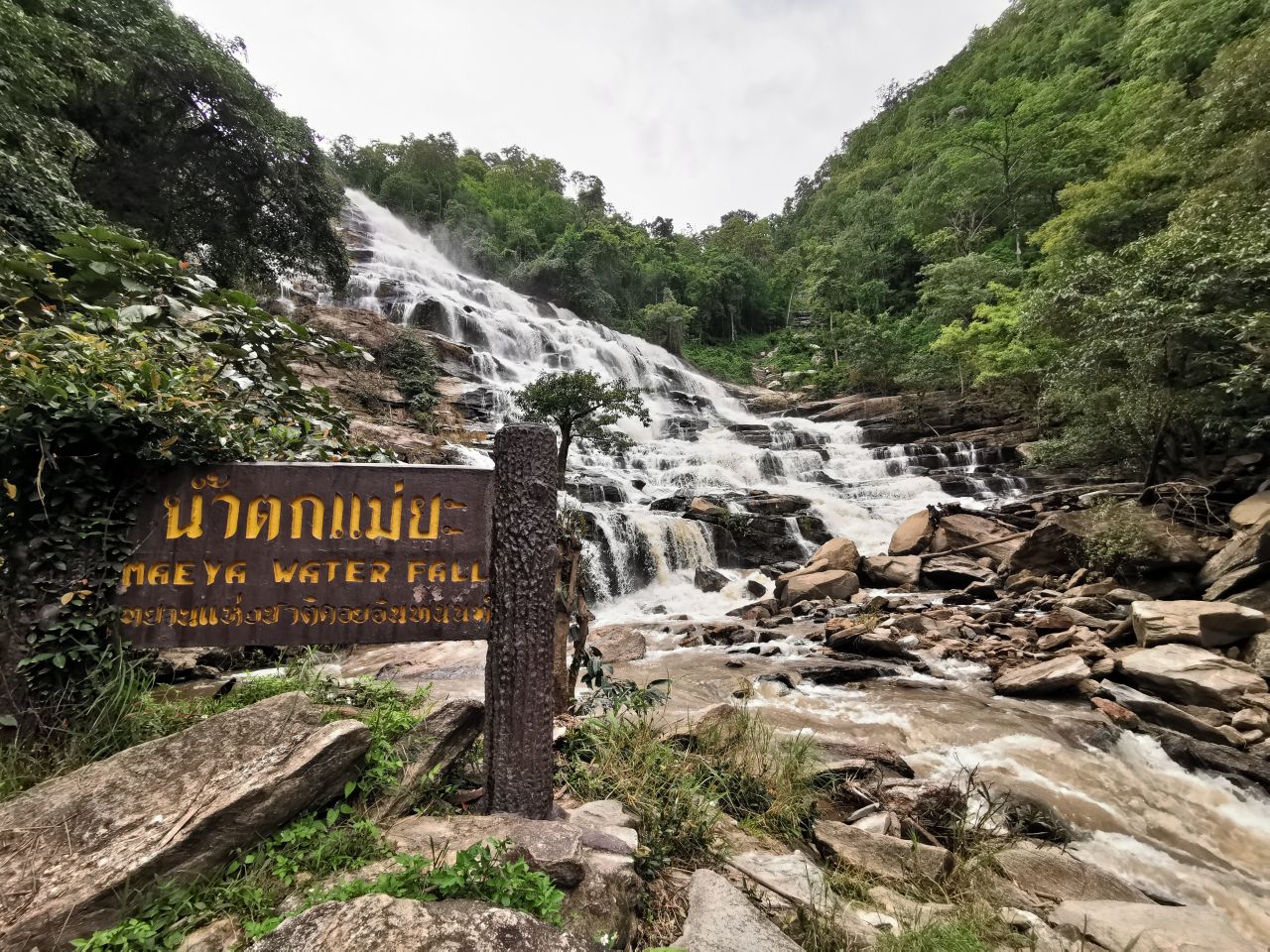
A peaceful waterfall can turn into a deadly trap in minutes. That is the warning behind a terrifying incident in northern Thailand, where tourists were caught in rapidly rising water and swept downstream as a flash flood transformed a popular waterfall into a raging torrent.
Dramatic footage from Mae Sa Waterfall in Chiang Mai’s Doi Suthep-Pui National Park shows tourists struggling against powerful currents, clinging to one another and desperately trying to stay upright as floodwater rushed around them.
The incident occurred on August 15, 2026, after tourists ventured onto rocks in the water. Park rangers warned visitors shortly before the surge arrived, but conditions changed extraordinarily quickly. Several tourists were swept downstream before park personnel managed to bring the group to safety. The visitors reportedly suffered only minor scratches and received first aid.
The episode is frightening not only because of what happened, but because it demonstrates a danger many travelers underestimate: flash floods can originate upstream, meaning dangerous water can arrive even when the weather directly above a waterfall appears manageable.
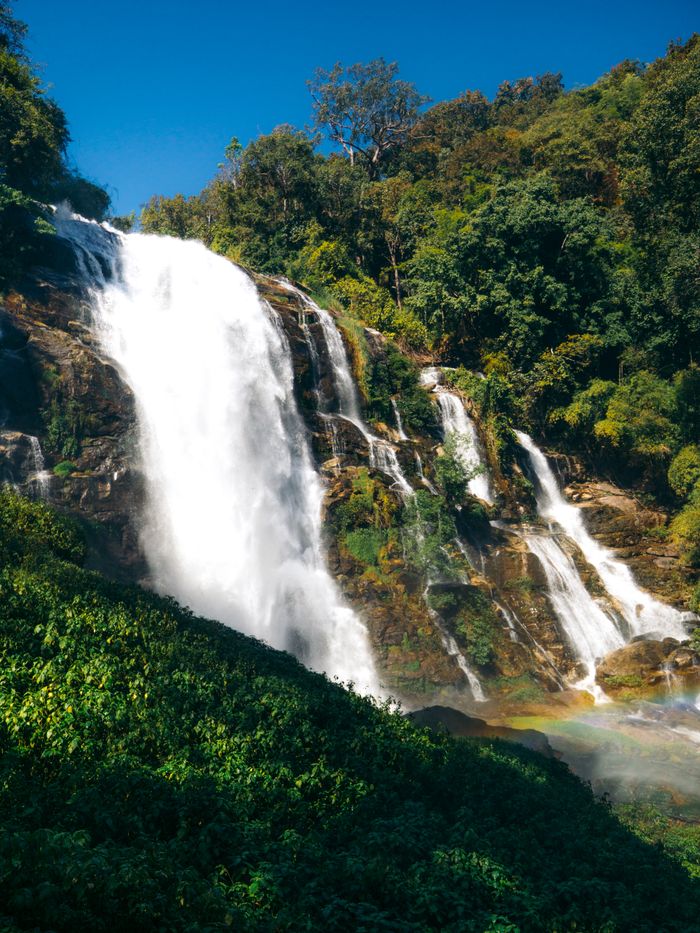
A Relaxing Tourist Attraction Turned Into a Survival Situation
Mae Sa Waterfall is one of the better-known natural attractions around Chiang Mai.
Located within Doi Suthep-Pui National Park, the waterfall draws visitors seeking a break from the city’s temples, markets and urban tourism.
Waterfalls are naturally attractive tourist destinations because they combine scenery, swimming opportunities, hiking and photography.
But those same characteristics can make them dangerous.
Visitors often stand directly on wet rocks, walk through shallow streams or approach the water to take photographs.
When the water is calm, these activities can appear harmless.
During Thailand’s rainy season, however, the situation can change dramatically.
The Warning Came Just Before the Flood
One of the most revealing details of the incident is that a park warning reportedly came moments before the flash flood reached the tourists.
Eyewitness Arttie Martin told reporters that he had been preparing to enter the water himself to take photographs when he heard a park officer blow a whistle.
He had apparently been about to remove his shoes and walk toward the area where the tourists were standing.
Then the water surged.
That detail illustrates one of the biggest problems with flash floods:
The window between “safe” and “dangerous” can be incredibly short.
Why Flash Floods Are So Dangerous Around Waterfalls
A flash flood doesn’t behave like an ordinary increase in water level.
Instead, a large volume of water can move rapidly through a narrow river channel.
The result can be:
- dramatically stronger currents;
- rapidly rising water;
- floating branches and debris;
- slippery rocks;
- reduced visibility;
- unstable footing;
- powerful hydraulic forces.
A stream that appears ankle-deep can become impossible to stand in once the flow increases.
And because water is much heavier than it looks, even strong swimmers can be overwhelmed.
The Danger Can Begin Far Upstream
This is perhaps the most important lesson for waterfall visitors.
You don’t necessarily need heavy rain at the waterfall itself for a flash flood to occur.
Rain falling several kilometers upstream can collect in streams and drainage channels.
That water can then travel downhill rapidly.
By the time it reaches a waterfall, visitors below may have little or no warning from the weather immediately around them.
In mountainous terrain, the effect can be especially dramatic because steep slopes accelerate runoff.
Why Thailand’s Rainy Season Requires Extra Caution
Thailand’s rainy season generally brings substantial rainfall to many parts of the country.
Northern Thailand, including Chiang Mai, has mountainous terrain that can intensify runoff and create rapidly changing conditions in streams and waterfalls.
The danger isn’t limited to Mae Sa.
Other Thai waterfall destinations have also experienced closures after heavy rain and flash flooding.
For example, Pa La-U Waterfall in Kaeng Krachan National Park was temporarily closed in July 2026 after persistent rain caused water levels to rise and currents to become dangerous. Officials cited muddy water, slippery routes and flash-flood conditions as reasons for the closure.
That makes the Mae Sa incident part of a broader seasonal safety issue rather than an isolated freak occurrence.
Mae Sa Waterfall Has Faced Previous Flash-Flood Risks
The danger at Mae Sa is not theoretical.
The waterfall area was temporarily closed earlier in August after continuous heavy rainfall caused a flash flood and turned the water visibly muddy.
Park authorities cited visitor safety when announcing the closure.
That history should be taken seriously.
When a park closes a waterfall because of flooding, it isn’t simply making a conservative administrative decision.
The closure is often based on conditions that can change faster than tourists can react.
Why Tourists Keep Entering Dangerous Water
The psychology of tourism plays a role.
Visitors see other people standing in the water.
They see photographs online.
They see children playing.
They see a beautiful waterfall rather than a potentially hazardous river system.
That creates a powerful perception:
“If everyone else is doing it, it must be safe.“
Unfortunately, that assumption can be dangerously wrong.
Conditions can change in minutes.
A photograph taken five minutes earlier tells you almost nothing about whether the same location is safe now.
The Selfie Problem
Modern tourism has added another layer to the risk.
Travelers increasingly want photographs from locations that place them as close as possible to waterfalls, cliffs and rivers.
The closer the photograph, the more dramatic it appears.
But proximity also reduces the time available to escape.
A person standing on a dry platform has more options than someone standing waist-deep in moving water.
A traveler focused through a smartphone camera may also fail to notice subtle changes in water level or sound.
The pursuit of the perfect photograph can therefore create a dangerous disconnect between what looks spectacular on camera and what is physically safe.
Why Clinging to Another Person Isn’t Always Enough
The footage shows tourists holding onto each other as the water pushes them downstream.
Their instinct was understandable.
Humans naturally seek stability by grabbing another person.
But in powerful moving water, forming a chain can sometimes create additional problems.
If one person loses footing, they can pull another person off balance.
Several people may then become entangled.
The safest response depends on the terrain and emergency instructions, but the fundamental principle is simple:
Don’t voluntarily enter fast-moving water in the first place.
Prevention is far easier than rescue.
Swimming Against a Flash Flood Is Usually a Losing Battle
Another misconception is that strong swimmers can simply swim out of danger.
Fast-moving water is different from a swimming pool.
The current may contain:
- rocks;
- submerged branches;
- uneven surfaces;
- turbulence;
- sudden drops;
- whirlpools;
- debris.
Swimming ability does not eliminate those hazards.
A person can be physically fit and still be unable to overcome the force of a sudden surge.
That is why official warnings and evacuation orders matter more than confidence in one’s swimming ability.
What Saved the Tourists?
The outcome could have been much worse.
Park rangers responded and helped bring the tourists to safety.
The group reportedly sustained only minor scratches and received first aid.
The quick response demonstrates why professional staff and park safety systems are so important at popular natural attractions.
A warning from a ranger may sound inconvenient when you’re enjoying a trip.
In a rapidly changing environment, it can be the difference between an interrupted vacation and a tragedy.
The Waterfall Was Restricted After the Incident
Access to Mae Sa Waterfall remained restricted following the flash flood.
That is a sensible response because water conditions may remain dangerous after the initial surge.
Even after rain stops, upstream water can continue moving downstream.
Rocks can also become extremely slippery, trails can deteriorate and debris can accumulate.
A waterfall shouldn’t automatically reopen simply because the sky has cleared.
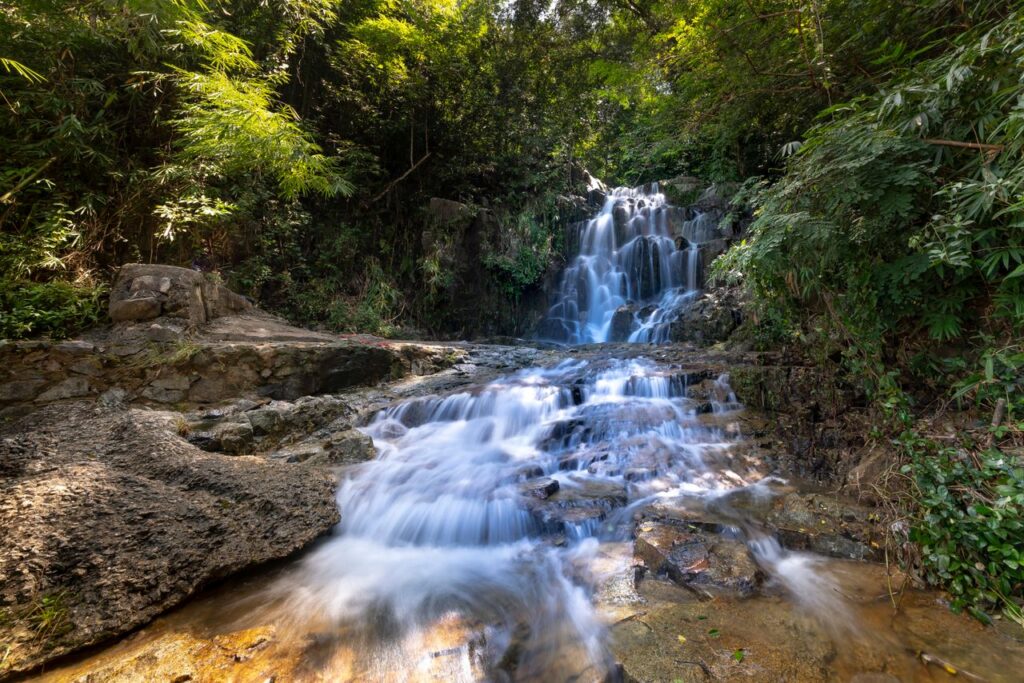
Flash Floods Can Travel Faster Than People Expect
One of the biggest misconceptions surrounding flash floods is that visitors will have plenty of time to react.
They may not.
Water traveling down steep mountain channels can move extremely quickly.
The first visible change in the river may occur only moments before the strongest flow arrives.
That means travelers should respond to warnings and environmental signals, rather than waiting until the water looks obviously dangerous.
Warning Signs Travelers Should Never Ignore
People visiting waterfalls should immediately leave the water if they notice:
Water suddenly becoming muddy
A sudden change from clear to brown or reddish water can indicate sediment and runoff moving downstream.
Rising water levels
Even a small increase can be a warning that much more water is coming.
A sudden change in water noise
A rapidly increasing roar may indicate a larger volume of water approaching.
Floating debris
Branches, leaves and other material can signal upstream flooding.
Heavy rain upstream
Even if the waterfall itself is experiencing sunshine, rainfall in the surrounding mountains can create danger.
Ranger whistles or evacuation instructions
This one should be obvious.
If a park official tells you to leave, leave immediately.
Why Waterfalls Are Especially Vulnerable
Waterfalls naturally occur where terrain forces water through changes in elevation.
That often means:
- steep slopes;
- narrow channels;
- rocks;
- pools;
- rapids.
These geographical features are beautiful but can amplify the danger during floods.
A narrow channel can concentrate water into a powerful current.
A steep slope can accelerate runoff.
A pool can become a trap if water suddenly enters from upstream.
Natural Beauty Can Hide Natural Hazards
Tourism marketing understandably emphasizes beauty.
Photographs show blue skies, clear water and lush vegetation.
They rarely show the same waterfall during a torrential storm.
That creates a psychological problem.
Visitors arrive with an image of what the destination usually looks like.
Nature doesn’t care what Instagram promised.
The river responds to rainfall, geography and gravity.
The Broader Tourism Safety Issue
The Mae Sa incident also reflects a larger challenge facing nature tourism.
As travelers increasingly seek outdoor experiences, destinations are welcoming visitors into environments that are inherently less predictable than conventional attractions.
That includes:
- waterfalls;
- mountain trails;
- caves;
- canyons;
- rivers;
- coastal cliffs;
- forests.
These places don’t have the same controlled environment as a museum or shopping mall.
The risk is part of the landscape.
Managing that risk requires cooperation between authorities, tourism operators and visitors.
Natural Attractions Need Better Risk Communication
A sign saying “Danger” isn’t necessarily enough.
Tourists may not understand what the danger actually means.
More effective warnings can explain:
- how quickly water can rise;
- why upstream rainfall matters;
- where visitors should evacuate;
- which areas are restricted;
- what specific signs indicate an approaching flood.
Visual warnings can be especially useful for international tourists who may not speak the local language.
Technology Could Help—But It Isn’t a Substitute for Judgment
Modern parks can potentially use:
- rainfall monitoring;
- upstream water-level sensors;
- automated warning systems;
- sirens;
- weather alerts;
- mobile notifications;
- surveillance cameras.
These technologies can provide valuable extra seconds or minutes.
But no system should create a false sense of security.
Sensors can fail.
Communications can be delayed.
Weather can change.
Visitors may not have cellular service.
The most reliable safety system remains a simple one:
If authorities tell you to leave, leave.
The Incident Is Also a Lesson for Adventure Tourism
Adventure tourism is growing because travelers increasingly want experiences rather than passive sightseeing.
But there is an important distinction between adventure and unnecessary risk.
Hiking a difficult trail with appropriate equipment can be an adventure.
Entering a restricted waterfall during dangerous weather is simply gambling with physics.
The two shouldn’t be confused.
Thailand’s Waterfall Tourism Needs a Seasonal Mindset
Thailand has countless beautiful waterfalls, especially in its national parks and mountainous regions.
During dry conditions, many locations can be perfectly enjoyable.
During periods of heavy rainfall, however, the same landscapes can become hazardous.
That means travelers shouldn’t rely solely on guidebooks or online reviews.
A review from last month doesn’t tell you whether a waterfall is safe today.
Current conditions matter more than historical reputation.
The Same Warning Applies Beyond Thailand
The lesson from Mae Sa is universal.
Flash flooding can occur at waterfalls and rivers around the world.
Similar dangers have affected popular natural attractions in:
- Malaysia;
- India;
- Indonesia;
- Brazil;
- the United States;
- Australia;
- Nepal;
- the Philippines.
In Malaysia, for example, a water surge at Sungai Kedondong near Batang Kali in May trapped three foreign tourists, with one suffering an injury during the rescue.
In July, three people died after being swept away by a water surge at Taman Eko Rimba Sungai Sedim near Kulim, Kedah.
These incidents demonstrate that sudden water surges are a regional and global tourism hazard.
What Travelers Should Do Before Visiting a Waterfall
A few simple precautions can dramatically reduce the risk.
Check the weather
Don’t only check the weather forecast for the waterfall itself. Look at rainfall across the surrounding region.
Check official park announcements
If authorities have closed the attraction, don’t attempt to enter.
Ask local staff
Park rangers often have information that isn’t available on travel websites.
Stay outside restricted areas
Barriers and warning signs exist for a reason.
Never underestimate shallow water
Fast-moving shallow water can still knock someone off their feet.
Don’t wait for the flood to become obvious
If conditions are changing, move to higher ground early.
What If You Are Already in the Water?
If water begins rising rapidly, the priority is to get out of the channel immediately.
Don’t waste time collecting phones, shoes, bags or cameras.
Move toward higher ground and follow instructions from park personnel.
If someone else is struggling, avoid creating additional victims by entering dangerous water yourself unless you are trained and equipped for rescue.
Professional rescuers have equipment and techniques that ordinary tourists usually do not.
A Camera Is Never Worth a Life
The incident also raises an increasingly relevant question about social-media tourism.
People are willing to take enormous risks for a few seconds of footage.
But the mathematics are terrible.
A photograph can be recreated.
A vacation can be postponed.
A phone can be replaced.
A life cannot.
The best travel photograph is the one you return home with.
The Bigger Lesson for Modern Travelers
The most important lesson from Mae Sa Waterfall isn’t simply “be careful around waterfalls.”
It’s this:
Nature can change faster than your assumptions about it.
A location can be safe in the morning and dangerous in the afternoon.
A river can be calm for hours and then surge suddenly.
A sunny sky above you doesn’t guarantee safe conditions upstream.
And a crowd of tourists standing in the water isn’t proof that the water is safe.
Final Thoughts
The tourists caught in the Mae Sa flash flood were fortunate.
Park rangers managed to rescue them, and reports indicate that injuries were limited to minor scratches.
But the frightening footage offers a powerful warning to anyone planning a trip to a waterfall during the rainy season.
Waterfalls are beautiful precisely because nature is powerful. That power should never be mistaken for harmlessness.
The incident also highlights the importance of listening to local authorities, respecting closures and understanding how flash floods work.
For travelers, the safest approach is remarkably simple:
Check conditions. Respect warnings. Stay out of restricted areas. And when a ranger tells you to get out of the water, don’t negotiate with the waterfall.
Gravity has never been particularly good at compromise.
5 Frequently Asked Questions
1. Where did the tourists get swept away?
The incident occurred at Mae Sa Waterfall in Chiang Mai’s Doi Suthep-Pui National Park, Thailand. Tourists were in or near the water when a sudden flash flood sent a powerful surge downstream.
2. Were the tourists killed or seriously injured?
No fatalities were reported in the incident. Park rangers rescued the group, and the tourists reportedly suffered only minor scratches before receiving first aid.
3. Why are waterfalls dangerous during Thailand’s rainy season?
Heavy rainfall can rapidly increase the amount of water flowing through mountain streams. Rainfall upstream can also produce a flash flood even when conditions immediately around the waterfall appear relatively calm.
4. What should tourists do if water suddenly starts rising?
Leave the water and move toward higher ground as quickly as possible. Follow instructions from park rangers or emergency personnel, and don’t waste time retrieving belongings. Avoid attempting an untrained rescue in powerful moving water.
5. How can travelers stay safe when visiting waterfalls?
Check current weather and official park conditions before visiting, obey closures and warning signs, stay out of restricted areas, avoid entering fast-moving water and pay attention to sudden changes in water level, color, sound or debris. Most importantly, follow local authorities immediately when they issue an evacuation warning.
Sources Fox News

