
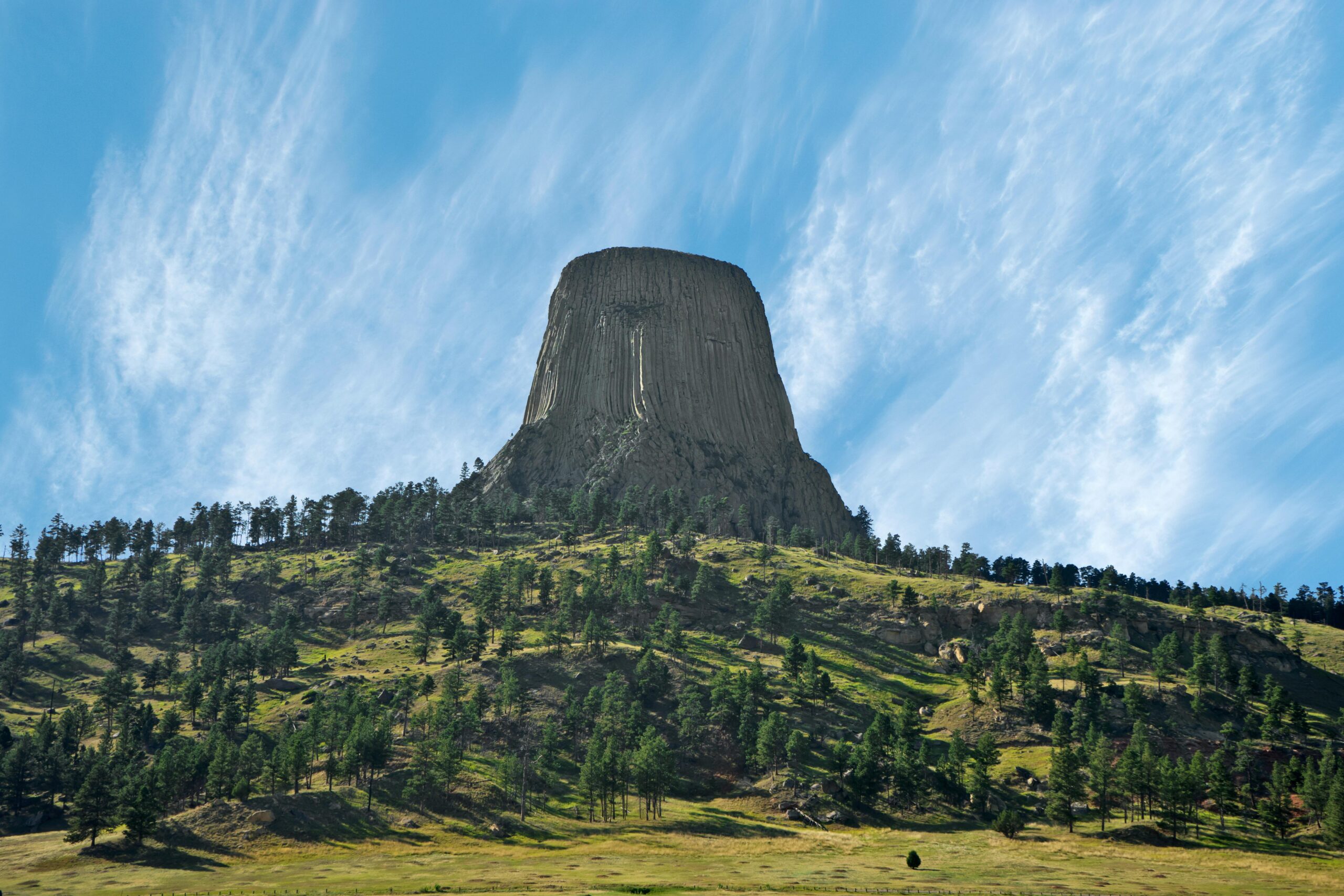
In the wide-open plains of northeastern Wyoming, a massive stone monolith rises like something that shouldn’t quite exist. Devils Tower stands alone—silent, vertical, and almost unnervingly precise in its geometry. Long before Hollywood ever pointed a camera at it, this formation was already sacred to Native American tribes and a geological curiosity for scientists.
Then cinema happened. And it changed everything.
When Steven Spielberg released Close Encounters of the Third Kind in 1977, Devils Tower stopped being just a remote natural monument. It became a global symbol of mystery, extraterrestrial imagination, and cinematic pilgrimage.
Almost half a century later, the influence still hasn’t faded.
A Natural Structure That Looks Almost Engineered
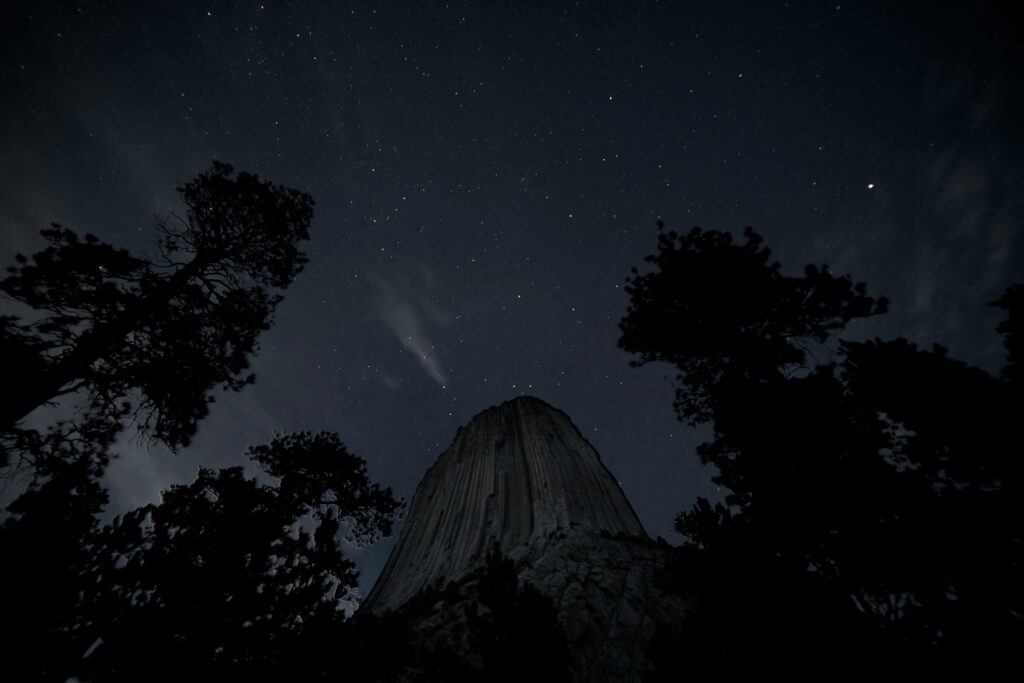
Devils Tower is visually striking in a way that feels intentional.
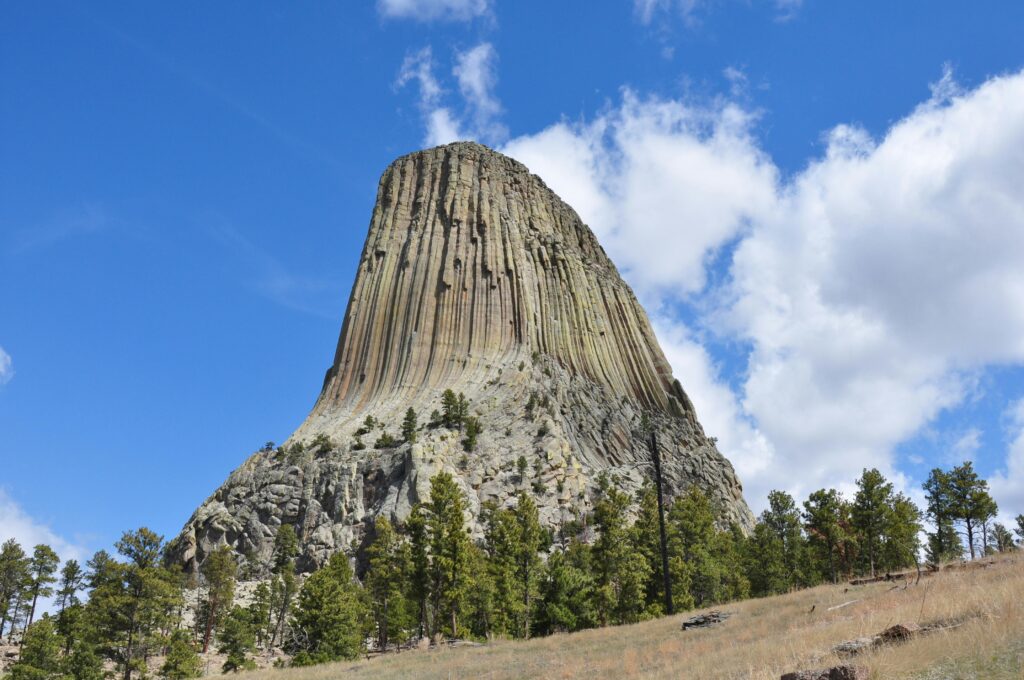
Rising roughly 867 feet from its base, the formation dominates the surrounding landscape. Geologists classify it as a laccolithic igneous intrusion—magma that solidified underground and was later exposed as surrounding rock eroded over millions of years.
That’s the science.
But standing in front of it, people rarely think in geological terms.
Instead, it feels like:
- A giant petrified tree stump
- A carved pillar from another world
- A landing platform for something unknown
That ambiguity is exactly what made it cinematic gold.
Why Spielberg Chose Devils Tower
Steven Spielberg was searching for a location that could visually represent “contact”—something Earth-born but emotionally alien.
Devils Tower offered that contradiction perfectly.
It appears familiar enough to feel real, yet strange enough to feel engineered. That duality became central to Close Encounters, where the monument serves as the focal point for humanity’s first peaceful communication with extraterrestrial intelligence.
Only a short segment of the film was actually shot on location, but it was enough.
The image stuck.
When Fiction Becomes Geography: The Tourism Explosion
After the film’s release, Devils Tower experienced a dramatic rise in attention.
Visitors began arriving not just to see a national monument, but to step into a scene they already knew by heart.
This is the essence of film-induced tourism—when audiences travel to physically inhabit a story world they once experienced on screen.
The impact included:
- Increased national monument visitation
- Growth in regional tourism infrastructure
- Rise in UFO-related folklore tied to the site
- Long-term global recognition far beyond the U.S.
Today, Devils Tower still attracts hundreds of thousands of visitors annually.
A Sacred Place Before It Was a Screen Icon
Long before Hollywood arrived, Devils Tower already carried deep meaning.
For several Native American tribes—including the Lakota, Cheyenne, Kiowa, and Crow—the formation is tied to origin stories, spiritual teachings, and ceremonial traditions.
One widely shared narrative describes it as a place shaped by spiritual forces and moral lessons embedded in the land itself.
This creates a layered identity:
- Sacred cultural site
- Geological landmark
- National monument
- Pop culture icon
Each layer coexists, sometimes comfortably, sometimes in tension.
The Climbing Debate: Recreation Meets Respect
The tower’s vertical columns make it a popular destination for climbers. But climbing has long been a sensitive issue due to its cultural significance.
In response, park authorities and Indigenous communities have developed ongoing agreements that encourage respectful behavior, especially during culturally important periods.
Key points include:
- Voluntary climbing restrictions during sacred times
- Educational outreach about Indigenous perspectives
- Ongoing dialogue between stakeholders
It’s a real-world example of how tourism must constantly negotiate meaning—not just access.
Why People Still Come: The Psychology of Recognition
Devils Tower is powerful because it sits at the intersection of three emotional triggers:
- Natural awe
- Cultural meaning
- Cinematic memory
Visitors often describe a strange sense of familiarity upon arrival.
They’ve seen it before—but not physically. That overlap between memory and reality creates a kind of cognitive “glitch” that makes the experience stick.
It’s not just sightseeing. It’s recognition.
Pop Culture as a Permanent Tourism Engine
Devils Tower is one of the earliest examples of what is now a global pattern: media shaping geography in the public imagination.
Modern parallels include:
- Fantasy landscapes becoming pilgrimage sites
- Film locations turning into global tourism hubs
- Fiction reshaping real-world economic activity
But Devils Tower is unique because it wasn’t built for film. It existed first. Cinema simply reinterpreted it—and never let go.
The Modern Visitor Experience
Today, visiting Devils Tower is a layered experience.
Tourists can:
- Walk scenic trails around the base
- View the formation from multiple angles
- Explore geological exhibits and cultural interpretation centers
- Camp nearby under wide-open skies
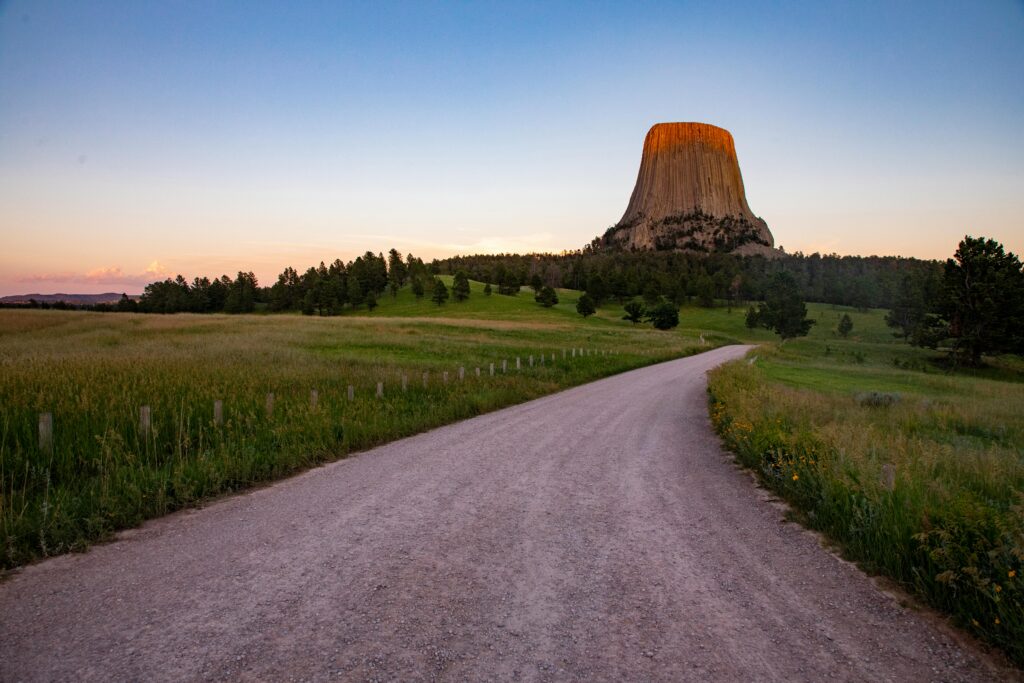
- Watch the tower shift colors at sunrise and sunset
Some still arrive because of UFO mythology. Others come for geology, photography, or cultural learning. Most leave carrying all three interpretations at once.
Frequently Asked Questions (FAQ)
1. What is Devils Tower?
It is a natural rock formation in Wyoming formed by ancient igneous activity and later exposed through erosion.
2. Why is it famous?
It became globally famous after appearing in Close Encounters of the Third Kind, which associated it with alien contact in popular culture.
3. Is it actually related to aliens?
No. The alien connection is fictional and comes from the film.
4. Why is it important to Native American tribes?
It holds deep spiritual and cultural significance and appears in multiple Indigenous origin stories and traditions.
5. Can you climb Devils Tower?
Yes, but climbing is managed carefully and discouraged during culturally significant periods out of respect for Indigenous practices.
6. How many people visit each year?
Hundreds of thousands of visitors come annually, making it one of Wyoming’s most visited natural landmarks.
7. Where is it located?
In northeastern Wyoming, within Devils Tower National Monument near the town of Hulett.
Final Thought
Devils Tower didn’t change.
The story around it did.
It began as stone shaped by deep time, became sacred meaning shaped by culture, and then became myth reshaped again by cinema.
And today, it stands as all three at once—quiet, immovable, and still somehow part of every version of the story told about it.
Sources CNN

