
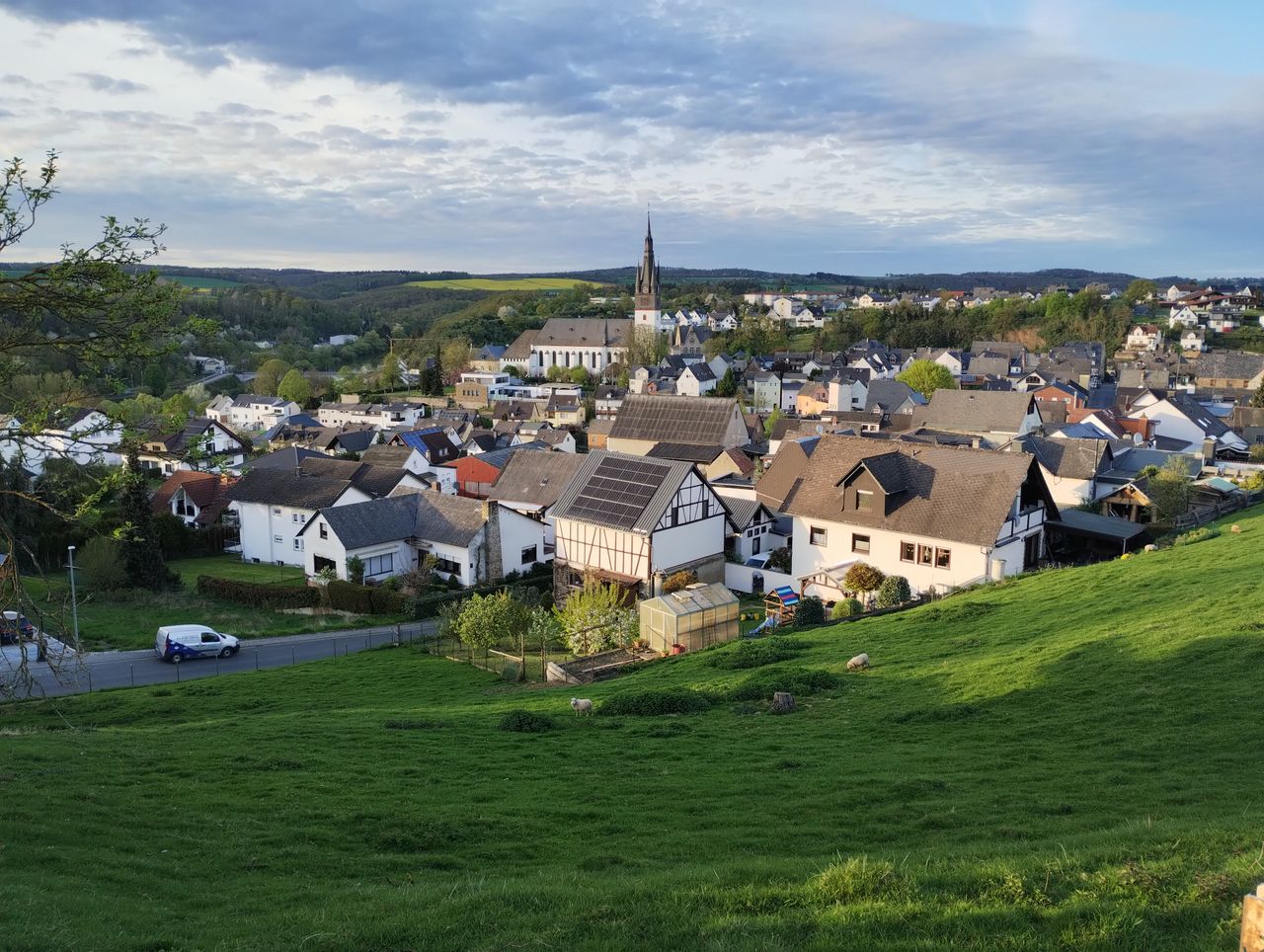
For years, Wunsiedel faced the economic difficulties familiar to many smaller European towns. Traditional industries were disappearing, factories were closing, and younger residents were leaving in search of better employment opportunities.
Rather than accept a future of industrial decline, the town began looking at its greatest local resources: forests, sunlight, wind and the industrial by-products generated by its regional timber industry.
The result is the Wunsiedler Weg, or Wunsiedel Way, an integrated renewable-energy strategy built around local electricity generation, biomass, energy storage and green hydrogen.
At the centre of this transformation is the Wunsiedel Energy Park, where sawdust and wood residues are processed into pellets, renewable electricity is generated and hydrogen is produced through electrolysis.
The project has attracted engineers, researchers, energy professionals and curious travellers from around the world. What was once an ordinary industrial facility has become an educational destination where visitors can see the energy transition happening in real time.
But the real story is not simply about technology. Wunsiedel offers a practical example of how renewable energy can support rural development, strengthen local economic resilience and give a town a new identity.
It also raises important questions about the cost of green technology, the sustainability of biomass and whether other communities can successfully reproduce the model.
1. Wunsiedel: A Small Bavarian Town With a Big Energy Ambition
Wunsiedel is a town of approximately 9,000 residents in northeastern Bavaria, close to the Czech border. It sits within the Fichtelgebirge, or Fichtel Mountains, a region known for its forests, outdoor recreation, historic settlements and traditional industries.
For much of its modern history, the regional economy depended on manufacturing and industrial activity. However, as factories closed and employment opportunities declined, the town faced the challenge of finding a new economic direction.
The response was to rethink the relationship between energy, local resources and economic development.
Instead of purchasing nearly all its electricity from large external suppliers, the municipal utility, SWW Wunsiedel, began developing ways to generate more energy within the region.
The idea was straightforward: use locally available resources, create opportunities for residents to participate financially, develop new businesses and retain more economic value within the community.
The strategy eventually became known as the Wunsiedler Weg.
It combines several technologies rather than relying on one renewable source:
- Solar panels generate electricity from sunlight.
- Wind turbines produce power when weather conditions permit.
- Biomass facilities convert suitable wood residues into heat and electricity.
- Battery storage helps balance fluctuations in renewable generation.
- Electrolysis converts renewable electricity into hydrogen.
- Waste heat is reused in industrial processes wherever practical.
This integrated approach is important because renewable electricity is not always available when consumers need it. Solar production falls at night, while wind generation depends on weather conditions.
By connecting different energy sources with storage and industrial demand, Wunsiedel is attempting to make its local energy system more flexible and resilient.
2. How Sawdust Became One of Wunsiedel’s Most Valuable Resources
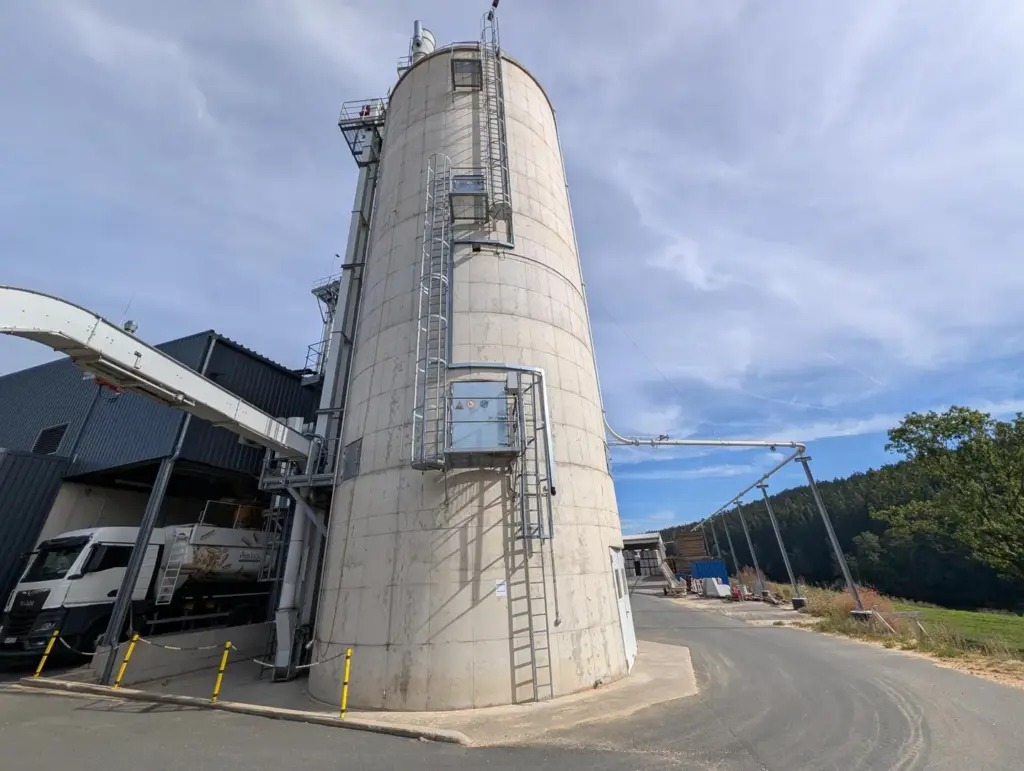
One of the most distinctive elements of the Wunsiedel project is its wood-pellet production facility.
The process begins in the forests surrounding the Fichtel Mountains, where timber is harvested and transported to regional sawmills.
When logs are processed into usable timber, they produce sawdust, shavings and wood chips. Rather than treating all these materials as waste, Wunsiedel uses suitable residues as feedstock for its pellet-production operation.
This creates a connection between forestry, manufacturing and energy production.
How wood pellets are manufactured
The production process involves several stages.
Step 1: Collecting local wood residues
Sawdust and wood shavings from nearby sawmills are transported to the Energy Park. Additional suitable wood chips come from local forest owners and Bavarian state forests.
The raw material is generally sourced within approximately 50 kilometres, although some supplies also cross the border from the Czech Republic.
Step 2: Removing unwanted material
The wood residues are screened and processed to remove unsuitable particles and contaminants.
Step 3: Drying the sawdust
Fresh sawdust can contain considerable moisture. Industrial dryers reduce its moisture content from approximately 40–50% to around 10%.
Heat generated within the energy park helps power this process.
Step 4: Pressing the material into pellets
The dried sawdust is forced through a metal die under heat and pressure.
Natural lignin, a substance found in wood, acts as a binding agent. This allows the material to form compact cylindrical pellets without requiring conventional synthetic glue.
Step 5: Using remaining material
Wood residues that are unsuitable for pellet production can be directed towards biomass boilers, subject to the plant’s operating requirements.
The objective is to make better use of available resources and reduce unnecessary waste.
A substantial regional production operation
The WUN Bioenergie joint venture, involving the municipal utility and the GELO sawmill business, began producing pellets in Wunsiedel in 2011.
The original facility has an annual production capacity of approximately 55,000 metric tonnes.
A second and larger plant opened in 2019, adding capacity of approximately 150,000 metric tonnes a year.
Combined, the facilities have a potential annual production capacity of approximately 205,000 tonnes.
A kilogram of wood pellets contains around 4.9 kilowatt-hours of energy, making them a concentrated fuel for heating applications.
Most of Wunsiedel’s pellet production is transported to customers, including garden centres and households using pellet-fired heating systems.
The municipal project therefore creates economic activity beyond the town itself. It connects forestry businesses, sawmills, pellet manufacturers, logistics companies and heating customers.
3. The Economic Strategy: Keeping Energy Money Within the Community
The most important lesson from Wunsiedel may not be its technology. It may be its ownership and investment philosophy.
In 2004, the municipal utility installed an approximately 80-kilowatt-peak solar array on its own roof.
Residents were offered the opportunity to purchase shares in the project.
This established a principle that would influence subsequent renewable-energy investments: local people should have an opportunity to participate in the financial benefits of the energy transition.
Instead of allowing renewable-energy development to become an entirely external business, Wunsiedel encouraged community participation.
Why local ownership matters
Large renewable-energy installations can create tension in rural communities.
Wind turbines, solar farms and industrial energy facilities may change landscapes, affect nearby residents and raise concerns about noise, visual impact and land use.
When projects are developed by outside investors, residents may feel that they carry the disadvantages while the financial benefits go elsewhere.
Wunsiedel has tried to address this problem by involving local residents in investment opportunities.
The reasoning is straightforward:
- Residents can potentially receive financial returns from projects.
- More economic activity remains within the region.
- Communities develop a stronger understanding of renewable-energy infrastructure.
- Local participation can improve public acceptance of new installations.
- Municipal energy investments can support long-term economic planning.
Community ownership does not automatically eliminate opposition. However, it can change the relationship between residents and renewable-energy development.
Instead of seeing a wind turbine only as an industrial structure on the landscape, residents may also see it as an investment in their community.
From an energy buyer to a local energy producer
Before the Wunsiedel strategy developed, the municipal utility largely purchased electricity from Germany’s centralised power system and distributed it through local infrastructure.
The new approach aimed to increase local generation and reduce dependence on external suppliers.
It does not mean Wunsiedel operates independently of Germany’s national electricity network. Rather, the town is building greater local production capacity and flexibility.
This distinction is important.
A community can generate substantial renewable electricity and still depend on the wider grid when local production is insufficient.
The objective is not necessarily complete isolation. It is greater control over energy supply, costs and infrastructure.
4. Wind, Solar and Battery Storage: Building a More Flexible Energy System
Wood pellets are only one part of the Wunsiedel energy strategy.
The town has also invested in solar panels, wind power and battery storage.
Solar panels have been installed on available rooftops and building facades around the Energy Park, while wind turbines contribute electricity when weather conditions are favourable.
These sources complement biomass generation.
Solar and wind are variable: their output changes with weather and time of day. Biomass facilities, by comparison, can generally be scheduled to generate energy when fuel is available and the equipment is operating.
A lithium-ion battery supplied by Siemens helps stabilise the local system by storing electricity and responding to fluctuations.
Why battery storage is essential
Imagine a sunny afternoon when solar panels produce more electricity than local consumers immediately need.
Without storage or flexible demand, some of that energy may have to be exported or curtailed.
A battery can store part of the surplus and release it later when production falls or demand increases.
Battery systems can also help manage short-term variations in electricity supply and demand.
However, batteries are not a complete solution to seasonal energy storage. They are generally better suited to balancing electricity over shorter periods than storing large quantities of energy for months.
That is one reason Wunsiedel is exploring additional technologies, including hydrogen and thermal storage.
Germany’s wider renewable-energy transition
Wunsiedel’s ambitions reflect a much larger transformation taking place across Germany.
According to the German Environment Agency, renewable sources supplied approximately 55.1% of Germany’s gross electricity consumption in 2025. The country’s Renewable Energy Sources Act sets a target of at least 80% by 2030.
Wind and solar are particularly important to this transition.
Germany’s Federal Network Agency reported that renewables accounted for 58.8% of electricity fed into the public supply network in 2025, although this generation-based figure uses a different calculation from the gross-consumption measure.
The figures show that renewable energy is no longer a marginal part of Germany’s electricity system. It has become central to the country’s energy strategy.
Wunsiedel’s contribution is relatively small in national terms, but its value lies in demonstrating how renewable generation, industrial processes and local economic development can be connected.
5. Green Hydrogen: Turning Renewable Electricity Into a Storable Fuel
One of the most technologically ambitious parts of the Energy Park is its hydrogen-production facility.
The WUN H2 electrolyser began operating in September 2022. With a capacity of 8.75 megawatts, it was described at its opening as the largest facility of its kind in Bavaria.
The plant is operated by WUN H2, a company involving Siemens Financial Services, industrial gas supplier Rießner Gase and the municipal utility.
Its purpose is to produce hydrogen using electricity generated from renewable sources.
How green hydrogen is produced
The process is called electrolysis.
Water is purified and passed through an electrolyser, where electricity is used to separate it into two components:
- Hydrogen, which can be collected and stored.
- Oxygen, which is produced as a by-product.
When the electricity used comes from renewable sources such as wind and solar, the hydrogen can be classified as renewable or green hydrogen, subject to the applicable production and certification requirements.
The hydrogen can then be compressed, transported and used in industrial processes or other applications.
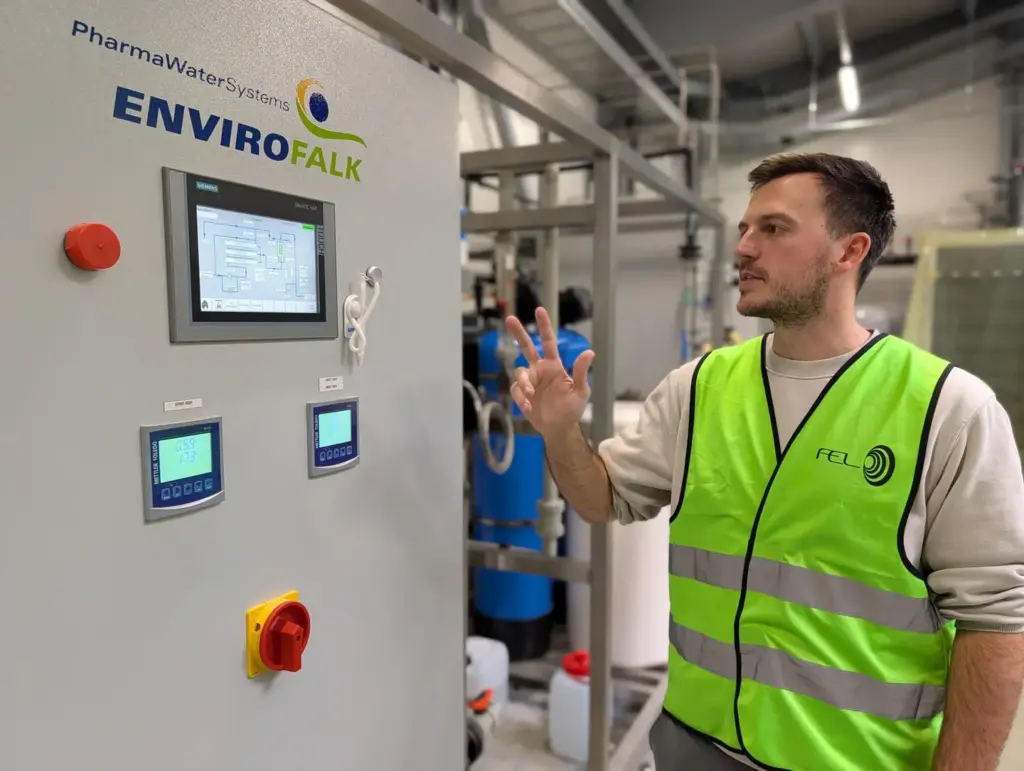
The Wunsiedel facility requires approximately 10 litres of highly purified water for every kilogram of hydrogen produced, according to the plant information described in the Forbes report.
The water must be significantly purer than ordinary drinking water because impurities can damage the electrolysis equipment.
Why hydrogen storage is difficult
Hydrogen is a useful energy carrier, but storing it is more complicated than storing electricity in a conventional battery.
At normal atmospheric pressure, hydrogen occupies a large volume relative to the amount of energy it contains.
To transport and store useful quantities, it is commonly compressed into high-pressure containers.
Wunsiedel therefore uses specialised compression equipment to prepare hydrogen for distribution.
The gas is transported by trailers to customers such as industrial businesses, hydrogen-fuelling stations and companies that blend gases.
The facility’s potential production capacity was reported at up to 1,350 tonnes annually, although production was still ramping up in the November 2026 Forbes report.
Who might use the hydrogen?
Potential customers include:
- Industrial companies requiring hydrogen in manufacturing.
- Metal-treatment businesses.
- Heavy-duty transport operators.
- Hydrogen-fuelling stations.
- Industrial gas suppliers.
Hydrogen could become particularly useful in applications where direct electrification is difficult or expensive.
Heavy trucks are one possible market, although the transition faces challenges involving vehicle costs, fuelling infrastructure and the availability of reliable hydrogen supplies.
The technology is promising, but commercial demand must grow before large-scale investment becomes financially attractive.
6. The Energy Park Is Also a Research and Innovation Laboratory
Wunsiedel is not simply building renewable-energy infrastructure. It is also using the operating system as a real-world research environment.
In 2023, the University of Bayreuth and the municipal utility established the UBT Future Energy Lab Wunsiedel.
The research facility received initial funding of approximately €15.5 million from the Bavarian government and was designed to investigate practical energy-transition challenges.
Its researchers can study how different energy technologies interact under actual operating conditions.
This is an important advantage over laboratory experiments that operate on a smaller scale.
For example, researchers can examine what happens when solar generation suddenly falls because of cloud cover while the pellet plant continues to require heat and electricity.
They can also study how storage systems respond to changing energy demand.
Research into thermal energy storage
One area of investigation involves converting surplus electricity into high-temperature heat.
The heat can be stored for several days before being converted back into electricity when needed.
This approach could provide another way to balance renewable energy production.
Thermal storage may be particularly useful where industrial processes already require substantial heat.
Turning waste wood into liquid fuel
Another research direction involves investigating how waste wood can be converted into liquid fuels.
This could create additional uses for biomass residues that are difficult to process through conventional pellet manufacturing.
The long-term objective is to make better use of regional resources while reducing dependence on fossil-based fuels.
Why real-world research matters
Energy systems are complicated.
A technology may work well in a controlled laboratory environment but encounter unexpected problems when connected to industrial machinery, storage facilities, transport networks and customers.
Wunsiedel provides researchers with access to operational data from a functioning energy park.
That makes the town an interesting place for companies and universities investigating the practical challenges of renewable-energy integration.
7. How Renewable Energy Turned Wunsiedel Into a Tourist Attraction
Renewable-energy facilities are not normally the first places that come to mind when planning a holiday in Bavaria.
Most visitors associate the region with Alpine landscapes, historic towns, castles, traditional food, Christmas markets and outdoor activities.
Wunsiedel offers something different.
Its Energy Park has become a destination for visitors interested in how renewable energy works in practice.
Engineers, university researchers, business representatives and tourists have travelled to the town to see its energy system.
The attraction is not a conventional amusement park. It is an operating industrial facility where visitors can observe how local resources are transformed into usable energy.
What visitors can see
The Energy Park offers an opportunity to learn about several stages of renewable-energy production.
Visitors may see:
- Wood residues being processed and dried.
- Industrial equipment pressing sawdust into pellets.
- Biomass boilers generating heat.
- The systems used to convert heat into electricity.
- Solar and renewable-energy infrastructure.
- The relationship between hydrogen production and electricity supply.
The hydrogen facility can also be included in certain professional visits, subject to advance arrangements.
The experience is valuable because it makes an otherwise abstract subject tangible.
Instead of reading about biomass, electrolysis or energy storage in a textbook, visitors can see the machinery and understand how different technologies connect.
Guided tours are available
The UBT Future Energy Lab Wunsiedel officially offers guided tours of the Energy Park.
According to its published visitor information:
| Tour detail | Information |
|---|---|
| Standard tour | Approximately 60–90 minutes |
| Electrolysis plant | Optional, subject to prior arrangement and professional eligibility |
| Hydrogen presentation | Optional, approximately one hour |
| General tour hours | Monday–Thursday, 9:00 a.m.–4:00 p.m. |
| Friday hours | 9:00 a.m.–12:00 p.m. |
| Booking | At least 15 working days in advance |
| Price | Available on request |
The electrolysis plant visit is described as an option for professionals, while the general Energy Park tour is the main visitor experience. Availability and arrangements should be confirmed directly with the operator.
This makes Wunsiedel especially interesting for university groups, engineering students, environmental researchers, energy professionals and travellers interested in sustainable technology.
8. Beyond the Energy Park: Discovering the Fichtelgebirge Region
An important reason to visit Wunsiedel is that the Energy Park sits within a broader destination offering nature, culture and outdoor recreation.
The Fichtelgebirge Nature Park covers more than 1,000 square kilometres between Bayreuth, Hof, Weiden and the Czech city of Cheb.
It offers extensive walking and cycling routes, forests, mountain scenery and geological attractions.
Visitors can combine an educational energy tour with a wider exploration of the region.
Luisenburg Rock Labyrinth
This extraordinary natural landscape consists of enormous granite boulders, narrow passages and unusual rock formations.
Visitors can follow marked paths through the labyrinth and discover how geological processes shaped the landscape over thousands of years.
It offers a striking contrast to the modern industrial equipment at the Energy Park.
Ochsenkopf Mountain
It attracts hikers, cyclists and winter-sports enthusiasts. Its surrounding forests also connect directly to the forestry activities that supply part of Wunsiedel’s biomass industry.
This creates an interesting opportunity to understand the relationship between nature, forestry, tourism and energy production.
Fichtelsee
It is a quieter destination for visitors looking to enjoy the natural landscape after an educational visit to the Energy Park.
Bayreuth and the wider region
It is internationally associated with Richard Wagner and the annual Bayreuth Festival, as well as its historic architecture and cultural institutions.
Combining Wunsiedel with Bayreuth creates an itinerary that brings together technology, history, music and nature.
9. Why Wunsiedel’s Model Matters for Rural Communities
Wunsiedel’s experience offers lessons for communities that have lost traditional industries or depend heavily on imported energy.
Many rural regions have valuable natural resources but struggle to convert them into sustainable economic opportunities.
Forests, agricultural residues, wind, sunlight and industrial by-products can all contribute to local energy systems when managed responsibly.
The key is to build an economic structure that connects these resources to local businesses and infrastructure.
Local resources can create local jobs
A renewable-energy project requires more than turbines and solar panels.
It also needs engineers, technicians, maintenance workers, logistics providers, construction companies, researchers and administrative staff.
A biomass facility creates demand for forestry and transport services. A hydrogen plant requires specialist engineering and industrial gas expertise.
These activities can help diversify a local economy.
Energy security becomes an economic advantage
Dependence on imported fuels can expose communities and businesses to international price fluctuations.
The energy crisis following Russia’s invasion of Ukraine in 2022 demonstrated how geopolitical events can affect energy prices across Europe.
Local renewable generation cannot eliminate all exposure to international markets, but it can reduce some forms of dependence.
For businesses, a more diversified energy supply can improve long-term planning.
For municipal authorities, local infrastructure can provide additional options during supply disruptions.
Community participation improves the chances of success
Renewable-energy projects often face opposition when residents feel excluded from decisions.
Wunsiedel’s investment model demonstrates why public participation matters.
Giving residents an opportunity to invest can help distribute financial benefits more widely and strengthen support for future projects.
It also encourages people to understand the infrastructure being developed in their own community.
Universities and businesses can work together
The Future Energy Lab demonstrates another important lesson: rural innovation does not need to take place exclusively in major metropolitan centres.
Universities can collaborate with municipal utilities and private businesses to develop research facilities close to operating infrastructure.
This creates opportunities for technology testing, skills development and commercial experimentation.
10. The Challenges: Is Green Energy Always Sustainable?
Wunsiedel’s achievements are impressive, but it would be misleading to suggest that every renewable-energy technology is automatically environmentally harmless or economically successful.
The project faces challenges that other communities should consider before attempting to reproduce it.
The biomass sustainability debate
Wood pellets are often described as renewable because trees can grow again.
However, the climate impact of biomass depends on how the wood is sourced, processed and used.
Using genuine sawmill residues and suitable waste materials can make good use of resources that might otherwise have limited value.
But harvesting whole trees specifically for energy production raises more complicated questions.
Forests absorb carbon, support biodiversity, protect soil and provide habitats for wildlife. Removing too much material can weaken these environmental functions.
The European Commission’s renewable-energy rules therefore include sustainability requirements for forest biomass, restrictions on certain high-biodiversity and high-carbon-stock areas, and a principle encouraging wood to be used first for higher-value material purposes before energy recovery.
For Wunsiedel, the long-term credibility of biomass depends on maintaining responsible sourcing practices and ensuring that energy production does not undermine the forests on which the regional economy depends.
Air pollution from combustion
Burning biomass produces emissions, including particulate matter and nitrogen oxides.
Modern industrial facilities can use emission-control equipment to reduce pollution, but combustion is not emission-free.
This means biomass should be assessed according to its actual environmental performance rather than being automatically classified as clean simply because the fuel is renewable.
Hydrogen is expensive and energy-intensive
Green hydrogen requires electricity to produce.
That electricity must first be generated, then used in electrolysis, compressed and transported before the hydrogen reaches its final customer.
Each stage involves costs and energy losses.
In many situations, using renewable electricity directly—for example, in an electric vehicle or heat pump—is more energy-efficient than converting it into hydrogen and then converting it back into useful energy.
Hydrogen therefore makes most sense in applications where direct electrification is difficult, such as certain industrial processes and heavy-duty transport.
Wunsiedel’s challenge is to develop a stable market that can justify the cost of its production infrastructure.
Infrastructure investment is expensive
Renewable-energy facilities require substantial upfront capital.
Solar installations, wind turbines, biomass boilers, electrolysers, compressors, storage facilities and electrical connections all involve investment and maintenance.
Projects can become financially vulnerable if energy prices change, government support is reduced or expected demand fails to materialise.
The hydrogen market is particularly sensitive to these issues because customers may hesitate to purchase hydrogen vehicles or equipment until sufficient refuelling infrastructure exists.
Local energy does not mean complete independence
Even a town with significant renewable generation may need the national grid.
Solar and wind production can fluctuate, while local energy demand may rise sharply during cold weather.
Wunsiedel’s strategy should therefore be understood as an effort to increase resilience and local energy production, not as proof that the town can operate permanently without external electricity.
11. Can Other Towns Copy the Wunsiedel Energy Model?
Wunsiedel’s success has attracted attention because its approach combines technologies that are available in many parts of Europe.
However, copying the model requires more than installing solar panels or building a biomass plant.
A successful project needs several conditions.
First, local resources must be available. A forest-rich region may have access to suitable wood residues, while an agricultural community might have better opportunities involving biogas or crop residues.
Second, the town needs a capable local energy organisation. Municipal utilities, cooperatives and regional businesses can provide the institutional structure needed to coordinate investment.
Third, residents must be included. Community participation can improve acceptance and help ensure that economic benefits are not concentrated entirely outside the region.
Fourth, energy technologies must complement one another. Solar, wind, biomass, storage and hydrogen should be selected according to local demand rather than installed simply because they are fashionable.
Fifth, long-term financial planning is essential. Renewable-energy projects need realistic estimates of capital costs, maintenance, fuel availability, electricity prices and customer demand.
12. Planning a Visit to Wunsiedel: What Travellers Should Know
Wunsiedel is a particularly interesting destination for travellers who enjoy combining educational experiences with outdoor activities.
It may not offer the conventional attractions of Munich or Neuschwanstein Castle, but its energy project provides a different perspective on modern Germany.
Who should visit?
The Energy Park is especially suitable for:
- Renewable-energy and engineering professionals.
- University students and research groups.
- Environmental and sustainability enthusiasts.
- Families with older children interested in technology.
- Travellers seeking unusual educational experiences.
- Visitors exploring the Fichtelgebirge region.
How to arrange an Energy Park tour
The official UBT Future Energy Lab Wunsiedel visitor information explains that tours should be requested at least 15 working days in advance.
Prices are available on request, and visitors should contact the operator to confirm availability and any access restrictions.
Suggested two-day itinerary
Day 1: Energy, technology and local history
- Arrive in Wunsiedel and explore the town centre.
- Attend a pre-booked guided tour of the Energy Park.
- Learn how wood residues become pellets and how renewable electricity supports industrial processes.
- Arrange an eligible professional visit to the hydrogen facility if available.
- Spend the evening enjoying local Bavarian food.
Day 2: Nature and culture
- Visit the Luisenburg Rock Labyrinth.
- Explore the forests and hiking routes around the Fichtelgebirge.
- Spend time at Fichtelsee.
- Consider extending the trip to Bayreuth for its cultural attractions.
The itinerary can be adapted according to the season, weather and tour availability.
Conclusion: Wunsiedel Shows That the Energy Transition Can Revive Communities, Not Just Power Grids
Wunsiedel’s transformation is an encouraging example of how renewable energy can become part of a wider economic development strategy.
The town has taken resources that were once underused, including sawdust and wood residues, and incorporated them into a regional energy system. It has combined biomass with solar and wind power, invested in battery storage, developed green hydrogen infrastructure and created a research environment involving universities and businesses.
Perhaps most importantly, it has encouraged local participation in energy investment rather than treating residents as passive consumers.
The result is a town with a distinctive economic identity and an unusual new attraction for visitors interested in sustainable technology.
However, Wunsiedel’s future success is not guaranteed. Biomass must remain environmentally responsible, hydrogen must become commercially competitive, and the infrastructure must deliver lasting value to residents.
The broader lesson is that renewable energy works best when it is connected to the real needs of a community.
A wind turbine alone cannot reverse decades of economic decline. A solar farm cannot automatically create a thriving local economy. But when energy production is linked to local businesses, skilled employment, research, investment and tourism, it can become a powerful tool for regional renewal.
Wunsiedel’s story is ultimately about more than electricity. It is about a community taking control of its resources and using innovation to build a more resilient future.
Would you visit a town like Wunsiedel to see how renewable energy works behind the scenes? And could a similar community-owned energy model succeed in your country? Share your thoughts and travel recommendations.
Frequently Asked Questions (FAQs)
1. Where is Wunsiedel, and why is it famous for green energy?
Wunsiedel is a town of approximately 9,000 people in Upper Franconia, Bavaria, northeastern Germany, near the Czech border. It is known for the Wunsiedler Weg, a community-oriented renewable-energy strategy combining biomass, solar power, wind energy, battery storage and green hydrogen. Its Energy Park has become an attraction for researchers, engineers and visitors interested in sustainable technology.
2. How does Wunsiedel produce renewable energy from wood waste?
Wunsiedel collects suitable sawdust, shavings and wood chips from regional sawmills and forestry operations. The material is screened, dried and compressed into wood pellets. Suitable remaining residues can be used in biomass boilers to generate heat and electricity. The pellet facilities have a combined potential annual production capacity of approximately 205,000 metric tonnes.
3. What is green hydrogen, and how is it produced in Wunsiedel?
Green hydrogen is hydrogen produced using renewable electricity to split purified water into hydrogen and oxygen through electrolysis. Wunsiedel’s WUN H2 facility has an electrolyser capacity of 8.75 megawatts. The hydrogen can be compressed and transported for industrial use and potential applications in heavy-duty transport. Its commercial development depends on production costs, infrastructure and customer demand.
4. Can tourists visit the Wunsiedel Energy Park?
Yes. The UBT Future Energy Lab Wunsiedel offers guided tours of the Energy Park, generally lasting 60–90 minutes. The electrolysis plant can be included in certain pre-arranged professional visits. Tours must be requested at least 15 working days in advance, and prices are available on request. Visitors should confirm current availability directly with the operator.
5. Can other towns use Wunsiedel’s renewable-energy model?
Yes, but the model must be adapted to local conditions. Communities need suitable renewable resources, reliable energy infrastructure, capable local organisations, financial investment and public participation. Forest-rich areas may benefit from sustainable biomass, while agricultural regions might use biogas. The most important lesson is to connect renewable-energy production with local businesses, employment, research and community investment rather than treating it as an isolated technology project.
Sources Forbes