

Rio de Janeiro is famous for beaches, samba and mountains. Now another spectacular attraction is returning to its waters: humpback whales.
For decades, seeing a humpback whale near Rio was a rare event. Commercial whaling had devastated Brazil’s population, pushing the animals toward the edge of disappearance.
Today, the picture is dramatically different.
Brazil’s humpback population has recovered from fewer than 1,000 animals in the late 1980s to an estimated 30,000–35,000 today. The whales return to Brazilian waters during the Southern Hemisphere winter, and sightings around Rio de Janeiro have increased sharply.
That recovery is one of marine conservation’s great success stories.
But it has created a new dilemma.
What happens when a conservation success becomes a tourism attraction?
Whale-watching can generate money, create jobs, educate visitors and provide valuable scientific observations. Yet too many boats, excessive noise, pollution and careless encounters can disturb exactly the animals tourism depends upon.
Rio is therefore facing a fascinating test of modern ecotourism:
Can people turn the return of the whales into an economic opportunity without turning the whales themselves into a problem?
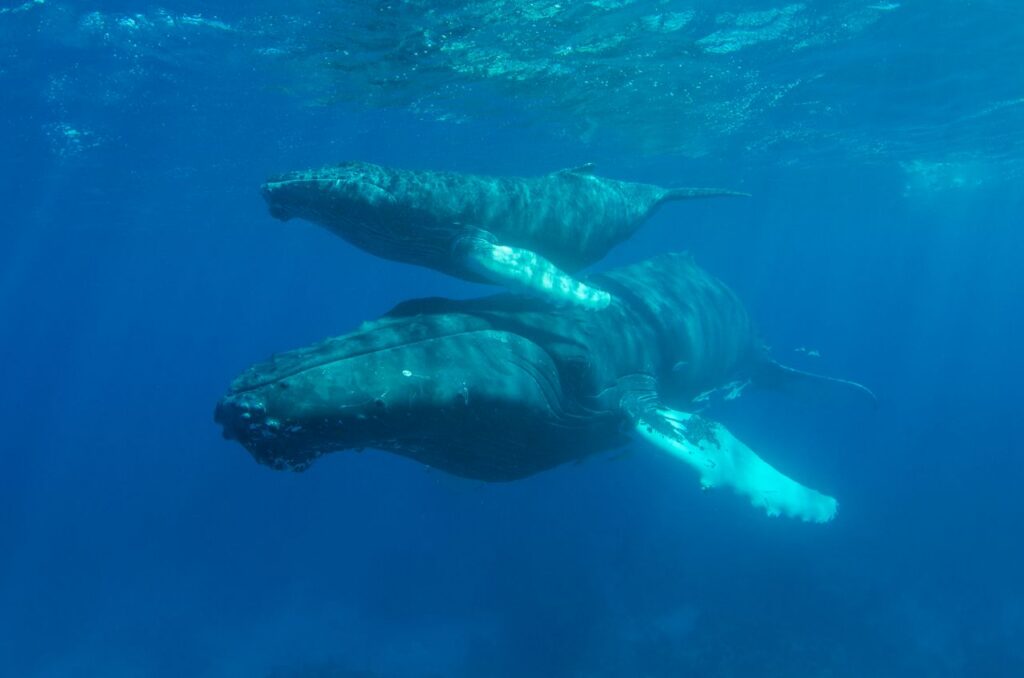
From Near Extinction to 30,000 Whales
The scale of Brazil’s humpback recovery is difficult to overstate.
Commercial whaling along the Brazilian coast was already documented centuries ago. Historical artwork even depicts whales being pursued and harpooned in Guanabara Bay.
By the late 1980s, the Brazilian breeding population had fallen below 1,000 individuals.
The international ban on commercial whaling that took effect in 1986, combined with conservation measures, gave the population an opportunity to recover. Researchers now estimate that tens of thousands of humpbacks use Brazilian waters.
The International Whaling Commission says many humpback populations worldwide are recovering strongly, although recovery levels vary between populations and regions.
Brazil’s experience demonstrates something important:
Marine conservation can work.
Remove the most destructive pressure, protect breeding animals and give populations time, and wildlife can return.
But recovery does not mean the job is finished.
Why Do Humpbacks Come to Brazil?
The whales seen off Rio are part of an enormous annual migration.
During the Southern Hemisphere winter, humpbacks travel from feeding grounds around the South Atlantic toward warmer Brazilian waters.
Their destination includes the Abrolhos Bank, off northeastern Brazil, where the whales breed and raise calves.
The Brazilian coast therefore functions as part of a critical reproductive corridor.
Rio isn’t simply a random place where whales happen to pass.
It sits along a migration route.
Researchers have increasingly documented humpbacks around Rio, and scientists have observed behaviors that may indicate the animals are using the area for more than simple passage.
Rio May Be Becoming More Than a Migration Highway
This is one of the most intriguing aspects of the recent sightings.
Marine biologist Liliane Lodi has reported behaviors around Rio that are more commonly associated with breeding areas, including calves, competitive behavior among males and whale songs.
That raises an exciting possibility.
The whales may be rediscovering parts of their historical range.
And one of the most dramatic examples is occurring inside Guanabara Bay.
A juvenile humpback has repeatedly been observed there, with at least 18 sightings reported in the current season. Researchers believe the same whale has been using the bay’s sheltered waters since mid-June.
For a city famous for its enormous urban bay, this is an extraordinary development.
Why Guanabara Bay Matters
Guanabara Bay is not pristine wilderness.
It is surrounded by one of Brazil’s largest metropolitan areas and has long faced environmental pressures.
The return of a humpback into such an urban marine environment therefore tells researchers something about the animal’s adaptability—and potentially about improvements in the surrounding ecosystem.
But it also creates a conservation challenge.
A whale that enters a busy bay is exposed to:
- vessel traffic;
- fishing activity;
- underwater noise;
- pollution;
- collision risks;
- human curiosity.
A whale’s return is therefore both good news and a warning.
The animals may be finding habitat again, but humans must ensure that the habitat remains safe enough for them.
The Whale-Watching Boom
The growing number of sightings has created an obvious tourism opportunity.
Specialist operators are now taking visitors offshore to search for humpbacks.
One such operation, ROC Sail, has begun offering whale-watching trips from Rio, with marine biology expertise incorporated into the experience.
The attraction is obvious.
Imagine leaving Rio’s coastline at sunrise, passing the Cagarras Islands and suddenly seeing a 15-meter humpback surface against the backdrop of Rio’s mountains.
That is the sort of travel experience people remember for decades.
And unlike a theme park attraction, it is completely unscripted.
Why Whale Tourism Is Economically Attractive
Whale watching creates a surprisingly broad economic chain.
Visitors may spend money on:
- boat tours;
- hotels;
- restaurants;
- transportation;
- photography;
- local guides;
- equipment;
- cultural attractions.
That means a whale can generate economic value without being captured, hunted or removed from the ecosystem.
This is one of the fundamental arguments behind wildlife tourism.
A living animal can become a recurring economic asset.
A dead one cannot.
But Ecotourism Is Not Automatically Eco-Friendly
This is where the story gets complicated.
Calling something “ecotourism” does not automatically make it environmentally harmless.
A whale-watching boat is still a boat.
Its engine creates noise.
Its propeller can create physical hazards.
Its presence can alter whale behavior.
And if dozens of vessels converge on the same animal, the cumulative effect may be considerably greater than the impact of one carefully operated boat.
Researchers have specifically warned about the effects of increasing vessel activity around humpbacks in Brazil. The International Whaling Commission’s Whale Watching Handbook notes research showing that vessel noise in Brazil’s Abrolhos National Marine Park reduced male humpback whale singing, a behavior believed to be important for breeding.
That is a critical warning.
A whale doesn’t have to be struck by a boat for tourism to cause harm.
Noise alone can matter.
The Problem of Cumulative Disturbance
Imagine one whale encountering one boat.
The disturbance may be small.
Now imagine:
- Boat A approaches.
- Boat B arrives.
- Boat C follows.
- Several engines remain running.
- Tourists shout.
- Boats reposition for photographs.
The individual impacts may seem insignificant.
Together, they can create chronic disturbance.
Marine biologists call attention to these cumulative effects because wildlife does not experience human activity one operator at a time.
The whale experiences all of it.
More Whales Can Mean More Boats
This creates a strange paradox.
The population increases.
Sightings become easier.
Tourists become interested.
More operators enter the market.
More boats go searching.
More boats create pressure.
The tourism industry succeeds.
And its success potentially threatens the resource supporting it.
This is a classic carrying-capacity problem.
Brazil Already Has Whale-Watching Experience
Rio’s new tourism market isn’t emerging in isolation.
Brazil has years of experience with whale watching in other regions.
Research from northeastern Brazil has examined the concept of tourism carrying capacity and concluded that whale watching can be low-impact when appropriately managed, while also warning that management capacity and knowledge need to keep pace with the industry.
That experience gives Rio an advantage.
It doesn’t have to invent responsible whale watching from scratch.
It can learn from destinations that have already confronted the same questions.
What Responsible Whale Watching Should Look Like
A good whale-watching operation should prioritize the animal over the photograph.
That means:
Keep distance.
Boats should avoid crowding whales.
Reduce speed.
Fast vessels create greater collision risks and disturbance.
Avoid sudden changes in direction.
Whales should not be chased or surrounded.
Limit time around animals.
Extended encounters can increase cumulative disturbance.
Never feed or touch whales.
Wildlife should remain wild.
Avoid mothers and calves when appropriate.
Young animals can be particularly sensitive to disturbance.
Follow seasonal and local regulations.
Rules exist for a reason.
Use trained guides.
Passengers should learn about whale behavior rather than simply being taken toward animals.
Science Could Become Part of the Tourism Product
Rio’s whale-watching industry has one particularly promising feature: the connection between tourism and research.
Marine biology students and researchers can accompany tours, recording observations and contributing information about whale behavior.
This creates an unusual model.
The tourist pays for the experience.
The operator provides transportation.
The scientist collects observations.
The whale becomes the subject of research rather than merely an attraction.
That is potentially powerful.
Citizen Science Could Expand the Research Network
Tourists can also become observers.
Modern smartphones and cameras make it possible for visitors to document:
- dorsal fins;
- tail flukes;
- scars;
- unusual behavior;
- location;
- date and time.
Photographic identification can help researchers determine whether individual whales return to the same areas.
In Rio, citizen scientists have already helped researchers monitor the juvenile whale in Guanabara Bay.
That transforms tourists from passive spectators into potential contributors.
The Whale-Watching Industry Could Help Pay for Conservation
This is perhaps the strongest argument for tourism.
If whales generate tourism revenue, some of that revenue can potentially support their protection.
Funding could contribute to:
- scientific research;
- marine patrols;
- enforcement;
- acoustic monitoring;
- public education;
- pollution reduction;
- habitat protection.
This creates a virtuous cycle:
Whales attract visitors → visitors generate revenue → revenue supports conservation → healthier whale populations attract more visitors.
But that cycle only works if conservation remains central.
The Danger of Turning Nature Into a Commodity
There is a philosophical problem too.
When wildlife becomes an economic attraction, pressure can emerge to maximize encounters.
Tour operators may feel compelled to provide customers with guaranteed sightings.
That can create incentives to approach animals more aggressively.
The ethical line must therefore be clear:
The whale does not owe the tourist a photograph.
A responsible tour should be willing to return to shore without a close encounter if approaching the animals would be inappropriate.
Why “No Guarantee” Is Actually a Good Thing
The unpredictability of wildlife is part of its value.
A whale-watching trip should not operate like a theme-park ride.
Sometimes you see six whales.
Sometimes you see one.
Sometimes you see dolphins.
Sometimes you see nothing.
That uncertainty is part of genuine wildlife tourism.
The industry’s long-term reputation may actually improve if operators teach visitors that a successful trip means learning about the ecosystem—not simply collecting a photograph.
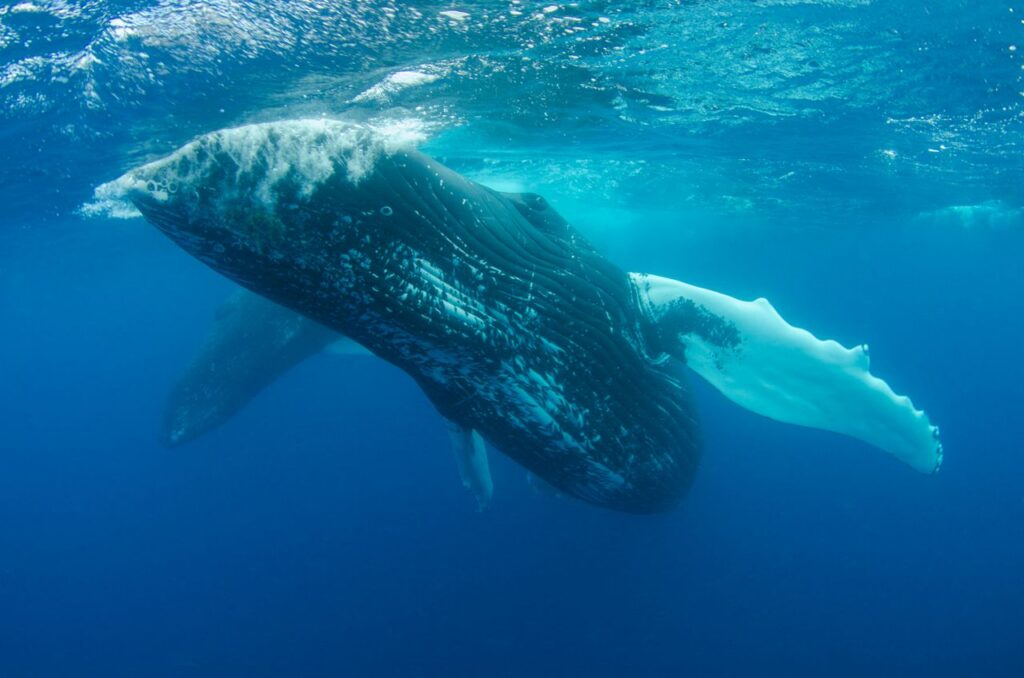
Climate Change Adds Another Variable
Whale recovery is happening in an ocean that is changing.
Climate change can affect:
- prey availability;
- ocean temperatures;
- migration routes;
- breeding conditions;
- food distribution.
Humpbacks are highly mobile, so their movements can change as ocean conditions change.
That means today’s tourism hotspots may not remain equally important decades from now.
Conservation policy needs to be flexible.
Pollution Is a Bigger Threat Than Tourism Alone
It would be easy to focus entirely on whale-watching boats.
But the whales face a much broader range of pressures.
Researchers working around Rio identify fishing, tourism, large ships, chemical pollution and underwater noise among the challenges facing whales.
That matters because whale tourism cannot be considered separately from the health of the entire marine environment.
A clean whale-watching boat operating in a polluted ocean does not solve the problem.
Ship Traffic Creates a Different Scale of Risk
Rio is a major coastal metropolis.
Large commercial vessels and other marine traffic operate in and around the region.
For a 50-ton animal, a collision with a large ship can be catastrophic.
Managing whale habitat therefore requires more than regulating tourist boats.
It requires considering the entire maritime traffic system.
Potential measures can include:
- speed restrictions;
- seasonal routing;
- improved monitoring;
- whale detection systems;
- designated marine corridors.
Fishing Interactions Matter Too
Fishing gear can entangle marine mammals.
Even when whales survive, entanglement can cause serious injury, restrict movement or interfere with feeding.
A comprehensive whale conservation strategy therefore needs to involve the fishing industry.
The solution isn’t simply to tell fishermen to stay away.
It may involve:
- improved gear;
- reporting systems;
- rapid-response teams;
- seasonal measures;
- better spatial planning.
The Return of Whales Could Change Rio’s Identity
Rio’s global image is already enormous.
But the return of humpbacks adds a new dimension.
The city can now market itself not only as an urban beach destination but as a place where visitors can experience large marine wildlife in the wild.
That is potentially powerful.
Imagine combining:
Christ the Redeemer + Sugarloaf Mountain + Cagarras Islands + humpback whales.
Few major cities can offer that combination.
Whale Tourism Could Extend the Tourist Season
Tourism in Rio has traditionally been strongly associated with summer, beaches and Carnival.
Humpback migration occurs primarily during the Southern Hemisphere winter, roughly from June through November.
That creates an attractive economic opportunity.
Whale tourism could help generate visitor activity during a different part of the year.
For hotels, restaurants and tour companies, seasonal diversification can be valuable.
The Tourism Product Is More Than the Whale
The best whale-watching experiences will probably combine several attractions.
Visitors might spend the morning searching for humpbacks and the afternoon exploring:
- Rio’s coastline;
- islands;
- marine ecosystems;
- local food;
- environmental projects;
- cultural attractions.
That makes the whale an entry point into a broader ecological tourism experience.
Education Could Be the Industry’s Secret Weapon
A visitor who learns why the whales disappeared may care more about why they returned.
That creates an emotional connection.
A guide can explain:
- historical whaling;
- the 1986 international ban;
- migration;
- breeding;
- whale communication;
- marine pollution;
- responsible tourism.
The result is more than entertainment.
It becomes environmental education.
A Whale Is a Better Conservation Ambassador Than a Brochure
This may sound obvious, but it matters.
People are more likely to care about an ecosystem after seeing a 50-ton humpback surface a few meters—or safely at a regulated distance—from their boat.
That experience can make abstract conservation issues tangible.
Instead of hearing:
“Marine biodiversity matters,”
people see a living animal that depends on a healthy ocean.
That emotional connection can be extraordinarily powerful.
But Rio Needs Stronger Management Before Tourism Explodes
Researchers have warned that existing regulations need updating and stronger monitoring. Brazil already has important whale-protection rules, including prohibitions on swimming with whales, but enforcement and regulation need to keep pace with increasing activity.
That is the central policy challenge.
Regulation must grow before the industry becomes too large to control.
Waiting until dozens of operators are competing for whales would make the problem much harder.
A Carrying-Capacity System Could Help
Rio could establish a science-based tourism carrying-capacity framework.
Such a system might determine:
- maximum number of boats;
- minimum approach distances;
- maximum observation times;
- permitted operating speeds;
- sensitive zones;
- seasonal restrictions;
- rules around calves;
- penalties for violations.
The rules could be adjusted as researchers collect more data.
This would allow tourism to grow without assuming unlimited capacity.
Technology Can Help Monitor Boats
Modern technology provides tools that weren’t available to earlier generations of conservation managers.
Authorities could potentially use:
- GPS vessel tracking;
- automatic identification systems;
- acoustic monitoring;
- aerial surveys;
- drones operated under appropriate scientific rules;
- digital reporting;
- photo identification.
A responsible operator could even use technology to demonstrate compliance.
That creates accountability.
Tourism Operators Could Compete on Conservation
Instead of competing only on price, whale-watching businesses could compete on sustainability.
For example:
Operator A: Cheapest boat.
Operator B: Small groups + marine biologist + research contribution.
The second experience could command a premium.
That would create a commercial incentive for better practices.
High-Value, Low-Volume Tourism May Be the Better Model
Rio doesn’t need thousands of boats to benefit from whale tourism.
A smaller number of high-quality operators could generate substantial economic activity while limiting pressure on whales.
This is the same principle increasingly used in sensitive wildlife destinations around the world:
fewer visitors, better experiences, higher value, lower ecological pressure.
The Whale Is Not a Renewable Resource in the Same Way as a Product
There is another important distinction.
A restaurant can simply make more food if demand increases.
A whale population cannot instantly produce more whales because tourists want to see them.
Humpbacks mature slowly and reproduce at relatively low rates compared with many other animals.
That means tourism demand must adapt to the biology of the species.
Not the other way around.
The Recovery Itself Must Be Protected
Perhaps the greatest danger is complacency.
Thirty thousand whales sounds like an enormous number compared with fewer than 1,000.
But conservation history is full of examples where recovered populations later faced new threats.
The correct response to recovery is not:
“The problem is solved.”
It is:
“The strategy worked. Now protect the gains.”
Rio Has a Rare Opportunity
The city has something many destinations would love to have:
A conservation success story happening in real time.
The whales disappeared.
Protection helped them recover.
Now they are returning close to one of the world’s most famous cities.
That creates an extraordinary opportunity to demonstrate what responsible wildlife tourism can look like.
But it also creates a responsibility.
Rio has to prove that conservation success can survive commercial success.
What Happens If Tourism Gets It Wrong?
The worst-case scenario isn’t necessarily dramatic.
It might happen slowly.
More whales arrive.
More tourists want to see them.
More boats follow.
Noise increases.
Whales alter their behavior.
Researchers notice changes.
Regulators respond too late.
Visitors complain that the experience has become crowded.
The animals eventually avoid the area.
Tourism declines.
Everyone loses.
That is why precaution matters now.
What Happens If Tourism Gets It Right?
The opposite scenario is much more exciting.
Rio develops a carefully regulated whale-watching industry.
Local guides receive training.
Researchers collect valuable data.
Tourists learn about marine conservation.
Businesses benefit from winter visitors.
Revenue supports research.
Boat traffic is monitored.
Sensitive areas remain protected.
And the whales continue returning year after year.
That would be a genuine model for sustainable tourism.
The Real Product Is a Healthy Ocean
Ultimately, whale tourism is not really about boats.
It is about the ocean.
If the marine environment is healthy, humpbacks have somewhere to migrate, breed and feed.
If the ocean becomes increasingly polluted, noisy and dangerous, tourism cannot fix the underlying problem.
The whale is simply the most visible symbol of the ecosystem.
Protect the whale, and you are forced to think about everything around it.
Five Principles Rio Should Follow
A sustainable whale-watching strategy could be built around five basic principles:
1. Put the animals first
Tourism should never override conservation.
2. Set limits before demand explodes
Establish vessel and encounter limits based on scientific evidence.
3. Make tourism contribute to research
Every boat trip can potentially provide useful observations.
4. Make local communities beneficiaries
Economic benefits should reach guides, businesses and residents.
5. Measure impacts continuously
Regulations should evolve as new evidence emerges.
The Bigger Lesson From Rio’s Whales
The return of humpbacks to Rio is a story about much more than whales.
It is a story about what happens when humans stop doing something destructive.
The international whaling ban didn’t instantly restore the population.
Nature needed decades.
But given enough time and protection, the whales came back.
Now humanity faces the second challenge.
Can we resist the temptation to love the whales too aggressively?
That may sound strange.
But wildlife tourism has always contained this paradox.
We want to see wild animals because they are wild.
Then our desire to see them can make their environment less wild.
Rio has an opportunity to break that cycle.
The city can build a tourism economy around the whales without turning the animals into performers.
The best whale-watching trip may not be the one that gets closest.
It may be the one that leaves the whale completely undisturbed.
Final Thoughts
Humpback whales returning to Rio is one of the most encouraging marine conservation developments in Brazil.
From fewer than 1,000 animals in the late 1980s to roughly 30,000–35,000 today, the recovery demonstrates the extraordinary resilience of wildlife when destructive pressures are reduced.
But recovery brings responsibility.
The whales now face a different world—one filled with tourism boats, commercial shipping, fishing activity, pollution and underwater noise.
Whale watching could become part of the solution.
It can provide jobs, generate revenue, support research and turn tourists into conservation advocates.
But only if the industry accepts one fundamental rule:
The whales come first.
If Rio can make that principle non-negotiable, its returning humpbacks could become much more than a spectacular tourism attraction.
They could become living ambassadors for a healthier Atlantic Ocean—and proof that conservation and tourism don’t have to be enemies.
They simply need boundaries.
5 Frequently Asked Questions
1. How many humpback whales are now found along Brazil’s coast?
Brazil’s humpback population has recovered dramatically from fewer than 1,000 animals in the late 1980s. Current estimates put the population at roughly 30,000 to 35,000 whales, depending on the assessment.
2. When can you see humpback whales near Rio de Janeiro?
Humpbacks generally pass along Brazil’s coast during the Southern Hemisphere winter and spring, roughly June through November. Rio is located along their migration route, and sightings have increased significantly in recent years.
3. Why are humpback whales returning to Rio?
The main reason is the dramatic recovery of the Brazilian population following the end of commercial whaling and decades of conservation. Researchers are also documenting increasingly frequent sightings and behaviors around Rio, including calves, male competition and whale songs.
4. Is whale watching harmful to humpback whales?
It can be if poorly managed. Boat traffic can create underwater noise and behavioral disturbance, and research in Brazil has found that vessel noise can affect humpback whale singing. Excessive numbers of boats can therefore create cumulative impacts. Responsible operators should maintain appropriate distances, reduce speed and follow local regulations.
5. Can whale tourism actually help conservation?
Yes. Responsible whale tourism can generate funding, employment, public awareness and scientific data. In Rio, marine biology students and researchers are already participating in whale-watching activities and collecting behavioral observations. But tourism only becomes a conservation benefit if visitor numbers, boat traffic and interactions with whales are properly controlled.
The ultimate test is simple: Can Rio make the whales worth more alive, wild and undisturbed than they would ever be as a spectacle? If the answer is yes, the return of the humpbacks could become one of Brazil’s most remarkable examples of conservation-powered tourism.
Sources The Guardian

