
South Korea has long been synonymous with cutting-edge skincare, addictive pop music, and cultural exports that have captivated the world. But a new phenomenon is quietly rewriting the country’s tourism playbook — one that goes far beyond browsing K-beauty shelves at Myeongdong cosmetics stores or catching a glimpse of a favorite idol on the streets of Gangnam.
Increasingly, international travelers are booking flights to Seoul not just to experience the culture, but to experience something far more personal: their own transformation. From high-powered laser skin resurfacing and thread lifts to jawline contouring and full-face rejuvenation treatments, South Korea’s medical aesthetics industry has become a magnet for beauty tourists from across Asia, the Middle East, the United States, Europe, and beyond — and the numbers are only growing.

The Rise of “K-Glow” Tourism: What’s Driving the Trend?
The Cultural Gravity of K-Pop and K-Drama
It would be impossible to discuss Korea’s beauty tourism boom without acknowledging the seismic influence of the Korean Wave — or Hallyu. K-pop groups like BTS, BLACKPINK, TWICE, aespa, and SEVENTEEN have introduced global audiences to a very specific aesthetic ideal: luminous, porcelain-smooth, glass-skin complexions, sharply defined facial features, and an almost otherworldly level of grooming and presentation.
K-drama stars and influencers have amplified this effect exponentially through social media platforms like Instagram, TikTok, and YouTube, where their flawless appearances spark curiosity — and aspirational desire — in viewers across the globe. When fans discover that many of these beauty standards are achieved not only through elaborate skincare routines but also through professional medical aesthetic procedures readily available in South Korea, the logical next step for many becomes booking a trip.
“People watch a Korean drama and they want that skin, that jawline, that overall look,” said Dr. Park Ji-soo, a dermatologist working in Gangnam’s medical aesthetics corridor. “They come here because they know Korea has the technology, the expertise, and the price point that makes it accessible.”
The “K-Glow” Promise: What Exactly Are Visitors Seeking?
The term “K-Glow” has entered the global beauty lexicon to describe a specific quality of skin: deeply hydrated, luminously clear, incredibly smooth, and radiantly healthy-looking. Achieving this look has become a primary motivation for beauty tourists visiting South Korea.
Treatments most commonly sought by international visitors include:
- High-Intensity Focused Ultrasound (HIFU) — particularly popular for non-surgical skin tightening and lifting around the jawline, neck, and brow area
- Fractional CO2 and Erbium laser resurfacing — for improving skin texture, reducing acne scars, and minimizing pores
- PicoSure and PicoClear laser treatments — for pigmentation removal, sun spot correction, and overall skin brightening
- Rejuran Healer injections — a uniquely Korean treatment using polynucleotide (PN) derived from salmon DNA to stimulate skin regeneration
- Skin boosters and hyaluronic acid injections (Juvederm Volite, Profhilo, and Korean-exclusive formulas) — for deep hydration and a “glass skin” appearance
- Thread lifts (PDO threads) — for facial contouring and lifting without surgery
- Double eyelid surgery — one of the most requested surgical procedures among visitors
- Rhinoplasty (nose reshaping) — both surgical and non-surgical filler-based versions
- Jawline slimming with Botox — for achieving the coveted V-shaped Korean face profile
- LDM (Local Dynamic Micro-massage) therapy — an ultrasound-based treatment exclusive to Korean clinics that supercharges skin cell regeneration
Seoul’s Gangnam District: The World Capital of Aesthetic Medicine
No conversation about Korean medical tourism is complete without deep attention to Gangnam, the upscale district that gave the world its most famous earworm courtesy of Psy — but which holds far greater significance as a global medical aesthetics hub.
The area around Apgujeong-ro and Sinnonhyeon has the highest concentration of plastic surgery clinics, dermatology centers, and medical aesthetic spas anywhere on the planet. According to some estimates, there are more than 500 plastic surgery clinics and dermatology centers within a relatively compact radius in the Gangnam-Seocho area alone.
What makes Gangnam particularly attractive to medical tourists is the fierce market competition — which paradoxically drives both price efficiency and innovation. Clinics must continuously invest in the latest technology and treatment protocols to attract both domestic and international patients. This competition has turned Gangnam into a living laboratory for cutting-edge aesthetic medicine.
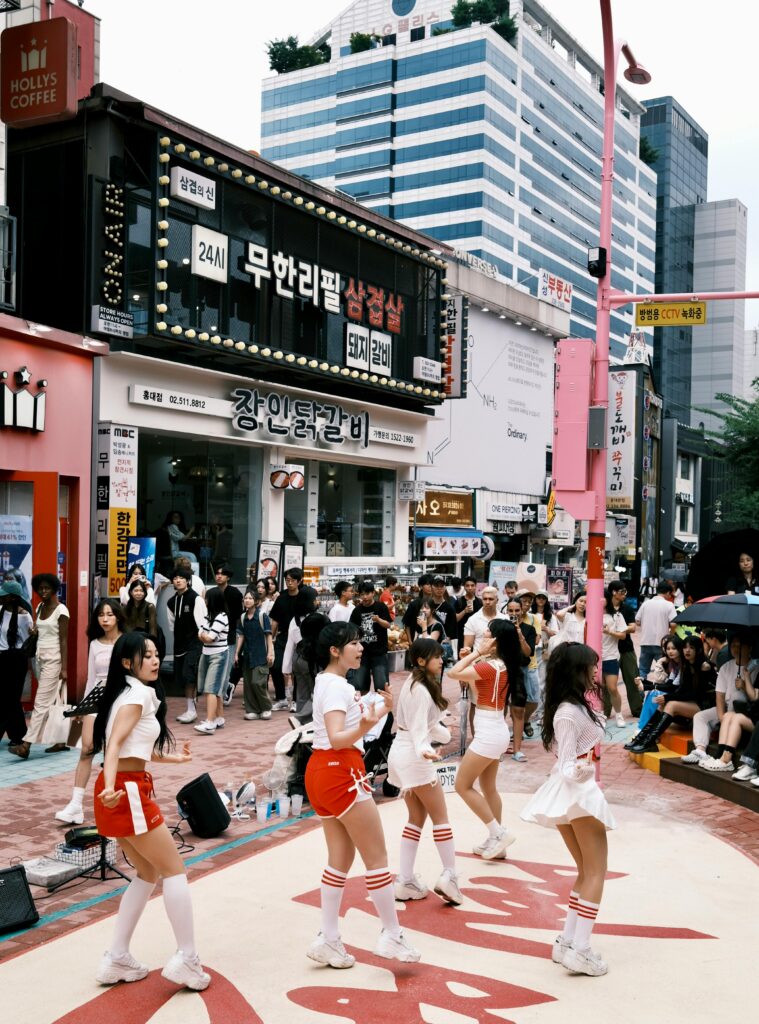
Beyond Gangnam, neighborhoods like Hongdae, Itaewon, and Mapo are also emerging as aesthetic clinic destinations, particularly catering to younger tourists who blend beauty treatments with the trendy cafe culture and nightlife these areas are known for.
The Numbers Behind the Boom
South Korea’s medical tourism industry has been on an aggressive growth trajectory. According to data from the Korea Health Industry Development Institute (KHIDI), the country attracted over 600,000 foreign medical tourists in 2023, with that number expected to surge significantly through 2026 and beyond following the post-COVID recovery of international travel.
The Ministry of Culture, Sports, and Tourism and the Korea Tourism Organization (KTO) have actively promoted “medical beauty tourism” as an official pillar of the country’s tourism strategy, reflecting how deeply the government has embraced this sector as both a cultural export and an economic driver.
Revenue generated by medical tourism reached an estimated $1 billion USD in recent years, with aesthetic procedures — rather than complex medical surgeries — accounting for an increasingly large share of that figure. Industry analysts project that the K-beauty tourism market could reach $3-4 billion USD annually by 2030 if current growth trends continue.
Where Are the Tourists Coming From?
The demographics of Korea’s beauty tourists are more diverse than many people realize:
- China historically represents the largest single source of medical tourists, though geopolitical tensions and China’s domestic aesthetics market growth have moderated this somewhat
- Southeast Asia — particularly visitors from Vietnam, Thailand, Indonesia, Malaysia, and the Philippines — has seen explosive growth
- Japan maintains a consistent flow of visitors, many drawn by competitive pricing compared to Tokyo clinics
- The Middle East — particularly Saudi Arabia, UAE, and Kuwait — has become an increasingly prominent source of visitors, with many seeking skin brightening treatments and facial contouring
- The United States and Canada — growing numbers of Korean-American and general American visitors are making dedicated beauty tourism trips
- Europe — visitors from France, Germany, the UK, and Eastern Europe are an emerging demographic
Why South Korea? The Competitive Advantages Explained
1. Price: The Value Proposition Is Extraordinary
The price differential between South Korean aesthetic procedures and equivalent treatments in Western countries is often staggering. A HIFU facial lifting treatment that might cost $2,500-$4,000 in the United States or Western Europe can typically be obtained in Seoul’s top-tier clinics for $300-$800. Full rhinoplasty procedures that run $8,000-$15,000 in the US may cost $2,000-$5,000 in Seoul — even at internationally recognized, premium clinics.
Even factoring in round-trip airfare and accommodation, international visitors frequently find that a “beauty vacation” to Seoul is dramatically more cost-effective than receiving the same treatments at home.
2. Technology: Korea Is Ahead of the Curve
South Korean clinics routinely offer treatments and devices that haven’t yet been approved or commercially introduced in Western markets. Korea’s regulatory environment for medical devices in the aesthetic space, while still rigorous, has historically moved faster than the US FDA or European CE marking processes for many non-invasive treatments.
Korean aesthetic medicine is also characterized by a culture of continuous innovation. Local companies like Classys (manufacturers of ULTRAFORMER, a HIFU device), Lutronic (makers of Genius RF and other platforms), and Jeisys Medical compete fiercely to develop next-generation devices that are then adopted by Korean clinics before anyone else in the world has access to them.
3. Expertise and Specialization
Korean dermatologists and plastic surgeons complete highly specialized training that often focuses almost exclusively on facial aesthetics. The sheer volume of procedures performed in Korean clinics — driven by both domestic demand and medical tourism — means that practitioners accumulate clinical experience at a rate that is simply unmatched in most other countries.
Many leading Korean aesthetic physicians publish research, develop proprietary techniques, and lecture at international medical conferences. The “Korean technique” for procedures like thread lifting, double eyelid surgery, and facial fat grafting has become a reference standard globally.
4. A Supportive Ecosystem: Not Just Clinics
The Korean beauty tourism experience is supported by an entire ecosystem that makes the process seamless for international visitors:
- Medical tourism facilitators and agencies that book appointments, provide translation services, and coordinate treatment packages
- Luxury recovery accommodations including medical-grade hotels designed for post-procedure guests
- English, Chinese, Japanese, and Arabic-speaking staff at major clinics
- Digital consultation platforms that allow patients to communicate with Korean doctors before arrival
- K-beauty shopping — visitors pair clinic visits with purchases of prescription-grade skincare products, sheet masks, serums, and cosmetics available exclusively in Korea
The Role of Social Media and Digital Influence
The symbiosis between Korean aesthetic tourism and social media cannot be overstated. YouTube channels dedicated to “Korea beauty trip” vlogs accumulate millions of views, with content creators documenting every step of their clinic visits — from initial consultations to post-treatment results — in granular detail.
TikTok has become particularly powerful in this space. The hashtag #KoreaBeautyTrip has generated hundreds of millions of views, while before-and-after content from clinic visits regularly goes viral. Korean clinics have been sophisticated early adopters of this dynamic, actively encouraging patients to film content and partnering with influencers to showcase their facilities and results.
Instagram-friendly clinic interiors — minimalist, white-marble aesthetic spaces with perfect lighting — have become a deliberate design choice, recognizing that the clinic environment itself is part of the content creation experience.
This digital ecosystem has also driven a new form of “clinic tourism” in which visitors plan their Seoul itineraries around multiple clinic visits — perhaps a laser brightening treatment on Monday, a Botox session on Wednesday, and a skin booster injection on Friday — spacing procedures strategically to allow appropriate recovery time before their flight home.
Government Support and Industry Infrastructure
Unlike many countries where medical tourism exists in a regulatory grey zone, South Korea has built a formal government framework to support and regulate foreign medical tourists.
The Korea Medical Tourism Council coordinates between government ministries, hospitals, clinics, and tourism organizations. The government’s Global Healthcare certification program helps international patients identify accredited, reliable healthcare providers and protects them from predatory practices.
The Korean Tourism Organization actively markets medical beauty tourism alongside cultural tourism at international travel fairs, with dedicated “Medical Korea” branding. The government has invested in creating Medical Tourism Information Centers at major international airports and in Gangnam itself, providing multilingual assistance to arriving beauty tourists.
Tax refund systems for medical procedures have been discussed in policy circles as a potential further incentive, and special medical tourist visa pathways have been streamlined to reduce bureaucratic friction for visitors planning extended stays for treatment and recovery.
The Ethics and Concerns: A Balanced View
No comprehensive treatment of this topic would be complete without acknowledging the legitimate concerns and criticisms surrounding Korea’s beauty tourism boom.
Mental Health and Unrealistic Standards
Critics — including mental health professionals and feminist scholars both within Korea and internationally — have raised concerns that the global propagation of Korean beauty standards promotes unrealistic and culturally specific ideals, particularly affecting young women and girls. The pressure to achieve “glass skin,” a V-line jaw, and double eyelids can contribute to body dysmorphia and self-esteem issues in vulnerable individuals.
Within Korea itself, there is a growing conversation about the intense societal pressure — particularly on women — to maintain specific beauty standards for social and professional advancement. Korea has one of the highest per-capita rates of cosmetic procedure uptake in the world, and not all of this reflects free consumer choice untouched by social coercion.
Patient Safety and “Bargain Hunting” Risks
While Seoul’s top-tier clinics maintain excellent safety standards, the sheer proliferation of clinics has created a concern about quality consistency. Visitors who bargain-hunt aggressively — seeking the cheapest possible prices — may encounter providers who cut corners on equipment maintenance, sterilization protocols, or physician supervision.
Several high-profile cases of complications arising from procedures performed at unlicensed or substandard clinics have created media attention, prompting calls for stronger consumer protection for international medical tourists.
Travelers are strongly advised to:
- Research clinics thoroughly using verified review platforms
- Confirm that all procedures will be performed by licensed physicians (not aestheticians or nurses unsupervised)
- Avoid clinics that offer dramatically below-market pricing
- Ensure post-procedure follow-up arrangements are in place before leaving Korea
Cultural Appropriation Debates
Some critics within Korea have expressed discomfort with the dynamic in which Western and other non-Korean visitors seek to replicate Korean aesthetic ideals — ideals that are themselves partly a product of historically complex beauty standards influenced by Westernization, colonialism, and global media. The conversation around who “owns” the K-beauty aesthetic and what it means for non-Koreans to seek Korean beauty procedures is nuanced and ongoing.
What’s Next: The Future of K-Beauty Medical Tourism
Emerging Technologies on the Horizon
South Korean clinics are already piloting next-generation technologies that will further extend the country’s lead in aesthetic medicine:
- AI-powered skin diagnosis systems that analyze thousands of skin data points to create fully personalized treatment protocols
- Exosome therapy — using cell-derived vesicles to accelerate skin regeneration, an area where Korean research is globally leading
- Precision radiofrequency microneedling systems with real-time tissue feedback
- Biorevitalization treatments using Korean-developed growth factor formulas
- 3D imaging and simulation for surgical planning that allows patients to visualize results before committing to procedures
The “Beauty + Culture” Package Evolution
Tourism operators are increasingly sophisticated in bundling medical aesthetics with Korea’s broader cultural offerings. Visitors are no longer choosing between a cultural trip and a beauty trip — they’re doing both simultaneously. Packages that combine DMZ tours, Korean cooking classes, K-pop experiences, and hanbok photo sessions with clinic appointments are becoming standard offerings.
Some high-end agencies are developing “Beauty Concierge” services for affluent international visitors that include private airport transfers, curated clinic schedules, luxury hotel recovery suites, post-treatment Korean skincare consultations, and personal shopping guides for bringing home Korean beauty products.
Regional Competition
South Korea’s dominance in aesthetic medical tourism is beginning to face challenges from Thailand, Japan, and Singapore, all of which are investing heavily in their own medical tourism infrastructure. Thailand already has a well-established medical tourism sector; Japan is leveraging its reputation for precision and quality; Singapore markets its regulatory rigor and English-language accessibility.
However, Korea retains significant structural advantages — particularly the density and specialization of its aesthetic medicine ecosystem, its technological innovation culture, and the powerful soft-power amplification of K-pop and K-drama that continues to make Korean beauty standards aspirational worldwide.
Frequently Asked Questions (FAQ)
Q1: How do I find a reputable clinic in South Korea for beauty treatments?
A: Research is essential. Start with internationally oriented platforms like RealSelf, Docfinderkorea, Gangnam Unni (a Korean clinic comparison app available in English), and Trippalist. Look for clinics with verified English-language reviews from international patients, not just domestic Korean reviews. Confirm that the physicians are board-certified in dermatology or plastic surgery. The Korea Medical Tourism Council’s Global Healthcare certified provider list is also a reliable resource. Avoid booking solely based on price — extremely low-cost offerings are a warning sign.
Q2: How much should I budget for a medical beauty trip to South Korea?
A: This varies enormously based on the treatments you’re seeking. As a rough guideline: budget $300-$800 for HIFU treatments, $200-$500 for a session of fractional laser resurfacing, $100-$300 for Botox jawline slimming, $150-$400 for Rejuran Healer injections, and $2,000-$6,000 for surgical procedures like rhinoplasty or double eyelid surgery. Add accommodation (budget $80-$200/night for quality hotels in Gangnam), flights, and food. Most beauty tourists with non-surgical treatment goals spend $1,500-$4,000 total on procedures, with the full trip cost including travel running $3,000-$7,000 depending on origin.
Q3: Do Korean clinics have English-speaking staff?
A: Many of the larger, internationally oriented clinics in Gangnam have dedicated English-speaking coordinators and in some cases physicians who are fully fluent in English. However, this is not universal — particularly at smaller neighborhood clinics. If English-language communication is important to you, confirm this explicitly with the clinic before booking. Medical tourism facilitator agencies that operate in English can also serve as intermediaries and translators throughout your visit.
Q4: Is it safe to get cosmetic procedures done in South Korea?
A: South Korea has a highly developed medical infrastructure with rigorous physician licensing requirements. The major clinics in Gangnam operate at safety standards comparable to or exceeding those in Western countries. However, safety levels are not uniform across all providers. To minimize risk: only choose licensed medical clinics (not beauty spas offering medical procedures), ensure a physician — not just a technician — is performing your treatment, have a thorough consultation before committing to any procedure, and ensure you understand the clinic’s protocol for handling complications. Traveling with appropriate travel insurance that covers medical complications is strongly recommended.
South Korea’s transformation into the world’s foremost destination for medical aesthetic tourism represents one of the most remarkable intersections of cultural soft power, technological innovation, and economic opportunity in modern travel. Whether you’re drawn by the promise of glass skin, a refined facial contour, or simply the desire to experience world-class aesthetic medicine at an accessible price point, Seoul’s clinics are ready to receive you — and the millions of beauty pilgrims who follow each year suggest that this is one trend with no signs of slowing down.
Disclaimer: This article is for informational purposes only and does not constitute medical advice. Always consult with qualified medical professionals before undergoing any cosmetic or medical procedure. Research all providers thoroughly and prioritize safety over cost savings when making decisions about medical treatments.

Sources Reuters

