
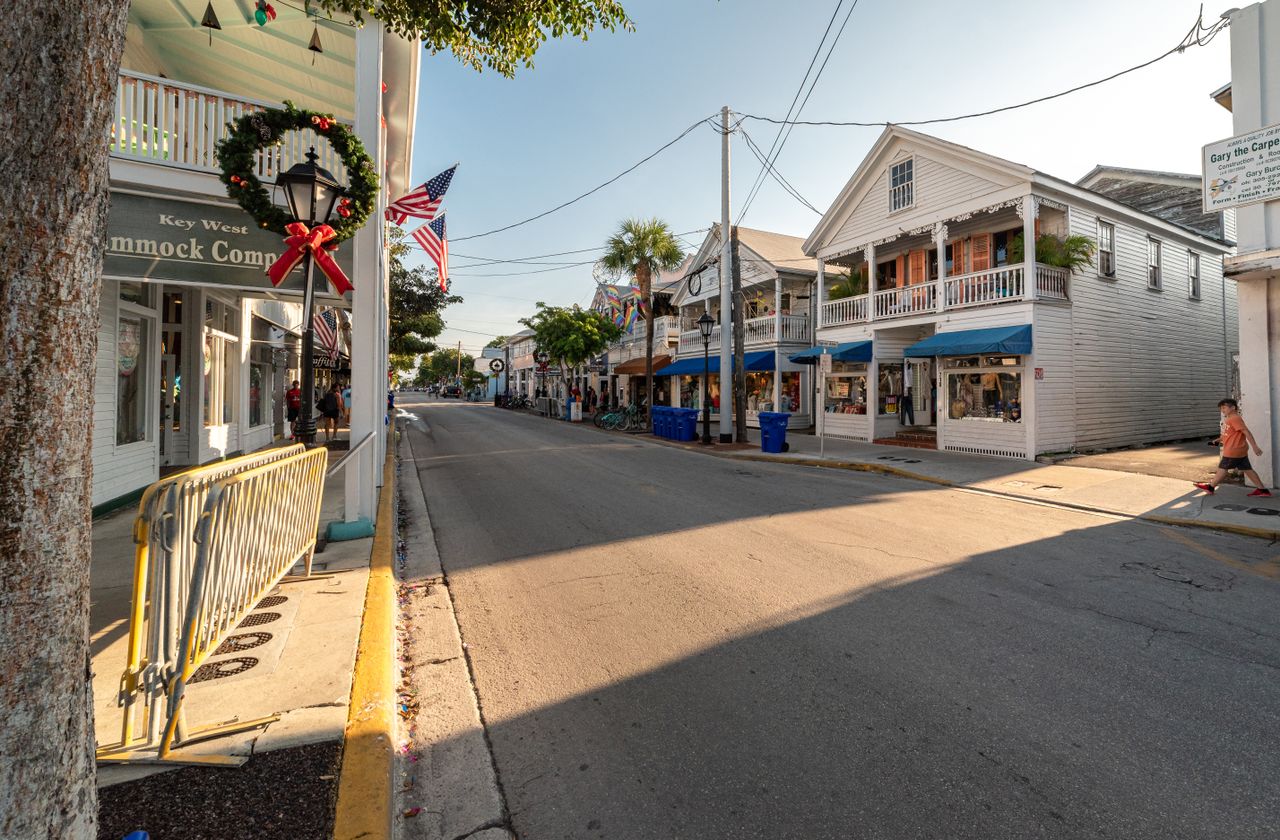
Key West has built its global reputation on leisure. Tourists arrive for pastel sunsets, fishing excursions, historic streets, restaurants, hotels and nightlife. Yet the smooth experience visitors expect depends on a workforce that is largely invisible to them: housekeepers making hotel rooms ready, cooks preparing meals, drivers moving visitors around the island, dishwashers keeping restaurants operating and workers filling countless other service jobs.
That labor system is now under pressure.
As the federal government ends Temporary Protected Status (TPS) protections for Haitian immigrants, Key West is experiencing a combination of labor shortages, fear, reduced business hours and uncertainty that could become especially visible as the Florida Keys enter their traditionally stronger fall and winter tourism period. The New York Times reported that Haitian workers have been detained, while others have reduced their public activities because they fear encounters with immigration authorities. Businesses say that even workers who remain legally authorized to work can become reluctant to show up for their jobs when they are worried about being detained.
The issue is therefore bigger than immigration policy alone. In Key West, it is becoming a question about how a tourism-dependent island can maintain its workforce when the people performing some of its most essential jobs no longer feel secure.
Why Haitian Workers Matter So Much in Key West
Key West is unusually vulnerable to labor disruptions because of its geography.
The city has only about 25,000 residents, according to the U.S. Census Bureau, yet it operates as a major international tourism destination. The island is connected to mainland Florida by the Overseas Highway, meaning employers cannot easily solve worker shortages by drawing a large commuting workforce from nearby cities in the way businesses might in a mainland metropolitan area.
Local immigration attorney Wayne Dapser estimated to The New York Times that at least 5,000 Haitians live in and around Key West. That is a remarkable presence for a city of roughly 25,000 people, although the estimate should be understood as a local professional assessment rather than an official population count.
Many Haitian immigrants came because Key West offered something particularly valuable: relatively accessible employment in a compact, walkable community. Workers without cars could often bicycle to jobs in hotels, restaurants, supermarkets and other businesses.
That advantage is now being undermined by fear.
The irony is striking. The same physical geography that makes Key West attractive to a worker without a car also makes the community particularly exposed to immigration enforcement. It is a small, geographically constrained island where people can be easier to notice and where leaving the area can be complicated.
The Tourism Industry Is Already Huge and Labor Intensive
The stakes are high because tourism is the backbone of the entire Florida Keys economy.
Monroe County’s Tourist Development Council estimates that visitors generate approximately $3.5 billion in annual spending and support more than 24,000 local jobs. The county’s tourism economy also generates nearly $400 million in tax revenue.
That means a labor shortage does not remain confined to a single restaurant or hotel. It can spread through the visitor economy.
A hotel that cannot hire enough housekeepers may have to reduce the number of rooms available for sale. A restaurant that lacks kitchen staff may close an extra day each week. A tour company with too few drivers may have to limit bookings. A hotel may pay higher wages to retain workers, increasing operating costs and potentially room prices.
The system is interconnected.
And tourism demand remains substantial. In July 2026, Florida Keys hotels posted an occupancy rate of 80.4%, up 6% from a year earlier, while average daily hotel rates rose 3.3% to $297.59. Key West International Airport also recorded roughly 70,900 TSA passengers in July, up 10.5% year over year.
The timing is important. A worker shortage becomes more painful when demand is growing rather than declining.
Temporary Protected Status Was More Than an Immigration Label
To understand the economic consequences, it is important to understand what TPS actually does.
Temporary Protected Status is a federal immigration program that can allow nationals of designated countries already in the United States to remain temporarily when conditions in their home countries make safe return impractical. It also provides employment authorization to eligible beneficiaries.
Haiti was first designated for TPS in January 2010 following the devastating earthquake. The designation was repeatedly extended and later redesignated as conditions in Haiti remained unstable.
The legal history became particularly complicated during 2025 and 2026. Litigation challenged the federal government’s decision to end Haiti’s TPS designation. On June 25, 2026, the Supreme Court ruled in favor of the administration’s position, allowing the termination to proceed; the lower-court stay subsequently ceased to have effect.
The Department of Justice describes TPS as a temporary program and argues that immigration law requires DHS to terminate a designation when it determines that the statutory conditions are no longer met.
For employers, however, the practical issue is much simpler: workers who previously had employment authorization through TPS may suddenly no longer have that particular authorization.
And that means a business can lose trained employees not because demand has disappeared, but because the workers’ legal ability to remain employed has changed.
The Crucial Distinction: Not Every Haitian Worker Has Lost the Right to Work
One of the easiest things to misunderstand about the situation is the assumption that every Haitian immigrant in Key West immediately became unauthorized to work.
That is not necessarily true.
Immigration status is highly individual. A Haitian national may have a pending asylum case, another immigration status, a different employment authorization category or another legal basis for remaining and working in the United States.
The New York Times described workers who were still able to work despite losing TPS because of other pending immigration proceedings. At the same time, the workers and their employers remained anxious because immigration detention could still disrupt their lives and employment.
This distinction helps explain why the impact extends beyond people who actually lost work authorization.
Fear itself can become an economic force.
When employees worry that commuting to work could expose them to immigration enforcement, some may stop reporting for shifts. Others may leave the region. Employers may find themselves unable to predict how many people will be available on a given day.
The result can look much like a conventional labor shortage even when potential workers technically exist.
Businesses Are Feeling the Pressure From Both Directions
Key West restaurants provide a vivid example.
The Times reported that some restaurant owners were losing line cooks, busboys and delivery workers, while remaining employees were taking on additional responsibilities. At Jose’s Latin Food, owners Clementina and José Amador reduced operating days because workers left the island amid concerns about immigration enforcement.
For a small restaurant, losing several workers can have an outsized impact.
Large chains may have human-resource departments, recruiting systems and the ability to transfer workers from other locations. Small independent restaurants often do not. The owner becomes the cook, manager, delivery driver and payroll administrator simultaneously.
This is particularly difficult in Key West because replacing staff from outside the area is not easy.
An employer could raise wages. But higher wages do not automatically create housing.
An employer could recruit from elsewhere. But the worker still needs somewhere to live.
An employer could reduce opening hours. But fewer operating hours mean less revenue and fewer services for visitors.
Every solution has a cost.
Key West Has a Housing Problem Before the Labor Problem
Immigration policy is only one part of the story.
The Florida Keys already face a severe workforce-housing shortage. Monroe County itself identifies affordable and workforce housing as one of its most difficult challenges, citing high land values, limited developable land, environmental constraints, the tourism economy and restrictions on growth.
This matters because hospitality labor cannot be separated from housing.
A hotel worker who earns a relatively modest hourly wage must somehow afford housing in one of America’s most expensive and geographically constrained vacation destinations.
That creates a structural contradiction:
Key West needs a large workforce to serve visitors, but the people who perform those jobs can struggle to afford to live where the jobs are.
Immigrant workers have historically helped fill that gap, often sharing housing, living in trailers or relying on compact transportation options. When immigration uncertainty causes some of those workers to leave, the underlying housing problem becomes even more visible.
Simply increasing wages may help, but businesses must also absorb the cost, and the housing supply remains constrained.
The Fall and Winter Could Be the Real Test
Key West tourism does not operate at a constant level throughout the year.
The summer period can be slower and affected by heat, storms and hurricane-season disruptions. Fall and winter typically bring stronger demand.
That means businesses may currently be experiencing only the early stages of the problem.
The New York Times reported concerns from local business owners and workers that shortages could become more severe as tourism activity increases.
This is where the issue could move from a community concern into a visitor experience problem.
Tourists might notice longer restaurant waits, fewer available tables, reduced hotel services, higher prices or fewer tour slots.
The visitor may never know why.
A hotel room that cannot be serviced quickly looks like a hotel-management problem. A restaurant closed on a Monday looks like a scheduling decision. A ride that is difficult to find looks like high demand.
But behind those small inconveniences could be a much deeper labor-market disruption.
The Problem Extends Beyond Haitians
Another important element of the story is that Haitian workers are not the only immigrant employees affected by the broader enforcement environment.
The Times reported that Hispanic immigrants and other foreign-born workers in the Florida Keys have also experienced arrests and fear around immigration enforcement. Some workers reportedly stopped using bicycles or limited their movements even when they had valid work authorization.
That creates a chilling effect across an entire workplace.
Imagine a restaurant with ten kitchen and service workers. If two lose authorization, one moves away and two others are afraid to report for shifts, the restaurant has effectively lost half its operating capacity even though only some employees’ legal status has changed.
For employers, the question becomes not simply, “How many workers are legally authorized?”
It becomes, “How many workers will reliably show up tomorrow?”
That is a much harder question to solve.
Why Replacing Immigrant Workers Is Not Easy
A common argument in immigration debates is that employers can simply hire American workers instead.
The reality in Key West is more complicated.
Tourism jobs often involve unusual hours, weekend shifts, physically demanding tasks, seasonal fluctuations and comparatively high living costs. Housekeeping, kitchen work and service jobs can also involve multiple jobs or long working weeks.
Even when wages rise, employers may struggle to attract enough local workers.
And Key West’s small resident population limits the size of the available labor pool.
The city’s population was estimated at just under 25,000 in July 2025, and the wider Monroe County population is only around 80,000.
For an economy supporting millions of dollars in visitor spending, that is a very small permanent population.
This explains why labor shortages in the Keys can be more stubborn than in larger cities.
Higher Wages Could Help—but Could Also Raise Tourism Costs
One likely economic response is wage competition.
When workers become scarce, businesses generally have to compete harder for employees. Employers may raise hourly pay, offer retention bonuses, provide transportation or improve schedules.
That could benefit workers who remain in the market.
But there is another side.
Higher payroll costs eventually have to be absorbed somewhere. Businesses can reduce profit margins, cut hours, increase prices or combine all three.
For tourists, that could mean more expensive meals, hotel rooms and services.
In a destination such as Key West, where accommodation and travel are already expensive, the labor shortage could therefore contribute to higher visitor costs.
That does not mean immigration enforcement will automatically cause dramatic price increases. Tourism prices are affected by many factors, including fuel, insurance, wages, property costs, demand and weather.
But labor is one of those costs—and it is becoming harder to ignore.
Tourism Revenue Also Pays for Community Needs
There is another reason the situation matters beyond individual businesses.
Tourism revenue supports public and community investments throughout Monroe County.
The Tourist Development Council says visitor spending generates hundreds of millions of dollars in tax revenue, while tourism-related funding supports infrastructure, beaches, cultural programs, conservation and local attractions.
That creates a feedback loop.
Visitors spend money.
Businesses earn revenue.
Workers earn wages.
Governments collect taxes.
Those taxes help fund local facilities and tourism infrastructure.
If labor shortages significantly constrain the visitor economy, the effects can eventually travel through that entire chain.
This is why workforce policy in Key West is not merely a question for employers and employees. It can become a tourism-management and local-government issue.
The Human Cost Is Larger Than the Labor Statistics
The economic numbers only tell part of the story.
For Haitian families, the end of TPS can mean uncertainty about housing, employment, children’s stability and the ability to participate openly in community life.
The New York Times reported that a Haitian congregation in Key West temporarily moved religious activities online because the pastor feared parishioners could be detained while attending services.
That illustrates how immigration enforcement can change ordinary community behavior.
A person who is afraid to attend church may also be afraid to go shopping.
A person who avoids public transportation may have difficulty reaching work.
A person who fears a traffic stop may stop driving.
A family worried about detention may avoid schools, doctors, banks or government offices unless absolutely necessary.
In that environment, economic participation can decline even when people want to work.
A Tourism Destination Cannot Separate Its Visitors From Its Workers
Key West’s current situation highlights a basic truth about tourism: destinations are experienced by visitors, but they function through residents and workers.
Tourists see hotel rooms, clean streets, restaurant tables, boats, transportation, attractions and friendly service.
Workers make all of those things possible.
When a tourism destination loses a significant part of its workforce, its identity as a visitor destination can eventually be affected.
This is especially important for places like Key West, where the visitor economy is disproportionately large relative to the permanent population.
The Florida Keys’ own tourism strategy emphasizes destination stewardship—an approach that recognizes the need to balance economic activity with community needs, infrastructure and long-term sustainability.
A sustainable tourism strategy therefore cannot focus only on how many tourists arrive.
It also has to consider whether there are enough people who can afford to live there and work the jobs required to serve those tourists.
What Could Key West Do Next?
There is no single solution.
Employers can increase wages, improve benefits, create more predictable schedules and invest in retention. Local governments can continue expanding workforce-housing programs and transportation options. Tourism organizations can focus on visitor growth that does not overwhelm local capacity.
Businesses can also examine whether automation can help with administrative tasks, reservations, check-in, cleaning technology and other processes.
But technology has limits.
A machine can assist with hotel operations. It cannot easily replace a housekeeper cleaning hundreds of rooms, a cook preparing food to order, a bartender interacting with customers or a maintenance worker solving a problem in an old building.
Tourism remains a people-intensive industry.
The more fundamental solution is therefore likely to involve a combination of legal immigration pathways, workforce housing, competitive wages, transportation, training and predictable employment authorization.
Key West Is a Preview of a Bigger U.S. Tourism Debate
What is happening in Key West has implications well beyond Florida.
Restaurants, hotels, farms, construction companies, cleaning businesses and other industries across the United States rely heavily on immigrant labor.
When immigration policy changes quickly, the consequences can spread beyond the people directly affected.
Businesses lose employees.
Workers lose income.
Consumers face higher costs.
Communities lose population.
Tourism destinations can experience service shortages.
At the same time, supporters of tighter immigration enforcement argue that employers and communities should not become dependent on temporary immigration programs that were never intended to become permanent.
The difficult national question is therefore not merely whether immigration enforcement should be stronger or weaker.
It is also what kind of workforce the U.S. economy expects to have—and what legal, housing and economic systems will support that workforce.
The Bigger Lesson for Key West
Key West’s tourism machine has always depended on a delicate balance.
The island needs visitors to generate revenue. It needs businesses to serve those visitors. Businesses need workers. Workers need housing. Residents need infrastructure and public services. And the entire system has to operate within the physical limitations of a small island.
The loss of Haitian workers through the end of TPS has made that interconnected system impossible to ignore.
The immediate issue is immigration status. The deeper issue is economic resilience.
Key West has a tourism industry capable of generating billions of dollars in regional spending, but its workforce cannot be treated as an unlimited resource.
As the busy season approaches, the island will provide an important real-world test of what happens when immigration policy collides with a labor market already constrained by geography, housing costs and heavy dependence on tourism.
Visitors may still arrive.
The sunsets will still be beautiful.
The boats will still leave the harbor.
But whether every hotel room gets cleaned, every restaurant stays open and every tour has enough staff may depend on a question much larger than tourism: who is allowed to live and work in America’s vacation destinations, and under what conditions?
5 Frequently Asked Questions
1. Why are Haitian workers important to Key West tourism?
Haitian immigrants have become an important part of the local service workforce, including hotel housekeeping, restaurant work, transportation and other tourism-related jobs. Local estimates cited by The New York Times put the Haitian population in and around Key West at roughly 5,000 people. Because Key West has a relatively small permanent population and limited access to outside workers, disruptions can have an unusually large impact.
2. What happened to Temporary Protected Status for Haitians?
Haiti’s TPS designation was originally created after the 2010 earthquake and was extended or redesignated multiple times as conditions in Haiti remained unstable. In 2026, the federal government’s decision to terminate the designation was challenged in court. The U.S. Supreme Court ultimately allowed the termination to proceed.
3. Does losing TPS automatically mean a Haitian worker cannot work in the United States?
No. Immigration status is individual, and some people may have another legal basis for employment or a pending immigration case. The loss of TPS can remove one source of employment authorization, but it does not mean every Haitian national has exactly the same legal situation. Employers and workers need to rely on current federal immigration rules and individualized legal advice.
4. Will Key West tourists notice the labor shortage?
Possibly. The effects could include shorter restaurant operating hours, difficulty filling shifts, higher labor costs, reduced service capacity or higher prices. The impact may become more apparent during the fall and winter tourism season, when visitor demand is generally stronger. Florida Keys tourism indicators were already showing strong performance in 2026, including 80.4% hotel occupancy in July and continued growth in Key West air traffic.
5. Is immigration enforcement the only reason Key West has a workforce shortage?
No. Key West and Monroe County already face structural labor challenges caused by high housing costs, limited land, development restrictions, expensive construction and the large scale of the tourism economy. Immigration enforcement can intensify those pressures, but the region’s workforce problem predates the current policy changes.
Sources The New York Times