
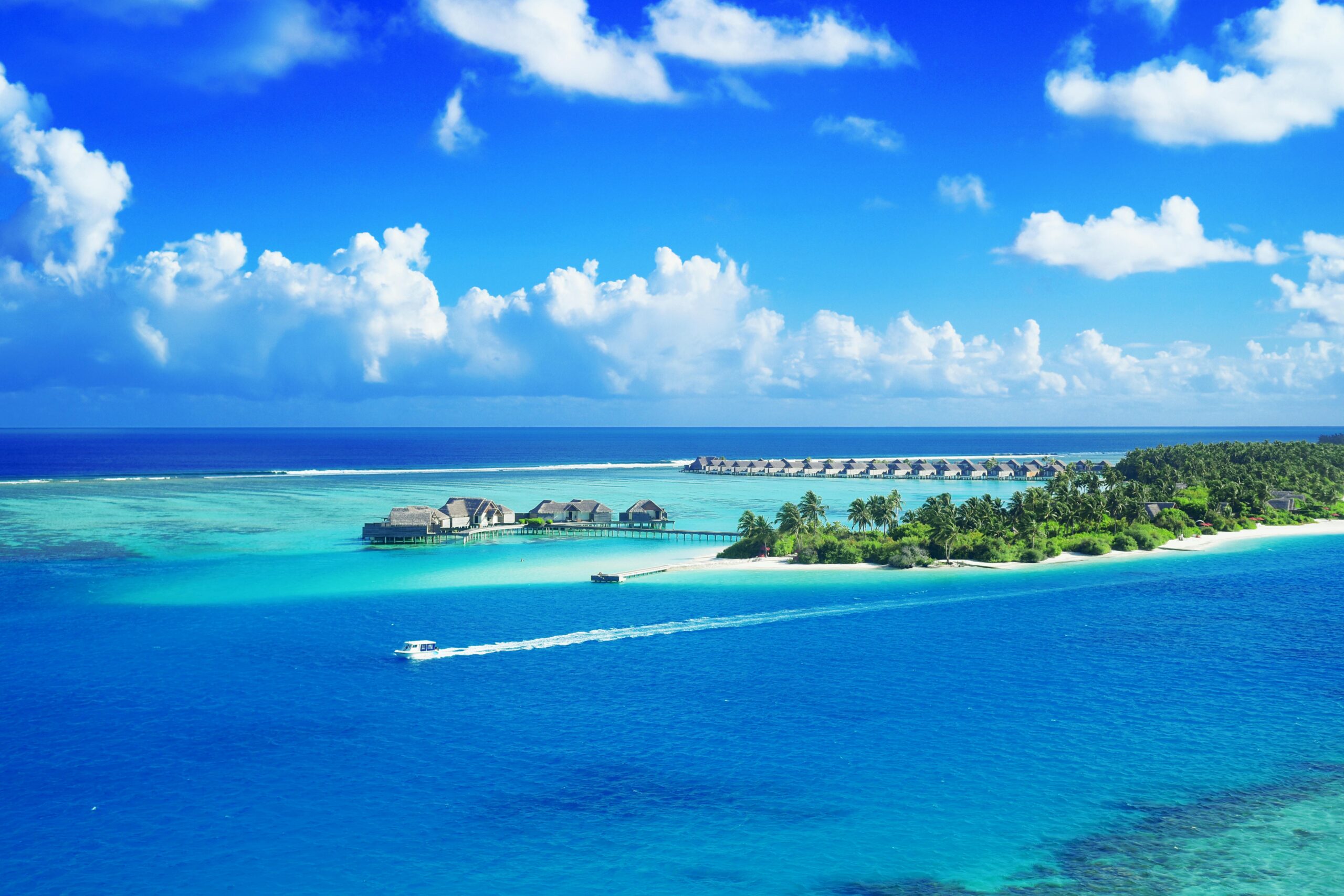
For decades, the Maldives and Seychelles have represented the dream of tropical luxury travel.
Crystal-clear waters, overwater villas, pristine beaches, and exclusive resorts transformed these Indian Ocean island nations into some of the world’s most desirable tourism destinations. Tourism became more than an industry—it became the foundation of their economies.
Today, that foundation is showing signs of strain.
As major Gulf airlines including Emirates and Etihad reduce flights amid rising geopolitical tensions, higher fuel costs, and shifting travel demand, both island nations are experiencing a sharp decline in tourist arrivals. The situation highlights a reality often overlooked during tourism booms: destinations that depend heavily on international aviation can become extremely vulnerable when global transportation networks are disrupted.
What appears to be a temporary airline scheduling adjustment could have far-reaching consequences for jobs, government revenues, local businesses, and long-term economic stability.
Why Flights Matter More to Island Nations
Most countries can rely on multiple transportation methods.
Island nations cannot.
The Maldives and Seychelles depend overwhelmingly on international air travel to bring visitors, workers, supplies, and business investment.
Unlike destinations connected by road or rail networks, these islands rely almost entirely on airlines.
When flight capacity declines:
- Tourist arrivals fall
- Hotel occupancy drops
- Tourism spending decreases
- Employment weakens
- Government tax revenue declines
Even relatively small reductions in airline capacity can have disproportionately large economic effects.
For island economies, air connectivity is economic connectivity.
The Gulf Airlines’ Critical Role
Many travelers from Europe, Asia, and the Middle East reach the Maldives and Seychelles through Gulf aviation hubs.
Airlines such as:
- Emirates
- Etihad Airways
- Qatar Airways
have spent years building global networks that connect hundreds of cities to Indian Ocean destinations through hubs in the Gulf region.
This model transformed previously remote islands into easily accessible luxury destinations.
A traveler from:
- London
- Paris
- Frankfurt
- Milan
- Kuala Lumpur
- Singapore
could often reach these islands with a single stopover.
When Gulf carriers reduce capacity, the effects ripple across the tourism ecosystem almost immediately.
Fewer flights mean fewer available seats.
Fewer seats generally mean higher ticket prices.
Higher ticket prices often result in weaker travel demand.
Rising Fuel Costs Are Hitting Airlines Hard
One major factor behind recent flight reductions is the rise in fuel prices caused by instability in the Middle East.
Jet fuel remains one of the largest operating expenses for airlines.
When oil prices surge:
- Airline margins shrink
- Ticket prices rise
- Routes become less profitable
- Capacity is reduced
Long-haul leisure destinations are often among the first routes affected because they rely heavily on discretionary spending.
Luxury tourism destinations can be particularly vulnerable because travelers may postpone expensive vacations during periods of uncertainty.
The Tourism Dependency Problem
The current situation exposes a challenge economists have warned about for years.
Tourism can generate tremendous economic benefits, but excessive dependence creates risk.
In the Maldives, tourism directly and indirectly contributes a substantial share of GDP, employment, foreign exchange earnings, and government revenue.
Seychelles faces a similar situation.
When tourism thrives:
- Employment rises
- Foreign currency flows increase
- Public finances improve
- Infrastructure investment accelerates
But when tourism slows:
- Jobs disappear
- Business revenue contracts
- Fiscal deficits grow
- Economic growth weakens
This concentration risk becomes especially dangerous when disruptions originate outside the country’s control.
Why Luxury Tourism Isn’t Immune
Many observers assume wealthy travelers continue spending regardless of economic conditions.
Reality is more complicated.
Luxury tourism often proves resilient, but not invulnerable.
Affluent travelers may still:
- Delay vacations
- Choose closer destinations
- Reduce trip frequency
- Shift spending to domestic travel
- Wait for geopolitical tensions to ease
Luxury destinations also depend heavily on consumer confidence.
When uncertainty rises, even wealthy households often become more cautious.
The Hidden Impact on Local Workers
The effects extend far beyond luxury resorts.
Tourism supports entire economic ecosystems.
Jobs linked directly or indirectly to tourism include:
- Hotel employees
- Tour guides
- Boat operators
- Restaurant workers
- Taxi drivers
- Fishermen supplying resorts
- Retail staff
- Construction workers
- Airport employees
When visitor numbers decline, income losses spread through communities.
For many families, tourism wages support housing, education, healthcare, and everyday living expenses.
The economic consequences can therefore extend well beyond the tourism industry itself.

Small Businesses Face the Greatest Risk
Large international hotel chains often possess substantial financial reserves.
Local businesses typically do not.
Independent operators frequently face greater vulnerability during tourism downturns.
Examples include:
- Guesthouses
- Dive operators
- Souvenir shops
- Local restaurants
- Excursion companies
- Water sports providers
These businesses often operate on thin profit margins.
Even a modest reduction in visitor numbers can threaten their survival.
The Aviation-Tourism Feedback Loop
Tourism and aviation operate in a mutually dependent relationship.
Airlines need strong passenger demand.
Tourism destinations need airline capacity.
When one side weakens, the other often follows.
This creates a feedback loop:
- Flights are reduced.
- Tourist arrivals decline.
- Demand weakens further.
- Additional flights become unprofitable.
- More capacity is cut.
Breaking this cycle can be difficult once it begins.
Climate Change Adds Another Layer of Risk
The current crisis arrives as both nations already face long-term environmental challenges.
The Maldives and Seychelles are among the countries most vulnerable to:
- Sea-level rise
- Coastal erosion
- Coral reef degradation
- Extreme weather events
Tourism infrastructure depends heavily on healthy marine ecosystems.
Coral reefs attract divers.
Beaches attract vacationers.
Marine biodiversity supports recreational tourism.
Environmental degradation could eventually compound economic pressures created by aviation and geopolitical disruptions.
The Growing Competition for Tourists
Another challenge is increasing global competition.
Travelers now have more options than ever.
Competing destinations include:
- Thailand
- Indonesia
- Vietnam
- Mauritius
- Fiji
- Caribbean islands
- Mediterranean resorts
When airfares rise, travelers often compare alternatives more carefully.
Destinations that become significantly more expensive may lose market share.
Could Domestic Tourism Fill the Gap?
For many countries, domestic tourism can help offset international declines.
Island nations face limitations.
The Maldives and Seychelles have relatively small populations.
Domestic demand alone cannot replace millions of international visitors.
This makes international connectivity particularly important compared with larger tourism markets.
What Governments Are Doing
Authorities are exploring several strategies to support tourism.
Potential measures include:
Airline Incentives
Providing incentives to encourage airlines to maintain routes.
Tourism Marketing
Launching campaigns targeting high-value travelers.
Market Diversification
Reducing reliance on specific countries or regions.
Infrastructure Improvements
Enhancing airports and tourism facilities.
Economic Diversification
Expanding sectors beyond tourism.
However, diversification is easier said than done.
Building entirely new industries takes years, sometimes decades.
The Future of Long-Haul Tourism
The challenges facing the Maldives and Seychelles may foreshadow broader trends.
Long-haul tourism increasingly faces pressures from:
- Fuel price volatility
- Geopolitical conflicts
- Environmental concerns
- Economic uncertainty
- Airline capacity constraints
Destinations heavily dependent on long-distance travelers may need to rethink growth strategies.
Future tourism models may place greater emphasis on:
- Sustainability
- Regional tourism
- Higher-value visitors
- Economic resilience
The Bigger Picture
The current downturn is not simply a tourism story.
It is a lesson in economic interconnectedness.
A geopolitical conflict in one region can influence oil prices.
Oil prices affect airlines.
Airlines affect tourism.
Tourism affects employment, government revenue, and economic growth.
For the Maldives and Seychelles, the recent flight reductions reveal how dependent modern economies have become on global transportation networks.
The same aviation system that enabled these nations to become world-famous tourism destinations has also become one of their greatest vulnerabilities.
The coming months will determine whether the decline represents a temporary setback or a warning sign of deeper structural challenges facing tourism-dependent island economies in an increasingly uncertain world.
Frequently Asked Questions (FAQ)
1. Why are tourist arrivals falling in the Maldives and Seychelles?
Reduced airline capacity, rising airfares, geopolitical uncertainty, and higher fuel costs have made travel more expensive and less convenient for many international visitors.
2. Why do Emirates and Etihad matter so much?
These airlines operate major international hub networks that connect travelers from Europe, Asia, Africa, and the Middle East to island destinations. Flight reductions significantly reduce accessibility.
3. How does higher oil prices affect tourism?
Higher oil prices increase jet fuel costs, which often lead to higher airline ticket prices. As travel becomes more expensive, demand for leisure tourism may decline.
4. Can domestic tourism replace lost international visitors?
Not fully. The Maldives and Seychelles have relatively small populations, making it difficult for domestic tourism to compensate for major declines in international arrivals.
5. What industries are affected besides hotels?
Many sectors depend on tourism, including restaurants, transportation, retail, fishing, construction, recreation services, and local suppliers.
6. Could tourism recover quickly if flights return?
Yes. Tourism demand often rebounds when airline capacity increases, travel costs stabilize, and geopolitical concerns ease. However, recovery speed depends on global economic conditions.

Sources Bloomberg

