

For decades, the cerebellum was treated as the brain’s backstage crew—essential, but uninteresting. Tucked beneath the cerebral hemispheres, it was largely described as a coordination center for balance and movement, a biological gyroscope that kept humans upright and precise.
That view is now obsolete.
New large-scale brain-mapping research, including work led by scientists at MIT, is revealing the cerebellum as one of the most complex and influential regions of the brain—deeply involved in cognition, emotion, learning, prediction, and even mental illness. These discoveries are forcing neuroscientists to rethink long-held assumptions about how intelligence and behavior actually emerge.
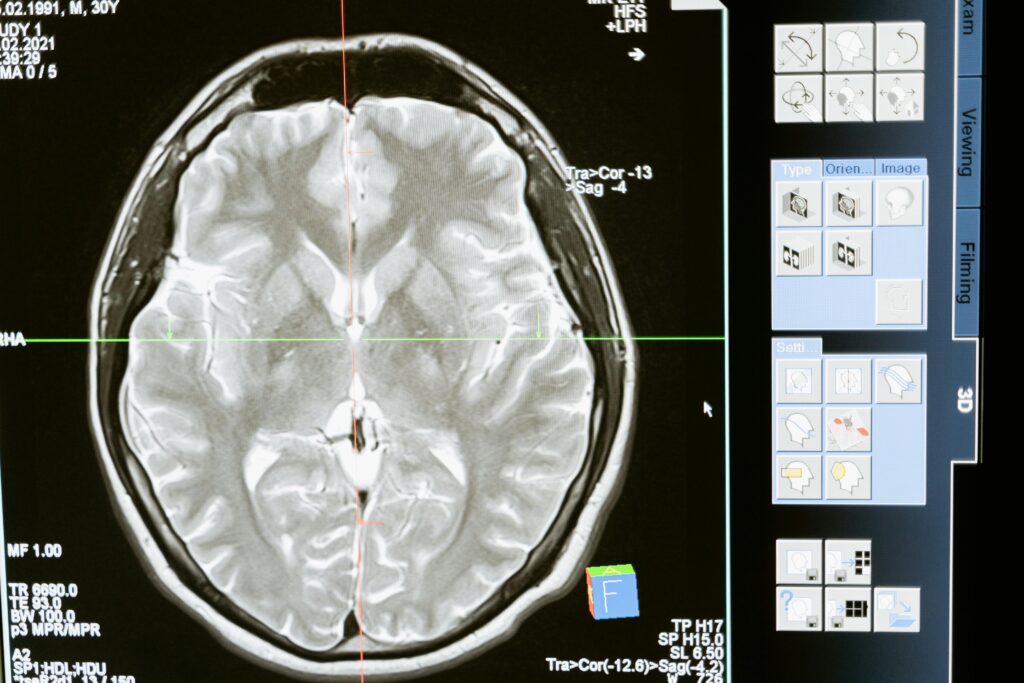
1. Why the cerebellum was misunderstood for so long
The cerebellum contains more neurons than the rest of the brain combined—an astonishing fact that was long overlooked.
Historically, it was sidelined because:
- Early neuroscience focused on visible cortical damage (speech, memory, vision)
- Cerebellar injuries often caused subtle, non-obvious deficits
- Animal models emphasized motor control tasks
- Imaging techniques lacked sufficient resolution
As a result, the cerebellum was labeled “motor-only,” despite its immense computational capacity.
2. What modern brain mapping has changed
Advances in neuroscience have transformed what researchers can see.
MIT-led efforts combine:
- High-resolution brain imaging
- Single-neuron and synapse-level mapping
- Machine learning analysis of neural circuits
- Large-scale connectomics (mapping how neurons connect)
These tools allow scientists to trace precise information pathways linking the cerebellum to cognitive and emotional centers of the brain.
The result: a structural and functional map that shows the cerebellum participating in far more than movement.
3. The cerebellum as a prediction engine
One of the most important emerging insights is that the cerebellum appears to function as a prediction machine.
Rather than reacting after events happen, it:
- Anticipates outcomes
- Fine-tunes responses before errors occur
- Optimizes timing and sequencing
This predictive function applies not just to movement, but to:
- Language processing
- Social interaction
- Emotional regulation
- Decision-making
In other words, the cerebellum may help the brain simulate the future—milliseconds at a time.
4. Cognitive and emotional roles once thought impossible
Brain mapping studies now link the cerebellum to:
- Attention and working memory
- Planning and executive function
- Emotional modulation
- Social cognition and empathy
Damage to specific cerebellar regions has been associated with:
- Flattened affect
- Impulsivity
- Language difficulties
- Autism spectrum traits
This challenges the traditional “thinking brain vs movement brain” divide.
5. Why the cerebellum’s structure matters so much
The cerebellum’s architecture is remarkably uniform.
It uses:
- Repeating microcircuits
- Highly regular neuron patterns
- Massive parallel processing
This consistency makes it ideal for:
- Error correction
- Pattern recognition
- Learning from feedback
MIT researchers suggest this structure allows the cerebellum to apply similar computational principles across many domains—movement, thought, and emotion alike.

6. Implications for neurological and psychiatric disorders
Mapping the cerebellum has profound clinical consequences.
Research increasingly links cerebellar dysfunction to:
- Autism spectrum disorder
- Schizophrenia
- ADHD
- Depression
- Dyslexia
- Parkinson’s disease
This reframes these conditions not only as cortical disorders, but as network-level brain disorders involving predictive and timing failures.
7. Rethinking intelligence and learning
Traditional models of intelligence focus on the cortex.
Cerebellar research suggests:
- Learning may depend heavily on error correction rather than abstraction
- Intelligence may be distributed, not centralized
- Prediction and timing are core cognitive skills
This has implications for:
- Education
- Artificial intelligence design
- Neurorehabilitation
The cerebellum may be teaching the rest of the brain how to learn.
8. Lessons for artificial intelligence
The cerebellum’s design is attracting attention from AI researchers.
Its features resemble:
- Predictive coding models
- Reinforcement learning systems
- Parallel error-minimization architectures
Unlike many AI systems, the cerebellum:
- Learns rapidly
- Uses minimal energy
- Adapts continuously
Understanding its principles could inspire more efficient, adaptable AI.
9. Why mapping the cerebellum was technically difficult
The cerebellum’s density posed enormous challenges:
- Extremely small neurons packed tightly together
- Complex folding that increases surface area
- Massive synaptic connectivity
Recent breakthroughs in microscopy, data storage, and algorithmic reconstruction finally made comprehensive mapping possible.
10. What this research changes philosophically
Perhaps the most radical implication is conceptual.
If prediction, learning, and emotion are deeply cerebellar, then:
- Conscious thought may rely on “unconscious” processes more than assumed
- Intelligence may be less about reasoning and more about optimization
- The brain may function more like a simulation engine than a logic machine
The cerebellum forces us to rethink what thinking actually is.
Conclusion: The brain’s “silent partner” steps into the spotlight
MIT’s cerebellum mapping research is not just filling in a missing piece of the brain—it is changing the picture entirely.
What was once considered a background support system is emerging as a central player in how humans move, think, feel, and learn. The cerebellum’s quiet precision may be the foundation upon which intelligence itself is built.
The more we map it, the clearer it becomes: understanding the cerebellum may be key to understanding ourselves.
Frequently Asked Questions (FAQ)
1. What is the cerebellum?
A brain region located at the back of the brain, traditionally linked to movement and coordination.
2. Why is cerebellum mapping important?
Because it reveals how this region contributes to cognition, emotion, and learning.
3. How many neurons does the cerebellum have?
More than half of all neurons in the human brain.
4. Does the cerebellum affect thinking?
Yes. Research links it to attention, planning, language, and emotion.
5. What technologies enabled this mapping?
High-resolution imaging, machine learning, and connectomics.
6. Is the cerebellum involved in mental illness?
Evidence increasingly suggests it plays a role in several psychiatric conditions.
7. How does the cerebellum learn?
By predicting outcomes and correcting errors based on feedback.
8. Can cerebellar research help treat disease?
Potentially, by identifying new therapeutic targets and intervention strategies.
9. Does this change how we understand intelligence?
Yes. It suggests intelligence relies heavily on prediction and timing, not just reasoning.
10. What’s next for cerebellum research?
More detailed circuit mapping, clinical applications, and AI-inspired modeling.
Sources MIT


AI linkbuilding tool with chatgpt