
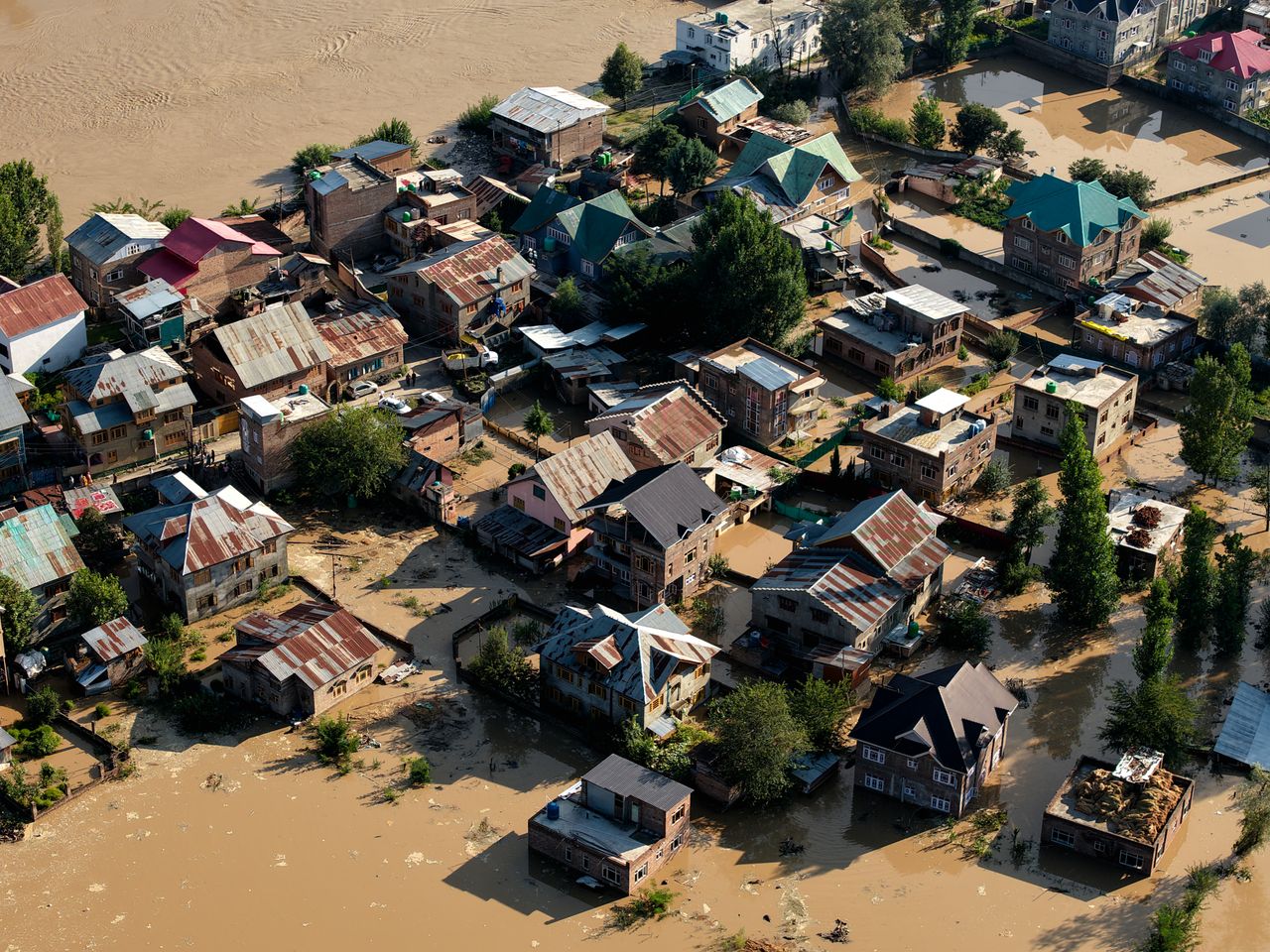
Nepal was hoping to build on two of its most important economic strengths: its mountains and its rivers.
Then, on August 26, 2026, both were hit at once.
A catastrophic flash flood swept through the Bhote Koshi and Trishuli river systems after an ice-and-rock avalanche and temporary blockage of a tributary north of the Nepal-China border. The disaster devastated settlements, roads, bridges and hydropower infrastructure across several districts. Nepal’s government continues search-and-rescue operations, while the full human and economic toll remains subject to revision.
The consequences extend far beyond the immediate destruction.
The flood struck a country whose economic strategy has increasingly depended on tourism as a source of foreign currency and hydropower as a source of export revenue.
The timing could hardly have been worse.
Tourism was recovering strongly, with more than 1.2 million foreign visitors recorded during Nepal’s 2025–26 fiscal year. At the same time, Nepal had only recently established itself as a net electricity exporter, earning a record amount from sales to India and Bangladesh.
The August disaster has now disrupted both sectors.
A Disaster That Followed the Rivers
The flood was geographically concentrated but economically far-reaching.
The Bhote Koshi originates north of the Himalayan border and enters Nepal through Rasuwa. The torrent then moved into the Trishuli river system, affecting Rasuwa, Nuwakot, Dhading and other downstream areas. Government health officials have identified multiple affected districts and extensive damage to roads, bridges, health facilities and other infrastructure.
The scale of the physical destruction has been enormous.
Recent reporting has put confirmed deaths in Nepal and Tibet at more than 1,300, with thousands still missing. Reuters reported on September 9 that the confirmed death toll had reached at least 1,380, with roughly 5,500 people still missing.
The disaster also destroyed or damaged homes and critical infrastructure. AP reported that about 7,500 homes had been destroyed and 12 hydropower projects damaged, with estimated losses of approximately $2.56 billion.
For Nepal, however, the disaster is not just a reconstruction emergency.
It is a warning about the vulnerability of two engines of its future growth.
Tourism Was Recovering Before the Flood
Nepal entered 2026 with a stronger tourism industry than it had in the years immediately following the pandemic.
During fiscal year 2025–26, Nepal welcomed 1,209,357 foreign tourists. India remained the largest source market, followed by the United States and China. Travelers from Bangladesh, the United Kingdom, Australia, Sri Lanka and other countries also represented important portions of the market.
That recovery matters because tourism is deeply integrated into Nepal’s economy.
The sector supports hotels, restaurants, trekking guides, porters, transport companies, airlines, travel agencies, souvenir businesses, equipment suppliers and local communities in mountain regions.
A foreign visitor does not simply purchase a hotel room.
The traveler creates a chain of local economic activity.
That makes every major disruption to tourism potentially much larger than the direct damage to a particular hotel or trekking company.
August Tourism Numbers Already Showed the Impact
The flood quickly began appearing in Nepal’s tourism data.
Nepal recorded 85,444 international tourist arrivals in August 2026, down from 88,680 in August 2025, a decline of about 3.6%. Reporting from Nepal linked the deterioration partly to the late-August floods and the resulting impact on travel routes and tourism confidence.
August is not the entire tourism season, and one month’s decline does not establish a long-term trend.
But the timing is significant.
Nepal’s important autumn trekking season follows the summer monsoon. That makes September, October and November particularly important months for mountain tourism.
A disaster near one of the country’s major trekking and pilgrimage corridors can therefore have an impact that extends well beyond the week in which it occurred.
The Langtang Valley Has Been Particularly Affected
Rasuwa is not an arbitrary location.
It contains some of Nepal’s best-known mountain tourism routes, including the Langtang Valley and the Gosaikunda pilgrimage area.
The floods swept away roads and bridges connecting Langtang with Dhunche, leaving communities cut off and raising serious concerns about the coming trekking season.
Syabrubesi, one of the key gateways to the Langtang region, was also badly affected.
That creates a tourism problem even when a trekking trail itself may remain geographically intact.
Tourism requires access.
A mountain route can be perfectly scenic, but if the road to the trailhead has been destroyed, a tourism business cannot simply reopen.
The Difference Between a Damaged Trail and a Damaged Access Route
This distinction is important.
The flood moved through the Bhote Koshi system, while the main Langtang trekking corridor follows a different river system farther east.
Some local tourism sources have therefore emphasized that the physical trail itself may not have experienced the same level of direct flood destruction as the access infrastructure around Syabrubesi.
But that does not make the region immediately accessible.
Roads, bridges, logistics and communications are all part of a tourism product.
If travelers cannot safely reach the starting point, the economic effect is almost identical to a closed trail.
Gosaikunda Pilgrims Were Also Caught in the Disaster
The timing of the disaster was especially unfortunate for religious tourism.
Gosaikunda is an important pilgrimage destination, and the August flood occurred just before the major Janai Purnima observance.
Hundreds of travelers, including foreign nationals and Indian pilgrims, were initially reported out of contact as communications and transport links failed.
Being “out of contact” did not necessarily mean that every person was missing or dead. Many travelers were subsequently located or rescued as access improved.
But the incident exposed the vulnerability of mass pilgrimage and tourism in remote Himalayan areas when a single transportation corridor is cut.
Kailash Mansarovar Travel Was Also Disrupted
Rasuwa is an important gateway for travelers moving toward the Kerung border and the overland route associated with the Kailash Mansarovar pilgrimage.
The flood damaged infrastructure in this corridor and disrupted cross-border movement.
That has consequences not only for Nepal’s domestic tourism companies but also for travel agencies organizing religious journeys between Nepal and Tibet.
A disruption at one border corridor can therefore affect businesses on both sides of the frontier.
Tourism Damage Is More Than Lost Hotel Revenue
Nepal’s Tourism Minister Khadak Raj Paudel said preliminary tourism-sector losses from the Rasuwa disaster exceeded 50 billion Nepalese rupees.
The estimate includes both physical damage and potential longer-term economic impacts.
Officials reported damage to 142 hotels, 57 restaurants and 141 tourism-related vehicles, while several religious and cultural sites were also affected.
Those numbers help explain why the tourism consequences could persist.
A hotel can lose revenue for weeks while its road access is repaired.
A restaurant can be physically intact but empty because tourists cannot reach the town.
A trekking guide loses income when bookings are cancelled.
A porter loses work.
A vehicle operator loses customers.
An equipment supplier loses sales.
The economic damage radiates outward.
Tourism Also Depends on Confidence
There is another problem that does not show up on a balance sheet.
Travelers make decisions based on perceived safety.
Images of collapsed bridges, flooded hotels and stranded tourists can cause potential visitors to reconsider trips even if their planned destinations are hundreds of kilometers away.
That is why the tourism industry has another job following a disaster:
It must communicate clearly.
Travelers need to know which regions are affected, which routes are operating and which attractions remain open.
Confusing information can be almost as damaging as the physical disruption itself.
Nepal Wants to Avoid a Nationwide Tourism Panic
Tourism officials have emphasized that the disaster is geographically concentrated and that Nepal remains open to visitors in many parts of the country.
That distinction is important.
The flood severely affected parts of Rasuwa and downstream river corridors, but it did not make every major tourist destination in Nepal inaccessible.
Pokhara, Chitwan, the Everest region and other tourism centers are geographically separate from the hardest-hit flood corridor.
Current tourism-information sources also emphasize that many destinations remain accessible while affected routes in Rasuwa remain disrupted.
For the tourism industry, communicating that difference is essential.
Hydropower Was Supposed to Be Nepal’s Next Big Export
While tourism was recovering, another transformation was underway.
Nepal had been turning its enormous hydropower potential into an export industry.
The country’s rivers provide abundant water during the monsoon, allowing run-of-river plants to produce more electricity than domestic consumers need.
Instead of wasting the surplus, Nepal began selling it to neighboring countries.
The country became a net electricity exporter during fiscal year 2024–25, according to Nepal Electricity Authority data. In fiscal year 2025–26, it exported electricity worth NPR 29.32 billion to India and Bangladesh, compared with imports of NPR 10.23 billion.
That represented a major strategic shift.
For decades, Nepal had been viewed primarily as an electricity importer with huge untapped hydropower potential.
Now it was becoming an exporter.
Then the Rivers Became the Problem
The flood struck directly at the infrastructure that makes this export strategy possible.
Hydropower stations were damaged.
Transmission lines were damaged.
Substations were flooded.
Roads needed to reach power plants were destroyed.
Workers disappeared.
And Nepal’s ability to generate enough surplus electricity for export was abruptly reduced.
Reuters reported that 431 MW of generation capacity—about 10% of Nepal’s electricity-generation capacity at the time—was damaged in the flooding.
Other estimates vary depending on whether damaged capacity under construction is included and how individual facilities are classified.
But the direction is unmistakable.
The flood turned an asset into a vulnerability.
Nepal Had Been Exporting Large Volumes of Power
Before the disaster, Nepal was exporting around 650 MW a day to India and Bangladesh during the monsoon season, according to Nepal Electricity Authority reporting.
The country had been earning increasing amounts from power sales as the rainy season boosted generation.
The system was becoming an important part of the country’s external accounts.
Nepal’s electricity exports increased substantially from the previous fiscal year, and the country had begun viewing hydropower as a tool not only for domestic energy security but also for reducing its trade deficit.
That progress has now been interrupted.
Bangladesh Is One of the Casualties
Bangladesh is especially interesting because Nepal’s power exports to the country are still relatively small compared with the electricity Nepal sells to India.
Nepal had been supplying 40 MW to Bangladesh during the monsoon under an arrangement that uses India’s transmission system.
Those exports were effectively halted following the August flood because the relevant hydropower projects and transmission infrastructure were damaged.
The interruption demonstrates an unusual feature of South Asian electricity trade.
Nepal and Bangladesh do not share a border.
Electricity must move through India.
So Nepal’s relationship with Bangladesh is not simply a bilateral energy relationship.
It depends on India’s transmission network and regulatory approvals.
India Remains the Central Electricity Market
India is Nepal’s most important electricity market.
That relationship provides Nepal with a large nearby market for seasonal power, but it also creates dependence on India’s grid infrastructure and export-approval system.
Even before the floods, some Nepali hydropower projects were unable to export their full potential because Indian approvals had expired or additional volumes had not been cleared.
The flood has therefore exposed two different kinds of energy risk.
The first is physical:
Can Nepal’s infrastructure survive extreme events?
The second is institutional:
Can Nepal reliably move and sell electricity across national borders?
The Seasonal Power Model Was Highly Attractive
Nepal’s hydropower model works because its natural river cycle is complementary to its electricity demand.
During the monsoon, rivers are full and generation rises.
During the dry winter, river flows fall and domestic electricity demand remains important.
Nepal can therefore export surplus power during the wet season and import electricity when its own generation falls.
In fiscal year 2025–26, that model produced a large net electricity-trade surplus despite continued imports during the dry season.
It was an elegant economic model.
But the 2026 flood has exposed a major weakness.
The system depends heavily on river corridors.
And those same corridors are increasingly exposed to extreme events.
The Real Question Is Climate Risk
The disaster is forcing a much larger question about Nepal’s hydropower ambitions.
Was the flood simply an extraordinary event?
Or is it a sign that infrastructure designed using historical flood patterns is becoming inadequate?
Scientists and infrastructure specialists have warned that Himalayan warming can destabilize glaciers, frozen slopes and mountain ecosystems.
The August disaster involved a massive ice-and-rock event rather than a conventional monsoon flood alone.
That difference matters because debris flows generated by sudden collapses can move faster and carry much more destructive material than the flood scenarios traditionally considered in hydropower planning.
Traditional Risk Models May No Longer Be Enough
Hydropower projects are normally engineered around expected flood conditions.
Engineers use historical data to estimate probabilities.
But climate change complicates that approach.
When the underlying climate changes, the historical record may no longer provide a reliable guide to future extremes.
The August event was sufficiently destructive that experts are calling for a reassessment of how hydropower projects are located and designed.
That does not mean Nepal should abandon hydropower.
It means the economics of hydropower may need to include a much larger risk-management component.
Nepal Is Not Alone in Facing This Problem
The Himalayan region is warming rapidly.
Glaciers are shrinking.
Permafrost is destabilizing.
Glacial lakes can become more hazardous.
Rainfall patterns are changing.
Extreme precipitation can interact with mountain geology in unpredictable ways.
Countries including Nepal, India, Bhutan, Pakistan and China therefore face related infrastructure challenges.
A disaster in one river basin can also have cross-border effects.
That makes regional early-warning systems increasingly important.
Early Warning Could Become Essential Infrastructure
The flood has highlighted the importance of detecting dangerous events quickly enough to warn downstream communities.
A few minutes can make a difference when a wall of debris is moving down a narrow Himalayan valley.
Early-warning systems can potentially combine:
Satellite monitoring.
River gauges.
Seismic sensors.
Weather data.
Glacier monitoring.
Automated alerts.
Mobile communications.
The challenge is connecting those systems to communities that can actually act on the warning.
A warning that arrives after a bridge has disappeared is not enough.
Hydropower Workers Were Among the Most Vulnerable
The disaster also revealed another weakness in the hydropower model.
Workers were on site when the flood struck.
Nearly 900 hydropower workers were reported missing in the aftermath, with some feared trapped underground. Reuters later reported rescue operations involving workers trapped in tunnels, including survivors who were found alive after many days.
That is a reminder that a power project is not simply concrete, steel and turbines.
It is also a workplace in a high-risk environment.
Future projects will need emergency shelters, evacuation plans, communications equipment and better real-time hazard monitoring.
Construction Projects May Face an Even Bigger Problem
Several damaged facilities were not fully operational.
Projects under construction can represent billions of dollars in investment before they generate a single unit of commercial power.
When extreme floods destroy access roads, tunnels, equipment or partially built structures, they can create massive delays and financing problems.
This could change how international lenders and insurers assess Himalayan hydropower.
Investors may demand:
Higher contingency funds.
More comprehensive insurance.
Different project locations.
Stronger geological studies.
New flood-protection requirements.
More emergency infrastructure.
Those measures could increase construction costs.
But the alternative could be even more expensive.
The Flood Could Slow Nepal’s Energy Ambitions
Nepal has ambitious plans to dramatically increase hydropower capacity over the next decade.
The country sees electricity exports as a way to generate foreign currency, create jobs and strengthen economic ties with India and Bangladesh.
But the August disaster introduces a new question:
How much generation capacity can safely be concentrated in the same vulnerable mountain corridors?
Building more plants does not necessarily produce more reliable export revenue if the underlying transmission network remains fragile.
Diversification Could Become More Attractive
The flood could therefore accelerate interest in other forms of electricity generation.
Solar power is an obvious candidate.
Nepal has high solar potential and can deploy solar installations without placing every new megawatt in a narrow Himalayan river valley.
Solar cannot simply replace hydropower.
It has its own intermittency challenges.
But a diversified system could reduce the consequences of one catastrophic river event.
That may eventually mean a more balanced combination of:
Hydropower.
Solar.
Battery storage.
Transmission upgrades.
Demand management.
Regional electricity trade.
Tourism Faces a Similar Diversification Challenge
Nepal’s tourism industry also needs geographic diversification.
The country is famous for Everest, Annapurna and Langtang.
But concentrating too much tourism attention in a small number of mountain corridors increases vulnerability to natural disasters.
Developing cultural tourism, wellness tourism, wildlife tourism, community tourism and less-exposed trekking destinations could spread the economic benefits more widely.
That would not eliminate mountain-tourism risk.
It could reduce the economic consequences of one damaged route.
The Disaster Could Create a New Form of Tourism
Nepal’s tourism minister has discussed the possibility of turning part of the affected region into a “climate heritage” site, potentially including a museum, memorial or park.
That idea is unusual but potentially significant.
Disasters become part of history.
A future museum could document:
The flood.
The people who died.
The communities that survived.
The changing Himalayan climate.
The development of hydropower.
The cultural significance of the affected valleys.
Such a project could preserve memory while creating a new educational tourism destination.
Rebuilding Tourism Will Require More Than Repairing Roads
The immediate objective is obviously to restore transportation.
But long-term recovery requires rebuilding confidence.
Tour operators need reliable information about route conditions.
Hotels need access to financing.
Affected workers need income.
Tourists need assurances about safety.
Religious sites need restoration.
Local governments need resources.
And infrastructure must be rebuilt in ways that reduce future vulnerability rather than simply reproducing what existed before.
“Build Back Better” Is Particularly Important in the Himalayas
Replacing a destroyed bridge with an identical bridge may be cheaper in the short term.
But if the original design was inadequate for future flood conditions, the same vulnerability remains.
The same applies to roads, power stations and transmission infrastructure.
Reconstruction creates an opportunity to ask:
Was the location appropriate?
Was the structure strong enough?
Should the route be moved?
Could communications be improved?
Can evacuation shelters be built nearby?
Can electricity systems be designed with greater redundancy?
The answers could determine whether the next disaster produces another catastrophe.
Nepal’s Small Economy Makes the Shock Larger
Nepal is not a large industrial economy with many alternative export sectors.
Its economy depends significantly on remittances, tourism, agriculture and services.
Hydropower was becoming a promising new source of export earnings.
That makes the simultaneous disruption to tourism and electricity exports unusually important.
The country has lost income from visitors at the same time that one of its fastest-growing export sectors has been damaged.
This Is More Than a Natural Disaster
It is tempting to describe the August flood simply as a tragedy caused by nature.
But the economic consequences are also linked to development choices.
Nepal has deliberately built infrastructure close to powerful rivers because those rivers provide enormous hydropower potential.
It has encouraged tourism in mountain valleys because those landscapes attract visitors.
Those strategies make economic sense.
The problem is that the assets that create economic value can also create exposure.
That is the paradox Nepal now has to manage.
The Infrastructure-Tourism-Energy Connection
The flood also demonstrates how interconnected Nepal’s economy really is.
Tourists need roads.
Hydropower projects need roads.
Power plants need bridges.
Communities need electricity.
Hotels need electricity.
Businesses need transportation.
Border trade needs functioning corridors.
When a single river system destroys several forms of infrastructure at once, the economic damage multiplies.
That is why recovery cannot be handled separately by tourism officials and energy officials.
It requires a national infrastructure strategy.
Regional Cooperation Will Become More Important
Nepal cannot manage all of these risks alone.
The Himalayas cross political borders.
Weather systems cross borders.
Rivers cross borders.
Electricity networks cross borders.
Tourist routes cross borders.
The August disaster affected Nepal and Tibet and also raised concerns in northern India.
That makes cooperation among Nepal, China, India and Bangladesh increasingly important.
Data sharing could help.
So could joint early-warning systems, disaster-response protocols and resilient regional energy infrastructure.
The Electricity Corridor Could Still Become a Success
The disaster does not invalidate Nepal’s hydropower strategy.
The fundamentals remain strong.
The country has enormous hydropower resources.
India needs additional electricity as its economy expands.
Bangladesh is heavily dependent on fossil-fuel generation and wants to diversify its power supply.
Regional electricity trade has economic and environmental advantages.
The question is whether Nepal can make the infrastructure resilient enough to support the strategy over decades.
Tourism Can Also Recover
The same is true of tourism.
Nepal’s mountains have not disappeared.
Its cultural heritage has not disappeared.
The Everest region, Pokhara, Annapurna, Chitwan and other major destinations remain important tourism assets.
The industry therefore has a strong foundation from which to recover.
But travelers need accurate information.
The tourism sector must avoid two extremes:
Pretending there was no disaster.
Or allowing reports about one severely affected region to create the impression that the entire country is inaccessible.
Neither approach helps.
Safety Could Become a Competitive Advantage
If Nepal can rebuild its infrastructure with stronger disaster-prevention systems, it could eventually turn resilience into part of its tourism brand.
Imagine trekking operators equipped with satellite communications.
Hotels with emergency evacuation plans.
Trails with better monitoring.
Real-time weather alerts.
Helicopter evacuation systems.
Digital route-status information.
These improvements would not only benefit tourists.
They would protect local residents.
The Next Tourism Season Will Be the Real Test
The immediate aftermath will eventually give way to the more important question of recovery.
Will autumn trekking bookings return?
Will airlines continue receiving strong demand?
Will travelers avoid affected destinations only, or Nepal as a whole?
How quickly will Langtang access reopen?
When will damaged roads and bridges be restored?
How much financial support will affected tourism businesses receive?
Those factors will determine whether the 2026 flood becomes a temporary interruption or a prolonged tourism setback.
The Energy Market Faces a Similar Test
For hydropower, the key questions are different.
How much damaged capacity can be restored?
How quickly can transmission lines be rebuilt?
Will Nepal maintain its export agreements?
Will India renew necessary approvals?
Can Bangladesh imports resume?
Will lenders continue financing new projects?
Will insurance costs rise?
And will developers change how they calculate climate risk?
The answers will shape Nepal’s energy strategy for years.
Final Takeaway
Nepal’s August 26 flood exposed a painful contradiction at the center of the country’s development strategy.
The mountains and rivers that make Nepal economically attractive are also becoming sources of extraordinary risk.
Tourism depends on mountain landscapes, trekking corridors and remote communities.
Hydropower depends on rivers and the infrastructure built beside them.
The disaster damaged both.
Before the flood, Nepal was making substantial progress.
The country welcomed more than 1.2 million foreign visitors during fiscal year 2025–26. Its electricity exports reached a record NPR 29.32 billion, helping establish Nepal as a net power exporter.
Then one catastrophic event disrupted both sectors simultaneously.
The lesson is not that Nepal should abandon tourism or hydropower.
Quite the opposite.
Nepal may need to invest more heavily in both—but differently.
Tourism infrastructure must become more resilient.
Hydropower projects need climate-adjusted risk assessments.
Early-warning systems need to become more sophisticated.
Energy generation may need greater diversification.
Tourism needs broader geographic distribution.
And regional cooperation needs to become a central component of disaster planning.
The long-term economic question is therefore bigger than rebuilding what was destroyed.
Nepal must decide how to build an economy that can continue functioning when the Himalayas themselves become more unpredictable.
The country’s future growth may still depend on its mountains and rivers.
But after the 2026 floods, resilience will have to become part of their economic value.
5 Frequently Asked Questions
1. What caused the major Nepal floods in August 2026?
The August 26 disaster began in the Bhote Koshi system near Nepal’s northern border and followed an ice-and-rock avalanche and temporary blockage of a tributary. The resulting flash flood moved through the Bhote Koshi and Trishuli river systems, causing widespread destruction in Rasuwa, Nuwakot, Dhading and other areas.
2. Did the floods affect tourism in Nepal?
Yes. The disaster directly disrupted tourism in areas including Rasuwa, Langtang, Gosaikunda and routes toward the Nepal-China border. Nepal recorded 85,444 international tourist arrivals in August 2026, about 3.6% fewer than in August 2025. The tourism minister also estimated preliminary tourism-sector losses from the Rasuwa disaster at more than NPR 50 billion.
3. Did the floods stop Nepal’s electricity exports?
The floods severely reduced Nepal’s ability to export electricity. Hydropower plants and transmission infrastructure were damaged, electricity exports to Bangladesh were effectively halted, and exports to India were reduced. Nepal had exported electricity worth NPR 29.32 billion during fiscal year 2025–26 before the disaster disrupted the system.
4. Is Nepal still open to tourists?
Yes, but conditions vary significantly by location. The flood severely affected particular corridors, especially in Rasuwa and nearby river systems, while many other major destinations remain accessible. Travelers should check current road, trekking-route and local safety information before traveling and should not assume that the status of one region represents the entire country.
5. Will the floods change Nepal’s hydropower strategy?
They could. Nepal remains strongly committed to hydropower because of its enormous river resources and regional export potential, but the disaster has intensified concerns about climate-related infrastructure risk. Experts are calling for updated flood and geological risk assessments, stronger early-warning systems, improved infrastructure resilience and potentially greater diversification through sources such as solar power.
Sources Nikkei Asia