
On September 25, 2025, state media in Syria announced that the nation’s Tourism Ministry had signed new tourism-related investment contracts and memoranda of understanding (MoUs) totaling $1.5 billion. This move is part of a broader push by Syria’s transitional government (after the fall of the Assad regime) to revive the war‑scarred economy.
The declared projects encompass redevelopment of existing facilities, construction of hotels and resorts, creation of entertainment complexes, and restoration of historical and cultural heritage sites. The agreements include partnerships with both Arab and foreign investors and target multiple governorates.
Importantly, these tourism deals come in tandem with earlier, larger-scale investment deals: in August 2025, Syria signed 12 investment agreements worth $14 billion in infrastructure, transportation, and real estate sectors.
But as much as the headline figures capture attention, the real test lies in implementation, sustainability, and the ability to attract both visitors and investors in a fragile environment.
Beyond the Numbers: What Lies Beneath Syria’s Tourism Push
War aftermath, reconstruction, and capacity gaps
Years of civil war, economic sanctions, and physical destruction have left Syria with deeply degraded infrastructure. Many roads, utilities, water systems, and public services in formerly vibrant tourist areas are in ruin or only partially functional.
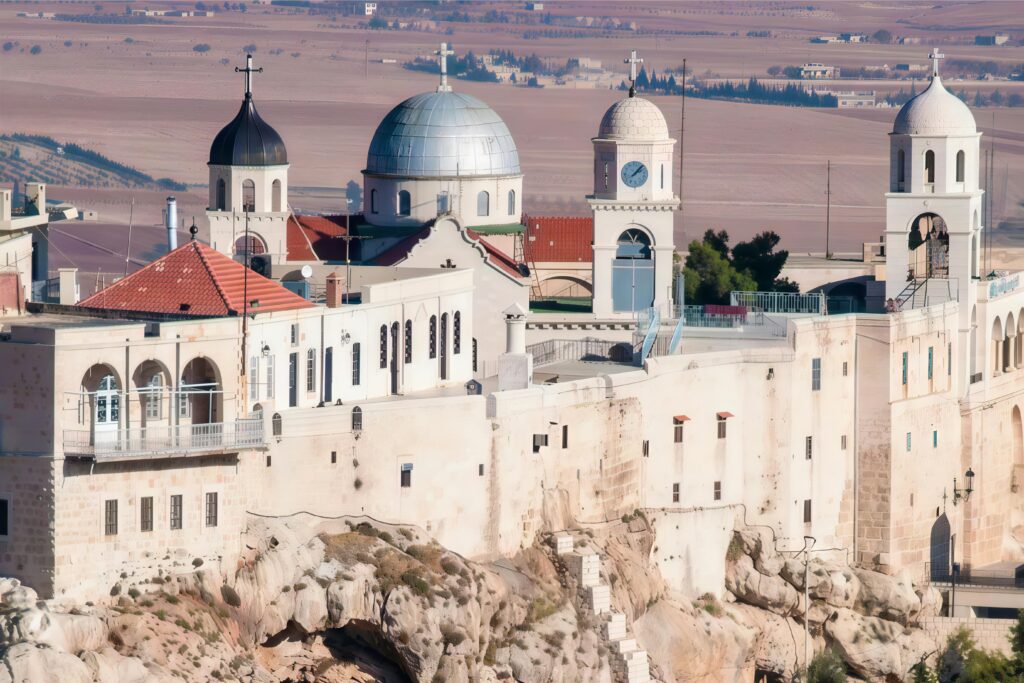
Restoring heritage sites (e.g. Palmyra, Crac des Chevaliers, the Old City of Aleppo) is both urgent and delicate — many landmarks were damaged or looted during conflicts. Conservation requires not just capital, but technical skill, international cooperation, artifact repatriation, and trust-building with global heritage institutions.
Syria’s ability to deliver on large-scale tourism projects depends on rebuilding basic infrastructure (power, water, transport), ensuring security, and rehabilitating the hospitality workforce.
Sanctions, reputational risk, and investor interest
Many foreign investors have historically shunned Syria because of sanctions, legal risk, and political instability. Easing sanctions or securing carve-outs will likely be prerequisites for large-scale foreign investment flows. Investors will examine stability, rule of law, property rights, and exit options carefully.
Furthermore, reputational risk is significant: investors must consider the possibility of renewed conflict, regime rollback, or renewed international condemnation. Some deals may favor investors from nearby Arab states or ones more willing to engage in “frontier” risk environments.
Strategic emphasis: heritage, nature, and diversification
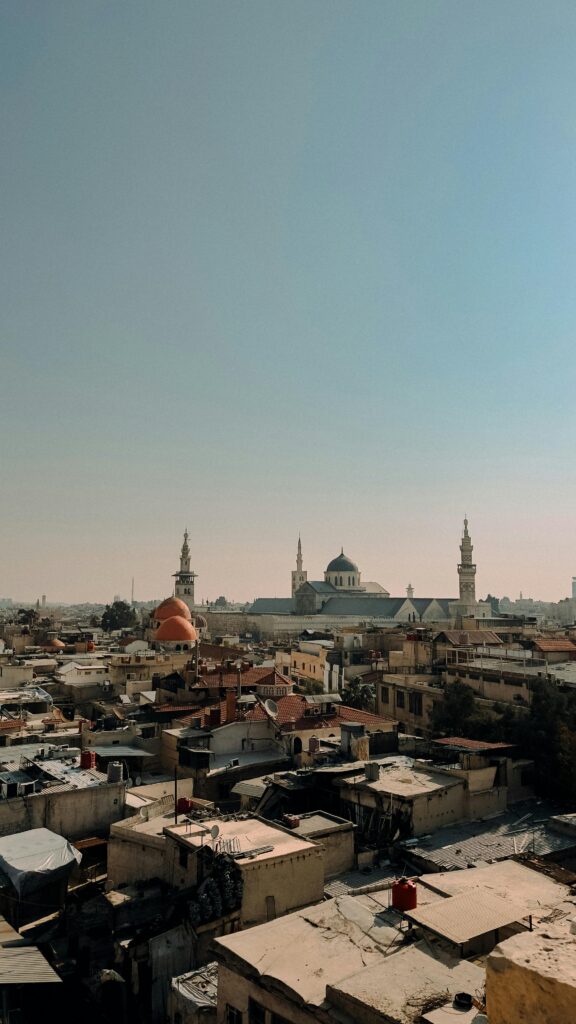
Syria has deep historical and cultural assets: Roman-era ruins, Crusader castles, Ottoman-era architecture, medieval Islamic and Christian sites, and diverse landscapes (Desert, Mediterranean coast, mountains). The government seems intent on restoring heritage tourism while also developing beach and resort tourism, entertainment complexes, and resort towns.
Some commentary suggests Syria is looking to emulate regional models like Saudi Arabia’s AlUla — combining economic development, heritage preservation, and sustainable tourism frameworks.
To reduce dependency on a few “tourist hotspots,” the government is reportedly seeking to distribute projects across governorates, building in port cities, coastal zones (e.g. Latakia), and lesser-known interior regions.
Institutional reforms, regulation, and incentives
Syria’s Tourism Ministry is reportedly working in coordination with the Syrian Investment Authority to streamline investment procedures, create investor service centers, and draft an investment guide with incentives and exemptions.
Government officials have mentioned that projects will be screened not just for tourism potential, but for economic viability and long-term returns. Some agreements with Saudi partners are said to be under way, and foreign participation is being actively solicited.
Another institutional development is the creation of a Tourist Police Department under the Ministry of Interior (as of May 2025). This force is tasked with safeguarding tourist areas, monitoring quality of services, and ensuring visitor security.
Challenges for domestic tourism players
While state-level deals attract headlines, many local tourism offices are struggling. Reports suggest that numerous travel agencies and tourism offices are on the brink of closure, having lost their prior roles (e.g. organizing pilgrimages or foreign visas) under the old regime. Because the revival is not yet in full force, many cannot sustain operations despite being burdened with regulatory requirements.
Thus, state-level deals need to be matched with bottom-up support: capacity building, micro-entrepreneur incentives, training, restoration of local networks, and policy clarity.
Macro‑economic headwinds
Syria still faces overarching economic fragility: inflation, currency instability, weak public finances, debt burdens, and food security challenges. A 2025 hunger crisis has been reported in parts of the country, illustrating that basic needs for many citizens are not being met.
If investments in tourism succeed, they must navigate this precarious environment and generate inclusive growth. Otherwise, the gains may be uneven or unsustainable.
Possible Scenarios: Risks, Upsides, and What Could Happen
- Optimistic (Best-case)
- Effective restoration of heritage sites, hotel clusters, and entertainment zones.
- Tourism begins to return (regional visitors, diaspora, cultural and pilgrimage tourism).
- Revenues help diversify the economy, create jobs, and strengthen the social contract between citizens and the new government.
- Foreign investment flows expand, and Syria re-enters some global tourism circuits.
- Moderate (Mixed outcome)
- Select flagship projects get built but many MoUs remain on paper.
- Tourism returns slowly, mainly from nearby countries and regional markets.
- Infrastructure bottlenecks, local distrust, or security lapses limit scale.
- Some local businesses benefit, but many remain excluded or under-resourced.
- Pessimistic (Limited success)
- Political instability, renewed conflict, or external shocks derail many projects.
- Heritage restoration is slow; investor pullouts happen.
- Tourism returns remain marginal; local debt and public finances are strained.
- The mismatch between grand promises and material delivery undermines legitimacy.
To tilt toward the positive outcomes, Syria will need careful planning, risk management, phased implementation, engagement with local communities, transparency, and external partnerships (UNESCO, global heritage bodies, multilateral donors where permissible).
Frequently Asked Questions (FAQ)
Q: Did the Reuters headline say $15 billion?
No — the Reuters piece reported $1.5 billion in tourism investment contracts. Earlier, Syria had signed broader deals worth $14 billion in August for infrastructure, transport, and real estate.
Q: What kinds of projects are included in these tourism deals?
They include upgrading existing tourism facilities, building new hotels and resorts, entertainment and leisure complexes, and rehabilitating historical and cultural heritage sites across multiple governorates.
Q: Are foreign investors involved?
Yes — the deals reportedly involve Arab and foreign parties. Some projects are expected to involve Saudi partners. The government is actively courting foreign capital to help revive the sector.
Q: When were the prior large investment deals signed, and what were they for?
In August 2025, Syria signed 12 investment agreements totaling $14 billion. These covered infrastructure, transportation, and real estate, including building a new or expanded airport, a subway system, residential, and commercial developments.
Q: What is the Tourist Police Department?
As of May 2025, Syria established a Tourist Police force under the Ministry of Interior. Its role is to protect tourists, monitor service quality, and secure tourist areas and facilities.
Q: What are the main challenges to success?
Challenges include infrastructure deterioration, security risks, funding gaps, reputational and sanction-related risks, institutional weakness, and the gap between grand plans and ground-level capacity.
Q: Could tourism really help Syria’s economy?
Potentially yes — if tourism returns meaningfully, it can generate jobs, foreign currency revenue, investment spillovers, and economic diversification. But its impact depends heavily on scale, sustainability, and the ability to integrate local communities.
Q: Which parts of Syria might benefit most?
Governorates with historical, scenic, or coastal appeal (such as Damascus, Aleppo region, Latakia, Homs, Tartus) are likely focus areas. But governments aim to distribute projects more widely to reduce regional inequality.
Q: How soon might tourists begin returning in significant numbers?
That is uncertain. A cautious estimate would suggest initial restoration and boutique tourism returning in 1–3 years, with scale tourism rebuilding over 5–10 years — contingent on security, infrastructure, marketing, and investor confidence.
Q: Will Syria compete with other tourism destinations in the region?
Yes. Syria will need to offer compelling comparative advantages — rich history, diverse culture, lower prices — while ensuring quality, safety, and brand rehabilitation to compete with established regional destinations.
Sources Reuters

