
A tourism comeback after more than a decade of conflict
Syria is beginning to reappear on the international tourism map after years in which war, political instability and economic isolation made the country inaccessible to most ordinary travellers.
The change is visible in Damascus, where historic markets and traditional restaurants are welcoming more visitors, hotels are preparing for renewed demand and tour operators are once again organising trips to important cultural destinations.
The country’s appeal is easy to understand. Syria contains some of the Middle East’s most significant archaeological and architectural treasures, including ancient Roman cities, medieval castles, historic mosques, traditional markets and neighbourhoods shaped by centuries of cultural exchange.
The end of Bashar al-Assad’s government in December 2024 created new expectations for political and economic change. Since then, Syria’s transitional authorities have sought to reconnect the country with international markets, attract investment and encourage the return of visitors.
Tourism is an important part of that strategy because it can generate foreign currency, create employment and support businesses ranging from hotels and restaurants to transport operators, guides and traditional craftspeople.
However, the recovery remains fragile. Security threats continue, international travel advisories remain severe, and recent confusion over visa procedures has demonstrated how quickly government decisions can damage the confidence of visitors and tourism businesses.
Syria’s challenge is therefore not simply to attract tourists. It must convince them that visiting the country is possible, organised and safe enough to justify the journey.
1. Syria’s visitor numbers are rising sharply
The latest tourism figures suggest that interest in Syria is recovering.
According to figures released by the Syrian tourism authorities, the country received approximately 3.52 million visitors during the first half of 2026, compared with 1.67 million during the same period in 2025. That represents an increase of approximately 111%.
International arrivals have also grown substantially. Tourism Minister Mazen Al Salhani reported that non-Arab foreign tourist arrivals increased by approximately 448% during the first six months of 2026, reaching around 719,000.
Arab visitors increased by approximately 107%, while visits by Syrians living abroad rose by around 75%.
These figures require careful interpretation. The headline total includes different categories of visitors, particularly Syrians returning from abroad to visit relatives or reconnect with their homeland. It should not be interpreted as 3.52 million conventional international holidaymakers.
Nevertheless, the increase in foreign tourist arrivals is significant because it suggests that Syria is beginning to attract people who are visiting for its cultural, historical and leisure attractions rather than primarily for family reasons.
The distinction matters for the industry’s future.
Returning Syrians may stay with relatives and spend money differently from international tourists who book hotels, hire guides, visit restaurants and purchase organised travel experiences.
For the government, the next objective is to convert rising arrivals into longer stays, higher visitor spending, more employment and investment in tourism facilities.
2. Why tourists are interested in visiting Syria again
Syria offers a combination of historical attractions and cultural experiences that is difficult to replicate elsewhere in the region.
Its geographical position placed it at the centre of ancient trade routes and successive civilisations. Greek, Roman, Byzantine, Islamic and Ottoman influences have all left their mark on its architecture, religious institutions, food and traditions.
For travellers interested in history, the country offers an unusually rich collection of destinations.
Some visitors are also motivated by a desire to understand a country that has spent years in international headlines for reasons almost entirely unrelated to tourism.
The return of independent travel bloggers, photographers, journalists and specialist tour operators has helped introduce Syria to a new generation of potential visitors.
Social media has played an important role. Images of Damascus’s historic markets, traditional cafés, ancient buildings and coastal landscapes are circulating again, offering a different picture from the conflict-related coverage that dominated international reporting for years.
There is also a strong diaspora dimension. Syrians living in Europe, North America, the Gulf and other regions are returning to see relatives, visit their hometowns and reconnect with places they left behind.
For some, these journeys are deeply personal rather than conventional holidays.
The challenge for Syria is to turn this renewed interest into a broader tourism market without confusing increased visitor numbers with a fully recovered industry.
3. Damascus: The historic capital at the centre of the revival
Damascus is one of the world’s oldest continuously inhabited cities and remains the natural starting point for many visitors.
Its historic centre contains narrow streets, traditional houses, religious landmarks, markets and cafés that provide a distinctive introduction to Syrian culture.
The Old City is particularly important because it combines several layers of history within a relatively compact area.
Umayyad Mosque
The Umayyad Mosque is one of the most important religious and architectural landmarks in the Islamic world.
Built in the early eighth century on a site with earlier religious structures, it reflects the importance of Damascus during the Umayyad period.
Its architecture, courtyards and decorative features make it one of the city’s most significant cultural attractions.
Al-Hamidiyah Souq
The Al-Hamidiyah Souq is among Damascus’s best-known traditional markets.
Visitors can explore shops selling textiles, sweets, spices, souvenirs and locally produced goods. The market is also an important part of everyday commercial life, making it more than simply a tourist attraction.
Traditional Damascene houses
Historic courtyard houses offer another insight into the city’s architectural heritage.
Many feature decorative wooden interiors, fountains, gardens and elaborate stonework. Some have been converted into restaurants, guesthouses and cultural venues.
These places help visitors understand how traditional domestic life developed in Damascus.
The National Museum of Damascus
The National Museum contains archaeological collections covering different periods of Syrian history.
Its reopening and continued development are important for cultural tourism because museums provide context for visitors exploring archaeological sites across the country.
However, the condition and accessibility of cultural institutions will depend on ongoing restoration, conservation and security arrangements.
4. Aleppo: Rebuilding one of the Middle East’s historic trading cities
Aleppo is another major destination with enormous tourism potential.
Its historic centre was severely damaged during the civil war, including important buildings, traditional neighbourhoods and parts of its ancient market.
The city’s historic identity is closely connected to its position on regional trade routes linking the Mediterranean with Mesopotamia and beyond.
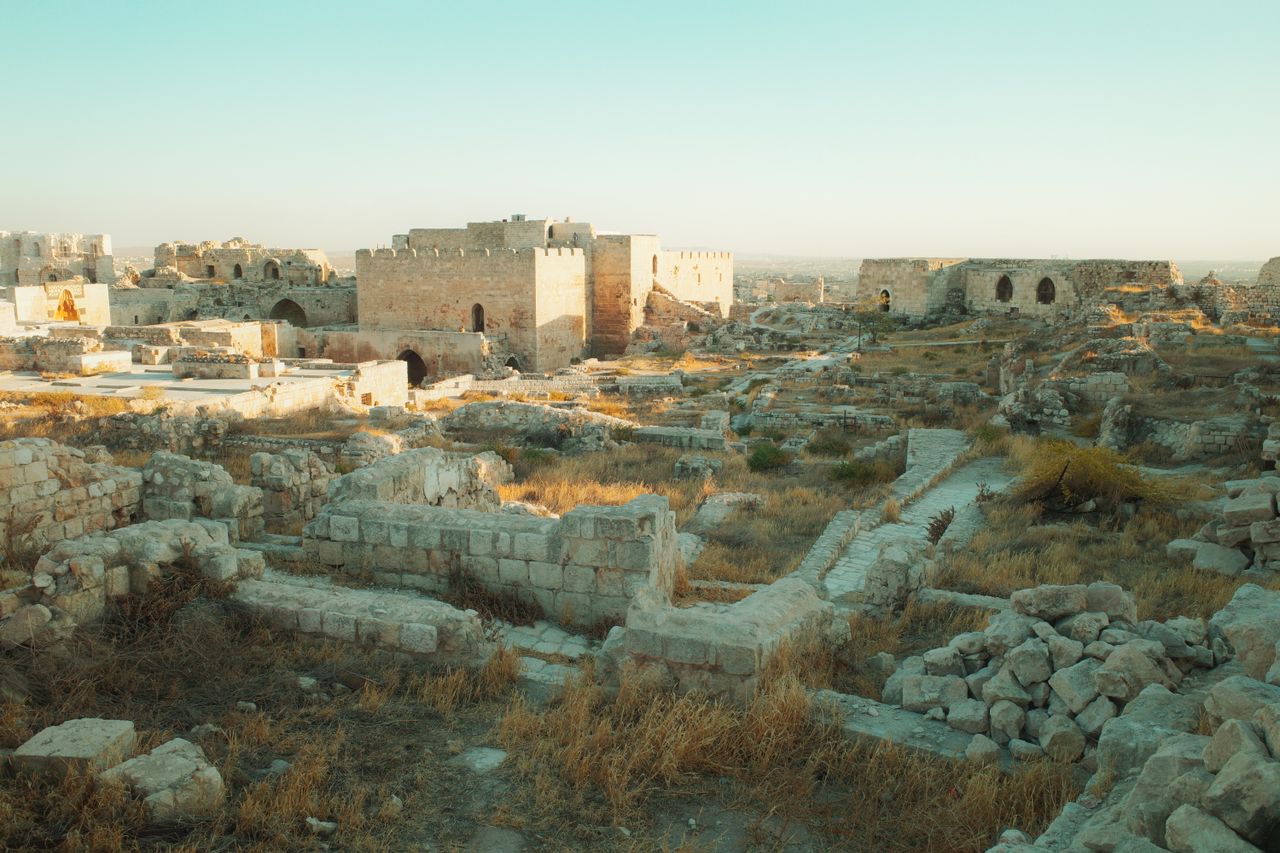
Among its most recognisable attractions is the Citadel of Aleppo, a monumental medieval fortress that dominates the city skyline.
The ancient souq, traditional caravanserais, historic religious buildings and old residential districts are also important parts of its cultural landscape.
Reconstruction in Aleppo is not simply a matter of repairing buildings for tourists. It involves restoring homes, public spaces, businesses and community infrastructure.
Heritage tourism can help generate income for restoration, but rebuilding must be carried out carefully. Poorly planned redevelopment could erase the architectural and social character that makes the city distinctive.
For visitors, Aleppo offers an opportunity to understand Syria’s commercial and cultural history. For residents, the more immediate priority is restoring a functioning city in which people can live and work.
5. Palmyra and Syria’s archaeological treasures
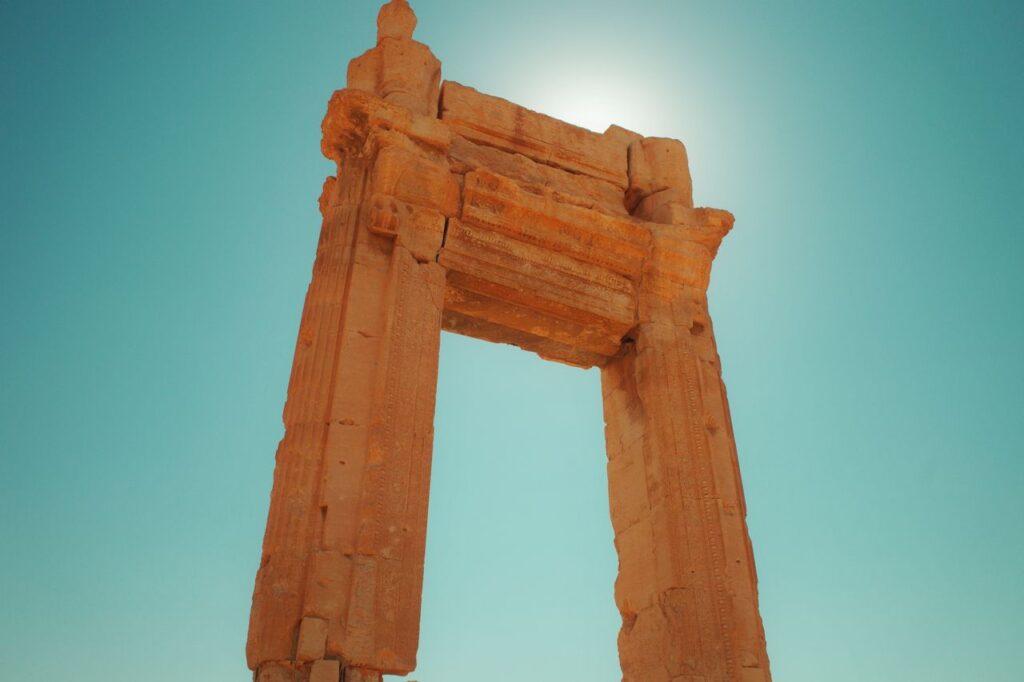
Few Syrian destinations have attracted as much international attention as Palmyra.
Located in the Syrian desert, Palmyra was once a major trading centre connecting the Roman world with Persia, India and other parts of Asia.
Its archaeological remains include monumental colonnades, temples, tombs and other structures that reveal the city’s historical importance.
The site suffered extensive destruction during the conflict, particularly under Islamic State control.
The damage to Palmyra became an international symbol of the threat facing cultural heritage during war.
Its eventual restoration and conservation will require extensive archaeological expertise, funding and international cooperation.
Other important archaeological destinations include:
- Bosra: Known for its exceptionally preserved Roman theatre and historic urban remains.
- Crac des Chevaliers: A major medieval Crusader castle and one of the region’s most impressive fortified structures.
- Ancient City of Damascus: A historic urban landscape with important religious and architectural monuments.
- Ancient Villages of Northern Syria: Archaeological settlements that provide evidence of early Christian communities and rural life.
- Ancient City of Aleppo: A historic trading centre with a remarkable architectural and cultural legacy.
All six of Syria’s UNESCO World Heritage properties remain on the World Heritage List in Danger as of November 2026.
This designation highlights the scale of the conservation challenge. It also means that international heritage organisations and Syrian authorities have an important role to play in protecting these sites.
6. Syria’s Mediterranean coast offers another tourism opportunity
Syria’s tourism ambitions extend beyond archaeological and cultural destinations.
The Mediterranean coastline offers beaches, coastal resorts, mountain scenery and opportunities for domestic and regional holidays.
Latakia and Tartus are among the country’s most important coastal areas.
Before the conflict, these destinations attracted Syrian families and visitors from neighbouring countries. Their potential remains considerable because they offer a different experience from the country’s historic cities.
Coastal tourism could support hotels, restaurants, transport operators, entertainment businesses and local suppliers.
International hotel groups have also expressed interest in Syria’s coastal and urban tourism opportunities.
However, investment alone will not guarantee success. The coastal economy needs reliable electricity, water supplies, roads, telecommunications and effective environmental management.
Uncontrolled resort development could also damage sensitive coastal landscapes and exclude local communities from the economic benefits.
A sustainable recovery should therefore balance new accommodation projects with environmental protection and opportunities for existing businesses.
7. Hotels and international investors are returning
Syria’s tourism revival is attracting interest from international hotel operators and regional property developers.
Reuters reported in October 2026 that companies including Accor, Wyndham Hotels and Resorts, Minor Hotels, Emaar, Arada and Eagle Hills were exploring opportunities in the country.
Some investors are examining major hotel and mixed-use developments in Damascus and along the coast.
The interest reflects the possibility that Syria could eventually become an important destination for cultural tourism, regional holidays and higher-end hospitality.
However, the country’s existing accommodation capacity is limited.
Tourism officials have indicated that Syria has fewer than 20,000 hotel rooms nationwide, with a large proportion classified as one- or two-star accommodation.
That creates a mismatch between rising visitor demand and the quality of services available to international travellers.
The government has reportedly introduced a programme to upgrade 332 lower-rated hotels containing approximately 10,000 rooms.
Improving existing properties may be faster and more practical than relying entirely on new luxury developments.
Visitors need more than attractive hotel lobbies. They require reliable water and electricity, clean rooms, functioning heating and air conditioning, internet access, dependable transport and clear booking arrangements.
For investors, the potential market is significant, but the risks are equally substantial.
Political uncertainty, security conditions, financing difficulties, infrastructure weaknesses and the ability to repatriate profits will all influence investment decisions.
8. The visa controversy that exposed Syria’s administrative problems
One of the most damaging developments for Syria’s tourism recovery occurred in November 2026, when the government abruptly introduced new entry requirements for foreign visitors.
Reports emerged that travellers would need prior approval before arriving and would have to organise their trips through licensed tourism agencies or tour operators.
The changes reportedly affected travellers arriving by air and land, with some foreign visitors turned away at border crossings and Damascus International Airport.
The decision created confusion because it was not clearly communicated in advance.
Tour operators reported cancellations, disrupted itineraries and financial losses. Some travellers who had already booked flights and accommodation found themselves facing unexpected entry problems.
The restrictions were subsequently reversed following public criticism and intervention by senior government officials.
The episode demonstrated a serious problem: a tourism industry cannot function effectively when entry rules change suddenly and are not communicated consistently to airlines, border officials, travel agencies and visitors.
Visa policy is not merely an administrative detail. It affects bookings, insurance arrangements, flight planning and the willingness of international tour operators to sell a destination.
For a country trying to rebuild its international reputation, predictable procedures are essential.
Syria needs a clear and publicly accessible visa system, consistent instructions at every border crossing and sufficient advance notice whenever immigration rules change.
Without these improvements, the country risks discouraging precisely the travellers it is trying to attract.
9. Security remains the biggest obstacle to tourism recovery
Despite the return of visitors, Syria remains a dangerous destination.
The fall of the Assad government did not automatically end the country’s security problems.
Different parts of Syria continue to face varying levels of instability, armed activity, political tensions and the threat of terrorism.
Foreign governments continue to issue serious travel warnings.
As of November 26, 2026, the United Kingdom’s Foreign, Commonwealth and Development Office advises against all travel to Syria. Australia’s Smartraveller service also advises travellers not to visit, citing armed conflict, air strikes, terrorism, kidnapping and arbitrary detention. The United States maintains a Level 4: Do Not Travel advisory.
These warnings are not simply formalities.
The UK government has documented attacks in Damascus during 2026, including explosions near the Four Seasons hotel and the Ministry of Tourism in July, as well as an attack at a crowded café earlier that month.
The security situation can change quickly, and fighting or violence may occur without warning.
Other risks include:
- Terrorist attacks and kidnapping.
- Armed clashes and air strikes.
- Unexploded ordnance and landmines.
- Unpredictable road closures and checkpoints.
- Disruption to airports and international flights.
- Limited emergency and consular assistance.
- Risks associated with travelling near military or security facilities.
The situation can vary considerably between locations, but travellers should not assume that a popular hotel, tourist attraction or city centre is automatically safe.
The return of some tour groups does not mean that Syria has become a normal or low-risk holiday destination.
10. Infrastructure and payment systems still need major improvements
Tourism depends on a network of services that visitors often take for granted.
A traveller booking a hotel expects a functioning reservation system, reliable payment options, clear transport arrangements and access to basic services.
Syria is still rebuilding many of these systems.
Limited hotel booking infrastructure
Some hotels have limited online booking facilities or lack websites that provide reliable information in foreign languages.
This makes it harder for independent travellers and international travel agencies to compare accommodation and confirm reservations.
International payments
International payment systems have begun returning to Syria following changes in sanctions and financial restrictions.
Visa and Mastercard services resumed operations in the country in 2026, representing an important development for businesses and visitors.
However, the practical availability of card payments can still vary between establishments.
Travellers should not assume that every hotel, restaurant, shop or transport provider accepts international cards.
Electricity and telecommunications
Reliable electricity and internet access remain important challenges in parts of the country.
Hotels and tourism businesses need stable infrastructure to operate booking platforms, payment terminals, air-conditioning systems and digital customer services.
Transport connections
International flight services have expanded, but air connectivity remains vulnerable to regional tensions and security-related disruption.
Road transport can also be difficult because of poor maintenance, checkpoints and changing security conditions.
These limitations make it difficult to deliver the smooth travel experience that international tourists increasingly expect.
11. Reconnecting Syria with international airlines
Air connectivity is essential if Syria wants to attract visitors from Europe, Asia and the Gulf.
Damascus International Airport is once again handling international flights, while Aleppo has also seen renewed regional and international services.
Airlines serving or reconnecting with Syria during 2026 have included regional and international carriers such as Etihad Airways, Qatar Airways, flydubai, Air Arabia, Royal Jordanian and Turkish Airlines, although schedules and routes can change.
Improved connections can make it easier for tourists, business travellers, investors and members of the Syrian diaspora to visit.
They also help tourism businesses organise group tours and package holidays.
However, airline decisions are heavily influenced by security assessments, insurance costs, airspace restrictions and demand.
A temporary escalation in regional conflict can result in cancelled flights or sudden changes to routes.
Syria therefore needs more than an increase in airline announcements. It needs stable operating conditions and dependable airport services.
12. The economic importance of tourism for Syria’s reconstruction
Tourism could become an important contributor to Syria’s economic recovery.
The industry supports a wide range of businesses, including accommodation providers, restaurants, cafés, transport operators, tour guides, museums, travel agencies and traditional craft producers.
It also creates opportunities for smaller businesses that may not require large amounts of capital.
A family-run restaurant in Damascus, a local guide in Aleppo or a traditional craft shop near a historic attraction can benefit directly from visitors.
Tourism also brings foreign currency into the economy, which is particularly valuable for a country seeking to restore trade, investment and financial connections.
The World Bank estimated in October 2025 that Syria would require approximately $216 billion to rebuild the damage caused by the conflict.
Tourism cannot finance reconstruction on that scale, but it can contribute to economic activity and support communities whose livelihoods were damaged by years of instability.
The benefits depend on how tourism income is distributed.
If investment is concentrated in a small number of luxury developments, local businesses may receive only limited benefits.
A more inclusive strategy would encourage local suppliers, independent accommodation providers, restaurants, craftspeople and community-based tourism initiatives to participate in the recovery.
13. Can Syria become a major Mediterranean tourism destination by 2035?
Syrian tourism officials have expressed ambitions to make the country one of the Mediterranean’s leading holiday destinations by 2035.
The strategy includes attracting hotel investment, restoring historic sites, improving transport connections and developing the country’s coastal tourism potential.
The ambition is understandable. Syria has a combination of historical and natural attractions that could appeal to cultural travellers, regional holidaymakers and specialist tour groups.
However, the 2035 target is a long-term aspiration rather than a guaranteed outcome.
The country faces substantial obstacles that cannot be resolved through marketing alone.
First, security must improve sufficiently for international governments and travel insurers to reconsider their risk assessments.
Second, infrastructure must be restored so that visitors can travel, stay and make payments without unnecessary difficulties.
Third, the government must establish predictable rules for tourism operators, investors and travellers.
Fourth, heritage restoration must be undertaken professionally to protect the authenticity of historic sites.
Finally, tourism development must provide meaningful benefits for local communities.
A destination cannot become internationally competitive if visitors are attracted by its history but encounter unreliable services, confusing regulations and serious security concerns.
14. Why Syria’s cultural heritage must be protected
Syria’s historic sites are not simply commercial tourism assets.
They are part of the country’s collective identity and contain evidence of human history spanning thousands of years.
The conflict damaged buildings, archaeological collections, religious monuments and entire historic neighbourhoods.
The destruction of Palmyra became one of the most widely recognised examples of cultural heritage being targeted during modern conflict.
Restoration must therefore be approached carefully.
Reconstructing a monument without sufficient archaeological documentation can risk replacing historical authenticity with a modern imitation.
International organisations, conservation specialists and local communities have important roles to play in determining what should be repaired, how it should be restored and which sites require urgent protection.
UNESCO’s continued monitoring of Syria’s World Heritage properties is important because heritage conservation requires long-term planning rather than short-term tourism promotion.
Tourism can help finance conservation, but commercial development should never take priority over the preservation of historically significant places.
15. What responsible tourism could look like in a recovering Syria
If Syria eventually becomes suitable for wider international tourism, responsible travel will be especially important.
Visitors should understand that they are entering a country still dealing with the consequences of war and displacement.
Tourism should support local communities rather than treating historic neighbourhoods as entertainment spaces disconnected from everyday life.
A responsible tourism strategy could include:
Employing local guides: Local professionals can provide historical context and help ensure that tourism income stays within communities.
Supporting independent businesses: Visitors can contribute to neighbourhood economies by using local restaurants, shops and accommodation providers.
Respecting religious and cultural traditions: Syria contains diverse religious communities and traditions. Visitors should dress and behave appropriately at religious sites.
Protecting archaeological sites: Travellers should avoid touching fragile structures, removing objects or disturbing archaeological remains.
Supporting local craftspeople: Traditional products can provide income for artisans and help preserve cultural skills.
Avoiding exploitative tourism: Communities affected by war and displacement should not be treated as attractions for photographs or entertainment.
The best tourism model would help Syrians rebuild their livelihoods while allowing visitors to experience the country’s history and culture with respect.
16. Should international tourists visit Syria now?
This question requires a clear distinction between tourism interest and travel safety.
There is growing evidence that visitors are returning, that tour operators are active and that the tourism industry is beginning to rebuild.
However, the existence of organised tours and reopened hotels does not mean that travel is safe.
As of November 26, 2026, several major foreign governments continue to advise against all travel to Syria.
Travellers should read their own government’s latest official advisory before making any plans. They should also understand that travelling against government advice may invalidate travel insurance and leave them without meaningful consular assistance.
Anyone already in Syria should monitor security developments, follow local instructions and understand that routes, airports and border crossings can become unavailable at short notice.
For most ordinary holidaymakers, postponing a leisure trip until security conditions improve is the more prudent decision.
Syria’s cultural attractions are likely to remain important tourism assets for many years. There is no need to rush into a visit simply because visitor numbers are increasing.
Conclusion: Syria’s tourism revival depends on trust, not just attractions
Syria’s return to the tourism conversation is an encouraging development for a country that has endured years of conflict and economic isolation.
The growth in visitor numbers, renewed airline connections, hotel investment interest and reopening of tourism businesses suggest that the country has an opportunity to rebuild an important part of its economy.
Its historical attractions remain extraordinary. Damascus, Aleppo, Palmyra, Bosra and the Mediterranean coast offer experiences that could eventually attract travellers from around the world.
But the recent visa controversy demonstrates how fragile the recovery remains. A country cannot promote itself as an international destination while leaving visitors uncertain about whether they can enter, how they can travel or whether their plans will be disrupted by sudden policy changes.
Security, infrastructure, clear regulations and professional tourism services must develop alongside marketing and investment.
The ultimate measure of success should not be the number of people crossing Syria’s borders. It should be whether tourism creates stable jobs, supports local communities, protects cultural heritage and provides visitors with a reliable experience.
Syria has the history and attractions to become an important destination again. Whether it can achieve that ambition will depend on the stability, planning and trust it builds in the years ahead.
Frequently Asked Questions (FAQs)
1. Are tourists returning to Syria in 2026?
Yes. Syria recorded approximately 3.52 million visitors during the first half of 2026, an increase of around 111% compared with the same period in 2025. However, the total includes Syrians living abroad who returned to visit family, as well as Arab and international visitors. The number of conventional foreign holidaymakers is therefore smaller than the headline total suggests.
2. Is Syria safe for tourists to visit in 2026?
Syria remains a high-risk destination. As of November 26, 2026, the UK advises against all travel, Australia advises travellers not to visit, and the United States maintains its Level 4: Do Not Travel warning. Risks include terrorism, armed conflict, kidnapping, air strikes, unexploded weapons and sudden travel disruption. Visitors should consult their government’s latest travel advice before considering any journey.
3. What are the best places to visit in Syria?
Syria has several important historical and cultural destinations, including Damascus, Aleppo, Palmyra, Bosra and Crac des Chevaliers. The Mediterranean coastal areas around Latakia and Tartus also have tourism potential. However, accessibility and security conditions vary, and the existence of a major attraction does not mean it is currently safe to visit.
4. Do foreign tourists need a visa to enter Syria?
Foreign visitors should check the latest entry requirements for their nationality before travelling. Syria experienced a sudden change and subsequent reversal of visa and prior-approval arrangements in November 2026, creating confusion at airports and land borders. Entry rules can differ by nationality and may change, so travellers should obtain confirmation from the relevant Syrian authorities or a reliable official source before departure.
5. Can tourism help rebuild Syria’s economy?
Yes. Tourism can create employment, generate foreign currency and support hotels, restaurants, transport companies, local guides, craftspeople and cultural institutions. It can also provide income for heritage conservation and local businesses. However, tourism alone cannot finance Syria’s reconstruction. Long-term recovery will require improved security, infrastructure, investment, predictable regulations and effective protection of cultural heritage.
Sources The Economist