

The launch of TranslateGemma, Google’s new suite of open translation models, signals more than just another improvement in machine translation. It reflects a broader shift in how language technology is being built, shared, and governed—especially at a time when multilingual access, AI transparency, and digital sovereignty are becoming global priorities.
While the original announcement focuses on availability and performance, the deeper story is about who controls translation technology, how it can be adapted, and which languages get to participate in the AI future.

1. What TranslateGemma actually is — beyond the headline
TranslateGemma is a family of open-weight neural machine translation models built on Google’s Gemma architecture. Unlike many commercial translation systems that are locked behind APIs, TranslateGemma models can be:
- Downloaded and run locally
- Fine-tuned for specific domains or languages
- Audited, evaluated, and adapted by developers and researchers
This makes TranslateGemma fundamentally different from consumer-facing tools like Google Translate. It is designed for builders, not end users.
2. Why “open” matters in translation AI
For years, machine translation has been dominated by closed systems operated by a handful of large companies. While these systems are powerful, they come with trade-offs:
- Limited transparency about training data
- Little control over model behavior
- Dependence on external APIs and pricing
- Difficulty supporting niche or low-resource languages
Open models like TranslateGemma change this dynamic.
They allow:
- Governments to deploy translation without sending data to third parties
- Researchers to study bias, error patterns, and linguistic behavior
- Developers to adapt models for legal, medical, or technical language
- Communities to improve coverage for underrepresented languages
In short, openness shifts translation from a service to an infrastructure.
3. The timing: why TranslateGemma arrives now
TranslateGemma is emerging at a moment when several pressures converge:
A) Explosion of multilingual content
Global platforms generate vast amounts of multilingual text—far more than human translators alone can handle.
B) Demand for data sovereignty
Institutions and companies increasingly want translation tools that can run on-premise, especially for sensitive data.
C) AI regulation and accountability
Governments are demanding explainability, auditability, and risk assessment—much harder with black-box systems.
D) Low-resource language urgency
Many languages still lack adequate digital representation, and open models are one of the few scalable ways to address this gap.
TranslateGemma fits neatly into all four trends.
4. What the original announcement didn’t emphasize: trade-offs
Open translation models are powerful—but not magic.
Some important realities include:
- Quality varies by language pair: High-resource languages perform better than low-resource ones.
- Fine-tuning is essential: Out-of-the-box models may struggle with domain-specific text.
- Deployment requires expertise: Running models locally demands infrastructure and ML knowledge.
- Bias doesn’t disappear: Open access enables scrutiny, but doesn’t automatically eliminate bias.
TranslateGemma lowers barriers—but responsibility still lies with those who deploy it.
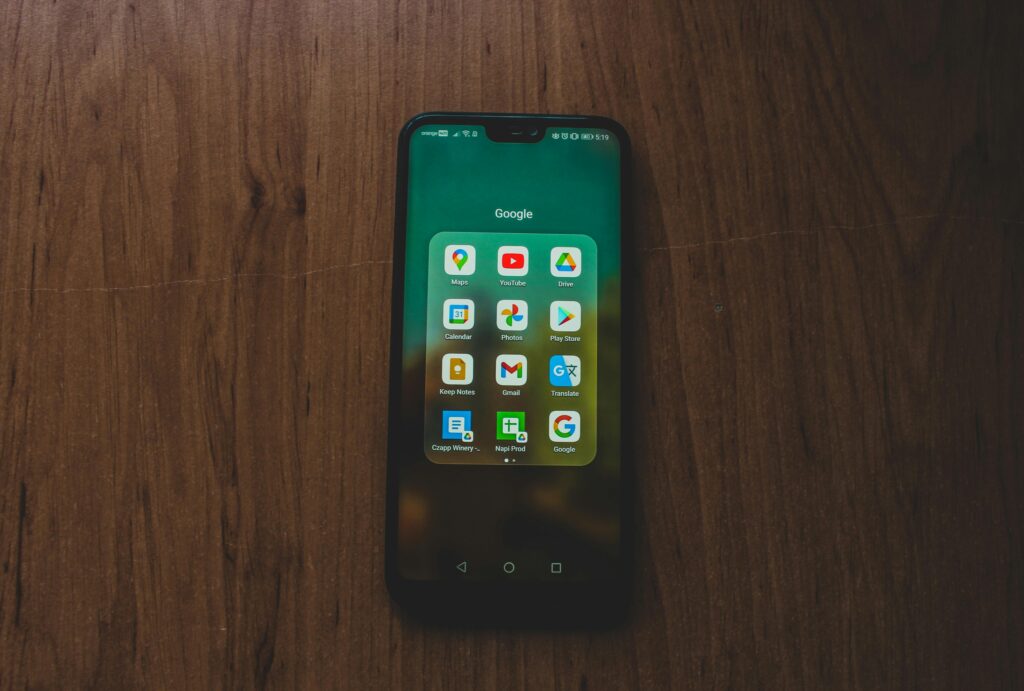
5. How TranslateGemma fits into the broader Gemma ecosystem
TranslateGemma is part of Google’s growing Gemma family, which emphasizes:
- Smaller, efficient models
- Developer-focused use cases
- Open weights and permissive usage
- Compatibility with common ML tooling
This reflects a strategic acknowledgment: not every AI workload belongs in a massive, centralized model. Translation, in particular, benefits from specialization, locality, and adaptability.
6. Implications for low-resource and regional languages
One of the most promising aspects of TranslateGemma is its potential impact on languages that are often overlooked by commercial translation services.
Open models allow:
- Universities to train region-specific variants
- NGOs to localize humanitarian content
- Governments to support minority languages digitally
- Communities to contribute evaluation data and improvements
This doesn’t solve linguistic inequality overnight—but it gives communities tools they previously lacked.
7. Translation models as civic infrastructure
Translation is no longer just a convenience feature. It underpins:
- Access to public services
- Cross-border research
- International law and governance
- Education and cultural preservation
By releasing open translation models, Google is indirectly contributing to translation becoming public digital infrastructure, not just a private service.
That shift has long-term consequences for democracy, inclusion, and global collaboration.
8. Who should consider using TranslateGemma?
TranslateGemma is especially relevant for:
- Developers building multilingual apps
- Enterprises with strict data privacy needs
- Governments and public institutions
- Researchers studying language, bias, or AI safety
- NGOs and nonprofits working across languages
It is less suitable for casual users who just want instant translation without setup.
Conclusion: Translation is becoming a shared responsibility
TranslateGemma represents a philosophical change as much as a technical one.
By opening translation models, Google is acknowledging that no single company should define how languages are processed, prioritized, or preserved in the digital age. The future of translation AI will be shaped not only by scale, but by participation.
The real impact of TranslateGemma will depend on how widely—and how responsibly—it is used.
Frequently Asked Questions (FAQ)
1. What is TranslateGemma?
TranslateGemma is a suite of open-weight neural machine translation models built on Google’s Gemma architecture for developers and researchers.
2. How is it different from Google Translate?
Google Translate is a consumer service accessed via apps and APIs. TranslateGemma is a developer-facing model that can be run, modified, and fine-tuned independently.
3. Is TranslateGemma free to use?
The models are open-weight under permissive terms, but users are responsible for infrastructure and deployment costs.
4. Can TranslateGemma be used offline?
Yes. One major advantage is the ability to run models locally without sending data to external servers.
5. Does it support all languages?
It supports many languages, but quality varies. High-resource languages perform better than low-resource ones.
6. Can I fine-tune it for my own domain?
Yes. TranslateGemma is designed to be adapted for specific industries or terminology.
7. Is it suitable for legal or medical translation?
It can assist, but human oversight is essential. Automated translation should not be used alone for high-stakes content.
8. How does it handle bias?
Bias can still exist. Openness allows evaluation and mitigation, but responsibility lies with implementers.
9. Who benefits most from open translation models?
Developers, researchers, governments, NGOs, and language communities—especially those needing control and customization.
10. Does this mean human translators will be replaced?
No. These models are tools that can augment human translators, not replace the judgment and accountability humans provide.

Sources Google

