
The Dead Sea — known for its salty waters, floating bathers and dramatic desert scenery — was recently ranked as the second-worst tourist destination out of 101 well-known sites worldwide. This ranking has raised eyebrows, not only among travelers but among tourism officials in the region, who are asking: what’s going on? Is the Dead Sea really that bad, or is this simply a reflection of some deeper problems and mismatched expectations?
Here’s a deeper dive into the ranking, the underlying causes, and what tourists should know before planning a visit — along with details that the original coverage missed.
What happened & what the ranking says
A survey by the review-analytics firm looked at negative commentary about tourist-destinations. Among the many places globally, the Dead Sea emerged near the top of “most disappointing” destinations. Issues cited ranged from high cost, over-commercialisation, overcrowding, and a sense that the experience didn’t live up to the hype.
In other words: it’s not necessarily that the place is uninteresting, but that what visitors expected vs. what they got had a wide gap.
Why the Dead Sea is widely visited (and has great credentials)
Before we judge its shortcomings, let’s recognise the major draws it brings:
- It is the lowest land point on Earth (about -440 meters below sea level).
- The water’s salinity is extraordinarily high (~30-34 %) which gives a unique floating experience.
- The area holds religious, historical and geological significance: ancient sites like Masada and archaeological finds around the shore.
- It has wellness and spa appeal: mineral-rich muds, “healing” salts, resort-style amenities.
- For many years it has been a bucket-list item.
So on paper, the setting is spectacular. All the more reason to ask: why the big disappointment?
What the ranking is really pointing to: major issues behind the scenes
Here are some of the deeper problems and structural issues that likely contributed — and that were not fully covered in the original article.
1. Environmental & structural degradation
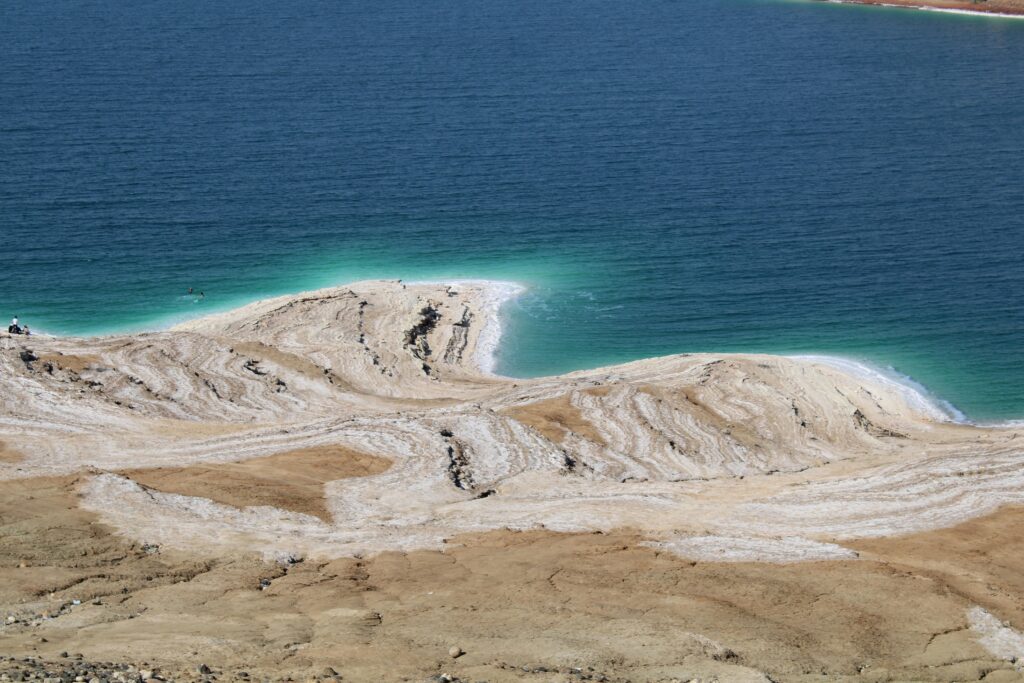
The Dead Sea is shrinking at a dramatic rate. Its water level is dropping by about one metre or more each year. The inflow from the Jordan River and tributaries has been greatly reduced, while evaporation remains high.
The shoreline is retreating and the landscape is changing visibly. Large numbers of sinkholes have developed as the salt layers under the ground dissolve and the land collapses — thousands of these exist in some areas.
These changes impact how the site looks, how accessible the water is, and how safe or comfortable it is to visit.
2. Infrastructure, tourism management and development strains
Rapid resort and hotel development have taken place along the Dead Sea’s shores, on both the Israeli and Jordanian sides. Local studies show that tourism development is occurring in places where the geology is unstable and where water level decline is changing access.
Some beaches and resort areas now require added cost or effort (e.g., walking further to reach the water). Parts of the shoreline are no longer the pristine “floating” shore that many visitors expect.
3. A mismatch between expectation and reality
Many visitors expect a magical, other-worldly experience: effortless floating, spa-style wellness, great views, relaxing environment. But for some:
- Resorts can feel expensive.
- Some facilities feel old or overly commercialised.
- Some beaches require extra fees, or the best “floating” spots are crowded.
- Access and amenities (parking, paths, changing rooms) may not match luxury expectations.
- Because the region is also involved in mineral-extraction and industrial uses, parts of the shore are less “scenic” than the postcard image.
4. The geopolitical and regional context
The Dead Sea region spans Israel, Jordan and the West Bank — with all the complexity of borders, governance, and regional geopolitics. That can affect costs, accessibility, transport, and the streamlined visitor experience.
In some visitor reviews, the sense of “this is hard to get to, or there are extra hassles” adds to a feeling of “not worth it”.
5. Under-reported visitor-experience metrics
While the ranking focused on negative words in reviews, what is less discussed are other metrics: repeated visits, day-trip vs stay-overnight ratios, local vs international visitors, value for money, or how many visitors leave feeling they would return. These deeper measures might reveal that the experience is less repeatable.
Why the ranking doesn’t tell the whole story
- Just because the Dead Sea ranked high on “destination disappointment” doesn’t mean it has no value. Many visitors still love it.
- Rankings based on review negativity can be skewed by high expectations and strong initial promises — high-profile destinations often get more “letdown” comments because the expectation is larger.
- Some of the issues (declining water levels, sinkholes, commercialisation) are mid-term problems; the destination may still be worth visiting, especially if you go with realistic expectations.
- Many of the problems are being addressed by governments and tourism bodies (see “what’s being done” below).
What’s being done to improve the situation
- There are plans (and some under-way projects) to stabilise the water level — including ideas such as a Red Sea–Dead Sea water-conveyance project, desalination brine transfer, or managed aquifer recharge.
- Tourism boards (especially in Jordan) are re-branding the region beyond just the shore: promoting hiking, adventure, culture, history, nature in the broader Jordan Valley to reduce reliance on the beach-resort model.
- Infrastructure upgrades: better access roads, parking, beach amenities, changing rooms, safety signage around sinkhole-risks.
- More emphasis on sustainable tourism: limiting over-development along sensitive shores, monitoring geology and shore-erosion, and balancing resort growth with conservation.
- Marketing aimed at setting realistic expectations: “floating experience is fun, but you’ll be sharing the water, some parts are industrial… here’s how to pick a good beach.”
What this means for you if you’re planning to visit
- Go in with realistic expectations: yes, you’ll float. But amenities may cost extra, the beach may be busier than ideal, and the surroundings may show industrial or erosion signs.
- Choose the right time of year: summer heat is intense; shoulder seasons may be more comfortable.
- Pick your shore and beach carefully: Israeli side vs Jordanian side differ in how they’ve developed and in cost/comfort.
- Consider staying overnight rather than just doing a quick day-trip — the full experience (sunset, early morning light) is richer.
- Add other nearby attractions: the Dead Sea works best when combined with visits to places like Masada, the Judean Desert, or Jordan’s Wadi Rum and Petra.
- Be aware of safety and infrastructure issues: sinkholes, rapidly changing shoreline, exposure to heat, limited public transport in some areas.
- Value vs cost: some guests feel they paid for a “floating selfie” but got a more crowded, less luxurious experience. If you’re paying resort-rates, check reviews carefully.
Frequently Asked Questions
Q: Why was the Dead Sea ranked so poorly?
A: The ranking is based on negative sentiments in visitor reviews — complaints about cost, crowdedness, high expectations vs actual experience, and some infrastructure or accessibility issues. It reflects visitor disappointment more than inherent danger.
Q: Is it still worth visiting the Dead Sea?
A: Yes — for many, the unique setting, floating experience and dramatic desert surroundings are memorable. But it’s worth visiting with the right mindset, realistic expectations, and choosing your beach/resort carefully.
Q: What’s wrong with the Dead Sea now (environmentally)?
A: Key problems include rapidly falling water levels (about 1 m per year), thousands of sinkholes forming around the shores, industrial and mineral-extraction operations altering the shoreline, and over-development of resorts in sensitive zones.
Q: Which side (Israel or Jordan) is better for visiting?
A: Both have advantages. The Israeli side tends to have more developed luxury resorts and amenities. The Jordanian side may offer fewer crowds and different resort styles. The choice depends on your travel itinerary, budget, and how much infrastructure/comfort you want.
Q: How can I avoid being disappointed by the Dead Sea trip?
A: Do your research: read recent guest reviews (especially about the beach area), check what’s included (beach access, changing rooms, towels, extra fees). Visit during a less busy time, combine with other attractions, stay overnight if possible, and go with the intention of a unique natural experience — not a full luxury resort.
Q: Is it safe to visit the Dead Sea now?
A: Generally yes, but be aware of natural hazards (sinkholes, rapidly receding shoreline), desert heat, and in some zones transport limitations. Check local travel advisories.
Q: Will things get worse (or better) at the Dead Sea?
A: If nothing changes, the situation could get worse: further water level decline, shore erosion, fewer “ideal” beaches. On the other hand, if restoration and tourism-management efforts succeed, conditions could improve — but access, cost and development may change.
Final Word
The ranking of the Dead Sea as one of the world’s “most disappointing” destinations is less about the place itself being worthless and more about the gap between high expectations and the on-the-ground reality. It’s still one of Earth’s most unique natural features — but it requires thoughtful planning, realistic expectations and awareness of its evolving condition.
Sources The Times of Israel

