
There is a quiet kind of literary madness at the heart of translation.
Nowhere is it more obvious than with Shakespeare.
You don’t just translate his words.
You translate rhythm, jokes, insults, metaphors, cultural memory, and sound patterns that were designed for a very specific moment in English history.
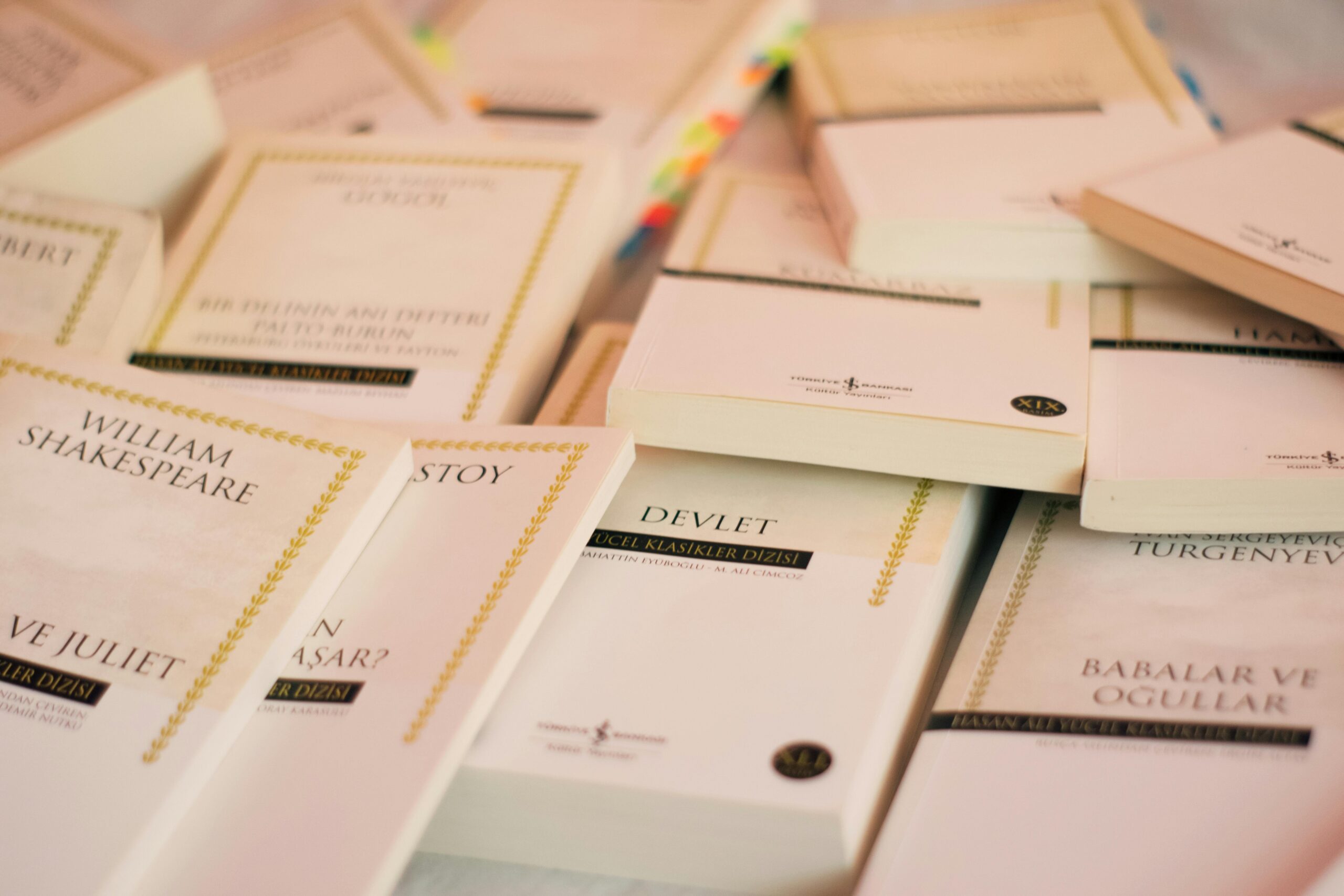
And yet — Shakespeare lives in over 100 languages today.
So the real question becomes:
If every word changes… is it still Shakespeare?
This is the central tension explored in Daniel Hahn’s If This Be Magic, a book that treats translation not as mechanical conversion, but as creative reinvention at the highest level.
🧠 The impossible problem: Shakespeare was built for English only
Shakespeare didn’t write “universal English.”
He wrote:
- Early modern English
- layered with slang, court language, and street speech
- full of puns that rely on pronunciation quirks
- structured in flexible iambic rhythms
- loaded with cultural references of Elizabethan England
Even in English, he is unstable.
So translators face a brutal dilemma:
Do you preserve form, or preserve meaning?
Because often, you cannot preserve both.
🔄 Translation is not copying — it is reconstruction
A major idea in modern translation studies is this:
Translation is not transfer. It is reconstruction.
With Shakespeare, this becomes extreme.
Take a joke:
- In English, it might rely on a pun like “sun/son”
- In another language, that pun may not exist at all
So translators must:
- replace the joke entirely
- invent a new joke with the same emotional effect
- or abandon wordplay and preserve tone instead
This is why some translators say:
“We don’t translate Shakespeare. We re-stage him in another language.”
🎤 Rhythm, rhyme, and the sound problem
Shakespeare’s power is not only meaning — it is music.
His writing depends on:
- iambic pentameter
- internal rhyme
- alliteration
- pauses and stress patterns
But languages differ dramatically:
- some are syllable-timed
- others stress-timed
- some don’t naturally support blank verse
So translators often face a choice:
- preserve meaning but lose rhythm
- preserve rhythm but shift meaning
- or rebuild both from scratch
In some cases, entire passages are rewritten just to “feel” right when spoken aloud.
Because Shakespeare was meant to be heard, not just read.
🌍 Culture is the real translation barrier
One of the most overlooked challenges is cultural mismatch.
For example:
- “summer’s day” in England = pleasant imagery
- “summer” in tropical regions = heat, discomfort, monsoon context
So a direct translation can actually distort meaning.
Similarly:
- honor systems
- marriage metaphors
- religious references
- social hierarchy jokes
All may need reinterpretation.
This is why translators often become cultural editors, not just language converters.
🎭 When translators become co-authors
Modern Shakespeare translation increasingly treats translators as:
creative equals, not invisible technicians
They must decide:
- Should Hamlet be more concise or more verbose in another language?
- Should jokes be modernized?
- Should characters be renamed for clarity?
In some adaptations:
- Hamlet becomes longer in Japanese due to grammatical expansion
- names are altered to avoid unintended meanings in local languages
- slang equivalents are used to preserve emotional tone
This creates a controversial idea:
every translation is a version of Shakespeare, not the version
🧩 The “faithfulness” myth is breaking down
Older translation theory valued “literal accuracy.”
But modern translators increasingly reject this.
Why?
Because literal translation often produces:
- broken rhythm
- lost humor
- cultural confusion
- emotionally flat dialogue
Instead, many translators aim for:
“functional equivalence” — preserving effect, not structure
So “faithful translation” now means:
- faithful to emotional impact
- faithful to dramatic tension
- faithful to audience experience
Not word-for-word accuracy.
🧬 Shakespeare survives because he adapts
Here is the paradox:
Shakespeare is often called “untranslatable.”
Yet he is also:
- constantly translated
- endlessly adapted
- rewritten across cultures
Why?
Because his works are structurally flexible:
- they tolerate change
- they absorb reinterpretation
- they survive transformation
In a sense:
Shakespeare is not a fixed text. He is a system of possibilities.
🤖 The modern twist: AI translation and Shakespeare
Now a new layer is emerging.
Machine translation systems:
- prioritize statistical likelihood
- smooth out irregular phrasing
- flatten poetic ambiguity
This creates a danger:
Shakespeare becomes “too normal” in translation
AI struggles with:
- metaphor density
- double meanings
- rhythm-driven ambiguity
So human translators remain essential — not for grammar, but for artistry.
🧭 The philosophical question underneath everything
At the center of all this is a deeper question:
Is meaning in the words… or in the experience they create?
If a translated Hamlet:
- feels like Hamlet
- moves like Hamlet
- hurts like Hamlet
Does it matter if the words are different?
Daniel Hahn’s exploration leans toward a bold answer:
Shakespeare survives not by being preserved, but by being reimagined.
❓ FAQ: What readers most want to know
1. Why is Shakespeare so hard to translate?
Because his work relies on wordplay, rhythm, cultural references, and sound patterns that don’t directly exist in other languages.
2. Can Shakespeare be translated accurately?
Not fully. Translators must choose between accuracy, readability, rhythm, and emotional effect.
3. Is a translation still Shakespeare?
Philosophically, yes — if it preserves core dramatic and emotional structure. But it is also a reinterpretation.
4. What is the hardest part to translate?
Puns, idioms, and poetic rhythm are usually the most difficult elements.
5. Do translators rewrite Shakespeare?
Often yes. They adapt jokes, restructure lines, and sometimes change names to preserve meaning.
6. Will AI replace Shakespeare translators?
Unlikely. AI can translate language, but not reliably recreate poetic intent, humor, or cultural nuance.
🧭 Final thought
Translating Shakespeare is not about moving words across borders.
It is about rebuilding a storm of language in a completely different sky.
And every time it is done, something strange happens:
Shakespeare changes —
but he does not disappear.
He multiplies.
Across languages, across cultures, across centuries, he keeps being reborn — not as a fixed voice, but as a living argument between meaning and expression.
And maybe that is the real magic Daniel Hahn is pointing to:
Shakespeare was never meant to stay still in English.
Sources The Guardian

