
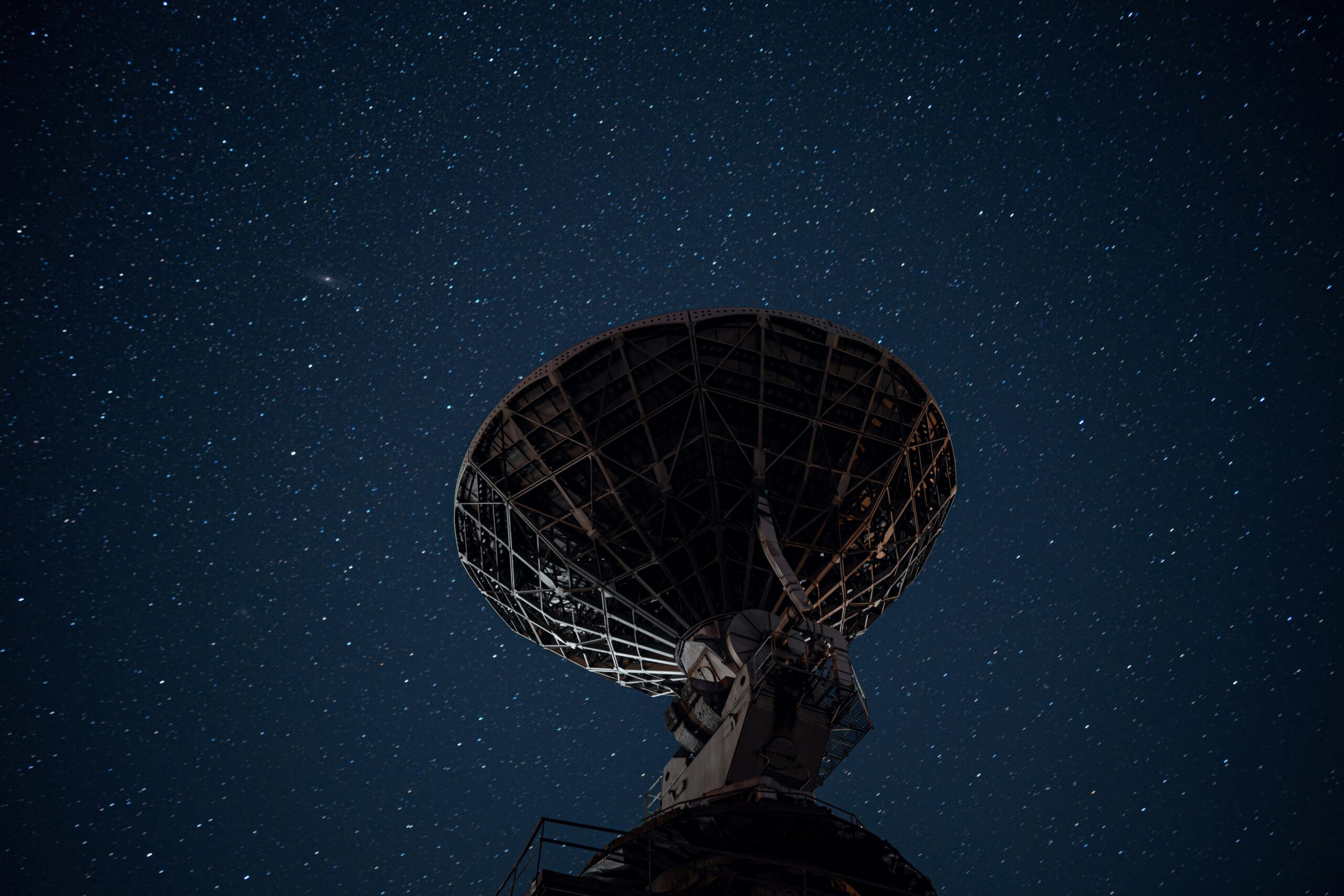
When the Voyager spacecraft launched in 1977, they were designed for exploration — to study the outer planets and then drift into interstellar space.
But attached to them was something far more poetic than scientific:
a golden phonograph record carrying the sounds, images, and languages of Earth.
It was not meant for us.
It was meant for whoever — or whatever — might find it someday.
The Voyager Golden Record remains one of humanity’s most ambitious cultural artifacts: a deliberate attempt to compress life on Earth into a single interstellar message.
🌍 What the Golden Record actually is
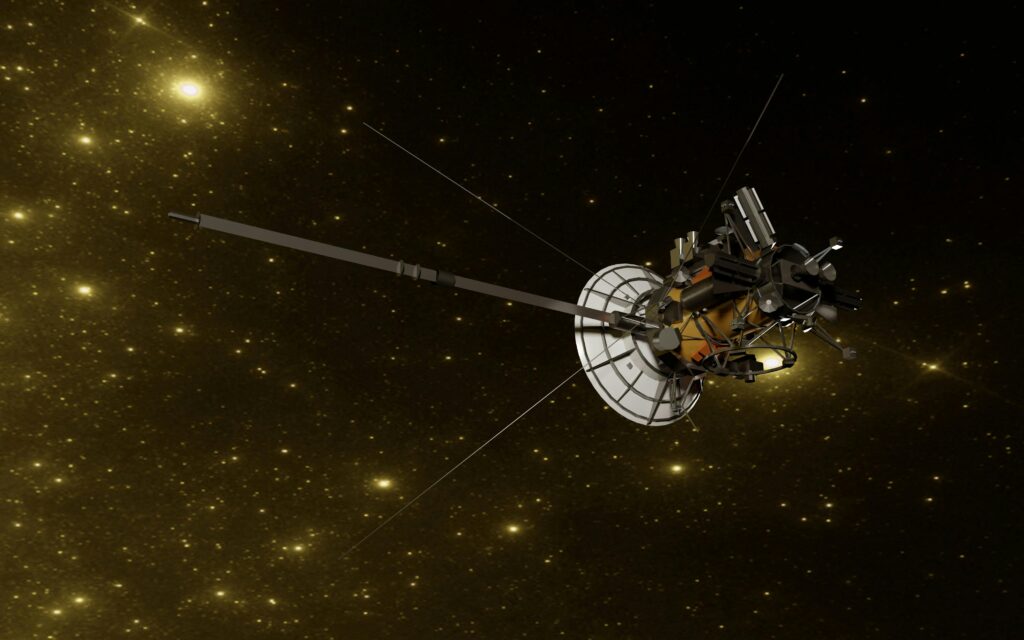
The Golden Record is a 12-inch gold-plated copper disk mounted on both Voyager 1 and Voyager 2.
It contains:
- 115 images of Earth
- natural sounds (wind, thunder, animals, waves)
- music from different cultures
- spoken greetings in 55 languages
- instructions on how to play the record
It is essentially:
Earth’s curated audio-visual autobiography.
It was designed by a NASA team led by astronomer Carl Sagan, who believed that space exploration should also carry cultural memory.
🗣️ The 55-language greeting: a global “hello” to the universe
One of the most iconic parts of the record is the collection of spoken greetings in 55 languages.
These include languages such as:
- English
- Mandarin
- Arabic
- Hindi
- Spanish
- French
- Russian
- Japanese
- Swahili
- many others from diverse linguistic families
Each message simply says a variation of:
“Hello from the inhabitants of planet Earth.”
The simplicity is intentional.
There is no explanation of politics, religion, or conflict — only presence.
It is humanity introducing itself in the most minimal way possible.
🧠 Why language was included at all
Language is one of the most defining features of human civilization.
Including multiple languages served several purposes:
🌐 1. Representing diversity
It acknowledges that Earth is not culturally uniform.
🧬 2. Encoding human identity
Speech is deeply tied to cognition, emotion, and social structure.
📡 3. Creating a universal “signal of intelligence”
A structured spoken greeting suggests deliberate communication, not random noise.
Even if extraterrestrial listeners cannot understand the words, they may recognize:
pattern, repetition, and intention.
🎶 Music as a universal language
The Golden Record also includes music from around the world, such as:
- classical Western compositions
- traditional folk music
- indigenous recordings
- contemporary global selections (for the 1970s)
Music was chosen because it might communicate:
- rhythm
- emotion
- mathematical structure
- shared human experience
Carl Sagan and the project team believed music might be the most “universal” human expression.
📷 Images of Earth: a visual identity snapshot
The record includes images depicting:
- human anatomy
- daily life activities
- scientific diagrams
- Earth landscapes
- agricultural practices
- architectural forms
Together, they form a kind of compressed anthropology.
It is not just what Earth looks like — it is how humans live.
🛰️ The spacecraft that will outlive civilization
Voyager 1 and Voyager 2 are now in interstellar space.
That means:
- they have left the heliosphere
- they are traveling beyond the solar system
- they will continue drifting for billions of years
No human-built object has traveled farther.
The Golden Record is therefore not just symbolic:
it is physically leaving the Solar System with no return path.
⏳ The time scale: a message aimed at deep time
The designers understood something important:
- civilizations rise and fall
- languages evolve or disappear
- Earth itself will change dramatically over cosmic time
So the message was not designed for immediate discovery.
It was designed for:
deep-time chance encounter.
Even if found millions of years from now, it still carries:
- instructions for playback
- mathematical references to universal constants
- a map of pulsars to locate Earth
It is a message designed to survive ignorance of its origin.
🧭 The symbolic meaning: a planetary self-portrait
The Golden Record is less about communication and more about reflection.
It forces a question:
If Earth had to describe itself in one object, what would it choose?
The answer was not:
- weapons
- governments
- conflicts
- borders
Instead, it was:
- music
- greetings
- images of life
- curiosity
- scientific understanding
It is, in a sense, humanity’s curated self-image for an unknown audience.
🧩 Limitations and criticisms
The Golden Record is widely admired, but not without critique.
Some key limitations include:
🌍 1. Cultural selection bias
The content reflects the perspectives of the 1970s scientific and cultural elite.
🧠 2. Human-centered assumptions
It assumes extraterrestrials will interpret:
- visual imagery
- sound frequencies
- mathematical encoding
in ways that make sense to human cognition.
🗺️ 3. Limited representation
Even with 55 languages, it cannot fully represent Earth’s linguistic diversity.
Despite this, it remains one of the most inclusive interstellar messages ever created.
🔮 Why it still matters today
The Golden Record has gained renewed relevance in the modern era because:
- humanity is again thinking about space exploration
- AI and language models are reshaping communication
- interstellar messaging is being debated in academic circles
- cultural preservation is increasingly digital
It stands as an early prototype of:
how a civilization might archive itself beyond its own survival timeline.
🪐 Voyager’s current status: still silent, still moving
Both Voyager spacecraft continue to operate in limited capacity.
They are:
- billions of miles from Earth
- sending faint signals back to NASA
- slowly losing power from their nuclear generators
Eventually, they will go silent permanently.
But the Golden Record does not depend on communication.
It is already traveling beyond any human reach.
❓ FAQ: The Voyager Golden Record
1. What is the Voyager Golden Record?
It is a gold-plated disc attached to Voyager 1 and 2 containing sounds, images, and greetings from Earth.
2. How many languages are on it?
There are greetings in 55 different languages.
3. Who created it?
It was developed by a NASA team led by astronomer Carl Sagan and colleagues.
4. Where is it now?
It is traveling through interstellar space aboard Voyager 1 and Voyager 2.
5. Could aliens actually find it?
It is extremely unlikely, but it was designed for long-term cosmic chance encounters.
6. Why was it made?
To represent Earth and humanity in case the spacecraft is discovered by extraterrestrial intelligence in the distant future.
🧭 Final thought
The Voyager Golden Record is not really a message in the traditional sense.
It is something quieter and more profound:
a civilization speaking to the possibility of not being alone — even when it will never know if anyone is listening.
And in that silence, drifting far beyond the reach of its makers, it carries something deeply human:
not certainty, not answers, but the courage to say hello anyway.
Sources Space Daily

