
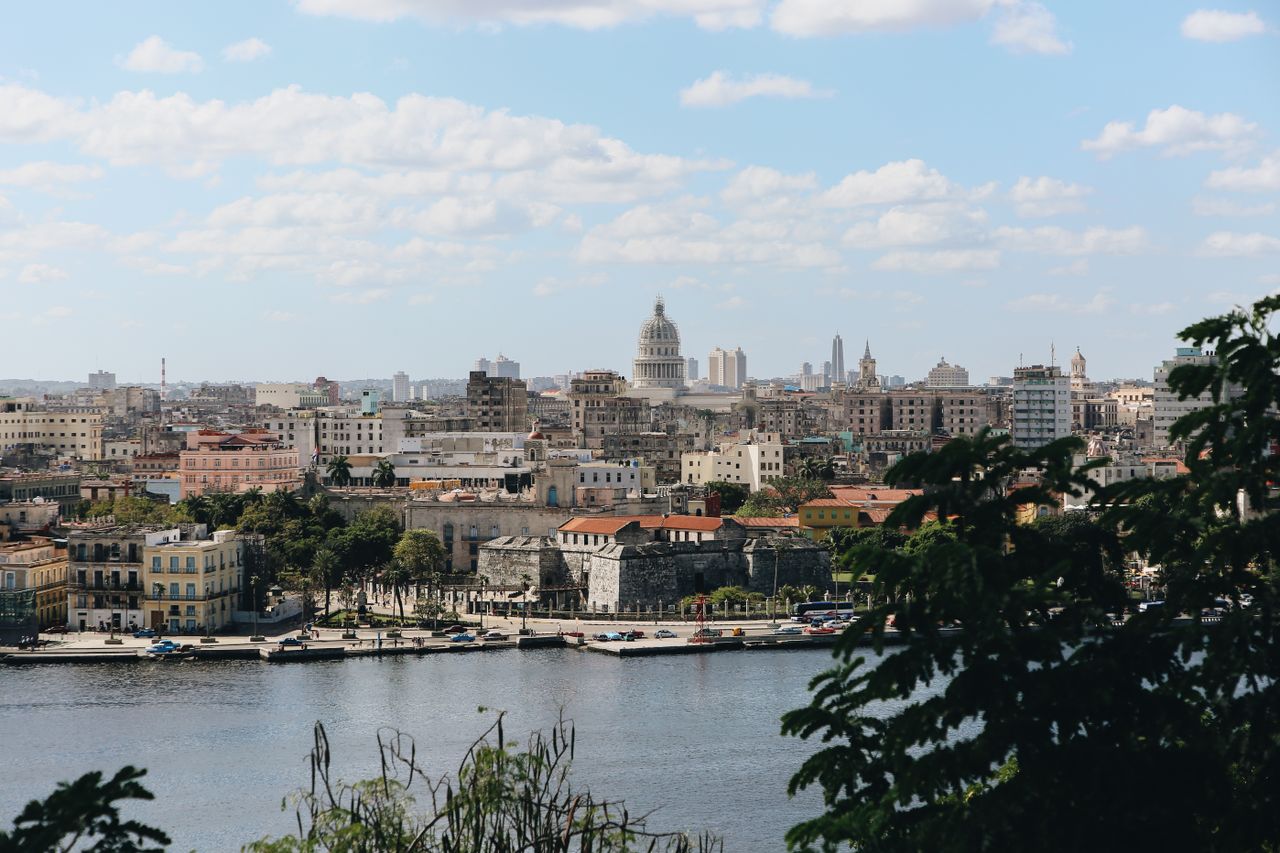
The story begins at Punta de Ganado, a campground located on Santa Lucía Beach in Camagüey province, on Cuba’s northern coast.
For years, the facility suffered from deteriorating infrastructure and poor beach maintenance. One particularly visible problem was the accumulation of sargassum, a type of brown seaweed that washes ashore in large quantities across parts of the Caribbean.
During better economic times, workers used tractors and other equipment to remove the seaweed, transporting it away from the swimming areas. But as Cuba’s economic crisis intensified in 2022 and 2023, maintenance budgets were reduced. Eventually, even areas around tourist facilities stopped receiving adequate attention.
By the summer of 2025, piles of rotting seaweed had become a familiar sight.
In mid-October 2026, Punta de Ganado reopened under private management after being leased to a private company. The new operator committed to restoring the beach, outdoor pavilion and restaurant before undertaking a second phase of repairs to the accommodation cabins.
The reopening introduced new activities, including all-terrain vehicle rentals, an inflatable children’s playground and entertainment events. Organisers also discussed the possibility of concerts featuring popular performers.
On paper, the transformation appeared promising. A neglected public tourism facility was receiving new investment, commercial activity was returning and visitors were being offered additional services.
However, the experience also revealed a serious problem: affordability.
According to Havana Times, round-trip private transportation from Camagüey city cost between 5,000 and 6,500 Cuban pesos per person. Admission was another 500 pesos for adults and 300 pesos for children and teenagers.
The report noted that average state salaries were below 9,000 pesos per month, making the excursion prohibitively expensive for many ordinary households.
Food prices were another source of dissatisfaction. One visitor, Nayara Ramírez, complained that restaurant prices were comparable to those of the most expensive private restaurants in Camagüey. She also questioned the quality of the beach cleaning, saying that the most thoroughly maintained section appeared to be the VIP area.
The campground’s management defended the additional charge for VIP services, explaining that customers received personalised waiter service, exclusive seating and access to one of the cleanest sections of the resort.
The dispute illustrates the central challenge facing Cuba’s tourism reforms: private operators may be able to improve facilities, but their prices can place the resulting benefits beyond the reach of the people who were originally expected to use them.
Why Cuba Is Turning to Private Tourism Management
The decision to transfer tourism facilities to private operators is not happening in isolation. It is part of a broader economic transformation driven by the country’s prolonged financial crisis.
Cuba’s state-owned tourism businesses have struggled with several overlapping problems:
- A shortage of foreign currency needed to purchase supplies and equipment.
- High inflation and a rapidly weakening Cuban peso.
- Deteriorating hotels, restaurants and recreational facilities.
- Shortages of food, fuel and construction materials.
- Falling international visitor numbers.
- Electricity shortages and unreliable infrastructure.
- Difficulty paying competitive wages to employees.
The Punta de Ganado example demonstrates how these problems affect daily operations.
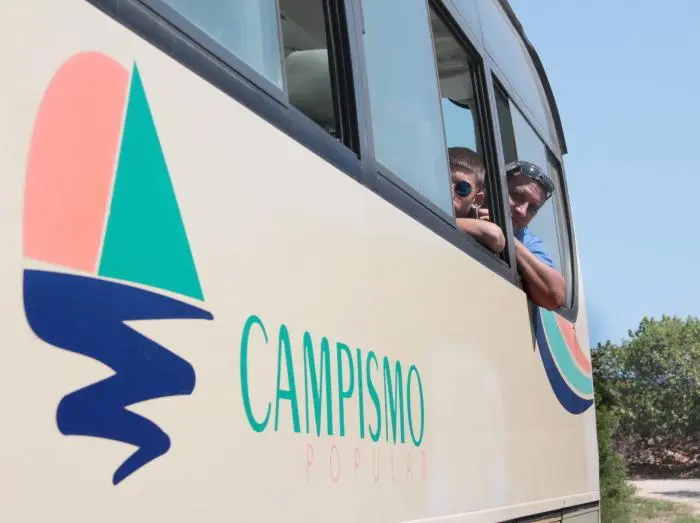
According to Yasmani Rabelo, a former accountant with the Popular Camping Company in Camagüey, the gap between the official exchange rate and the informal market rate made it increasingly difficult for state enterprises to cover their costs.
Private businesses, meanwhile, operated in a market where prices could adjust more quickly to changing economic conditions.
State-owned facilities were often unable to raise prices sufficiently to cover their expenses because of government pricing guidelines. As costs increased, their financial position deteriorated.
By the end of 2025, Punta de Ganado reportedly had difficulty obtaining enough supplies to operate its restaurant and cafeteria. Furniture and facilities were not properly maintained, and the range of available food became increasingly limited.
The private management arrangement is therefore an attempt to introduce a different financial model.
Instead of relying entirely on state budgets and regulated prices, private operators can invest their own capital, manage procurement, set commercial prices within the applicable rules and attempt to generate profits.
For the Cuban government, transferring management responsibilities could reduce the financial burden of maintaining facilities that have become expensive to operate.
For entrepreneurs, it creates opportunities to enter a sector that was historically dominated by state companies.
The difficult question is whether the model can deliver both better services and fair access.
A Wider Transformation: Cuba’s 2026 Economic Reforms
The changes taking place at Punta de Ganado are part of a much broader opening of Cuba’s economy.
In June 2026, Cuban lawmakers approved a package of 176 economic reforms described by Reuters as one of the most significant changes to the country’s socialist economic model since the 1959 revolution.
The measures seek to attract investment, increase private-sector participation and reduce some of the administrative restrictions that have discouraged business activity.
In July, further details emerged about allowing private tourism companies to operate and easing restrictions on land use, fuel imports and other commercial activities.
On September 3, 2026, Cuba published additional regulations in its national registry.
Among the changes were:
1. Private travel agencies
Private businesses gained permission to establish and operate travel agencies, subject to the applicable licensing requirements.
This opens the door for Cuban entrepreneurs to organise excursions, sell travel packages and develop tourism services that were previously controlled largely by state entities.
2. Independent tour guides
Self-employed individuals can now work as tour guides under the new regulatory framework.
This could create opportunities for people with knowledge of Cuban history, architecture, culture, nature and local communities.
3. Direct hiring of employees
Foreign companies and certain investment structures gained greater flexibility to hire workers directly rather than relying on state employment agencies.
The change could give tourism operators more control over recruitment, staffing and employee incentives.
4. Greater flexibility in foreign banking
Certain joint ventures and domestic companies involved in foreign commerce can open foreign bank accounts by notifying Cuban authorities rather than obtaining prior approval.
This could make it easier for businesses to manage international transactions.
5. Expanded investment opportunities
The reforms are designed to make tourism, property development and other commercial activities more accessible to national and international investors.
These measures do not mean Cuba has abandoned its socialist economic system. The government continues to maintain control over strategic sectors, and investment activities remain subject to Cuban laws and authorisation procedures.
Nevertheless, the direction of change is significant: the private sector is being given a larger role in activities that were previously concentrated in state hands.
Reuters reported that the government presented the reforms as a way to simplify business operations, reduce bureaucracy and improve the investment environment.
Is Cuba Actually Privatizing Its Beaches?
The word privatization requires some explanation.
The developments described in the Punta de Ganado report involve the transfer or lease of management responsibilities to private operators. That is not necessarily the same as selling the beach itself or transferring ownership of the coastline.
There are several different arrangements that should not be confused:
- Private ownership: A business or individual owns an asset.
- Leasing: A private operator receives the right to use and manage a property for an agreed period.
- Concessions: A business receives permission to operate particular services or facilities under specified conditions.
- Private management: A private company operates a publicly owned facility, potentially under a contract with the state.
- Joint ventures: A private investor and a state entity participate in a shared business arrangement.
Punta de Ganado is described as having been leased to a private company. The available reporting does not establish that the beach itself has been sold into private ownership.
This distinction matters because Cuba has a legal framework governing coastal areas.
Cuba’s Decree-Law 77 of 2023 on coastal zones states that common uses of coastal areas are generally free, public and free of charge, subject to specified exceptions and regulations.
The law also establishes requirements concerning beach capacity, sanitary conditions, bathing-water quality and waste disposal.
Consequently, private management of a restaurant, campground, beach service or recreational facility should not automatically be interpreted as the legal transfer of the entire beach into private ownership.
The real issue is how public access will be protected in practice.
If a private company manages a beachfront facility, authorities need to make clear which areas are available to the public, which services require payment and whether additional charges affect access to the beach itself.
This is particularly important in a country where beaches are a major part of the national identity and a valuable resource for domestic tourism.
The Scale of Cuba’s Tourism Crisis
Cuba’s economic reforms are taking place against an extraordinary collapse in international tourism.
For decades, tourism has been one of the country’s most important sources of foreign currency. The industry became especially important after the collapse of the Soviet Union, when Cuba lost a major economic partner and needed alternative sources of income.
The government invested in hotels, resorts, airports and tourism infrastructure, while international hotel operators entered partnerships with Cuban state companies.
The industry eventually became a major source of employment and income.
However, the recovery expected after the COVID-19 pandemic never fully materialised.
According to figures from Cuba’s National Office of Statistics and Information (ONEI), the country received approximately 1.81 million international visitors in 2025, down from approximately 2.2 million in 2024.
The 2025 figure was also far below the approximately 4.3 million visitors recorded in 2019.
Hotel occupancy deteriorated as well. A report by Columbia University’s Cuba Capacity Building Project, using ONEI figures, placed Cuba’s hotel occupancy rate at just 18.9% in 2025.
The situation became even more severe in 2026.
The Associated Press reported that Cuba received approximately 419,000 visitors between January and July 2026, compared with 1.1 million during the same period in 2025. That represented a decline of approximately 62%.
The figures reveal a tourism industry operating far below its previous capacity.
For an economy that depends heavily on tourism-related foreign currency, the consequences are serious.
Fewer visitors mean lower hotel revenues, less business for restaurants and transport providers, reduced demand for tour guides and fewer opportunities for tourism workers.
The crisis also affects businesses that supply the industry, including food producers, construction companies, transport operators and maintenance contractors.
Why International Hotel Operators Have Been Leaving Cuba
Cuba’s tourism difficulties are not limited to domestic campgrounds and state-owned facilities.
International hotel companies have also faced serious operational and financial challenges.
For many years, foreign hotel groups helped develop Cuba’s resort industry through management agreements and partnerships with state entities.
Spanish hotel companies such as Meliá and Iberostar became particularly prominent, while other international operators also participated in the market.
However, the worsening economic and geopolitical environment has complicated their operations.
In 2026, fuel shortages, electricity disruptions, reduced visitor demand and growing uncertainty over international sanctions contributed to the withdrawal or suspension of several hotel operations.
In July 2026, Euronews reported that Cuba’s prime minister had described the tourism sector as being close to paralysis, with approximately 73% of hotels closed at that time.
The departure of major operators creates a difficult problem for the government.
International hotel companies bring more than accommodation brands. They can provide management experience, marketing networks, international booking relationships, staff training and access to global tourism markets.
Replacing those capabilities requires more than transferring a hotel to a new operator.
Cuba needs reliable electricity, fuel, food supplies, maintenance services, payment systems and international transportation.
Without these foundations, even well-funded tourism projects may struggle.
Foreign Investors See Opportunity in Cuba’s Beaches and Resorts
Despite the risks, Cuba continues to attract attention from international investors.
The country has an extensive coastline, tropical climate, historic cities and tourism destinations with significant development potential.
Some of its most recognised coastal destinations include:
- Varadero: Famous for its long white-sand beach and established resort infrastructure.
- Cayo Coco: Known for beaches, nature and all-inclusive resorts.
- Cayo Santa María: A northern island destination with beaches and large tourism developments.
- Cayo Guillermo: Popular for its coastal scenery and water-based activities.
- Guardalavaca: An important resort area in Holguín province.
- Santa Lucía: The Camagüey coastal destination where Punta de Ganado is located.
Cuba’s 2026 reforms have encouraged discussions about new investment models, including foreign participation in hotel development, property projects and tourism businesses.
In June 2026, The National reported on interest from Gulf investors in developing tourism projects in Cuba, including a proposed luxury complex on Cayo Santa María.
Such proposals illustrate the potential scale of foreign investment being discussed.
However, investors must consider the country’s difficult business environment.
Potential obstacles include:
- Unreliable electricity supplies.
- Fuel shortages.
- Restrictions and uncertainty involving international payments.
- Currency instability.
- Complicated administrative procedures.
- Limited availability of construction materials.
- Risks arising from US sanctions.
- Uncertainty over the long-term legal and commercial environment.
Tourism experts have welcomed the reforms but warned that they are unlikely to produce an immediate recovery while the wider political and economic challenges remain unresolved.
A more open investment framework is helpful, but investors still need confidence that projects can operate profitably and reliably.
The US Sanctions Factor: A Major Obstacle to Tourism Recovery
Cuba’s tourism crisis cannot be understood without considering its relationship with the United States.
Washington has maintained a comprehensive sanctions framework against Cuba for decades. Restrictions affect trade, financial transactions, investment and travel, although the precise rules vary according to the type of activity and applicable exemptions.
In 2026, the US government increased pressure on Cuba, including measures affecting energy supplies and companies connected to the tourism industry.
The resulting fuel shortages have had a direct effect on travel.
Airlines need aviation fuel to operate flights. Hotels need electricity, transportation and reliable supplies. Tour operators need functioning vehicles and logistics networks.
When fuel becomes scarce, the entire tourism chain suffers.
Reuters reported in February 2026 that Cuba’s aviation fuel shortage was forcing airlines to suspend or reduce services. Canadian carriers, among others, announced flight suspensions, while some hotel operators consolidated guests or closed facilities.
The Associated Press subsequently reported that the energy restrictions and additional sanctions had intensified an already existing economic crisis.
However, it would be misleading to attribute the entire decline in Cuban tourism to US policy.
The industry’s difficulties began before the latest energy restrictions.
Cuba had already experienced declining visitor numbers, deteriorating infrastructure, inflation, shortages and weak hotel occupancy.
The country’s internal economic policies, exchange-rate problems and the limited efficiency of state-owned enterprises also contributed to the situation.
A sustainable recovery will therefore require both an improvement in external conditions and meaningful domestic economic reform.
The Sargassum Problem: Cuba’s Beaches Face an Environmental Challenge
Private investment may improve beach maintenance, but it cannot eliminate every problem affecting Cuba’s coastline.
One of the most visible challenges is sargassum.
Sargassum is a naturally occurring floating brown seaweed found in the Atlantic Ocean. Large quantities can accumulate in the Caribbean, particularly during certain seasonal periods.
When it reaches the coast in substantial amounts, it can create several problems:
- Unpleasant smells as the seaweed decomposes.
- Reduced beach attractiveness for visitors.
- Difficulty accessing swimming areas.
- Increased cleaning and waste-management costs.
- Potential effects on coastal ecosystems.
Sargassum is not simply rubbish. It plays an important ecological role in the open ocean, providing habitat and food for marine organisms.
The challenge arises when unusually large quantities wash ashore and decompose along beaches.
The Caribbean has experienced significant sargassum influxes in recent years, making the issue a regional tourism and environmental concern.
For Cuba, the problem is particularly important because beaches are among the country’s most valuable tourism assets.
Private operators may have stronger financial incentives to maintain beaches that attract customers. They may also be able to invest in equipment and organise cleaning operations more efficiently.
However, beach management must be environmentally responsible.
Mechanical removal can damage dunes and coastal habitats if carried out improperly. Disposal methods also matter because accumulated seaweed can create environmental problems if dumped in unsuitable locations.
The most effective response requires cooperation between tourism businesses, environmental authorities, scientists and local communities.
Beach cleanliness should not come at the expense of the natural systems that make the coastline attractive in the first place.
Will Private Tourism Make Holidays More Expensive for Cubans?
This may be the most politically sensitive question surrounding Cuba’s tourism reforms.
For decades, state-operated campgrounds and holiday facilities provided opportunities for Cuban families to enjoy domestic tourism.
These facilities were not always luxurious, but they offered a more affordable alternative to international resorts.
The shift toward private management could improve service quality, but it may also lead to higher prices.
Punta de Ganado demonstrates the problem.
According to the Havana Times report, the change in management was accompanied by price increases estimated at between fourfold and tenfold across various services.
The new prices reflected higher operating costs and the need for commercial profitability, but they also made the facility less accessible to households dependent on state salaries.
The VIP service illustrates another potential consequence.
Customers willing and able to pay more can receive better seating, personal service and access to cleaner facilities. Others may find themselves restricted to less attractive areas or unable to afford the additional services.
This creates the risk of a two-tier tourism system.
One segment of the population enjoys increasingly sophisticated private facilities, while lower-income households lose access to places that were previously more affordable.
The problem is particularly serious in Cuba because the population has been experiencing high inflation, declining purchasing power and shortages of essential goods.
Tourism reforms that improve commercial performance but exclude most domestic visitors could create social resentment.
The government will therefore need to consider ways of balancing private profitability with public access.
Possible approaches include:
- Maintaining affordable admission prices for basic beach access.
- Introducing discounted rates for Cuban residents.
- Requiring private operators to maintain public-access areas.
- Establishing transparent rules for VIP services.
- Encouraging competition among tourism providers.
- Publishing clear information about leasing arrangements and pricing.
- Monitoring whether improvements benefit surrounding communities.
The goal should be to create better tourism facilities without turning every attractive beach into an expensive privilege.
What the Reforms Could Mean for Cuban Workers
The tourism industry has historically provided employment for hundreds of thousands of Cubans.
Hotels, restaurants, transport services, entertainment venues and travel agencies support a large network of jobs.
When visitor numbers collapse, workers are among the first to feel the consequences.
Hotel closures can leave employees without regular income. Tour guides may lose customers, taxi drivers may struggle to find passengers and restaurant suppliers may see demand disappear.
Private investment could create new employment opportunities.
A privately managed campground may need cleaners, maintenance workers, cooks, waiters, receptionists, entertainers and transport providers.
New travel agencies may require sales staff and tour guides. Foreign hotel investors could introduce training programmes and more competitive employment practices.
The 2026 reforms allowing greater flexibility in direct hiring are particularly relevant.
Under the previous system, foreign companies generally relied on state employment agencies to recruit Cuban workers. The new rules give eligible businesses greater freedom to manage recruitment and employment arrangements.
This could improve operational efficiency and allow companies to introduce incentives that are more closely connected to employee performance.
However, better employment opportunities are not guaranteed.
Private businesses may offer higher wages in some cases, but workers could also face uncertain contracts, seasonal demand and pressure to accept working conditions determined by commercial considerations.
The government will need to ensure that economic liberalisation is accompanied by appropriate labour protections.
Could Cuba Become a Caribbean Tourism Leader Again?
Cuba still possesses considerable advantages as a tourism destination.
Its coastline is extensive, its cultural identity is distinctive and its cities offer historical attractions that differ from many Caribbean resort destinations.
Havana, Trinidad, Santiago de Cuba and other historic centres offer architecture, music, food and cultural experiences that appeal to international travelers.
The country also has significant opportunities in:
Beach tourism: Developing and upgrading coastal resorts while improving environmental protection.
Cultural tourism: Promoting Cuban music, dance, architecture, art and historical sites.
Nature tourism: Expanding opportunities for birdwatching, hiking, diving and protected-area experiences.
Community tourism: Encouraging visitors to explore smaller towns and support locally owned businesses.
Medical and wellness tourism: Developing services where infrastructure, regulation and international confidence permit.
Adventure tourism: Expanding activities such as sailing, cycling, diving and nature excursions.
However, Cuba cannot compete on natural attractions alone.
Modern travelers expect reliable transportation, clean accommodation, functioning payment systems, consistent electricity and access to food and services.
A beautiful beach cannot compensate indefinitely for a hotel without reliable power or a visitor experience disrupted by shortages.
Columbia University’s Cuba Capacity Building Project argues that the country’s tourism potential depends on a comprehensive strategy involving macroeconomic stability, institutional modernisation, infrastructure improvements, a stronger private sector and sustainable tourism development.
That is a more realistic path than simply building additional hotels.
Five Conditions Cuba Must Meet for Tourism Privatization to Succeed
The success of the reforms will depend on more than the number of properties transferred to private management.
Several conditions will determine whether the new system can deliver lasting benefits.
1. Transparent agreements and clear regulations
Investors and local communities need to understand who owns tourism facilities, who manages them and what obligations apply.
Leasing arrangements should be transparent, with clear rules on maintenance, pricing, environmental protection and public access.
Without transparency, private investment may generate suspicion rather than confidence.
2. Reliable electricity, fuel and infrastructure
Hotels, restaurants and transport operators cannot function effectively without reliable energy.
Cuba needs improvements to electricity generation, fuel distribution, roads, water systems and telecommunications.
These investments are expensive, but they are essential for the tourism industry to recover.
3. A stable financial and currency environment
Currency instability makes it difficult for businesses to calculate costs, pay employees and plan investments.
The government needs a more predictable monetary framework that allows private companies and foreign investors to operate with greater confidence.
4. Protection of workers and local communities
Economic reform should create meaningful employment rather than simply transferring assets from state management to private operators.
Workers need fair wages, appropriate contracts and opportunities for training and career development.
Local residents should also have a voice in decisions affecting beaches, neighbourhoods and public facilities.
5. Environmental protection
Cuba’s beaches, coral reefs, mangroves and coastal ecosystems are valuable economic assets, but they are also natural environments that require protection.
Tourism development should include proper wastewater management, sustainable construction, beach maintenance and protection of marine habitats.
A resort that damages its surrounding environment may generate short-term profits while undermining its long-term attractiveness.
Conclusion: Cuba’s Tourism Experiment Is About More Than Private Beaches
Cuba’s decision to introduce private management at facilities such as Punta de Ganado represents a significant change in the country’s approach to tourism.
For years, state-owned enterprises struggled with shortages, inadequate maintenance and financial losses. Private operators may offer a way to restore neglected properties, improve services and attract investment without requiring the government to finance every operation.
The wider 2026 reforms show that this is part of a broader attempt to reshape the Cuban economy.
However, the experience at Punta de Ganado reveals the social risks.
A cleaner beach and a better restaurant are meaningful improvements, but they become less meaningful if ordinary Cuban families can no longer afford to visit.
The future of Cuban tourism will depend on whether private investment can deliver quality, affordability and environmental responsibility at the same time.
International investors may see opportunity in Cuba’s coastline, historic cities and tourism potential. Cuban entrepreneurs may see a chance to build businesses in an industry that was previously dominated by the state.
But the country’s most important test will be whether the people who live there benefit from the transformation.
Cuba does not simply need more private hotels or better-managed beaches. It needs a tourism model that creates jobs, attracts visitors, protects its natural heritage and allows Cubans themselves to enjoy the country’s extraordinary coastline.
Frequently Asked Questions (FAQs)
1. Is Cuba privatizing its beaches?
Cuba is expanding private management and investment in tourism facilities, including campgrounds, hotels and other coastal businesses. However, leasing a campground or allowing a private company to manage beach-related services does not automatically mean that the beach itself has been sold into private ownership. Cuban coastal legislation generally recognises public and free use of coastal areas, subject to specified legal exceptions and environmental rules.
2. Why is Cuba allowing private companies to manage tourism facilities?
Cuba’s state-owned tourism businesses have struggled with financial losses, inflation, shortages of supplies, deteriorating infrastructure and declining visitor numbers. Private management is intended to attract investment, improve services, increase efficiency and reduce the financial burden on the government.
3. What happened to Punta de Ganado campground?
Punta de Ganado, located on Santa Lucía Beach in Camagüey, was transferred to private management in October 2026. The new operator committed to restoring the beach, restaurant and outdoor facilities before repairing the accommodation cabins. However, the reopening also introduced substantially higher prices, raising concerns about affordability for ordinary Cuban families.
4. Can foreign investors now own tourism businesses in Cuba?
Cuba’s 2026 reforms have expanded opportunities for foreign investment and private-sector participation in tourism. Foreign investors can explore new business and ownership structures under the applicable legal framework, while private businesses have also gained permission to operate travel agencies and provide additional tourism services. These opportunities remain subject to Cuban regulations, approvals and investment requirements; they do not mean that every foreign investor can freely acquire any property or operate without restrictions.
5. Will Cuba’s tourism industry recover after privatization?
Private investment could help restore hotels, improve beach facilities and create employment. However, a full recovery will also depend on reliable electricity and fuel supplies, international flights, stable financial conditions, improved infrastructure and greater confidence among travelers and investors. The reforms are an important step, but privatization alone cannot solve Cuba’s wider economic and political challenges.

Sources Havana Times