

Tourism has traditionally meant visiting famous cities, historic landmarks, national parks, or tropical beaches. But in the digital age, people are increasingly exploring places that don’t physically exist.
One of the most fascinating examples is the Backrooms—an internet-born fictional world of endless yellow hallways, flickering fluorescent lights, stained carpets, and unsettling emptiness. What began as a simple online image has evolved into a global cultural phenomenon inspiring video games, virtual reality experiences, YouTube series, online communities, academic research, and even discussions about a new form of “digital tourism.”
Researchers studying internet culture suggest that millions of people are voluntarily “visiting” the Backrooms through interactive media, not because the location is real, but because it offers a unique psychological experience. Instead of seeking relaxation, these digital tourists pursue curiosity, mystery, nostalgia, suspense, and exploration.
The rise of the Backrooms demonstrates how tourism itself is changing in an increasingly virtual world—where imagination, technology, and online communities can create destinations every bit as compelling as physical ones.
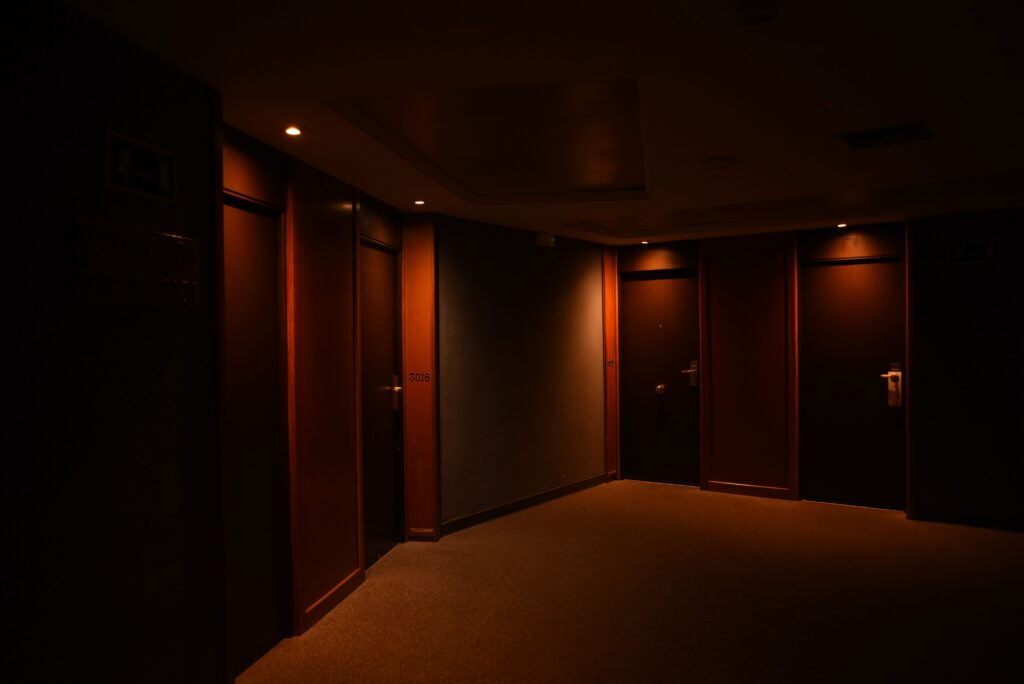
What Are the Backrooms?
The Backrooms originated in 2019 after a seemingly ordinary photograph of an empty office-like interior was posted online alongside a fictional story describing a place hidden just beyond reality.
According to the internet myth, someone can accidentally “noclip” out of reality—a term borrowed from video games that refers to passing through walls or boundaries—and enter an endless maze of nearly identical rooms.
The classic Backrooms are typically described as featuring:
- Yellow wallpaper
- Damp carpeting
- Buzzing fluorescent lights
- Endless corridors
- Empty office spaces
- An overwhelming sense of isolation
Over time, internet users expanded this concept into an elaborate fictional universe with hundreds of unique “levels,” mysterious entities, and community-created lore.
Understanding Liminal Spaces
The Backrooms belong to a broader category known as liminal spaces.
A liminal space is a location associated with transition—places designed for passing through rather than staying.
Examples include:
- Empty shopping malls
- School hallways after hours
- Airport terminals
- Hotel corridors
- Parking garages
- Waiting rooms
- Stairwells
- Abandoned office buildings
These environments often feel strangely familiar yet unsettling because they are usually experienced only briefly or while other people are present.
When depicted as completely empty, they can evoke feelings of nostalgia, unease, curiosity, or loneliness.
Why Are People Fascinated by the Backrooms?
The appeal of the Backrooms lies in several psychological factors.
Familiar but Unfamiliar
The environments resemble places people recognize from everyday life.
Yet subtle differences make them feel “wrong.”
This combination creates cognitive tension that captures attention.
Fear of Isolation
Humans are social creatures.
The complete absence of people in the Backrooms triggers discomfort while simultaneously encouraging exploration.
Infinite Exploration
Unlike traditional stories with clear beginnings and endings, the Backrooms appear endless.
Each hallway suggests another mystery waiting around the corner.
Ambiguity
Little is fully explained.
The unknown becomes part of the attraction.
Rather than answering every question, the Backrooms encourage imagination.
The Rise of Digital Tourism
Researchers increasingly use the term digital tourism to describe experiences in which people explore virtual or fictional destinations for recreation, education, or entertainment.
Examples include:
- Historical reconstructions
- Virtual museums
- Digital cities
- Video game worlds
- Metaverse environments
- VR travel experiences
- Fictional landscapes like the Backrooms
Unlike traditional tourism, these destinations exist entirely through digital technology.
Visitors travel using computers, gaming consoles, or virtual reality headsets rather than airplanes.
Gaming Turned the Backrooms Into a Destination
Video games transformed the Backrooms from an internet meme into an interactive experience.
Players can now:
- Explore procedurally generated corridors.
- Solve puzzles.
- Escape mysterious entities.
- Cooperate with friends.
- Discover hidden lore.
- Create custom Backrooms maps.
Popular gaming platforms have hosted thousands of user-generated Backrooms experiences, attracting millions of players worldwide.
YouTube and Viral Storytelling
The Backrooms exploded in popularity thanks to cinematic online storytelling.
Independent creators produced realistic “found footage” videos depicting fictional encounters inside the Backrooms.
These videos often feature:
- Handheld camera perspectives
- Distorted audio
- Practical visual effects
- Analog horror aesthetics
- Minimal dialogue
Their realism blurred the line between fiction and documentary, helping the Backrooms reach mainstream audiences.

The Psychology of Liminal Spaces
Psychologists believe liminal spaces activate several cognitive processes.
Pattern Recognition
People instinctively search for meaning, even in empty environments.
Uncertainty
The absence of clear information encourages imagination.
Nostalgia
Many Backrooms resemble offices, schools, hotels, or public buildings familiar from childhood or everyday life.
Existential Reflection
The endless hallways can symbolize isolation, transition, or uncertainty about modern life.
These emotional responses help explain why seemingly ordinary images become unexpectedly memorable.
The Role of Artificial Intelligence
AI is rapidly expanding the Backrooms phenomenon.
Generative AI now allows creators to produce:
- Photorealistic liminal environments
- Procedural architecture
- Dynamic storytelling
- Interactive NPCs
- Personalized horror experiences
Future AI systems may generate entirely unique Backrooms experiences in real time, meaning no two visitors encounter exactly the same digital world.
Virtual Reality Makes the Experience Even More Immersive
VR technology has introduced a new level of immersion.
Instead of watching videos, users physically look around empty hallways, listen to ambient sounds, and navigate unfamiliar spaces.
Researchers studying virtual environments note that immersive experiences can produce emotional responses remarkably similar to those experienced in physical locations.
Can Fictional Places Become Tourist Attractions?
Surprisingly, yes.
Many famous tourist destinations originated in fiction.
Examples include:
- Sherlock Holmes’ Baker Street
- Platform 9¾ from the Harry Potter series
- Hobbiton in New Zealand
- Star Wars filming locations
- Game of Thrones destinations
The Backrooms differ because there is no original physical location.
The attraction exists almost entirely in the collective imagination.
Yet millions willingly “visit” through digital media.
Academic Interest in Digital Tourism
Researchers across multiple disciplines are studying the Backrooms as an example of emerging digital culture.
Areas of interest include:
- Psychology
- Architecture
- Human geography
- Digital anthropology
- Media studies
- Internet folklore
- Tourism studies
These studies suggest tourism increasingly involves emotional and imaginative experiences rather than physical travel alone.
Could Digital Tourism Complement Real Travel?
Rather than replacing traditional tourism, virtual experiences may enhance it.
Digital destinations can:
- Inspire future travel.
- Provide accessible experiences for people with mobility limitations.
- Preserve endangered heritage sites digitally.
- Offer educational exploration.
- Reduce environmental impacts associated with long-distance travel.
As virtual reality improves, digital tourism may become an important complement to conventional vacations.
The Future of Internet-Born Destinations
The success of the Backrooms suggests that future tourist attractions may emerge entirely online.
Possible developments include:
- AI-generated fantasy worlds.
- Persistent virtual cities.
- Collaborative digital museums.
- Interactive historical simulations.
- Personalized dreamlike environments.
- Mixed-reality tourism experiences.
The line between entertainment, gaming, education, and tourism will likely continue to blur.
Conclusion
The Backrooms began as a simple internet meme but have grown into one of the most remarkable examples of digital culture influencing how people experience exploration and place. Through games, virtual reality, online storytelling, and AI-generated environments, millions of people now “visit” a location that exists only in imagination.
This phenomenon challenges traditional ideas about tourism by showing that curiosity, discovery, and emotional engagement do not always require physical travel. Digital destinations can evoke wonder, fear, nostalgia, and excitement in ways once reserved for real-world locations.
As technology continues to advance, the Backrooms may be remembered not only as an iconic piece of internet folklore but also as an early glimpse into the future of tourism—where virtual worlds become meaningful destinations in their own right.
Frequently Asked Questions (FAQs)
1. What are the Backrooms?
The Backrooms are a fictional internet-created world consisting of endless empty rooms and hallways. Originating from an online meme in 2019, they have evolved into a large collaborative fictional universe featured in games, videos, and virtual experiences.
2. What are liminal spaces?
Liminal spaces are transitional environments such as empty hallways, airports, shopping malls, schools, or hotels that often evoke feelings of nostalgia, mystery, or unease because they are familiar yet strangely empty.
3. Why do people enjoy exploring the Backrooms?
People are drawn to the Backrooms because they combine mystery, exploration, psychological suspense, nostalgia, and internet storytelling. The absence of clear explanations encourages imagination and personal interpretation.
4. What is digital tourism?
Digital tourism refers to exploring destinations through digital technologies such as virtual reality, video games, interactive simulations, or online environments instead of physically traveling to real-world locations.
5. Could virtual destinations become as important as physical tourist attractions?
While virtual experiences are unlikely to replace traditional travel, advances in VR, AI, and immersive technology are making digital destinations increasingly engaging. Many experts believe digital tourism will become an important complement to physical travel, particularly for education, accessibility, entertainment, and cultural preservation.

Sources Scitech Daily

